
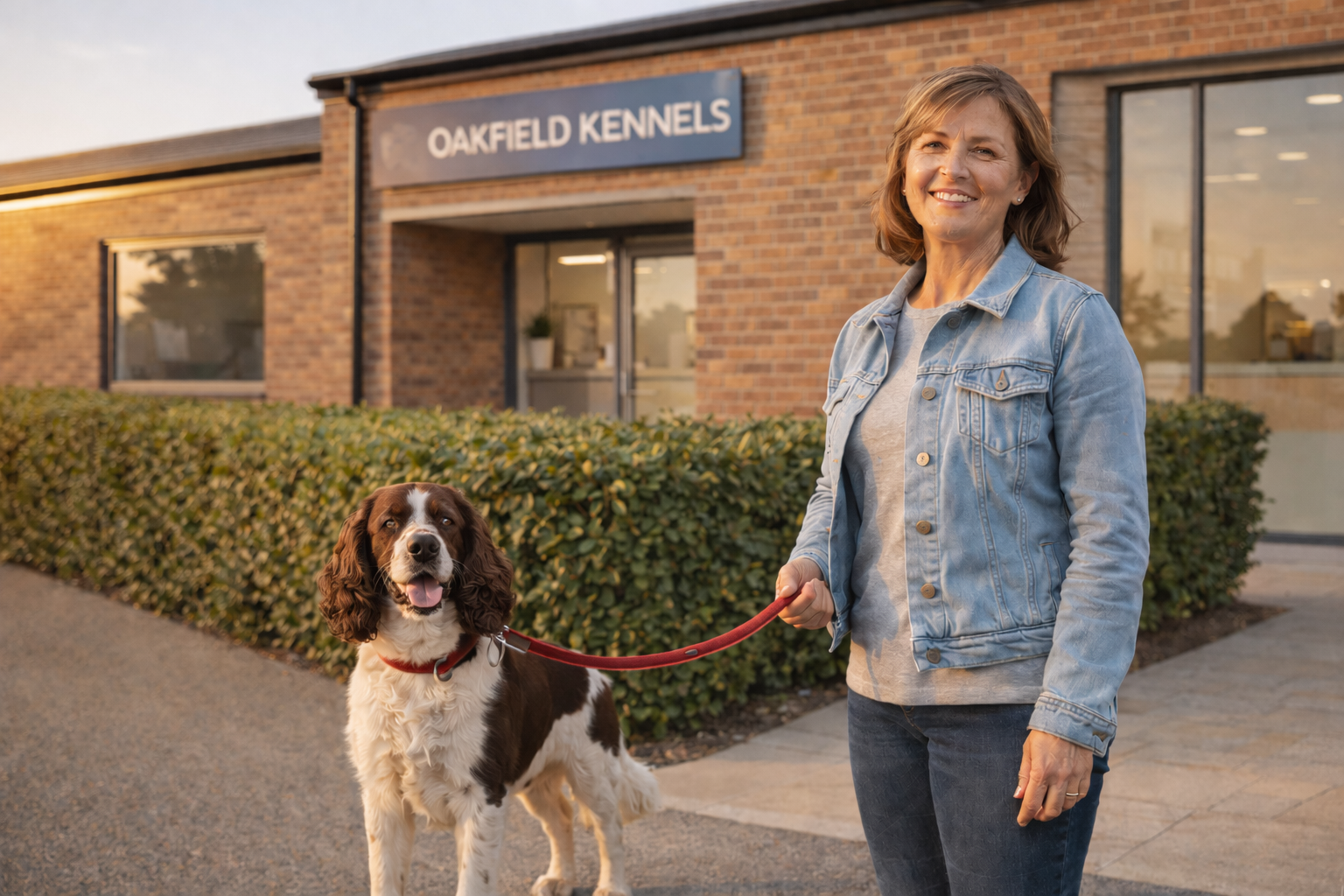
Every commercial dog boarding operation in England needs a licence, whether it's a 50-kennel facility or someone looking after two dogs in their spare room. The Animal Welfare (Licensing of Activities Involving Animals) (England) Regulations 2018 replaced the outdated 1963 Act and set science-based standards for how boarding facilities must operate.
Wales has similar requirements under separate legislation. Scotland and Northern Ireland maintain their own frameworks. The 2018 Regulations apply to England only, don't assume they're UK-wide.
Key Takeaways
- All commercial dog boarding needs a licence, kennels and home boarding alike, with local authorities deciding what counts as "commercial"
- Star ratings (1-5) reflect care quality, higher-rated facilities exceed minimum standards and get inspected less frequently
- You can verify any licence yourself, contact the facility's local council directly and ask for their licence number and star rating
- Home boarding has specific restrictions, no conservatories, garages, or children's bedrooms for dog accommodation
- Regulations don't cover pricing or service levels, a licence confirms safety standards, not value for money
Who Needs a Licence?
Any dog boarding operation run as a business. Local authorities use HMRC's badges of trade to determine whether someone is operating commercially, if you make sales, seek profit, or earn fees from boarding dogs, you need a licence. Even operators with trading income below HMRC's threshold still need one if they meet the commercial criteria.
This catches hobby boarders who assume they're exempt. If you're being paid to look after someone else's dog in your home, you almost certainly need a licence.
Dog sitting in the owner's home generally doesn't require licensing, the distinction is whose home the care happens in.
Kennels vs Home Boarding: Different Rules
The regulations set distinct standards for each environment while maintaining equally rigorous welfare requirements.
Commercial kennels (Schedule 4, Part 2) must provide purpose-built accommodation with robust construction, two-barrier escape prevention systems, non-toxic materials, and proper drainage. They need appropriate staff-to-dog ratios and established vet relationships for emergencies.
Home boarding (Schedule 4, Part 3) operates in domestic settings with stricter space rules. Dogs generally can't be kept in conservatories, garages, or cellars due to temperature and safety concerns, and children's bedrooms are off-limits. If the boarder has their own pets, they need your written consent before housing them together, and must be able to separate animals if conflicts arise.
Both types require detailed record-keeping for at least three years, feeding, exercise, health observations, and incidents.
The Star Rating System
All licensed facilities meet minimum standards (1 star), while higher ratings are awarded to those that meet additional standards beyond the legal minimum. A 5-star facility should offer genuinely higher standards, not just a marketing badge.
What higher ratings typically mean for your dog: better staff-to-dog ratios, more exercise time, improved enrichment, and more experienced staff. Higher-rated facilities also benefit from longer licence periods (up to 3 years instead of annual renewals), which reflects the council's confidence in their standards.
How to Verify a Facility
Don't take a facility's word for it, verify independently:
- Contact their local council's animal licensing team, they must provide licence details on request, including star rating and recent inspection results
- Ask to see the licence on display, licensed facilities must show it prominently
- Request their last inspection report, confident operators share this without hesitation
Be wary of operations that can't produce licensing documentation, seem overcrowded, or are reluctant to let you visit before booking. Unlicensed commercial boarding is illegal, and using it leaves you with no regulatory recourse if something goes wrong.
Browse boarding facilities on Tailstays to start comparing options in your area.
What Regulations Don't Cover
A licence confirms welfare standards, not value for money. Pricing, deposits, cancellation policies, communication frequency, and extras like grooming are all commercial decisions left to individual operators. A facility can meet every regulatory requirement while providing minimal updates during your dog's stay.
Exercise frequency beyond basic welfare minimums isn't prescribed either. A 1-star facility meets the legal minimum; whether that's enough for your energetic Border Collie is your call.
Frequently Asked Questions
Do all dog boarders need a licence?
All commercial dog boarding requires a licence in England under the 2018 Regulations. This includes both kennels and home boarding. Dog sitting in the owner's own home generally doesn't require a licence, the key distinction is whose home the care happens in. Wales has similar requirements under separate legislation.
Are there different rules across the UK?
Yes. The 2018 Regulations apply to England only. Wales has similar requirements under separate legislation. Scotland and Northern Ireland each maintain their own regulatory frameworks. Always check the requirements specific to where the boarding facility is located.
Can I board my dog with someone who has their own pets?
Yes, but home boarders must get your written consent before housing your dog with their pets. They must be able to separate animals if needed and meet all standard licensing requirements.
What should I do if I suspect a facility isn't licensed?
Contact your local council's animal licensing team. They have inspection powers and can investigate. Document any concerns and report them, it protects other pet owners and keeps the system working.