
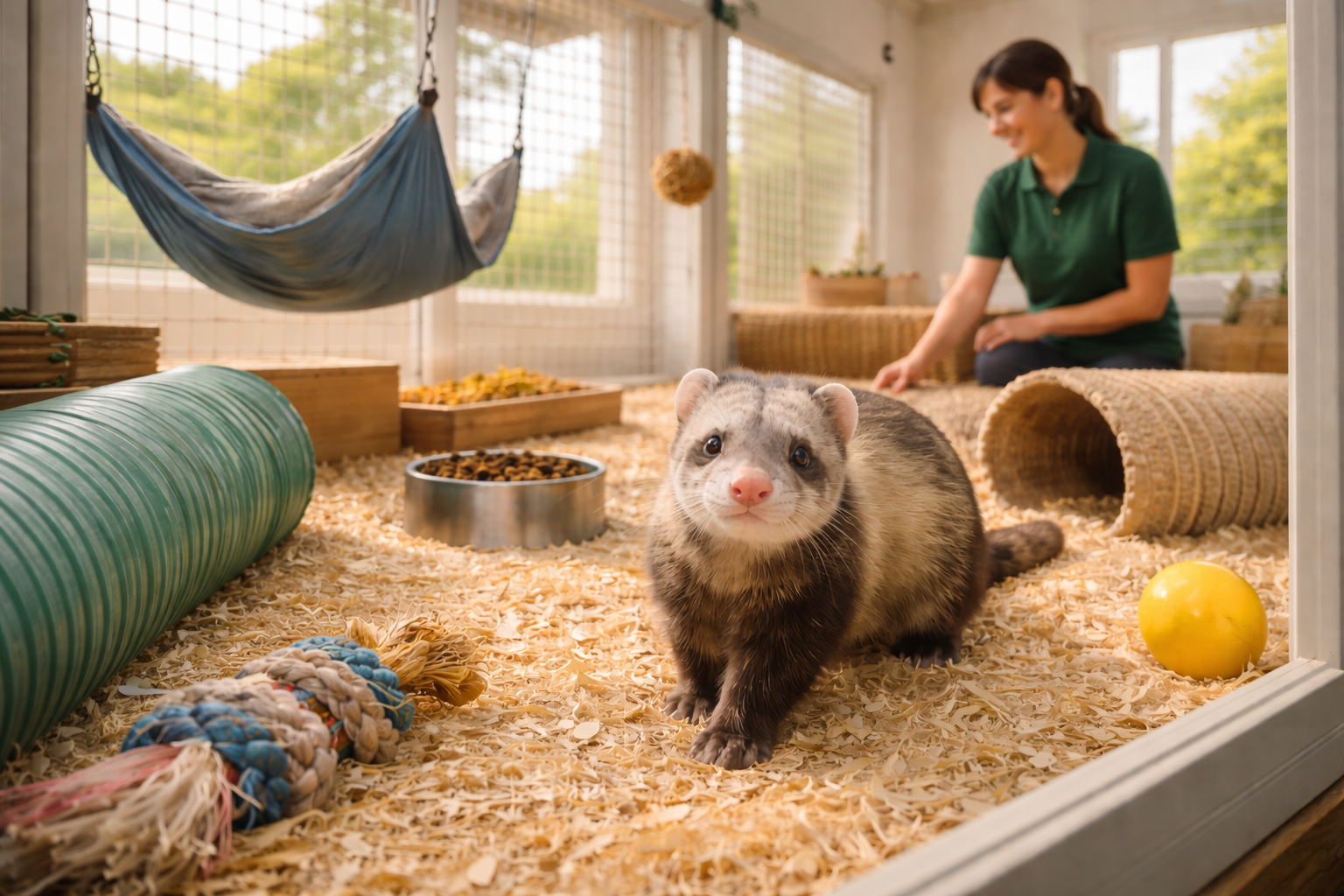
Specialist ferret boarding in the UK is limited — most mainstream kennels don't accept ferrets, so you're looking at small animal specialists, ferret rescues that offer boarding, and dedicated exotic pet facilities. Availability varies hugely by region, and advance booking is essential.
Key Takeaways
- Expect to pay £7–15 per day for a single ferret, with additional ferrets from the same household usually at reduced rates
- Specialist facilities are scarce — coverage is patchy across the UK, with significant gaps in many regions
- Bring your ferret's usual food — most facilities require it to prevent digestive upset during the transition
- Chronic conditions usually accepted — adrenal disease and insulinoma are fine with proper medication. Contagious conditions (fleas, mites, ECE) will prevent boarding
Where to Find Ferret Boarding
Ferret boarding clusters around areas with active ferret communities and specialist vet support. Some facilities, such as Blue Ferret Boarding near Crook in the North East, specialise exclusively in ferret care with outdoor accommodation and secure exercise areas. Others, like Marley's Ferret Rescue, combine rescue work with a boarding service.
Beyond a handful of dedicated providers, many small animal boarding facilities in areas like the East Midlands accept ferrets alongside rabbits and guinea pigs. Coverage remains patchy though — if you're outside an area with an established ferret community, you may need to travel or arrange in-home care instead.
Check Tailstays to see if there are boarding options near you that accommodate ferrets.
What Professional Ferret Boarding Includes
Most specialist facilities use outdoor accommodation with weatherproof shelters and secure exercise areas. Pens typically measure at least 6x4 feet for a pair, with height for climbing and multi-level housing with sleeping boxes, tunnels, and enrichment.
Daily care includes multiple checks (morning, afternoon, and evening), feeding schedules that accommodate ferrets' need for frequent small meals, and exercise periods in secure play areas. Experienced carers monitor eating habits, toilet behaviour, and general alertness.
Bonded ferret pairs or groups are housed together to maintain social bonds. Facilities will separate them if stress or aggression develops during the stay.
Questions to Ask a Ferret Boarding Facility
- How often are ferrets fed, and can you accommodate their usual diet?
- Are ferrets handled daily, and how much out-of-cage time do they get?
- What happens if a ferret stops eating? (This can become a medical emergency within 24 hours)
- How are ferrets housed separately from predator and prey species?
- What's your emergency vet protocol — do you use a vet experienced with ferrets?
- Can bonded groups stay together in the same accommodation?
- What experience do your staff have with ferret-specific health conditions?
A knowledgeable provider will answer these confidently and ask their own questions about your ferret's temperament, diet, and medical history.
Pricing
Based on typical UK pricing, specialist ferret boarding costs around £7–10 per day for a single ferret, with additional household ferrets often at reduced rates (around £3 per day each). This tiered structure is common across dedicated providers.
Small animal boarding facilities that accept ferrets alongside other species typically charge £10–15 per day, with less favourable multi-ferret rates. Premium facilities with veterinary support or indoor accommodation may charge £15–20 per day.
Medication administration usually costs an extra £2–5 per day. Emergency vet costs are typically the owner's responsibility.
Health Requirements
Pre-boarding health checks typically include visual inspection for parasites, coat condition assessment, and evaluation of alertness and appetite. Some facilities require a recent veterinary certificate for extended stays.
Conditions that prevent boarding: fleas, mites, respiratory infections, and ECE (Epizootic Catarrhal Enteritis) — anything contagious.
Conditions usually accepted: adrenal disease and insulinoma, provided you supply medications and detailed care instructions. Experienced ferret facilities have protocols for managing these common conditions.
Distemper vaccination is commonly required. Check with your specific facility, as requirements vary.
It's worth noting that ferret boarding generally isn't covered by the 2018 Regulations in England, which primarily apply to dogs and cats. This doesn't mean standards are lower — many specialist facilities maintain high care standards voluntarily — but there's no mandatory inspection regime to fall back on.
Frequently Asked Questions
Can ferrets board alongside other small animals?
Most facilities house ferrets separately from rabbits, guinea pigs, and other small animals. Ferrets are natural predators and their presence can cause anxiety in prey species, even when physically separated.
How far in advance should I book?
At least 2–4 weeks for most periods, with 6–8 weeks recommended for school holidays and summer. Limited specialist facilities mean availability fills quickly.
What should I bring for my ferret's stay?
Their usual food (to prevent digestive upset), favourite toys or bedding for comfort, any medications with detailed instructions, and your vet's emergency contact details.
Do ferret boarding facilities need to be licensed?
Ferret boarding generally isn't covered by the 2018 Regulations in England, which primarily apply to dogs and cats. Many specialist facilities maintain high care standards voluntarily, but there's no mandatory inspection regime, so your own research matters more.