

Your dog is staring at your ice cream with absolute conviction that they deserve some. They probably shouldn’t have it. Most adult dogs are lactose intolerant, ice cream is packed with sugar and fat, and some ingredients, xylitol, chocolate, raisins, are genuinely dangerous.
A single lick of plain vanilla won’t send most dogs to the vet. But there are much better ways to give your dog a cold treat on a hot day.
Key Takeaways
- Most adult dogs are lactose intolerant and struggle to digest dairy products
- Ice cream’s high sugar and fat content contributes to obesity, diabetes, and pancreatitis over time
- Xylitol, chocolate, and raisins in ice cream can be life-threatening, even in small amounts
- Commercial dog ice cream and homemade frozen treats are safer alternatives
- A small lick of plain vanilla is unlikely to cause serious harm, but it’s not a good habit
- Contact your vet immediately if your dog eats ice cream containing xylitol, chocolate, or alcohol
Why Ice Cream Is a Problem for Dogs
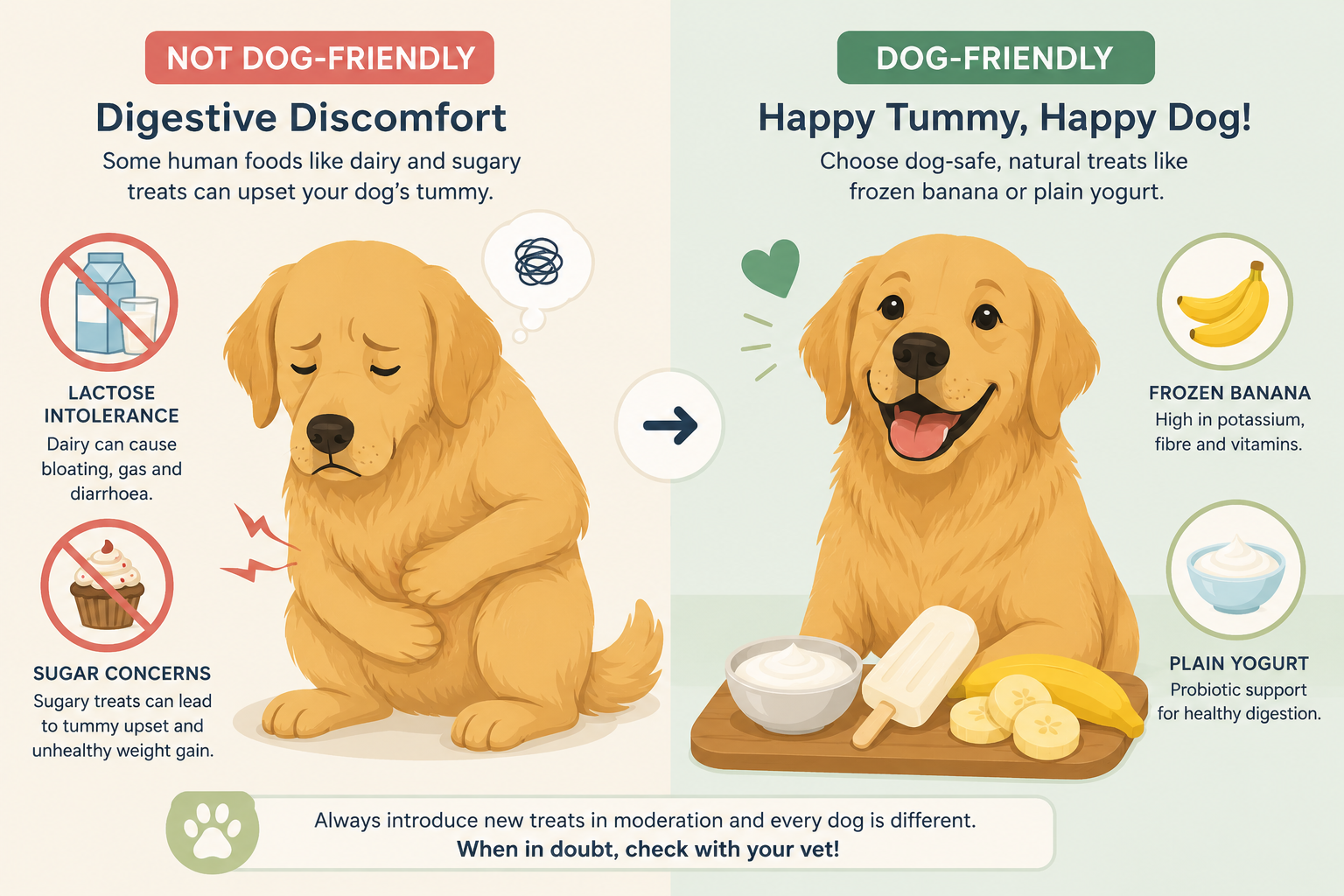
Lactose Intolerance
Most adult dogs lose much of their ability to produce lactase, the enzyme needed to break down lactose, after weaning. This is normal. Wild canines don’t continue drinking milk after puppyhood, so there’s no evolutionary reason to keep producing the enzyme.
Individual tolerance varies. Some dogs handle small amounts of dairy without obvious symptoms; others get immediate digestive distress. There’s no reliable way to predict your dog’s tolerance without careful observation, and the experiment isn’t worth the clean-up.
Sugar and Fat Content
A typical 100g serving of ice cream contains 15-25g of sugar and 10-15g of fat, far more than dogs should consume as treats. Even a small portion contributes significantly to daily calorie intake, particularly for smaller breeds where a few spoonfuls can represent a substantial percentage of their daily requirement.
Regular consumption increases the risk of obesity, which affects a large proportion of UK dogs. Excess weight strains joints and organs, and high-fat foods can trigger pancreatitis, a painful and potentially serious condition.
Toxic Ingredients
Several common ice cream ingredients are genuinely dangerous. Xylitol, an artificial sweetener found in sugar-free varieties, causes rapid insulin release that can lead to life-threatening hypoglycaemia within 10-60 minutes. Even small amounts can be fatal.
Chocolate ice cream contains theobromine, which dogs metabolise far more slowly than humans. Dark chocolate flavours pose the highest risk, but even milk chocolate varieties can cause toxicity in smaller dogs.
Rum and raisin is a double threat. Raisins can cause kidney failure in dogs, and alcohol affects them much more severely than humans due to their smaller body size. Mint chocolate chip and any alcohol-infused flavours should also be kept well away.
Safe Frozen Alternatives
Commercial Dog Ice Cream
Several UK companies produce ice cream specifically formulated for dogs. Jude’s offers plant-based dog ice cream in flavours like strawberry, apple and banana, using ingredients that are safe for canine consumption.
These products avoid dairy, use dog-safe sweeteners, and are portion-controlled. They’re designed as occasional treats, not meal replacements.
Homemade Frozen Treats
Making your own gives you complete control over ingredients. Frozen banana slices are an excellent starting point, naturally sweet, full of potassium, and most dogs love the creamy texture.
For dogs who tolerate dairy, plain unsweetened Greek yoghurt frozen with dog-safe fruit works well. Blueberries, apple chunks (remove seeds), or small pieces of watermelon all freeze nicely. Introduce new ingredients gradually to monitor for reactions.
Pureed pumpkin mixed with xylitol-free peanut butter makes another popular option. Freeze the mixture in ice cube trays or stuff it into Kong toys for a longer-lasting activity.
Zero-Calorie Options
Plain ice cubes give many dogs the cooling satisfaction they’re after without any calories at all. Some dogs enjoy flavoured ice made from low-sodium bone broth or diluted coconut water.
For dogs on weight management plans, these are ideal, cooling relief and mental stimulation without compromising their diet. Always supervise dogs with ice to prevent choking on large pieces.
When to See the Vet
After a Small Amount
If your dog has had a few licks of plain vanilla, don’t panic. You might see loose stools, mild gas, or stomach rumbling within 2-6 hours. These symptoms typically resolve within 24 hours without intervention.
Keep fresh water available and stick to their regular diet for a day or two. No need to call the vet unless symptoms persist.
After a Large Amount or Toxic Ingredients
If your dog has eaten a significant portion (more than a few spoonfuls) or any variety containing toxic ingredients, watch for persistent vomiting, severe diarrhoea, lethargy, difficulty breathing, or unusual behaviour.
Xylitol ingestion may cause weakness, loss of coordination, or collapse. Chocolate toxicity produces restlessness, increased heart rate, and tremors. Both need urgent veterinary attention.
Emergency Signs
Contact your vet immediately if your dog shows severe distress, or if you know they’ve consumed ice cream containing chocolate, xylitol, or alcohol. Don’t wait for symptoms to develop with known toxic exposures, early treatment makes a significant difference.
Also call your vet if mild digestive symptoms persist beyond 24 hours, or if your dog becomes dehydrated from repeated vomiting or diarrhoea. Puppies, senior dogs, and those with existing health conditions warrant closer monitoring and a lower threshold for seeking help.
Frequently Asked Questions
Can puppies eat ice cream?
No. Puppies have more sensitive digestive systems than adult dogs and are at higher risk of hypoglycaemia from sugar content. Their reactions to new foods are less predictable, making ice cream particularly risky.
Is vanilla ice cream safer than other flavours?
Plain vanilla poses fewer toxic risks than chocolate or fruit varieties, but it still contains lactose, sugar, and fat that can upset your dog’s stomach. The vanilla flavouring itself isn’t harmful, but the base ingredients remain problematic for most dogs.
What about vegan ice cream?
Vegan ice cream eliminates lactose concerns but may contain artificial sweeteners, high sugar, or toxic nuts. Some plant-based varieties use coconut milk, which can still cause digestive upset. Always check the full ingredient list before sharing.
How do I know if my dog is lactose intolerant?
Most dogs show signs within 2-6 hours of consuming dairy: loose stools, gas, bloating, stomach rumbling, or mild vomiting. If you want to test tolerance, try a tiny amount of plain yoghurt rather than ice cream, yoghurt contains less lactose and fewer problematic ingredients.
Are there any dogs that can safely eat regular ice cream?
Even dogs who don’t show immediate digestive symptoms are still consuming unnecessary sugar and calories. No dog benefits from regular ice cream, regardless of their tolerance level. Dog-specific frozen treats are always the better choice.