
Kennel cough vaccination is a standard requirement at most UK boarding facilities — but the timing catches plenty of owners off guard. Get the vaccine too late, and your dog won't be protected in time for their stay. Here's what you need to know before booking.
Key Takeaways
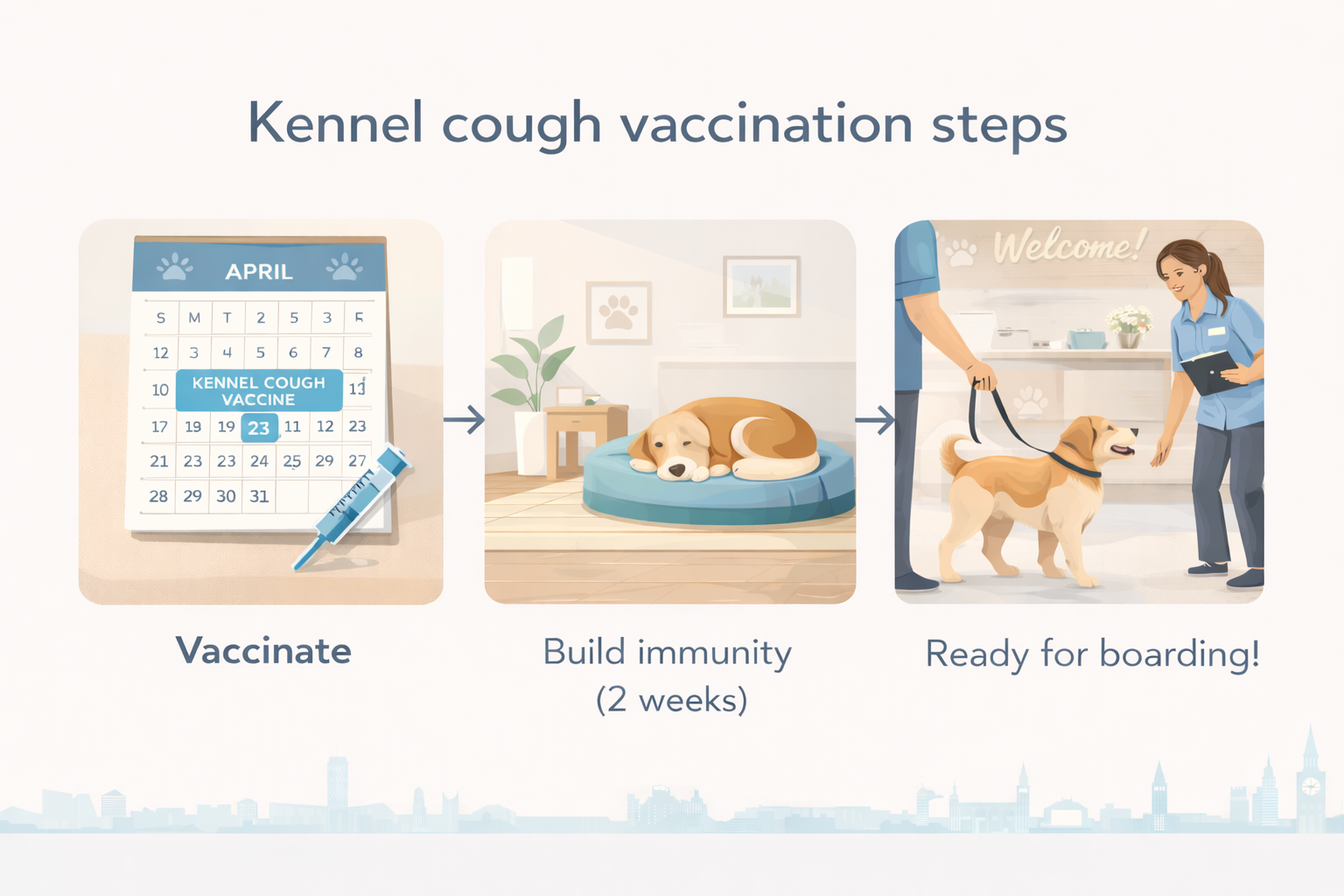
- Timing matters: Nasal vaccines need 72 hours to take effect; injectable versions need about 2 weeks. Book your vet appointment 4–6 weeks before boarding.
- Vaccination reduces risk but isn't bulletproof: Multiple organisms cause kennel cough, and current vaccines target the most common ones. Vaccinated dogs who catch it typically recover faster with milder symptoms.
- Most boarding facilities won't accept unvaccinated dogs — and some require longer waiting periods than the minimum, so check their specific policy early.
- Budget £20–40 for the vaccination itself, depending on your practice and vaccine type.
What Is Kennel Cough?
Kennel cough (properly called acute infectious tracheobronchitis) causes a distinctive dry, hacking cough — some owners describe it as sounding like a goose honk. It's airborne and spreads easily wherever dogs are in close proximity: boarding kennels, daycare, training classes, even the park.
Boarding environments are higher risk because of concentrated dog populations, shared airspace, and common surfaces. That's why facilities insist on vaccination — not because it guarantees your dog won't catch it, but because it significantly reduces the chance and severity.
Vaccination: Types, Timing, and Cost
Two main vaccine types are available in the UK:
Nasal vaccine — squirted up the nose, protection kicks in within about 72 hours. Some dogs sneeze or have mild nasal discharge afterwards, but side effects are generally short-lived.
Injectable vaccine — a standard injection, but needs approximately 2 weeks to become effective. Often combined with other routine boosters.
Annual boosters are standard. If your dog's last kennel cough vaccine was more than 12 months ago, they'll need a fresh course rather than just a booster. Budget £20–40 depending on your vet practice and vaccine type.
The safest approach: book your vet appointment 4–6 weeks before boarding. This gives plenty of buffer if your dog has a reaction, if the practice is busy, or if your facility requires a longer waiting period than the minimum.
What Boarding Facilities Require
Contact your chosen facility at least 2 weeks before booking to confirm their specific requirements. Most kennels require kennel cough vaccination, but the details vary:
- Some accept dogs 72 hours after nasal vaccination; others insist on 2 weeks regardless of vaccine type
- Most want to see the vaccination certificate and may contact your vet to verify
- Some require all core vaccinations (distemper, hepatitis, parvovirus, parainfluenza) alongside kennel cough
Get the requirements in writing. If you turn up on drop-off day without valid documentation, reputable facilities will turn you away — no exceptions, even for regulars.
Compare boarding facilities near you on Tailstays to find options that suit your dog's needs.
What If Your Dog Gets Kennel Cough?
Before boarding: If your dog develops any respiratory symptoms — persistent coughing, retching, nasal discharge — cancel the booking immediately. Boarding a symptomatic dog risks spreading infection to every other animal in the facility.
After boarding: Most dogs recover within 1–3 weeks without specific treatment. Keep them rested, provide fresh water, and avoid other dogs during recovery. Contact your vet if symptoms worsen, persist beyond three weeks, or if your dog stops eating.
Frequently Asked Questions
Can my dog get kennel cough even with vaccination?
Yes. Multiple organisms cause kennel cough, and vaccines target the most common bacterial cause (Bordetella bronchiseptica) plus some viral components. Vaccinated dogs who do catch it typically have milder symptoms and recover faster.
How long after vaccination can my dog be boarded?
It depends on the vaccine type. Nasal vaccines typically provide protection within 72 hours; injectable vaccines need about 2 weeks. Always check your facility's specific requirements — some impose longer waiting periods.
Can humans catch kennel cough?
Human infection is extremely rare and typically only affects people with severely compromised immune systems. The organisms are generally species-specific, but basic hygiene when caring for an infected dog is still sensible.
Are some boarding facilities higher risk than others?
Risk varies with ventilation quality, cleaning protocols, space between dogs, and vaccination enforcement. Facilities that require proof of vaccination, isolate symptomatic dogs promptly, and maintain good hygiene present lower risk.