
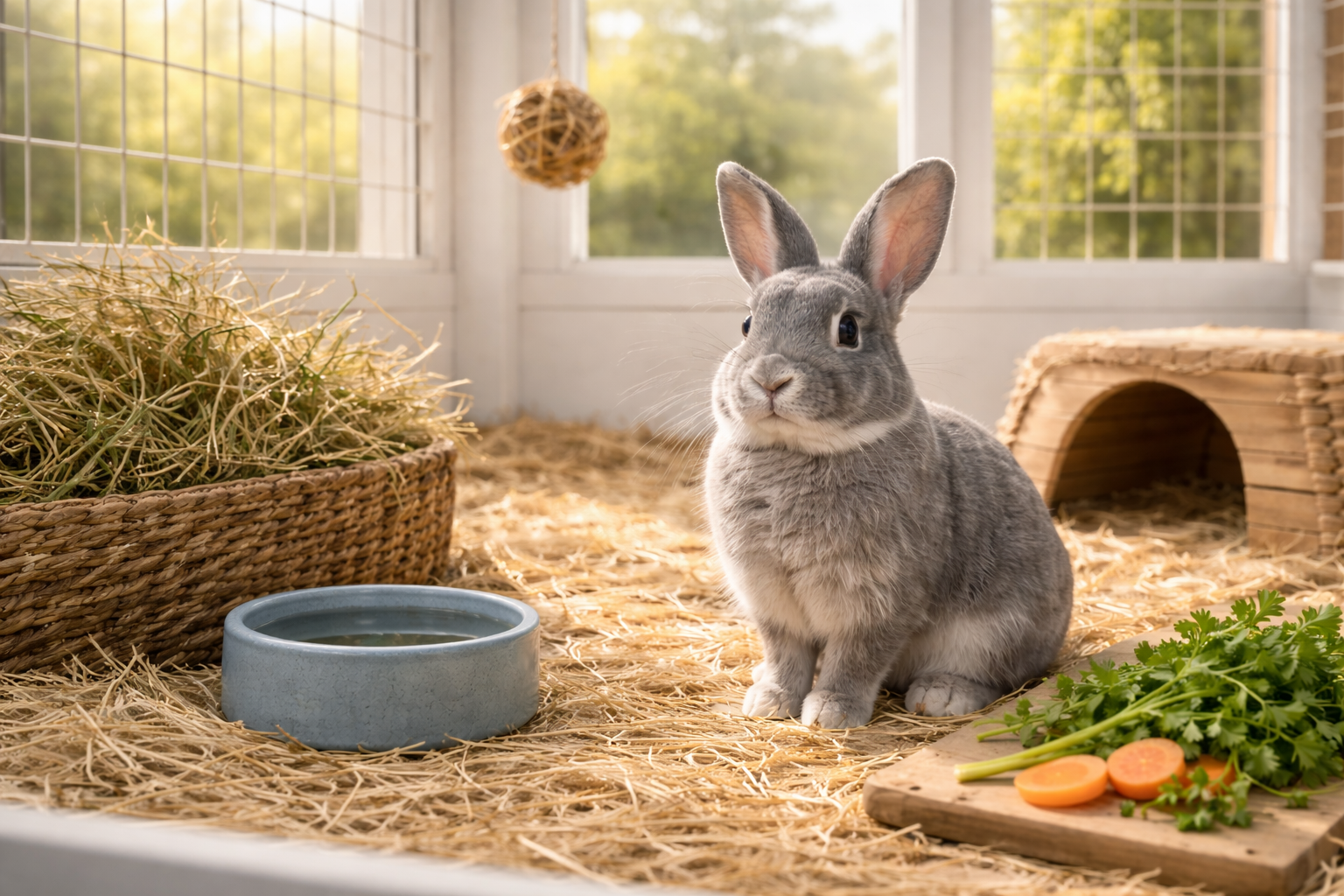
Finding safe rabbit boarding in the UK takes more homework than booking a kennel for a dog. Rabbit boarding generally isn't regulated under the 2018 licensing laws that cover dogs and cats, so there's no star rating system or mandatory inspections to fall back on. Your research is the safety net.
Key Takeaways
- Vaccination first: Most facilities require up-to-date myxomatosis and RVHD2 vaccinations, with at least 8 days between the jab and boarding
- Pricing varies widely: Standard hutch boarding from around £6.50/day; luxury room boarding up to £16/day
- Specialist facilities are safest: Rabbit-only boarders like Hopit Holidays keep predator species completely separate
- No licensing requirement: Rabbit boarding in England generally isn't covered by the 2018 Regulations, making your own due diligence essential
Types of Rabbit Boarding
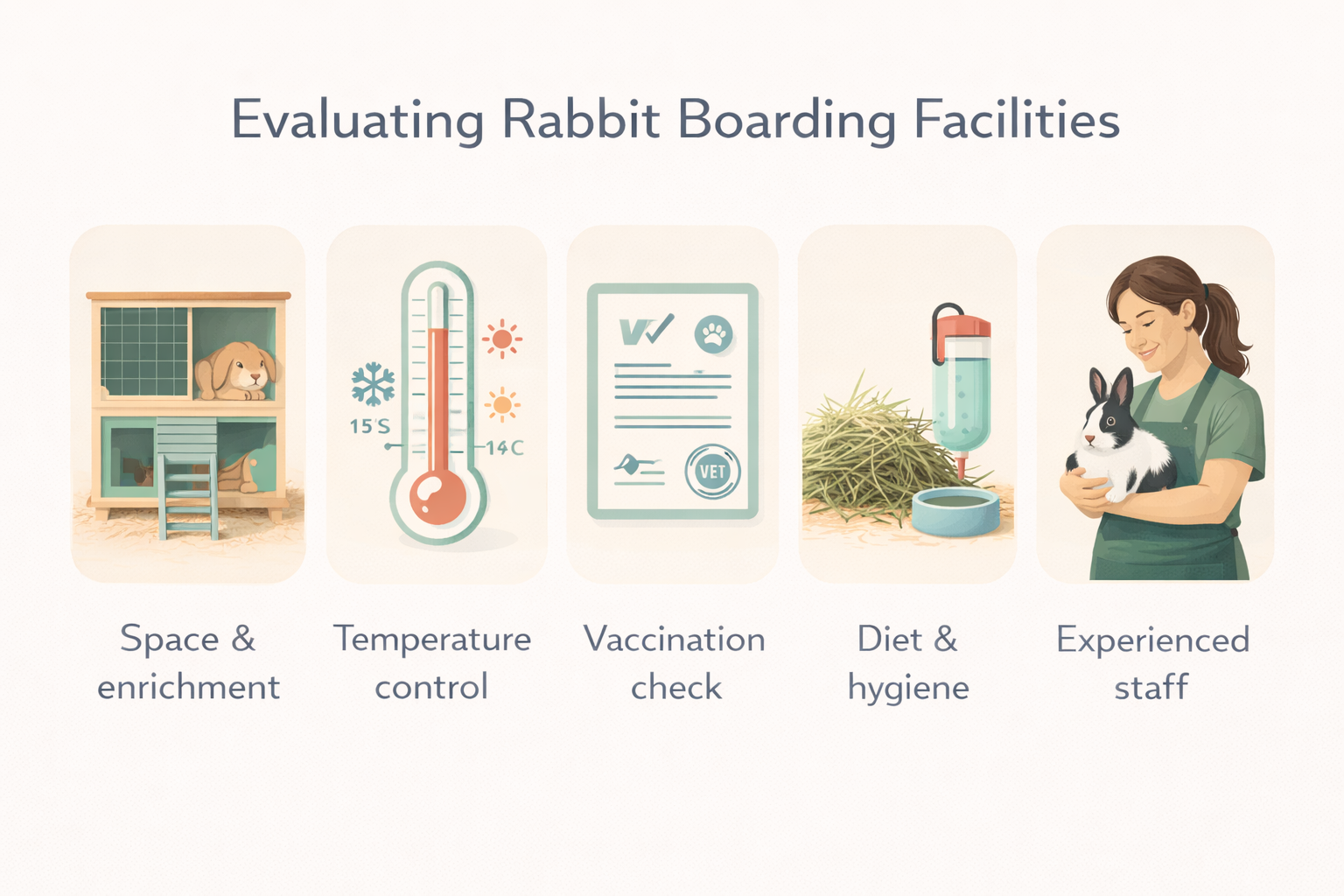
Luxury room boarding typically includes a large indoor space (often 10x4 feet or bigger), an attached secure outdoor run with 24-hour access, multiple levels with hiding areas, and sometimes CCTV so you can check in remotely. According to Doggies n Moggies, expect around £16 per day for this level of accommodation.
Standard hutch boarding offers traditional hutch accommodation with separate exercise periods in shared runs. More basic, but perfectly adequate for rabbits used to hutch living. Based on typical UK pricing, standard boarding starts from around £6.50 per day, with additional rabbits in shared accommodation typically £2-5 extra.
Specialist vs Multi-Pet Facilities
Specialist rabbit-only facilities are worth seeking out. Hopit Holidays, for example, explicitly states "no cats, dogs or ferrets", creating a predator-free environment that makes a genuine difference for prey animals. These providers tend to have deeper rabbit knowledge and species-appropriate enrichment.
Multi-pet facilities can work, but ask pointed questions: How are rabbits kept separate from dogs and cats? Are rabbit areas soundproofed from barking? What's the protocol if a dog escapes into the rabbit area? Rabbits are highly sensitive to predators and can suffer severe stress from nearby dogs or cats.
What to Look For on a Visit
Phone the facility before visiting. Experienced rabbit carers will ask about your rabbit's personality, diet, and health history, not just confirm dates and take payment.
On your visit, check:
- Cleanliness, no strong ammonia smells, fresh water, clean bedding
- Security, predator-proof fencing, secure latches, escape-proof enclosures
- Space, room to hop and stretch, separate areas for eating and toileting
- Enrichment, toys, hiding places, different levels to explore
- Staff handling, confident, gentle, genuinely interested in individual rabbits
Questions to Ask Before Booking
- What vaccinations do you require, and how far in advance of boarding?
- Can bonded pairs stay together in the same accommodation?
- How are rabbits kept separate from dogs, cats, and other predators?
- What's your emergency vet protocol, and which practice do you use?
- How many times per day are rabbits checked and fed?
- What are the exact dimensions of the accommodation my rabbit will have?
- Can I visit the facility before committing to a booking?
Reputable providers answer these confidently and often ask questions back about your rabbit's needs. Defensiveness or vague answers are a warning sign.
Red Flags
Predator and prey housed together. Any facility that keeps rabbits in the same area as dogs or cats is a non-starter, regardless of what barriers they claim to have.
No vaccination requirements. RVHD2 and myxomatosis are too serious to ignore. A facility that doesn't ask for certificates isn't taking biosecurity seriously.
Won't let you visit. Legitimate boarding facilities are proud of their setup. Refusal to show you around before booking suggests something to hide.
Vague emergency procedures. "We'll figure it out" isn't an answer. They should have an established relationship with a vet experienced in rabbit care and a clear protocol for contacting you.
Extremely low prices. Rabbit boarding under £5 per day rarely provides adequate attention, space, or emergency preparedness.
Find rabbit boarding options on Tailstays to compare facilities in your area.
Vaccination Requirements
Most reputable facilities require current vaccinations against RVHD2 (Rabbit Viral Haemorrhagic Disease 2) and myxomatosis. Most UK vets now use Nobivac-RHD+, which covers both in one injection.
The critical detail: allow at least 8 days between vaccination and boarding for immunity to build. As Hopit Holidays notes, some facilities require up to 14 days for initial vaccinations. Plan your vet appointment 2-3 weeks before boarding dates to be safe.
You'll need to show a certificate with the vaccination date, vaccine type, vet practice stamp, and your rabbit's identification details. Turn up without valid certificates and reputable facilities will turn you away.
Frequently Asked Questions
How much does rabbit boarding cost in the UK?
Based on typical UK pricing, expect to pay around £6.50 per day for standard hutch boarding or up to £16 per day for luxury room boarding. Additional rabbits in shared accommodation typically cost £2-5 extra. Prices vary by location and facility quality.
Can bonded rabbit pairs stay together?
Yes, and they should. Separating bonded rabbits causes severe stress and can break the bond permanently. Most facilities accommodate pairs in shared accommodation for a small additional daily charge.
Does rabbit boarding need to be licensed in the UK?
In England, rabbit boarding generally isn't covered by the 2018 Regulations, which primarily apply to dogs and cats. Wales has separate legislation with similar scope. This makes your own research and facility visits even more important.
What if my rabbit gets sick during boarding?
Reputable facilities have established relationships with local vets experienced in rabbit care and clear protocols for health concerns. They should contact you immediately and seek veterinary care if needed. Always confirm their emergency procedures before booking.