
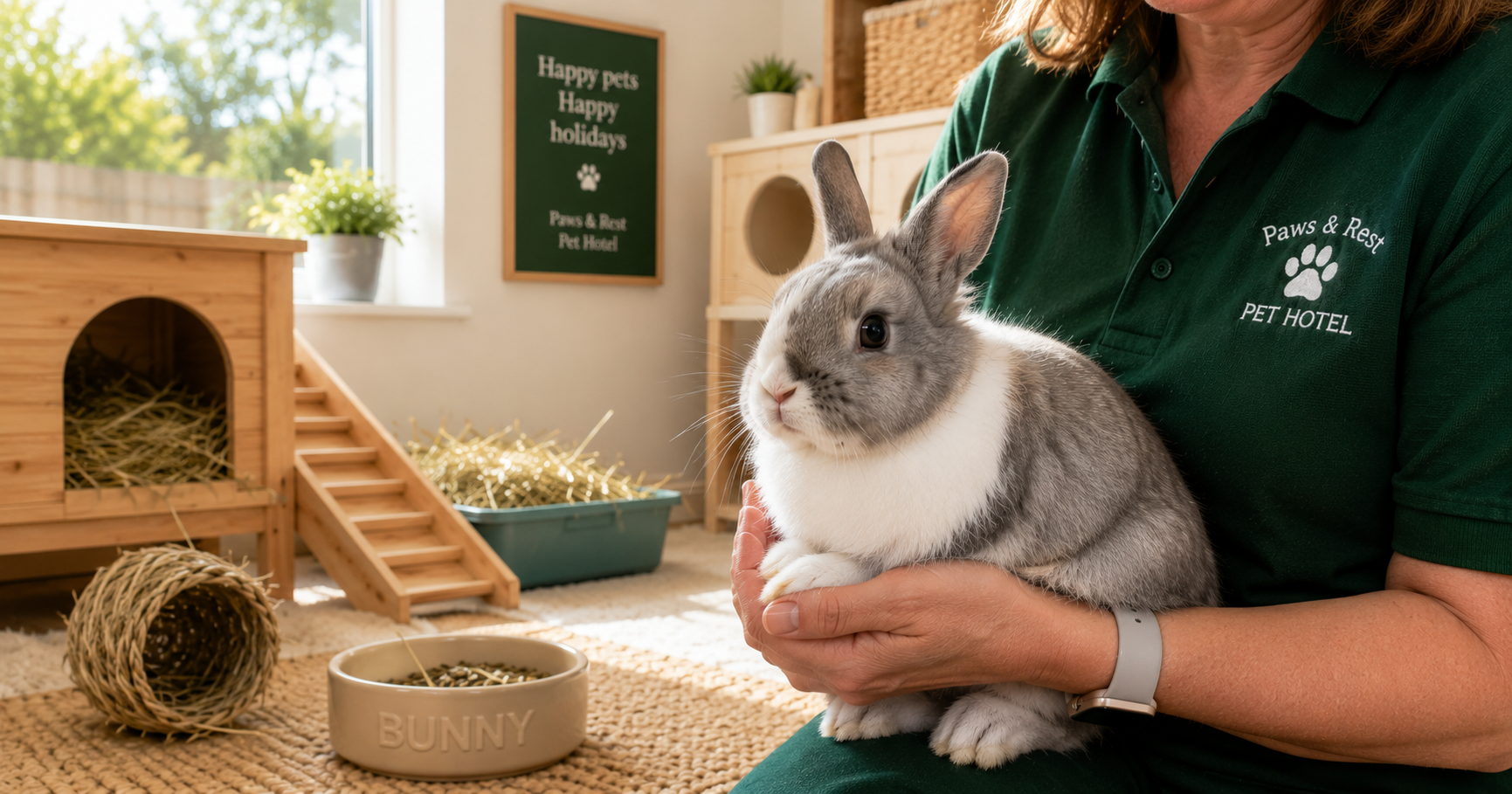
Small pet boarding is a gamble if you don’t know what to look for. Your rabbit needs daily exercise space, flystrike checks in summer, and unlimited hay. Your guinea pig needs vitamin C in every meal and a companion to share the stay with. A general boarding facility that treats small animals as an afterthought won’t provide any of this.
Unlike dog and cat boarding, small animal boarding isn’t regulated in the UK. No licensing, no inspections, no star ratings. Quality varies enormously, from basic hutch storage to genuinely excellent specialist care.
Key Takeaways
- Small pet boarding is unregulated, researching providers thoroughly is essential
- Look for Rodent Health Advisor (RHA) certification or exotic animal care qualifications
- Costs range from £3-6/day for basic hutch boarding to £16+/day for specialist room setups
- Daily flystrike monitoring is non-negotiable for rabbit boarding, especially in summer
- Guinea pigs need vitamin C supplementation and shouldn’t be separated from bonded cage mates
- Book early, specialist small pet boarding has far less capacity than dog and cat facilities
What Your Small Pet Needs
Species-Specific Requirements
Rabbits are natural athletes who need substantial exercise space and daily opportunities to run, stretch, and explore. They’re social animals that often do better in pairs, though introducing unfamiliar rabbits requires careful management. Our guide to finding safe rabbit boarding covers the rabbit-specific details in depth.
Guinea pigs are highly social and can genuinely pine when separated from their cage mates. They also can’t produce vitamin C naturally, a boarding facility that doesn’t know this isn’t equipped for guinea pig care. For a broader overview, our guide to small animal boarding in the UK covers all species.
Hamsters, gerbils, and mice have different needs again. Most are solitary (except gerbils), primarily nocturnal, and natural escape artists who need secure accommodation with deep bedding for burrowing.
Indoor vs Outdoor Accommodation
Indoor boarding costs more but offers better temperature control and security. Outdoor setups can work for rabbits and guinea pigs in suitable weather, but you need assurance about predator-proofing and shelter quality.
Consider your pet’s current setup. An indoor rabbit suddenly placed in an outdoor hutch may struggle to adapt, especially in colder months. Consistency matters for stress-sensitive prey animals.
Bonded Pairs and Groups
If you have bonded animals, confirm the facility can house them together. Separating bonded guinea pigs or rabbits causes genuine distress. However, introducing your single pet to strangers during boarding is rarely advisable, stress levels are already elevated.
Finding the Right Facility
Qualifications to Look For
The gold standard is Rodent Health Advisor (RHA) certification through the British Association of Rodentologists. This demonstrates genuine small animal expertise. Some providers hold Level 3 Diploma in Small Animal Care or exotic animal care qualifications.
Ask specifically: are the people who’ll actually handle your pet trained in small animal care? A business owner with qualifications but untrained daily staff is a red flag.
Credentials and Insurance
Some boarding services display veterinary inspection certificates, a good sign. Public liability insurance isn’t legally required but reputable providers carry it. Don’t just accept claimed qualifications at face value, ask to see certificates and references.
Pricing and What It Includes
Costs vary dramatically. Basic hutch boarding for guinea pigs starts around £3-6 per day. Specialist room setups for rabbits with exercise space can reach £16+ per day, plus additional charges for companions. Providers with advanced qualifications like RHA certification typically charge at the higher end.
Ask what’s included in the daily rate. Some providers bundle bedding, basic food, and daily health checks. Others charge separately for each. The cheapest option rarely provides the specialist care small pets require.
Questions to Ask
Daily Care and Exercise
A quality provider should describe different exercise routines for rabbits versus guinea pigs, explain feeding schedules, and detail their cleaning protocols. Ask about staff-to-animal ratios and how much individual attention each pet receives.
Some facilities offer multiple daily play sessions. Others provide minimal interaction beyond feeding and cleaning. The difference matters for social animals stuck in unfamiliar surroundings.
Health Monitoring
Daily flystrike checks are non-negotiable for rabbit boarding, especially during warmer months. Guinea pigs need monitoring for respiratory issues and vitamin C deficiency signs. Ask providers to walk you through their health monitoring routine.
What would they do if they noticed changes in appetite, behaviour, or droppings? Their answer should show both knowledge and clear escalation procedures, not a vague “we’d keep an eye on it.”
Emergency Arrangements
Every facility should have arrangements with a vet experienced in exotic animals. Small pet emergencies escalate fast. Ask for specific veterinary contacts and whether they’re available out of hours. Who makes the decision to seek vet care, and will they contact you first?
Red Flags
Walk away from any provider who claims all small pets have the same needs, can’t explain species-specific care, won’t show you the facilities, can’t provide veterinary references, or lacks insurance. Be wary of anyone more interested in taking your booking than understanding your pet’s specific needs.
Preparing for the Stay
Before You Go
If possible, arrange a brief trial visit. Some providers offer “taster sessions” where your pet spends a few hours getting familiar with the environment. Maintain your pet’s routine in the weeks before boarding, introduce any diet changes well before departure, not during an already stressful transition.
Schedule a health check with your exotic vet within a week of boarding. This provides a baseline if any issues arise during the stay.
What to Pack
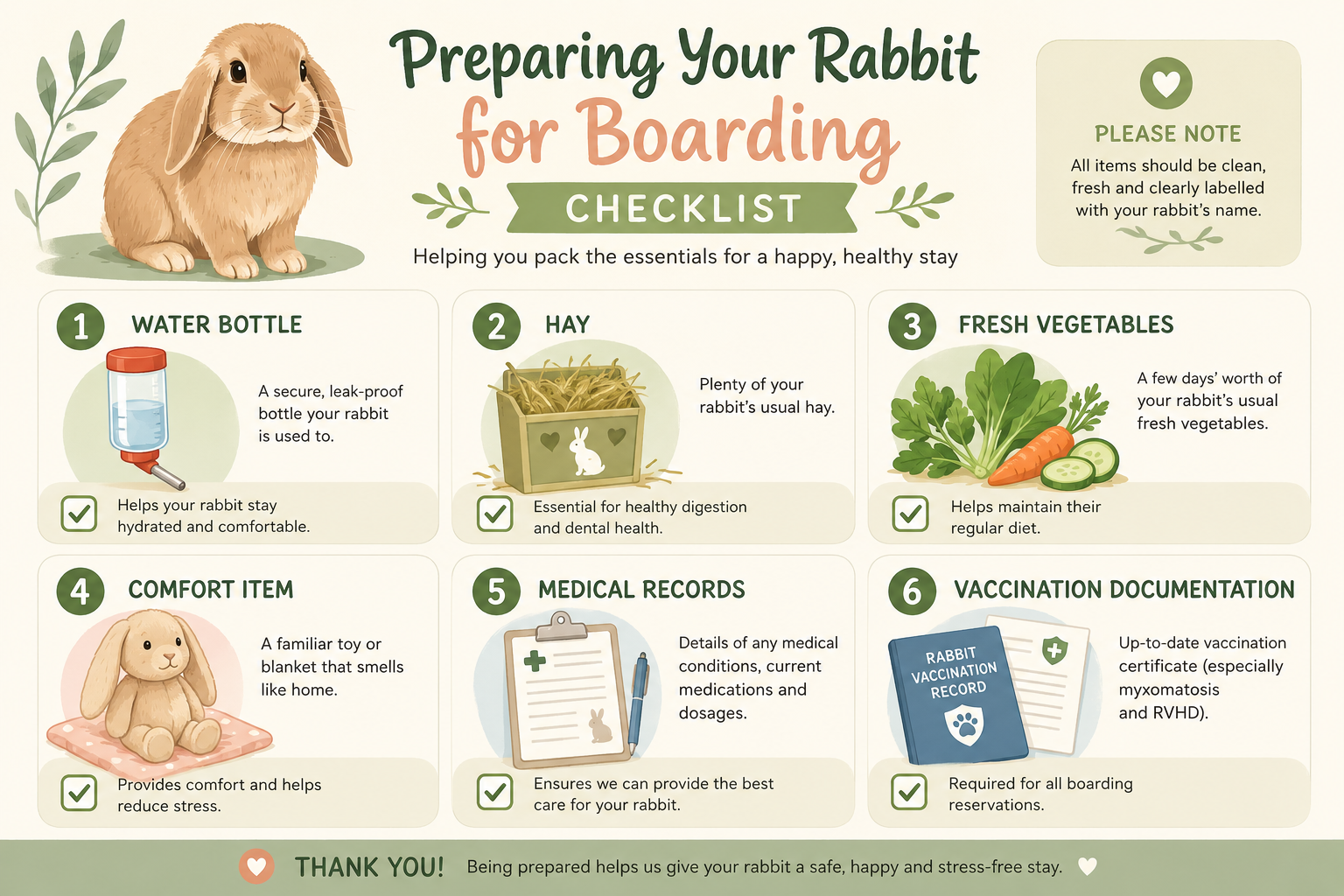
Bring familiar bedding that smells like home, favourite toys or hiding spots, and enough of their regular food for the entire stay plus a few extra days. Dietary changes cause digestive upset in small animals, so consistency matters. Our rabbit boarding packing guide has the full list.
Include detailed written care instructions: feeding times and amounts, handling preferences, behavioural quirks, your vet’s details, and the nearest emergency exotic clinic. You can browse small animal boarding options on Tailstays to compare what’s available near you.
Frequently Asked Questions
Do small pet boarding services need licences?
No. Small pet boarding is generally unregulated in the UK, unlike dog and cat boarding which requires licensing. This makes researching qualifications, insurance, and references especially important.
How much does small pet boarding cost?
Basic hutch boarding starts around £3-6 per day. Specialist room setups with exercise space and qualified staff can cost £16+ per day, plus extra for companions. Location and care level are the biggest price factors.
Can bonded pairs stay together?
Most quality providers accommodate bonded pairs, usually with an additional daily charge. Separating bonded guinea pigs or rabbits causes significant stress, any facility that suggests it doesn’t understand small animal welfare.
What qualifications should staff have?
Rodent Health Advisor (RHA) certification is the gold standard. Level 3 Diploma in Small Animal Care or exotic animal care qualifications also demonstrate genuine expertise. Ask whether the staff who’ll handle your pet are trained, not just the business owner.
How far in advance should I book?
As early as possible, especially for school holidays and summer. Specialist small pet boarding has far less capacity than dog and cat services, so popular providers book up weeks or months ahead.