
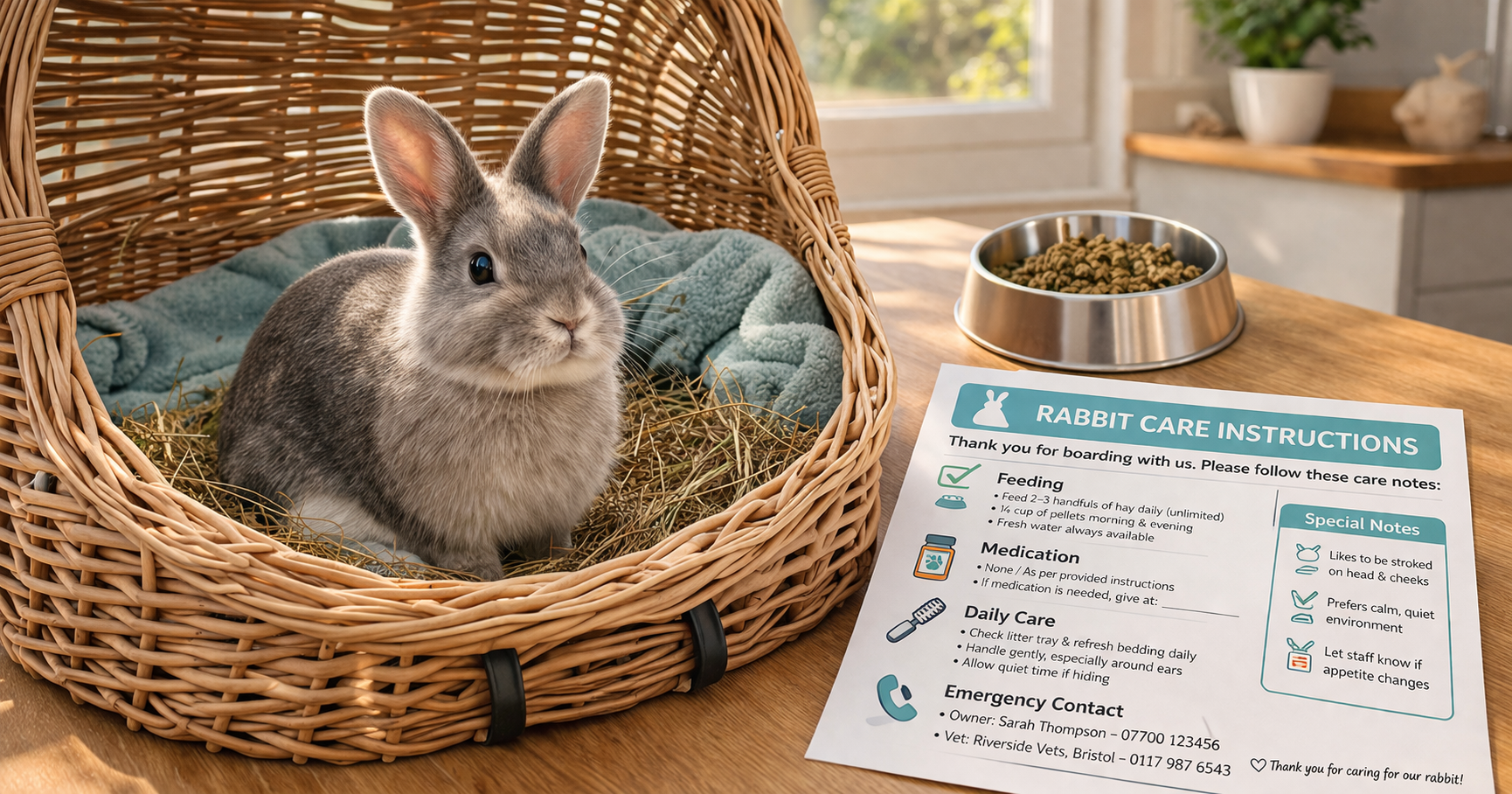
Packing for rabbit boarding is different from dogs or cats, rabbits have sensitive digestive systems, specific vaccination requirements, and stress responses that make the right items genuinely important. Get the essentials right and your rabbit will settle much faster.
Key Takeaways
- Vaccination certificates are essential: Most facilities require up-to-date myxomatosis and RVHD2 records, check timing requirements before booking
- Bring their regular food: Sudden diet changes can cause gut stasis, which is potentially life-threatening in rabbits
- One familiar item beats many: Their usual litter tray or a blanket that smells like home helps more than a bag full of toys
- Write detailed care instructions: Include behavioural quirks, "Luna hides behind her hay rack when tired, she's not unwell" prevents unnecessary worry
Quick Packing Checklist
| Item | Why It Matters | Facility Usually Provides? |
|---|---|---|
| Vaccination certificates | Required for boarding | You must bring |
| Regular pellets (full stay + 1 day) | Prevents digestive upset | Rarely, different brands |
| Hay (if picky eater) | Maintains eating habits | Usually, but quality varies |
| Current medications | Continues treatment | You must bring |
| Familiar litter tray | Smells like home, reduces stress | Sometimes, ask first |
| Comfort blanket or toy | Familiar scents aid settling | No, personal items only |
| Written care instructions | Ensures consistent routine | You must provide |
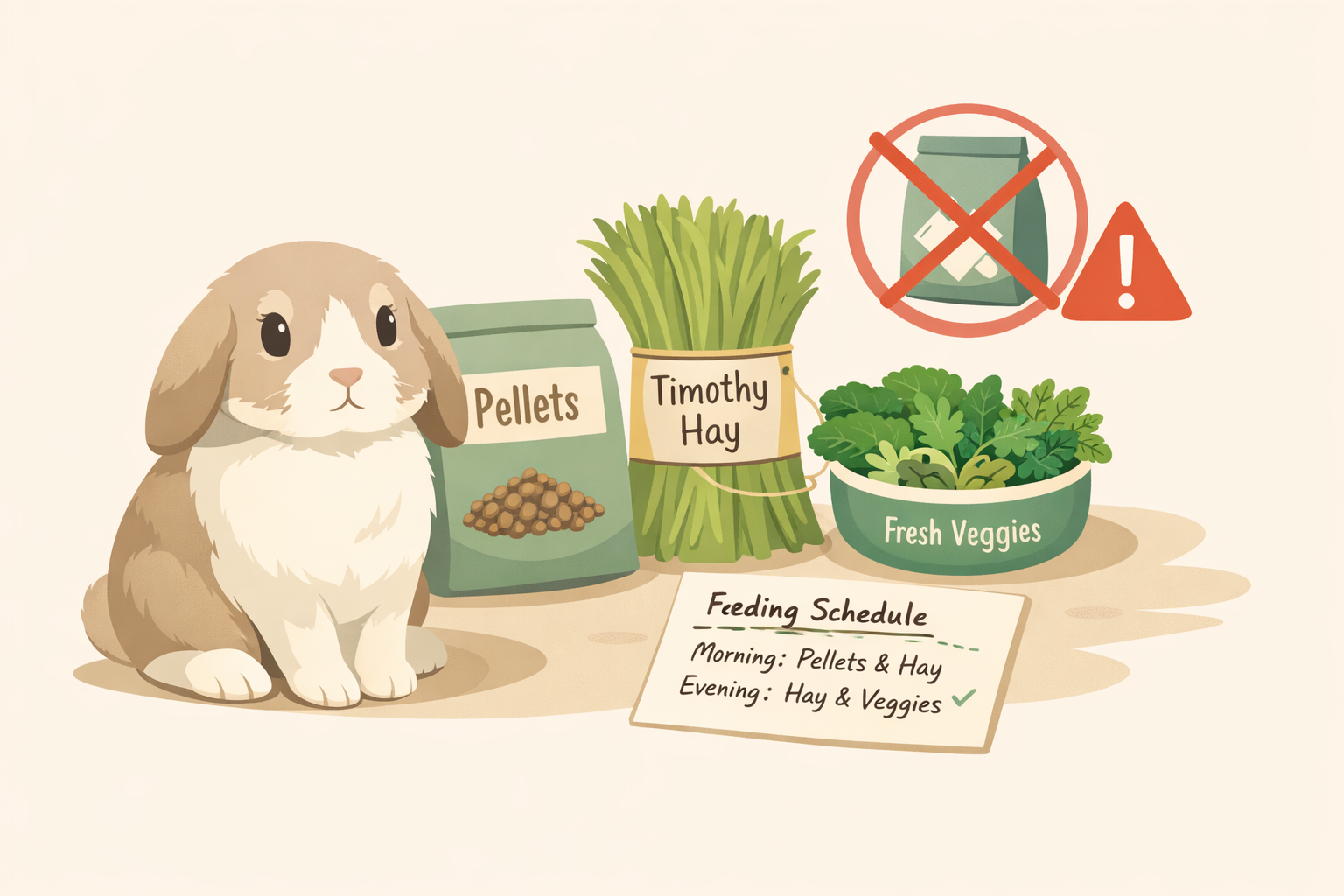
Check what your facility provides before packing, some supply everything except personal items and medications, while others expect you to bring most supplies.
Health Documents
Pack vaccination certificates showing current myxomatosis and RVHD2 coverage (most vets use Nobivac-RHD+ which covers both). Include your vet's contact details, out-of-hours number, and any medical history for ongoing conditions.
If your rabbit takes medication, bring it in original packaging with written instructions, timing, dosage, and what to do if they refuse. Include a 1-2 day buffer supply.
Food, The Most Important Thing You'll Pack
Sudden diet changes cause digestive problems in rabbits, ranging from soft stools to gut stasis, a potentially life-threatening condition. Even switching between high-quality pellet brands can trigger upset.
Bring enough of their regular pellets for the entire stay plus one extra day. If your rabbit is fussy about hay, bring their preferred type, most facilities stock Timothy hay, but picky eaters may refuse unfamiliar brands and reduce their intake.
Note whether your rabbit drinks from a bottle or a bowl, switching can reduce water intake, which is dangerous for rabbits already at risk of gut stasis. Mention this in your care instructions so staff can match their setup.
Include a list of safe vegetables and fruits they're used to eating, and any treats they get regularly.
Comfort Items
One or two familiar items work better than many:
- Their usual litter tray if litter trained, it smells like home and helps them settle
- A familiar blanket or piece of your clothing for scent
- One favourite toy (nothing too valuable in case it gets damaged)
Label everything with your rabbit's name and your contact details. Don't bring anything irreplaceable.
Care Instructions
Write these as if explaining to a knowledgeable friend. Include:
- Feeding schedule with exact portion sizes
- Litter tray cleaning frequency
- Exercise preferences and energy levels
- Signs of stress or illness specific to your rabbit
- Behavioural quirks that might seem concerning but are normal
That last point matters more than you'd think. "Max gets very excited at feeding time and might knock over his bowl, this is normal" or "Luna tends to hide behind her hay rack when tired, she's not unwell" prevents staff from worrying unnecessarily or missing genuine problems.
Provide emergency contacts in order: your mobile, a backup decision-maker, your regular vet, and the nearest emergency vet to the facility.
Common Packing Mistakes
- Bringing new or different food, even switching to a "better" brand mid-stay risks gut stasis. Stick to their exact usual pellets and hay
- Not warning staff about reduced appetite, many rabbits eat less for the first day or two in a new environment. If staff don't know this is normal for your rabbit, they may panic or miss a genuine problem
- Forgetting litter habits, if your rabbit is litter trained, not bringing their tray (or not mentioning their preferences) can cause stress and messy accommodation
- Overpacking toys, one familiar item is comforting; a bag full of options is overwhelming
- Bringing homemade food or treats, most facilities won't accept them due to liability concerns
- Packing irreplaceable items, facilities can't guarantee things won't get lost or damaged in a multi-animal environment
Frequently Asked Questions
Should I bring hay if the facility provides it?
If your rabbit is fussy about hay type or quality, bring a small amount of their preferred variety. Most facilities stock good Timothy hay, but picky eaters might refuse unfamiliar brands and reduce their intake, which is risky for rabbits.
Do I need to bring their litter tray?
If your rabbit is litter trained, bringing their usual tray is recommended, it smells like home and helps with settling. The litter itself is less critical; most facilities stock rabbit-safe litter.
How much extra food should I pack?
One extra day's worth of pellets is enough. For stays over a week, pack two extra days. If you're worried about running out, include the exact product name and where to buy it locally in your care instructions.
What if my rabbit is on prescription medication?
Bring all medications in original packaging with clear dosing instructions. Include your vet's contact details and what to do if your rabbit refuses medication. Most boarding facilities can administer prescription drugs with proper documentation.