
Puppy daycare splits opinion. Some owners swear by it, their pup came home calmer, more confident, better with other dogs. Others pulled their puppy out after a week of overstimulation and sleepless nights.
The difference usually isn’t the facility. It’s whether the puppy was ready, and whether the daycare was set up to handle young dogs properly. Most UK centres accept puppies from 12-16 weeks after full vaccination, but age alone doesn’t tell you much about readiness.
Key Takeaways
- Best suited to confident, healthy puppies aged 12+ weeks with completed vaccinations
- Major benefits: socialisation during the critical developmental window, supervised exercise, reduced destructive behaviour at home
- Real risks: overstimulation, disease transmission, learning bad play habits from older dogs
- Not suitable for shy or fearful puppies, those with health conditions, or puppies showing resource guarding
- UK costs: typically £20-45 per day, higher in London and the South East
- Always start with a trial half-day, never commit to regular bookings without testing your puppy’s response first
Is Your Puppy Ready?
Vaccination and Age Requirements
Most reputable UK daycare facilities require puppies to be at least 12 weeks old with completed primary vaccinations, typically two rounds covering distemper, hepatitis, parvovirus, and parainfluenza, plus kennel cough. Our dog vaccination schedule covers the full timeline.
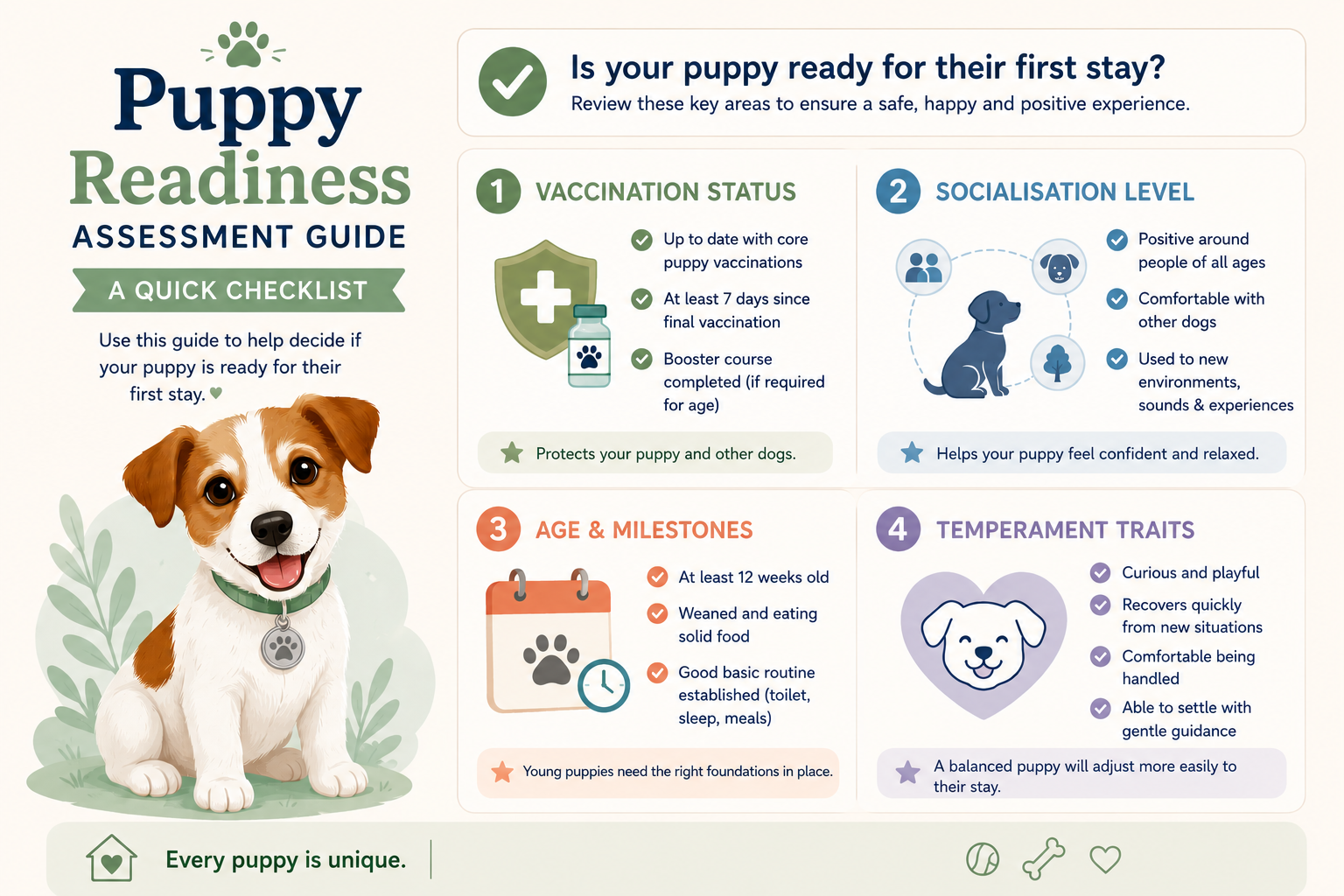
Wait 1-2 weeks after the final jab before starting daycare. This gives the immune system time to build proper protection. Skipping this window puts your puppy at genuine risk of contracting serious diseases in a group setting.
Temperament Check
Your puppy’s personality matters more than their age. Confident puppies who show curiosity about new dogs, people, and environments generally thrive. Watch how your puppy responds on walks or in busy areas, do they investigate or hide behind your legs?
High-energy puppies often benefit enormously from structured daycare exercise. But there’s a line between “energetic” and “overwhelmed”, very high-strung puppies can tip into overstimulation in group settings, which makes behaviour worse, not better.
Health Considerations
Ongoing health issues need careful thought. Puppies with breathing problems (common in flat-faced breeds), joint conditions, or compromised immune systems may not cope well with group care. Even sensitive stomachs can become problematic when stress levels are higher and routines different from home.
Behavioural Red Flags
Certain behaviours mean your puppy isn’t ready. Resource guarding around food, toys, or people can escalate fast in a group. Fear-based reactivity or severe separation anxiety suggests your puppy needs individual work with a trainer first, not group immersion.
These issues are usually fixable with professional guidance, daycare just isn’t the place to fix them.
Benefits and Risks
What Daycare Gets Right
The critical socialisation window runs from roughly 8-16 weeks. Positive experiences with other dogs, people, and environments during this period shape your puppy’s behaviour for life. Quality daycare provides controlled socialisation that’s difficult to replicate on your own, your puppy learns canine communication, appropriate play, and confidence in diverse situations.
The exercise benefit is practical too. Structured play prevents the destructive behaviours that develop when energetic puppies are left alone all day. Many facilities also weave basic training into the routine, reinforcing commands in a social context.
Genuine Risks
Overstimulation is the most common problem. Too much excitement creates hyperactive behaviour patterns that persist at home, some puppies become so wired by group play that they can’t settle even in calm environments.
Disease transmission exists despite vaccination requirements. Kennel cough, intestinal parasites, and skin conditions can spread in group settings. Good facilities minimise this with high hygiene standards, but the risk never hits zero.
Bad habits learned from other dogs are surprisingly hard to undo. If your puppy picks up rough or dominant play styles from older dogs, those patterns tend to stick and transfer to interactions with family pets or dogs in the park.
Cost adds up quickly: £80-180 per week for regular attendance.
Choosing a Facility
Licensing and Insurance
In England, commercial dog daycare requires licensing under the Animal Welfare Regulations 2018. Always verify a current licence with the local authority, licensed facilities face regular inspections covering welfare standards, staff competence, and conditions.
Ask to see insurance certificates. Reputable facilities carry public liability and professional indemnity coverage. Staff qualifications vary, but look for relevant animal care training or substantial hands-on experience.
What to Look For
Puppy-specific areas are non-negotiable. Your 14-week-old shouldn’t be mixing with large, boisterous adult dogs on their first day. Quality facilities separate by age group and size, or run dedicated puppy sessions.
Ask about supervision ratios. Regulations don’t specify exact numbers, but quality facilities typically have one staff member per 10-15 dogs, with lower ratios for puppies or mixed groups.
Check their daily routine, puppies need structured rest periods, not constant stimulation. How do they handle a stressed or overwhelmed puppy? What are their emergency vet arrangements? Will they update you during the day?
Request references from other puppy owners. Any established facility should have satisfied clients willing to share their experience.
Getting Started
Trial Periods
Never commit to regular attendance without a trial. Start with a single half-day and observe your puppy’s response. A good sign: they come home tired but content, eat normally, and sleep well. A bad sign: excessive panting, loss of appetite, increased anxiety, or reluctance to go back.
Build up slowly, one or two half-days per week, increasing only if your puppy is clearly enjoying it. Some facilities run “puppy preschool” programmes designed for exactly this gradual introduction.
Costs Across the UK
Daycare pricing varies by region. London facilities typically charge £35-50 per day, while providers in northern England sit around £20-35. Many boarding facilities also offer daycare alongside overnight stays, you can compare pet hotels on Tailstays to check what’s available near you.
Compare against alternatives: professional dog walkers (£15-25 per visit) or individual pet sitters. Consider the long-term behavioural value of proper early socialisation against the immediate cost.
If Daycare Isn’t Right
Puppy training classes provide controlled socialisation in smaller groups with professional guidance, less overwhelming for nervous pups. Professional dog walkers or pet sitters offer individual attention and exercise, with many providing puppy-specific services. If you’re bringing home your first puppy, our new puppy guide covers the broader essentials.
Family and friend networks are underrated. A trusted neighbour with a calm, vaccinated dog can provide socialisation without the intensity of a daycare environment.
Frequently Asked Questions
What age can puppies start daycare in the UK?
Most facilities accept puppies from 12-16 weeks old, after completing their primary vaccination course. Wait 1-2 weeks after the final jab before starting. Some facilities run puppy-specific programmes for younger dogs with completed vaccinations.
How much does puppy daycare cost?
Typically £20-45 per day, varying by region. London and the South East charge £35-50, while northern providers sit around £20-35. Many offer discounts for regular weekly bookings.
How do I know if my puppy is enjoying daycare?
Happy puppies come home tired but content, maintain normal eating and sleeping patterns, and show excitement approaching the facility. Warning signs: excessive panting, loss of appetite, increased anxiety at home, or reluctance to enter the building.
What should I pack for my puppy’s first day?
Vaccination certificates and emergency contact details are essential. Bring a favourite toy or blanket, any medications, and special food if your puppy has dietary requirements. Some facilities provide everything, check beforehand.
Is daycare suitable for all breeds?
Individual temperament matters more than breed, but some breeds need extra consideration. Flat-faced breeds overheat more easily. Very large breed puppies need careful management around smaller dogs. Quality facilities assess each puppy individually regardless of breed.