

London has more dog boarding options than anywhere else in the UK — but higher prices, tighter availability, and the sheer size of the city make choosing the right one harder than it sounds. Here's what you actually need to know.
Key Takeaways
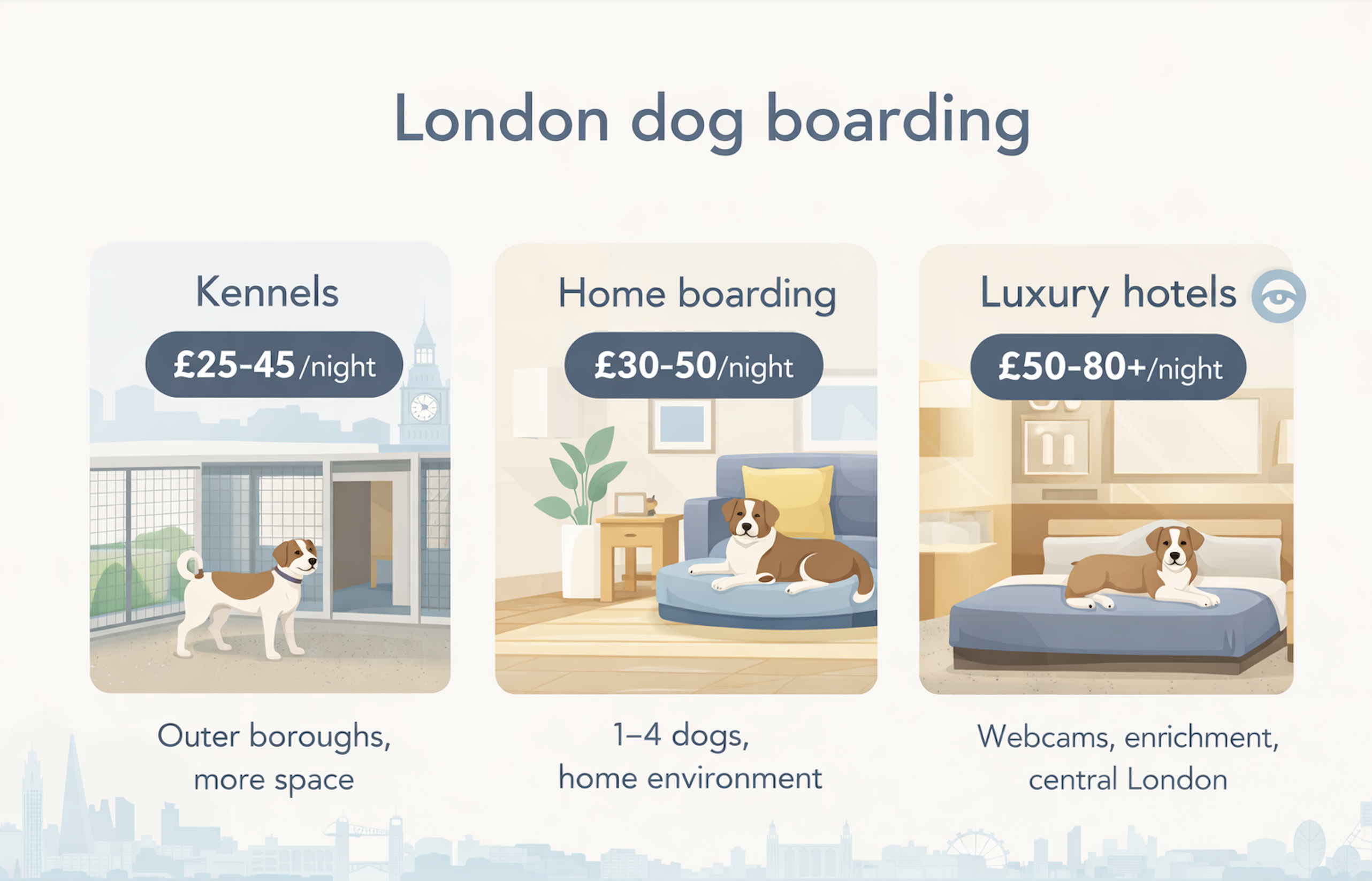
- Traditional kennels typically cost £25–45 per night in London; luxury dog hotels run £50–80+; home boarding sits around £30–50
- All boarding requires a licence under the 2018 Regulations — verify with the facility's local borough council
- Book 4–6 weeks ahead for summer and Christmas. London's holiday demand is intense.
- Many of the best-value facilities are in outer boroughs where space is cheaper — factor in transport links, not just nightly rate
- Home boarding requires the same licence as kennels but offers a more domestic setting for anxious dogs
What's Available in London
Traditional kennels are the most straightforward option — secure individual runs, set routines, outdoor access. They work well for sociable, confident dogs who don't mind a busier environment. In London, most kennels sit in outer boroughs where there's actually room for them. Expect £25–45 per night for standard care.
Luxury dog hotels have become a London speciality. Suite-style rooms, webcam access, spa services, enrichment activities — some even offer one-on-one training sessions. They're not cheap (£50–80+, with premium central London places hitting £100+), but for dogs who need extra attention or owners who want constant updates, they deliver.
Home boarding places your dog in a carer's home, usually with 1–4 other dogs maximum. It's a good middle ground — more personal than a kennel, less expensive than luxury hotels, and ideal for dogs who get stressed in facility environments. Don't confuse it with dog sitting in your own home, which generally doesn't require licensing. Home boarding in the carer's home requires the same licence as kennels.
Daycare with overnight — some London daycare centres offer extended stays. This works well if your dog already attends and knows the staff, but overnight capacity is usually limited.
What Makes London Different
The biggest London-specific factor is geography. Quality boarding facilities need space, and space in central London is expensive. That pushes many of the best options into outer boroughs — South London, the edges of East and West London, and just beyond the M25. A facility in Zone 4–5 with good transport links often offers better value and more outdoor space than a central alternative at twice the price.
Some providers offer pickup and drop-off services covering specific postcodes, which is genuinely useful if you don't have a car or your dog travels badly. Factor this into your comparison — a £5–10 daily transport fee on top of a cheaper nightly rate might still beat a pricier central facility.
London's seasonal demand is more intense than most of the UK. School holidays, Christmas, and Easter fill up fast. But London also has peak weeks other cities don't — half-terms, long weekends, and summer Fridays when much of the city leaves at once. Booking 4–6 weeks ahead isn't cautious, it's necessary.
You can see what's available across London on Tailstays to get a feel for options in your area.
How to Find and Vet a Facility
Start with your vet. Veterinary practices often know which local facilities they'd trust with their own dogs — that's more telling than a Google review. Dog walkers are another good source; they hear from multiple clients about boarding experiences good and bad.
When reading online reviews, look for specifics: how the dog seemed on collection, whether communication was good during the stay, how pickup and dropoff worked. Vague five-star reviews tell you less than a detailed four-star one. Multiple mentions of illness after stays, or dogs returning in notably different condition, are genuine red flags.
Always verify the licence. Contact the facility's borough council directly — every London borough maintains its own licensing records. Ask for the licence number and star rating. Licensed facilities receive star ratings (1–5) based on welfare standards, with higher-rated ones inspected less frequently. A legitimate operator will show you their licence without hesitation.
What to Check on a Visit
Any reputable facility will encourage a visit before you book. Watch how staff interact with the dogs already there — are they calm, patient, confident? Do the dogs seem relaxed around them?
Check cleanliness in kennels, food prep areas, and outdoor spaces. Some smell is normal; strong odours or visible waste suggest poor maintenance. Look for secure fencing, weather shelter, and fresh water in exercise areas.
Ask the questions that matter: what are their emergency vet procedures? What happens if your dog becomes ill? How will they handle medications or special diets? What's the daily routine — feeding times, exercise, bedtime?
Costs and Booking
London boarding is more expensive than the UK average, but there's a wide range. Budget for the nightly rate plus extras — medication administration (£2–5 per dose), grooming during longer stays (£15–30), and peak-period surcharges are all common.
Emergency same-day boarding exists but costs 20–50% more and availability is very limited. If you think you might need last-minute care, it's worth building a relationship with a local facility so you're not starting cold.
Cancellation policies vary. Most reasonable facilities allow cancellation 48 hours ahead with a full refund, reducing closer to the date. Extremely restrictive policies (7+ days, no refund) aren't necessarily a red flag, but they're worth questioning.
Browse options near you on Tailstays to compare what's available before committing.
Red Flags
Can't show you their licence or provide a number? Walk away. Refuse to let you visit before booking? Walk away. Staff seem nervous around the dogs, or the facility smells significantly worse than you'd expect? Trust your instincts.
Prices well below the London averages above should prompt questions. And be wary of facilities that promise a completely stress-free experience. Honest providers acknowledge that boarding involves an adjustment period for most dogs.
Frequently Asked Questions
How far in advance should I book dog boarding in London?
Book 4–6 weeks ahead for summer holidays and Christmas. Easter and half-terms need 2–3 weeks. Weekday availability is generally better than weekends during school holidays.
How do I verify a London boarding facility's licence?
Contact the facility's local borough council directly. Ask for their licence number, current star rating, and recent inspection results. Every London borough maintains its own licensing records.
Is home boarding in London licensed?
Yes. Home boarding in the carer's home requires the same licence as traditional kennels under the 2018 Regulations. Dog sitting in your own home generally doesn't require licensing — the distinction is whose home the care happens in.
Are outer London boarding facilities as good as central ones?
Often better — they typically have more outdoor space, lower overheads (meaning better value), and less noise. The trade-off is travel time for drop-off and collection. Many offer pickup services to bridge the gap.