
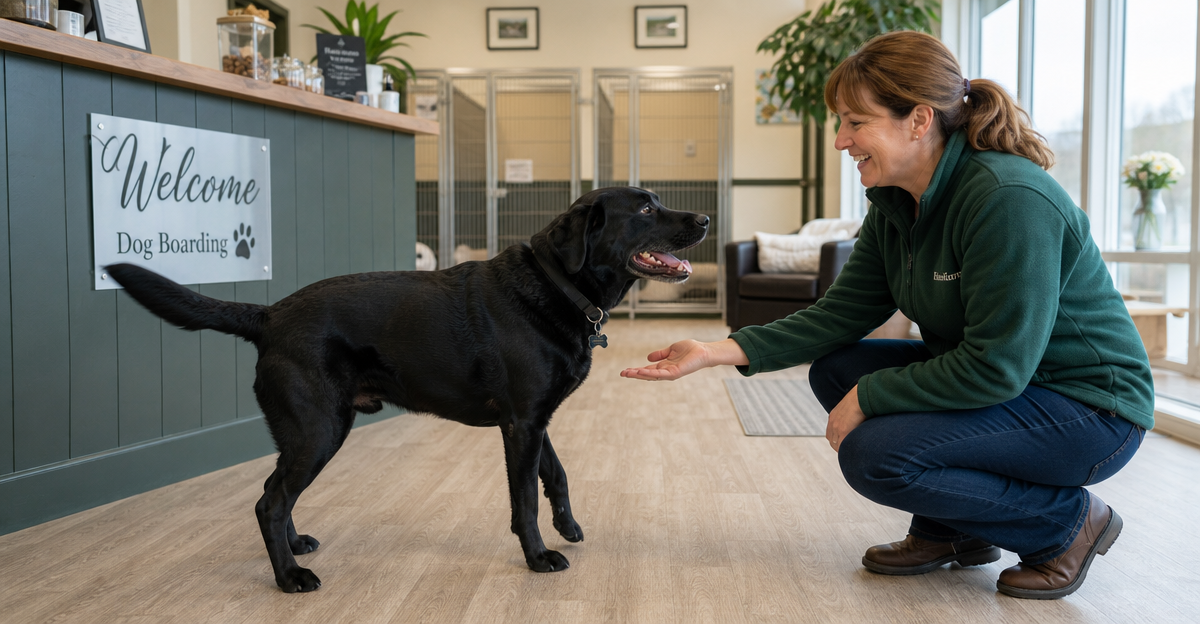
Two weeks isn’t the same as two nights. A dog that’s perfectly happy with a weekend at the kennels might struggle after day five of an extended stay, or they might settle in and have the time of their life. The difference usually comes down to whether you matched them to the right type of boarding.
Most owners consider anything over two weeks as long-term boarding, though some providers draw the line at a week. Either way, extended stays need more planning than dropping your dog off for the weekend. You’re choosing somewhere that becomes their temporary home.
Key Takeaways
- Home boarding suits anxious dogs: Expect £26-32 per day for exclusive care in a family home (BarkingMad rates)
- Kennels offer structure and backup: Generally £15-20 per day, with staff cover if someone’s ill, both kennels and home boarders require licensing
- Book early for extended stays: Long-term slots fill quickly, especially summer and Christmas
- Meet-and-greets aren’t optional: Personality matches matter more for extended stays than short breaks
- Check insurance properly: Some policies have per-incident caps that matter more over longer periods
- Build up gradually: A trial overnight before a month-long stay saves everyone a lot of stress
Long-Term Boarding Options
Three main choices, each with genuine trade-offs depending on your dog.
Home Boarding (£26-32/day)
Your dog stays with a licensed family in their home, often alongside the host’s own pets. BarkingMad quotes £26-32 per day, making it the premium option.
This works well for dogs who thrive on routine and personal attention. They get one-on-one care in a domestic environment rather than a facility. The trade-off is that you’re relying entirely on one person, if they get ill or have an emergency, backup arrangements may be limited compared to a staffed kennel.
Traditional Kennels (£15-20/day)
Professional kennels typically charge £15-20 per day with structured environments and trained staff. Plenty of dogs actually prefer the predictable routines that a good kennel provides.
For long-term stays, kennels have a practical advantage: staff coverage. If one handler is off sick, others step in. They’re also generally more experienced with medication schedules and special dietary needs across multiple dogs.
In-Home Pet Sitting
A sitter stays in your home with your dog. This keeps your dog in familiar surroundings but tends to be the most expensive option, and you need to be comfortable with someone living in your house.
Pet sitting in the owner’s home generally doesn’t require the same licensing as boarding, since the care happens in your property rather than the carer’s. Pricing varies significantly, £25-50 per day depending on whether the sitter lives in or visits.
Agencies vs Independent Providers
Agencies like BarkingMad and PetStay provide vetted carers with backup support, but you pay for that structure. Independent providers often cost less but you’ll need to do more vetting yourself.
For long-term stays specifically, the backup support that agencies provide is worth considering seriously. A month is a long time to rely on one person with no contingency plan.
Choosing a Provider
Assess Your Dog’s Needs First
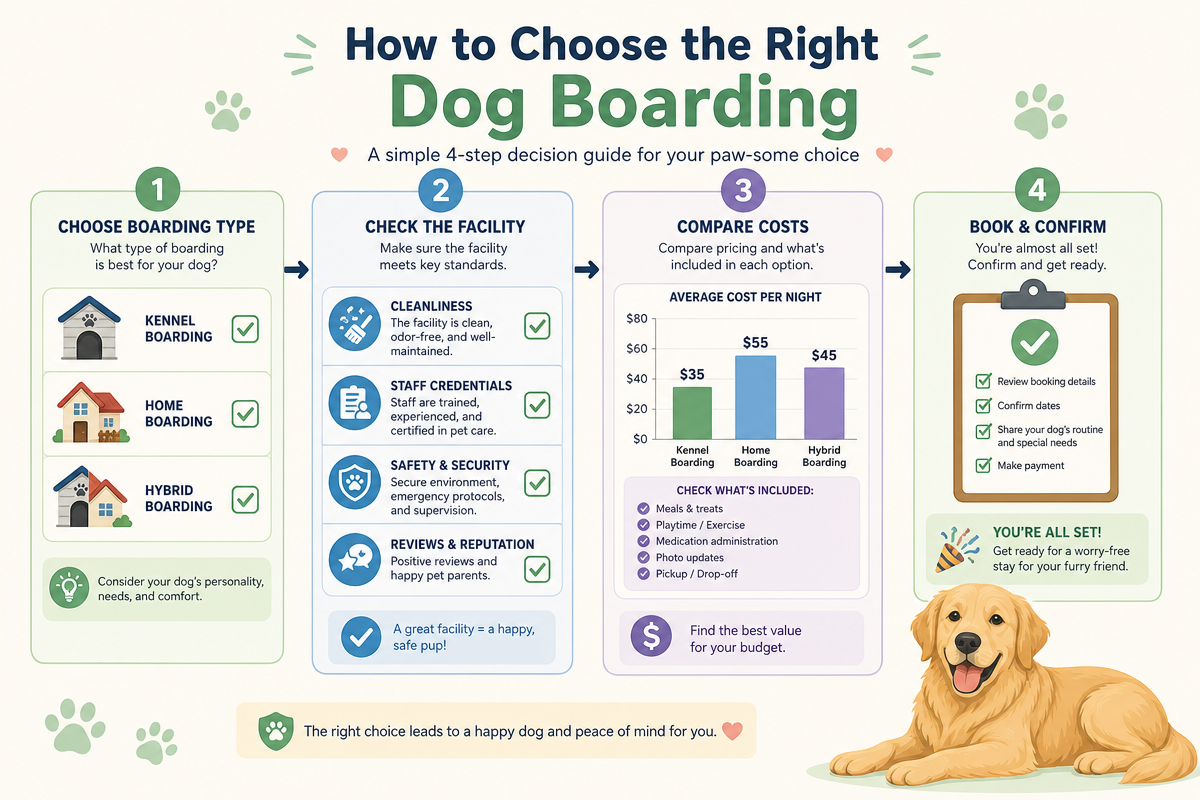
Be honest about your dog’s temperament. Anxious dogs typically do better with home boarding where they get consistent attention from one person. Social, confident dogs might prefer kennels with supervised interaction. Dogs on strict medication routines need providers who’ve done it before, not ones willing to try.
Energy levels matter too. An active Border Collie needs a provider who’ll maintain proper exercise. An elderly Greyhound needs somewhere quiet and comfortable.
Check Licensing
In England, both kennels and home boarding operations require licensing under the 2018 Animal Welfare Regulations. Wales has similar requirements under separate legislation. Scotland and Northern Ireland have their own licensing regimes.
Licensed facilities display their licence number and undergo regular inspections covering welfare standards, accommodation, and record-keeping. You can verify any provider’s licence through their local council, it takes five minutes and should be non-negotiable for extended stays.
Research and Shortlist
Read reviews that specifically mention long-term stays. A provider who’s brilliant for weekends might not have the stamina, routine, or facilities for month-long bookings. Short-stay reviews don’t tell the full story.
Ask other dog owners locally. Vets and dog walkers often know which providers handle extended stays well and which ones struggle.
Arrange Meet-and-Greets
Any provider worth booking will insist on meeting you and your dog before accepting a long-term stay. This isn’t a formality, it’s where you find out whether your dog actually likes the place.
Watch your dog’s body language. Stress signals during a 30-minute visit will compound over weeks. If they’re hiding behind your legs or refusing treats, that’s your answer.
Verify Insurance and Backup Plans
Ask what happens if your primary carer becomes unavailable during a four-week stay. Agencies typically have alternatives lined up. Independent providers may not.
Check insurance covers the full duration. Some policies have per-incident caps or time limits that could leave gaps during extended bookings.
Book Early for Peak Periods
Long-term slots during school holidays fill months in advance. Summer and Christmas periods often carry 20-30% premiums on top of standard rates.
Book 8-12 weeks ahead for holiday periods, 4-6 weeks for quieter times. Most providers require deposits for extended bookings, and cancellation policies tend to be stricter than for short stays. You can compare long-term boarding options on Tailstays to start shortlisting providers in your area.
What Long-Term Boarding Actually Costs
Pricing by Service Type
Home boarding averages £26-32 per day (BarkingMad published rates). Traditional kennels typically charge £15-20 per day. In-home pet sitting ranges from £25-50 per day depending on live-in arrangements and location.
Many providers offer 5-10% discounts for bookings over two weeks. Always ask, they’d rather fill a slot at a slight discount than have it empty.
What Pushes Costs Up
Multiple dogs usually add £5-10 per extra dog per day, though siblings from the same household sometimes get better deals. Peak season premiums apply during school holidays, with Christmas commanding the highest rates.
Additional services, daily walks, grooming, medication administration, typically add £3-8 per service per day. These compound quickly over a long stay.
Hidden Costs to Ask About
Transport to and from the facility: £10-25 each way, sometimes included, often not. Cancellation policies for long-term bookings are stricter than short stays, you might lose your deposit if you cancel within 2-4 weeks.
Emergency vet costs need clear agreement upfront. Who authorises treatment? What’s the spending limit before they must contact you? Get this in writing.
Red Flags and What to Look For
Insurance to Verify
Professional providers should carry public liability insurance and care, custody, and control coverage. Ask to see certificates. For long-term stays, verify coverage limits are high enough for veterinary emergencies, some policies have per-incident caps that could prove inadequate for serious conditions.
Warning Signs During Visits
Providers who seem rushed or won’t answer detailed questions about long-term care should be crossed off your list. Poor facility maintenance, inadequate cleaning, or stressed-looking animals in their care are obvious flags.
Be wary of anyone who can’t explain their emergency procedures or doesn’t have an established relationship with a local vet practice. For a stay lasting weeks, that’s not acceptable.
Questions Every Provider Should Answer
What does a typical day look like for a dog in your care? How do you handle medication? What’s your emergency procedure? How often will you send updates? What happens if you’re ill or unavailable?
If they stumble on any of these, move on. Professional providers have clear answers because they’ve thought about these scenarios already.
Preparing Your Dog for an Extended Stay
Build Up Gradually
If possible, start with shorter stays, a night or two, before committing to weeks. This is especially important for dogs who haven’t boarded before. A dog that’s prone to separation anxiety needs particular care with this transition.
Arrange multiple visits so your dog becomes familiar with the carer and environment. Familiarity reduces stress significantly during those first few days of a long stay.
What to Pack and Communicate
Bring familiar items, favourite toys, their own bedding, a worn t-shirt with your scent. These aren’t sentimental extras; they genuinely help dogs settle.
Write detailed instructions covering feeding schedules, medication routines, exercise preferences, and behavioural quirks. Include your vet’s contact details. Pack enough food for the entire stay plus a few extra days, sudden diet changes cause digestive problems, which is the last thing you want during an already stressful transition.
Managing Separation Anxiety
Dogs with separation anxiety need shorter initial stays to build confidence. Discuss anxiety management strategies with your chosen provider, experienced ones will have dealt with this before.
Some dogs respond well to hearing their owner’s voice on a phone call. Others find it more unsettling. Your provider can help gauge what works. For very anxious dogs, speak to your vet about whether short-term medication might help with the first extended stay.
If this is your first time using boarding, our first-time boarding guide covers the basics before you get into the long-term specifics.
Ready to compare long-term boarding options? Browse providers on Tailstays to find the right match for your dog’s extended stay.
Frequently Asked Questions
How far in advance should I book long-term boarding?
Book 8-12 weeks ahead for peak periods like summer and Christmas, or 4-6 weeks for quieter times. Popular providers fill long-term slots quickly, and you’ll need time for meet-and-greets and trial stays.
What happens if my boarding arrangement falls through last minute?
Agencies typically provide backup carers. Independent providers may not have alternatives available. Always ask about contingency plans during booking, for stays lasting weeks, this isn’t optional.
Does insurance coverage change for extended stays?
Some policies have per-incident limits or time restrictions that become more relevant during long stays. Verify coverage limits are adequate for veterinary emergencies and understand any excess amounts that apply.
How do I manage medication and special diets during long-term boarding?
Provide detailed written instructions, enough supplies for the entire stay plus extras, and your vet’s contact details. Licensed providers are experienced with medication routines, but always verify their comfort level with your dog’s specific needs before booking.
What communication should I expect during extended stays?
Professional providers typically send updates two to three times per week, including photos and activity summaries. Agree communication preferences upfront, some owners want daily updates, others prefer weekly. Establish expectations before the stay begins.