
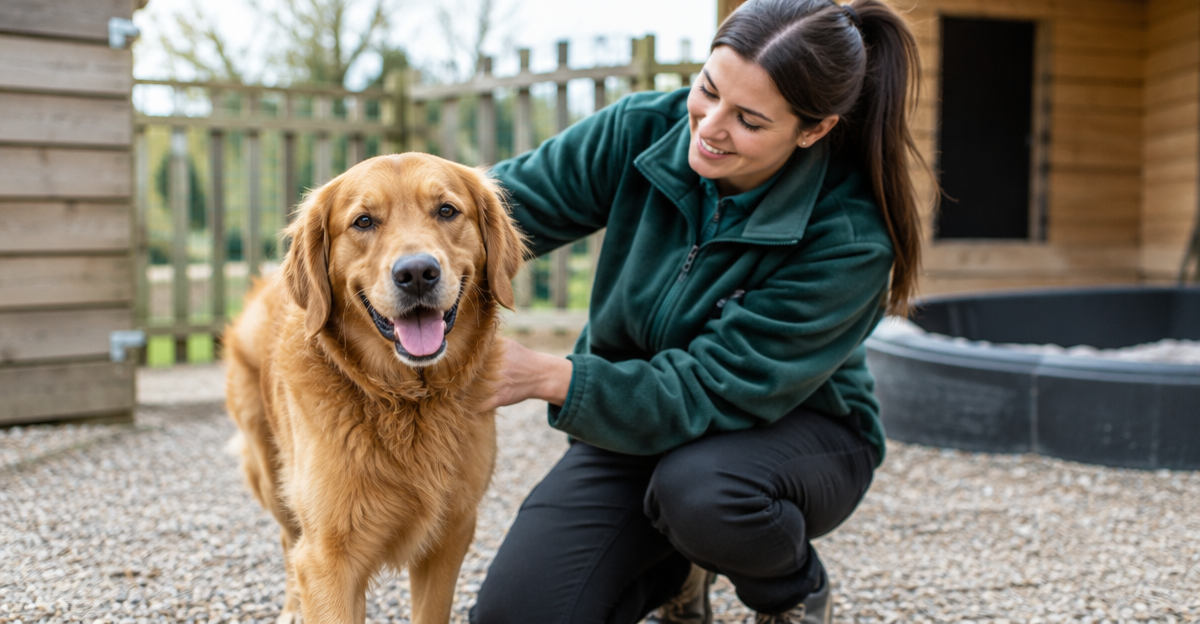
Dog boarding cost in the UK varies widely. Nightly rates depend on the type of boarding, where you live, your dog's size and when you travel, and the headline rate on a website rarely tells the whole story.
We haven't got a single reliable national average to hand you, and we'd rather say so than quote a number we can't trace. What we can do is show you what actually moves the price, so you can budget properly and spot a bargain that isn't one.
Key Takeaways
- Kennels, home boarding, dog hotels and sitters sit at different price points. Kennels and home boarding are usually mid-range, while luxury dog hotels sit at the top.
- The biggest price movers are boarding type, location, dog size and peak dates such as school holidays and Christmas.
- Extras like medication, extra walks, grooming and collection can add noticeably to the final bill.
- Always ask for an itemised quote in writing, so you compare like with like.
- The cheapest option is not always the best. Check the licence, vaccination rules, staffing and emergency vet arrangements before you book.
What Do Different Types of Dog Boarding Cost?
Each boarding type has its own price position, and the gap mostly comes down to space, staffing and how much individual attention your dog gets. Providers set their own prices and change them often, so treat any figure you see online as a starting point and check the provider's current price list before you budget.
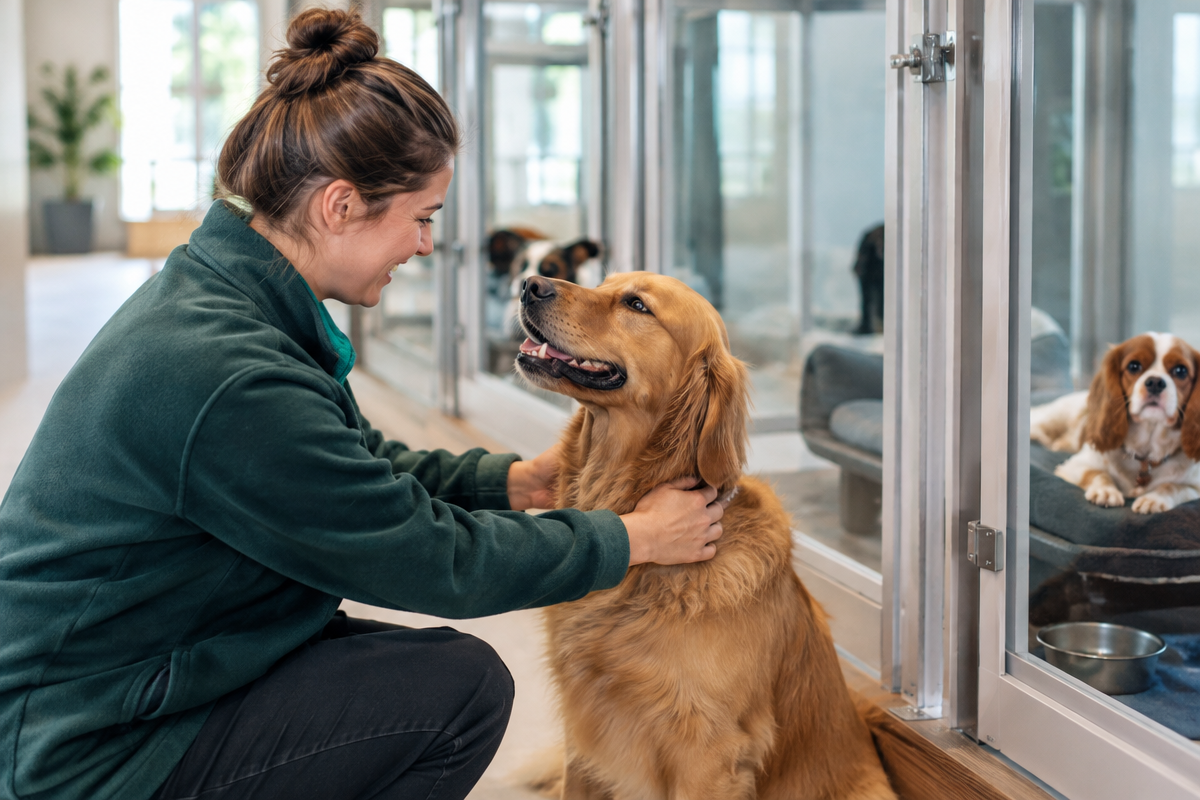
First, a quick note on terms, because it trips a lot of owners up. "Dog sitter" can mean someone who looks after your dog in their own home (home boarding, which needs a licence) or someone who stays at, or visits, your home (house sitting, which generally does not). The two are often priced very differently.
Traditional kennels
Kennels are the option most people picture, and they usually sit in the middle of the price range. In England, a boarding kennel must be licensed under the Animal Welfare (Licensing of Activities Involving Animals) (England) Regulations 2018. The rest of the UK has its own rules, which we cover further down.
The nightly rate typically covers accommodation, feeding, regular exercise and basic care. Some kennels charge extra for longer walks or one-to-one time, so it's worth asking what "exercise" actually means in practice. Ten minutes in a run and an hour's walk are not the same thing.
Home boarding and host families
Your dog stays in a carer's home, usually alongside far fewer dogs than a kennel would have. Many owners like the family-style routine, particularly for nervous or older dogs.
Don't mistake home boarding for a lighter-touch option, though. In England it needs a licence under the same 2018 Regulations, with different requirements from kennels but equally strict ones. Prices can come in slightly below or close to kennel rates, but this varies a lot by area and carer. Our guide to choosing a licensed kennel or home boarder covers what to check in more detail.
Dog hotels and luxury boarding
These sit at the top of the market. You're usually paying for private suites, webcams, scheduled play sessions, spa-style extras or very low dog-to-staff ratios. Honestly, if your dog is calm and sociable, most of that is for your benefit rather than theirs. If your dog is anxious or has specific needs, some upgrades can genuinely be worth the money. We look at where the premium earns its keep in what makes a luxury dog hotel worth it.
Dog sitters at your home
A sitter who stays at your property lets your dog keep their usual routine, which suits dogs who hate new places. Because a sitter working in your own home generally doesn't need a licence, the vetting falls to you: check their experience, references and insurance. Overnight cover pushes the price up, and with several dogs or a long trip it can end up costing more than boarding. If you're weighing the two, our comparison of live-in dog sitters vs pet hotels sets out the trade-offs.
| Type | Typical price position | Best for | Watch out for |
|---|---|---|---|
| Traditional kennel | Mid-range | Sociable, confident dogs; longer stays on a budget | Extras for walks, bedding or medication |
| Home boarding | Mid-range, varies by carer | Anxious, older or small dogs who prefer a quiet household | Limited availability at peak times; check the carer's licence |
| Dog hotel / luxury | Higher | Owners wanting webcams, private suites or lots of enrichment | Paying for upgrades your dog doesn't need |
| Sitter in your home | Varies; can be higher for overnight cover | Dogs who hate leaving home; multi-pet households | Checking experience, references and insurance yourself |
Once you know which type suits your dog, you can search for boarding near you on Tailstays and see how local providers compare on facilities and reviews.
What Affects Dog Boarding Prices?
Four things move the price most: your dog's size, your location, the time of year and the length of your stay. Special requirements can then add to it.
Dog size and breed
Larger dogs need bigger spaces, more food and sometimes more handling, so many providers charge more for them. Some set rates by weight band; others charge everyone the same. Breeds with high exercise needs, or dogs that have to be kept separate, can also cost extra.
Location
Rents, wages and demand push prices up in London and the South East, while rates in the North and Midlands tend to be lower. That's a general pattern rather than a rule. Rural areas with only a handful of providers can be surprisingly pricey.
Say you're comparing London with Leeds. You'd expect the London quotes to come in higher, yet a premium Leeds dog hotel could easily cost more than a basic London kennel. Compare the same type of provider, not just the postcode. Other cities with plenty of choice include York, Nottingham and Bristol.
Peak vs off-peak
School holidays, Christmas, New Year, Easter, summer and bank holidays are the busiest periods. Many providers add a surcharge, set a minimum stay or ask for a larger deposit. Popular places can fill up months ahead, so the real cost of leaving it late is sometimes having no choice at all.
Length of stay and multi-dog discounts
Some providers discount longer stays, and many offer a reduced rate for a second dog from the same household sharing a space. Policies vary, so ask rather than assume. If you're planning weeks rather than days away, our guide to long-term dog boarding is worth a read.
Special requirements
Puppies, senior dogs, dogs on medication and dogs on special diets can all raise the price because they take more staff time. Dogs with separation anxiety or reactivity may need a quieter setting, which can cost more too. Be upfront about all of this when you enquire. A quote based on half the picture isn't much use to anyone.
Extras and Hidden Costs to Check For
The nightly rate is rarely the full cost. Extras are where two similar-looking quotes drift far apart. Common add-ons include:
- Medication administration, especially for multiple doses or injections
- Extra or longer walks, and one-to-one play sessions
- Baths, grooming or a pre-pickup tidy-up
- Collection and drop-off services
- Premium or special-diet food if you don't supply your own
- Late pick-up fees
- Non-refundable deposits and cancellation charges
The simplest protection is an itemised quote in writing. It lets you compare providers properly and gives you something to point to if there's a disagreement later.
Questions to ask about what the rate includes
- Does the nightly rate include walks, play time and bedding?
- Is there a charge for medication or special feeding?
- Are there peak-date surcharges or minimum stays for my dates?
- What is the deposit, and when is it refundable?
- What happens if I'm late collecting my dog?
- If my dog needs a vet, who pays up front and how is it billed?
What Does a Typical Trip Really Cost?
The best way to budget is to take a real quote and run the sums. The numbers below are made up purely for the arithmetic. They are not market prices, so swap in the rates you're actually quoted.
Imagine a kennel quotes a flat £30 per night for a small dog and £40 per night for a large dog:
| Trip | Small dog (£30/night) | Large dog (£40/night) |
|---|---|---|
| Weekend (2 nights) | £60 | £80 |
| One week (7 nights) | £210 | £280 |
| Two weeks (14 nights) | £420 | £560 |
Now add extras. Suppose the large dog's week falls in the school holidays with a £5 per night peak surcharge (£35), daily medication at £5 a day (£35) and a £15 collection fee. The week now comes to £365 rather than £280, a rise of roughly 30% in this example from extras alone. That's why the headline rate is such a poor guide on its own.
Price the alternatives too. A sitter in your home may work out cheaper for one small dog on a short trip, and more expensive for a long trip or several dogs. Friends and family are free, but only if the arrangement is realistic for them and safe for your dog.
How to Save on Dog Boarding Without Cutting Corners
The safest savings come from planning, not from picking the cheapest listing. If you want cheap dog boarding you can actually trust, timing and flexibility do most of the work:
- Book early for peak dates, before places and good rates run out.
- Travel off-peak where you can, to avoid surcharges.
- Ask about multi-dog, long-stay and repeat-customer discounts.
- Look at providers in nearby towns, not just your own postcode.
- Get quotes for both home boarding and kennels. Neither is automatically cheaper.
Red flags for boarding that is too cheap
A low price isn't a problem in itself. A low price combined with any of these is:
- No licence displayed or offered when you ask
- No meet-and-greet or visit (reputable providers will happily let you look around)
- Vague answers about staffing and how many dogs are looked after at once
- No vaccination requirements, including kennel cough
- No clear emergency vet arrangements
How to verify a licence
In England, ask to see the local authority licence, which should name the licence holder and the activity. Many licences also carry a star rating, so ask what it means. Wales has similar requirements under separate legislation, while Scotland and Northern Ireland have their own regimes. Say which part of the UK you're in when you contact your council.
Ready to shortlist? Compare providers on Tailstays, then check each one's licence details with them directly.
How to Compare Options and Book
Shortlist three or four providers, request the same itemised quote from each, then visit your top choice before you commit. Tailstays is a search and comparison platform: you find and compare providers here, then request to book directly with the hotel.
Our directory lists 2,703 pet hotels across the UK. The cities with the most choice are London (31), Leeds (25), York (25), Nottingham (22) and Bristol (20), so you'll usually have a few to compare. You can filter by location and facilities, and read reviews from other owners before you get in touch.
Booking checklist
- Confirm your dog's vaccinations are up to date and check the provider's requirements, including kennel cough. Timing depends on the vaccine type, so ask early. Our kennel cough vaccine guide explains what to expect.
- Arrange a trial day or meet-and-greet where possible.
- Get the full cost confirmed in writing, including extras, deposits and cancellation terms.
- Share emergency contacts, your vet's details and any medical or behavioural notes.
- Ask what happens if your dog is unwell or you're delayed getting back.
FAQ
How much does it cost to board a dog for a week in the UK?
It depends on boarding type, location, dog size and season. Multiply the quoted nightly rate by seven, then add extras like medication, peak surcharges and collection fees. Get at least three itemised quotes in writing to compare.
Is home boarding cheaper than kennels?
Not always. Home boarding can come in slightly below or close to kennel rates, but it varies by carer and area, and both need a licence in England. Inclusions like walks and medication often matter more than the headline rate.
Why is dog boarding more expensive at Christmas and summer?
Demand is much higher and spaces are limited, and staff often work extra hours over bank holidays. Many providers add a peak surcharge, require a minimum stay or take larger deposits. Booking early gives you more choice and may help you avoid last-minute premiums.
Do I have to pay a deposit?
Many providers ask for one, particularly for peak dates, but policies vary. Ask how much it is, whether it counts towards the final bill and when it's refundable. Get the cancellation terms in writing before you pay.
Is it cheaper to use a dog sitter?
Sometimes, for one small dog on a short trip. Overnight sitters in your home can cost more for long stays or several dogs. As they generally don't need a licence, check references and insurance yourself.
Ready to start comparing? Browse dog boarding on Tailstays by city and get quotes from the providers that suit your dog.