
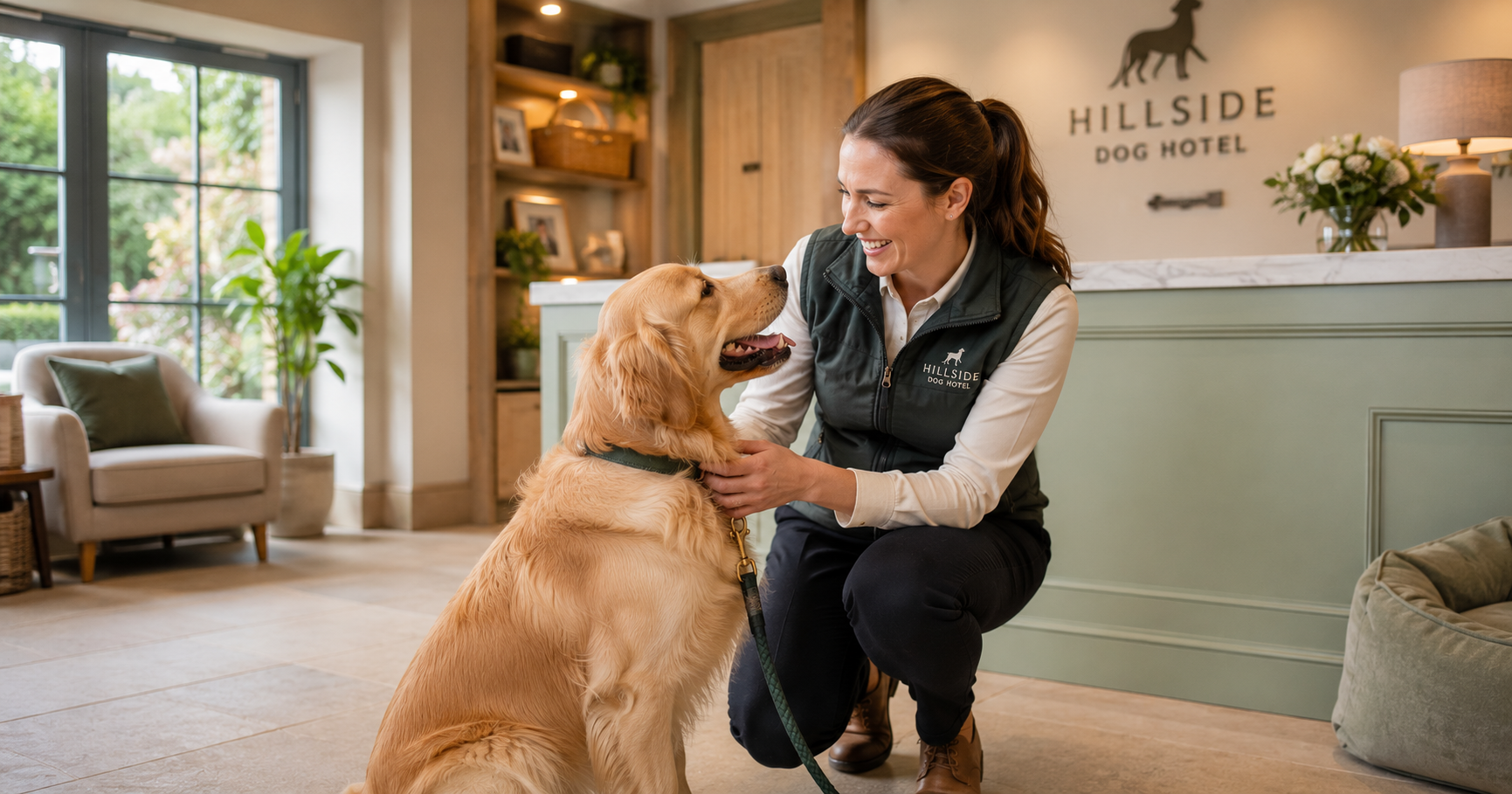
Luxury dog hotels charge £45-80+ per night compared to £15-20 at standard kennels. Whether that premium buys genuine quality or just better marketing depends entirely on what’s behind the brochure photos.
The word “luxury” in boarding is unregulated, anyone can use it. So the difference between a £25 kennel and a £70 boutique suite comes down to specifics: staff ratios, space, enrichment, and veterinary access. Some facilities justify every penny. Others have painted their walls and tripled their prices.
Key Takeaways
- Luxury boarding typically costs 50-150% more than standard kennels, expect £45-80+ per night
- The real differences are staff ratios, private suites, structured enrichment, and veterinary partnerships
- Always visit in person, marketing photos and “luxury” labels mean nothing without verification
- Anxious dogs and those with medical needs benefit most from premium facilities
- Book 2-6 weeks ahead for regular periods, up to 3 months for Christmas and summer
- Healthy, confident dogs on short stays may not need luxury features at all
What Actually Makes Boarding “Luxury”
Accommodation
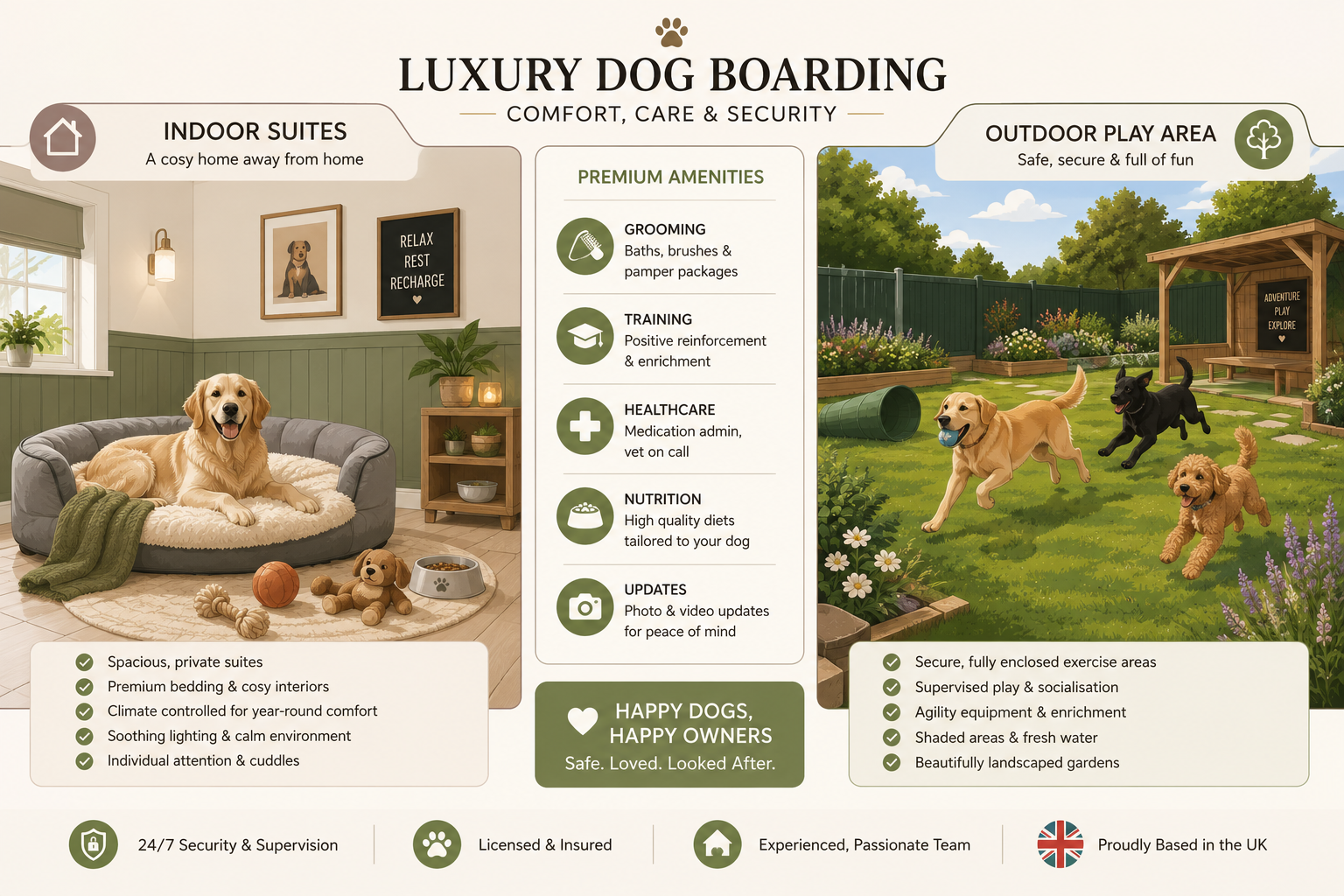
Genuine luxury means private suites rather than traditional kennel runs. Your dog gets their own enclosed space with a proper bed, usually orthopaedic, temperature control, and natural light. Many premium facilities include an attached outdoor run so your dog can move between inside and outside without waiting for staff.
Webcam access is increasingly standard at the higher end. It’s a good transparency signal, facilities confident in their care are happy for you to watch.
Staff Ratios
This is the single biggest factor that separates luxury from standard boarding. Better staff-to-dog ratios mean more individual attention, personalised exercise, and staff who actually learn your dog’s preferences rather than processing them through a system.
The best facilities assign a primary carer to each dog, which reduces stress through familiar faces, especially valuable for longer or repeat stays. They also provide detailed daily reports with photos, feeding notes, and behaviour observations. That level of communication requires significant staff time, which is partly what you’re paying for.
Enrichment and Exercise
Beyond basic walks, premium facilities offer structured exercise programmes, swimming pools, agility courses, nature trails, supervised play sessions. Some partner with certified trainers for enrichment activities.
Dining is another differentiator. Premium places prepare fresh meals, accommodate special diets without fuss or extra charges, and handle supplements reliably. Standard kennels will feed your dog. Luxury ones will feed them properly.
Evaluating Facilities in Person
What to Check on Site
Visit and measure the reality against the marketing. Suites should be genuinely spacious for your dog’s size, not just a kennel with a nicer name. Check ceiling height, ventilation, and natural light. Concrete floors with thin mats aren’t luxury regardless of the price tag.
Sound insulation matters. If you can easily hear dogs barking in adjacent suites, the facility hasn’t invested where it counts. Noise stress compounds over multi-day stays.
Exercise Programmes
Ask for specific exercise schedules, not vague promises of “plenty of playtime.” Good facilities provide multiple exercise sessions daily, with at least one substantial walk or structured play period.
Group play policies reveal staff competency. Reputable places assess dog compatibility carefully and supervise all interactions. Random mixing without evaluation suggests inadequate training.
Food and Dietary Needs
Premium facilities accommodate any dietary requirement without extra fees. They should handle raw diets, prepare fresh meals, and manage multiple supplements without complaint.
Ask what food brands they stock and how they prepare meals. If a facility calling itself luxury is serving cheap kibble, the “luxury” is cosmetic.
Health and Safety
Look for veterinary partnerships and on-call access to qualified professionals. All boarding facilities in England require licensing under the 2018 Animal Welfare Regulations, but premium ones should exceed those minimum standards visibly.
Ask about staff qualifications and emergency response training. Quality facilities carry comprehensive insurance, while not legally required, it’s a strong signal of professionalism. You can verify any facility’s licence through their local council.
Red flags during visits:
- Reluctance to show all areas of the facility
- Vague answers to specific questions about ratios, schedules, or protocols
- Pressure to book immediately without allowing thinking time
- Unclear or inconsistent pricing
- No evidence of veterinary partnership or emergency procedures
Is Luxury Boarding Worth It?
When It Genuinely Is
Anxious dogs benefit enormously from lower staff ratios and consistent carers. The premium is worth it if your dog struggles with separation anxiety or finds busy environments stressful.
Senior dogs or those with medical needs get real value from enhanced health monitoring and veterinary partnerships. The premium can pay for itself through early problem detection.
Long stays also justify the investment. A weekend in basic kennels is fine for most dogs. Two weeks is a different proposition, comfort, enrichment, and personalised attention matter more over extended periods.
When It Probably Isn’t
Healthy, confident, social dogs staying for a few days may not need luxury features. Some dogs genuinely don’t care about orthopaedic beds, they’re happy anywhere with food, walks, and company.
If your budget is tight, a well-run standard kennel with good licensing and genuine care beats a flashy facility that’s all surface. The fundamentals, clean environment, proper exercise, attentive staff, aren’t exclusive to luxury pricing.
Pricing Expectations
Standard kennels: £15-35 per night. Luxury facilities: £45-80+ per night. The gap widens with add-ons, grooming, extra walks, medication administration, which luxury places often include and standard ones charge separately for.
Many premium facilities offer discounts for extended stays or regular bookings. Always ask, especially if you’re planning repeat use. You can compare boarding options and pricing on Tailstays to see what’s available in your area.
Booking and Preparation
Popular luxury hotels fill 2-6 weeks ahead for regular periods, with Christmas and summer filling months out. First-time guests usually need an assessment visit before booking confirmation, so build that into your timeline.
Bring vaccination records, medication details, and written care instructions. Premium facilities follow specific routines well, but only if you provide the detail. If this is your first time boarding, our first-time boarding guide covers the preparation basics.
Ready to see what’s available? Browse boarding options on Tailstays to find and compare facilities near you.
Frequently Asked Questions
What’s the typical price difference between luxury and standard boarding?
Luxury dog hotels typically charge 50-150% more than standard boarding. Basic kennels run £15-35 per night, while premium facilities range from £45-80+ depending on location and included services.
How far in advance should I book a luxury dog hotel?
Book 2-6 weeks ahead for regular periods, and up to 3 months for Christmas or summer. Popular premium hotels have limited capacity and loyal client bases. First-time guests need additional time for assessment visits.
Are luxury dog hotels suitable for anxious dogs?
Anxious dogs often benefit significantly from luxury features like lower staff ratios, consistent carers, and quieter environments. However, some nervous dogs do better in familiar, simpler settings. Discuss your dog’s specific anxieties during facility visits.
Do luxury dog hotels provide veterinary care?
Most luxury facilities have partnerships with local vet practices and can arrange care if needed, but don’t typically have vets on-site. They’re generally better at monitoring health, administering medications, and recognising when professional care is needed than standard facilities.
Can I visit my dog at a luxury hotel during their stay?
Policies vary. Many accommodate visits by appointment, while others discourage them believing they disrupt settling routines. Webcam access at premium facilities often reduces the need for physical visits while maintaining connection.