
First-time dog owners always over-buy on day one and forget something critical on day three. The pet shop wants you to walk out with a trolley full of accessories. Your dog needs about a third of it.
Some items are legal requirements, collar, ID tag, microchip. Others prevent immediate problems, a lead, food, somewhere to sleep. Everything else can wait until you know your dog’s actual preferences, which takes a few weeks.
Key Takeaways
- Budget £200-500 for initial setup; monthly costs average £50-100 for food, treats, and replacements
- Collar with ID tag and microchip are legal requirements from day one
- Buy absolute essentials before your dog arrives, then add items over the first month as you learn their preferences
- Avoid over-purchasing, many dogs ignore expensive beds and toys in favour of old blankets and sticks
- Puppies need different supplies than adult rescue dogs, plan accordingly
- Introduce travel crates and portable feeding equipment early to make future boarding easier
What Every Dog Needs
The Five Welfare Needs
The Animal Welfare Act 2006 legally requires you to meet five welfare needs for any animal in your care. For dogs, these translate directly into your shopping list:
- Suitable environment: safe sleeping area, weather protection, secure boundaries
- Suitable diet: age-appropriate complete food, fresh water, proper bowls
- Normal behaviour: leads, toys, exercise opportunities, mental stimulation
- Appropriate companionship: your time, training tools, safe spaces for rest
- Protection from suffering: grooming tools, health monitoring, identification
Legal Requirements
Under UK law, dogs in public must wear a collar with an ID tag showing your name and address. Phone numbers are helpful but not legally required. All dogs must be microchipped by 8 weeks old, with details registered to a compliant database. If you’re getting a puppy from a breeder, they should handle this; rescue dogs should already be chipped.
Budget Planning
Initial setup typically runs £200-500 depending on your dog’s size and your quality preferences. Monthly ongoing costs average £50-100 for food, treats, waste bags, and replaceable items. Plan separately for veterinary registration, insurance, and seasonal additions like winter coats.
Most first-time owners underestimate ongoing costs while overspending on the initial shop. A £60 designer bed your dog refuses to sleep in is money wasted.
Choosing the Right Gear
Food and Bowls
Look for “complete” on the label, this means the food contains everything your dog needs as their main diet. Choose puppy food for dogs under 12-18 months (breed-dependent), adult maintenance for most dogs, or senior formulations for older animals.
Avoid grain-free diets unless specifically recommended by your vet, they’ve been linked to heart problems in some dogs.
Stainless steel or ceramic bowls work best. Plastic can harbour bacteria and cause chin acne in some dogs. Size bowls appropriately: too large encourages gulping, too small creates mess. Raised feeders aren’t necessary for most dogs and may increase bloat risk in large breeds.
Collars and Leads
Collar fit should allow two fingers underneath when fastened. For growing puppies, adjustable collars save money on multiple sizes.
Standard 2-metre leads work for most situations. Retractable leads can be useful for trained dogs but aren’t recommended during initial training, they make it harder to teach good walking habits. Slip leads should only be used by experienced handlers.
Beds and Crates
Your dog’s bed should be large enough to stretch out fully but cosy enough to feel secure. Avoid oversized beds for puppies, they prefer not to soil their sleeping area, but will use the far end of a bed that’s too big.
Crate training isn’t essential for every dog, but crates provide valuable safe spaces and genuinely help with house training. Size appropriately: your dog should be able to stand, turn around, and lie down comfortably. Too much room during house training defeats the purpose.
Create dog-safe spaces throughout your home before arrival. Remove hazards, electrical cords, toxic plants, small swallowable objects. Baby gates help manage access while your dog learns house rules.
Grooming and Dental Care
Grooming needs vary dramatically by breed. Long-coated dogs need daily brushing to prevent matting; smooth coats may need only weekly attention. Research your specific breed before choosing tools.
Start dental care from day one with appropriate chews and toys. Dental disease affects most dogs by age three, and early prevention makes a significant difference.
Register with a local vet before your dog arrives. Ask about out-of-hours coverage and whether they see your breed regularly.
What to Buy When
Week One Essentials
These must be ready before your dog arrives:
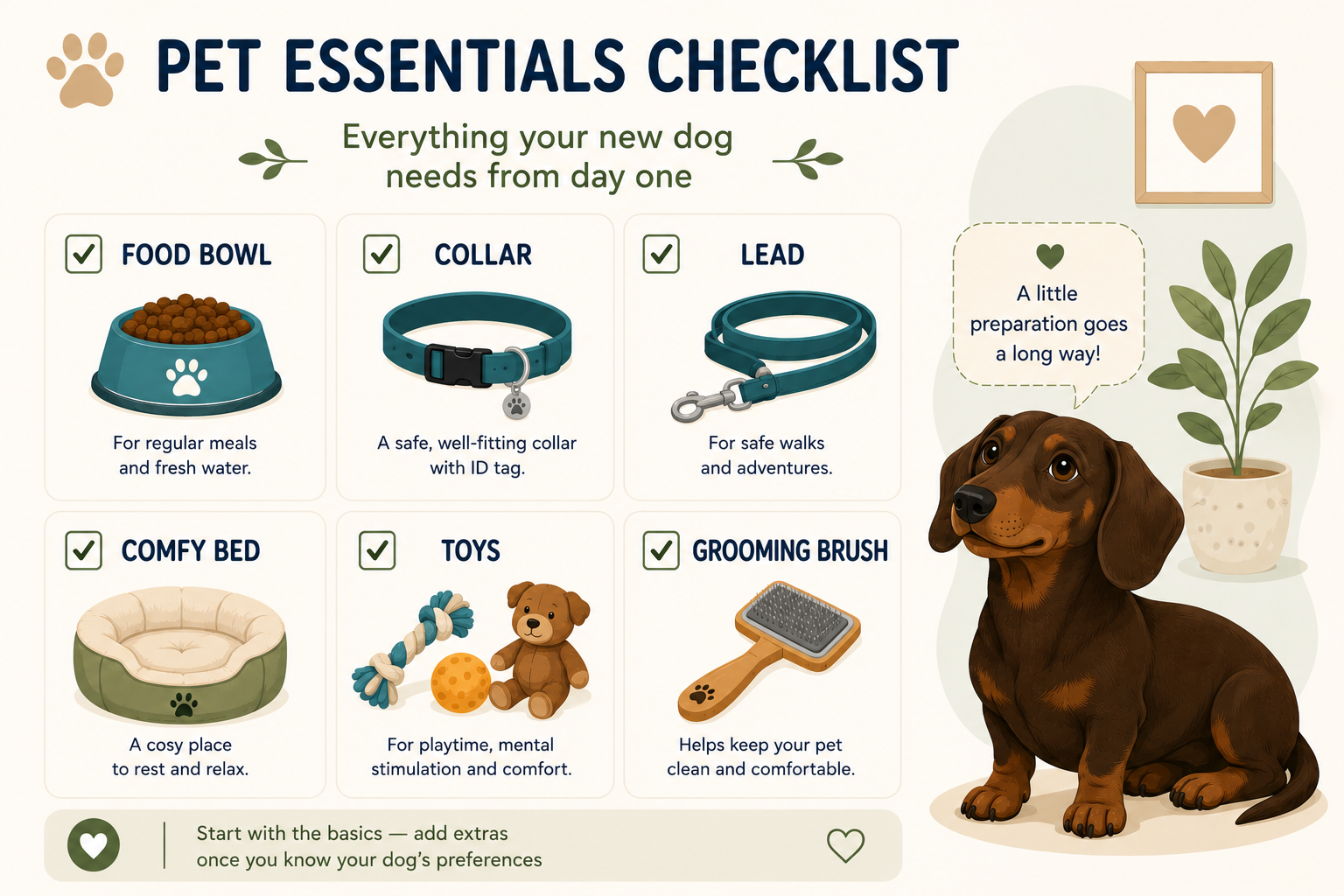
- Food and water bowls, plus the exact food your dog has been eating
- Collar and ID tag, legal requirement for any public outing
- Lead, needed immediately for garden access and vet visits
- Bed or blanket, designated sleeping area from night one
- Waste bags, required for any outdoor toilet trips
- Basic grooming brush, helps with bonding and early health checks
- A few suitable toys, redirects chewing and provides comfort
Puppy-proof your home completely before arrival. Curious puppies find dangerous items in seconds. If you’re bringing home your first puppy, our new puppy guide covers the broader essentials beyond just supplies.
Month One Additions
Once you understand your dog’s personality and preferences:
- Training treats, high-value rewards for good behaviour
- Additional toys, variety prevents boredom and destructive chewing
- Car restraint, legally required for safe vehicle travel
- Weather protection, coats for thin-skinned breeds, paw balm for winter walks
- Grooming supplies, nail clippers, ear cleaner, appropriate shampoo
- Crate or travel carrier, useful for vet visits and future travel
Introduce new items gradually. Dogs can become overwhelmed by too many changes at once.
What NOT to Buy Initially
Multiple beds before knowing where your dog prefers to sleep. Many dogs ignore expensive beds in favour of old blankets or unexpected locations.
Expensive toys until you understand what your dog enjoys. Some dogs love squeaky toys, others prefer rope or rubber. Start with variety packs and observe.
Professional grooming tools before understanding your dog’s coat type and tolerance. Basic brushes work initially, upgrade once you know what’s needed.
Specialist training equipment like clickers, long lines, or harnesses. These become valuable later but can confuse early training if misused.
Puppies vs Adult Rescue Dogs
Puppies need house training supplies: waterproof mats, enzymatic cleaners, and patience. Check your puppy’s vaccination schedule, they can’t go out safely until 1-2 weeks after their second jab, usually around 10-12 weeks.
Adult rescue dogs need transition support rather than development tools. Comfort items that smell like their previous home ease anxiety. Ask the rescue centre what bedding or toys your dog has been using. Budget for a thorough vet check-up, health histories may be incomplete.
Planning for Boarding and Travel
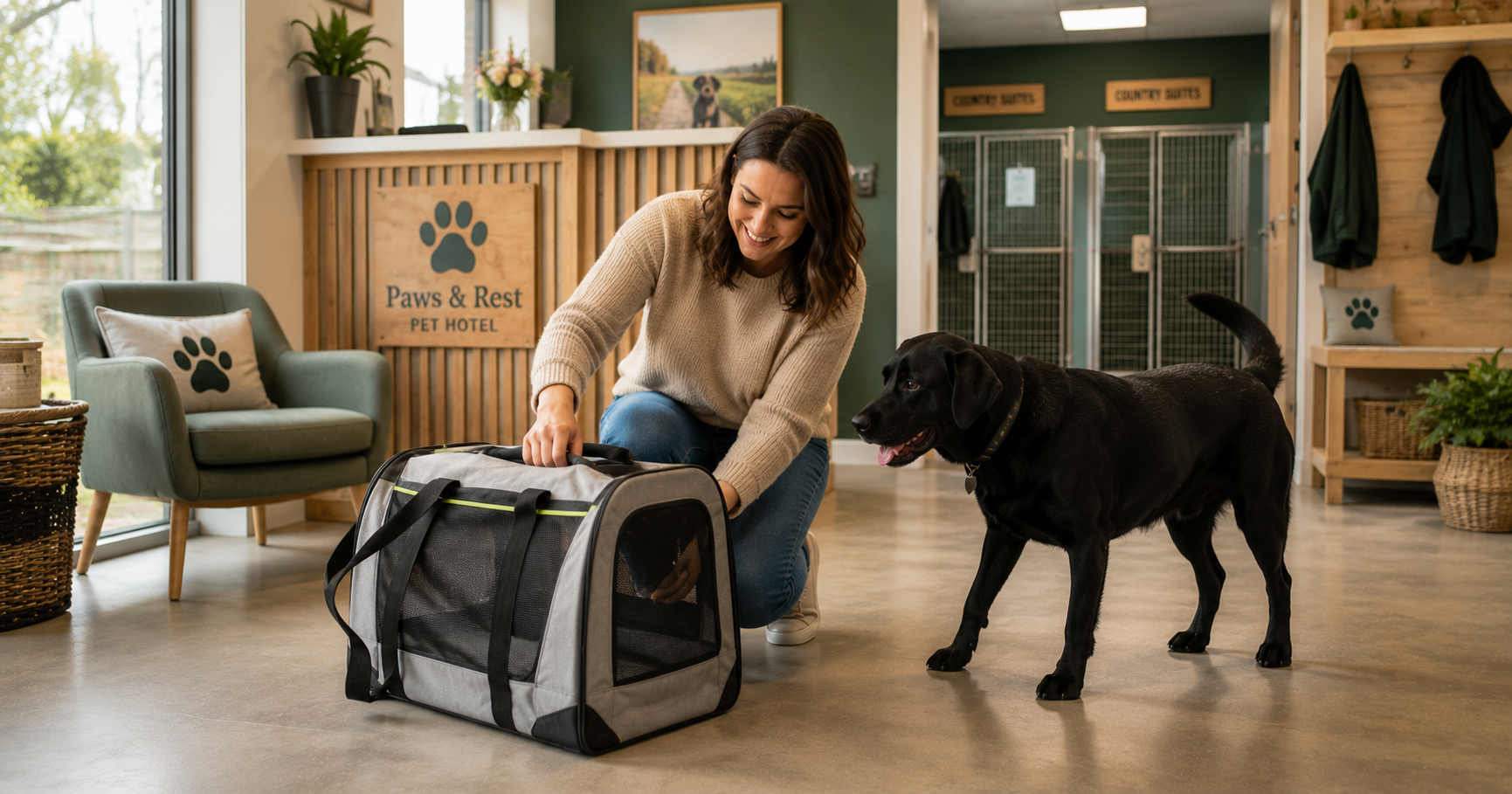
Even new owners should think about future boarding. Dogs that are comfortable in travel crates, eating from different bowls, and spending short periods away from you adapt far more easily when boarding becomes necessary.
Dogs must be properly restrained in vehicles under the Highway Code, a car harness, travel crate, or dog guard, not just a lead attached to a seatbelt. Most boarding facilities expect you to provide comfort items, any special food, and medications. Our first-time boarding guide covers what to expect. You can also browse boarding options on Tailstays to see what’s available near you.
Frequently Asked Questions
How much should I budget for dog essentials?
Initial setup typically costs £200-500 depending on your dog’s size. Monthly ongoing costs average £50-100 for food, treats, waste bags, and replacements. Budget separately for vet registration, insurance, and seasonal items.
What’s the difference between puppy and adult dog food?
Puppy food contains higher protein and fat for rapid growth, plus extra calcium for bone development. Puppies need it until 12-18 months depending on breed size. Look for “complete” on the label, this means it contains all nutrients as a main diet.
Do I need a crate for house training?
Not essential, but crates significantly speed up house training. Dogs avoid soiling their sleeping area, so an appropriately sized crate encourages them to hold their bladder. Too much space defeats the purpose, they’ll use one end as a toilet.
When can my puppy go outside?
Typically 1-2 weeks after their second vaccination, usually around 10-12 weeks old. Private gardens are fine before this. Your vet will confirm the exact timeline based on local disease risks.
What size collar and lead should I buy?
Measure your dog’s neck and add 5cm, you should fit two fingers under the collar when fastened. Adjustable collars work best for growing puppies. Standard 2-metre leads suit most situations. Avoid retractable leads during initial training.