
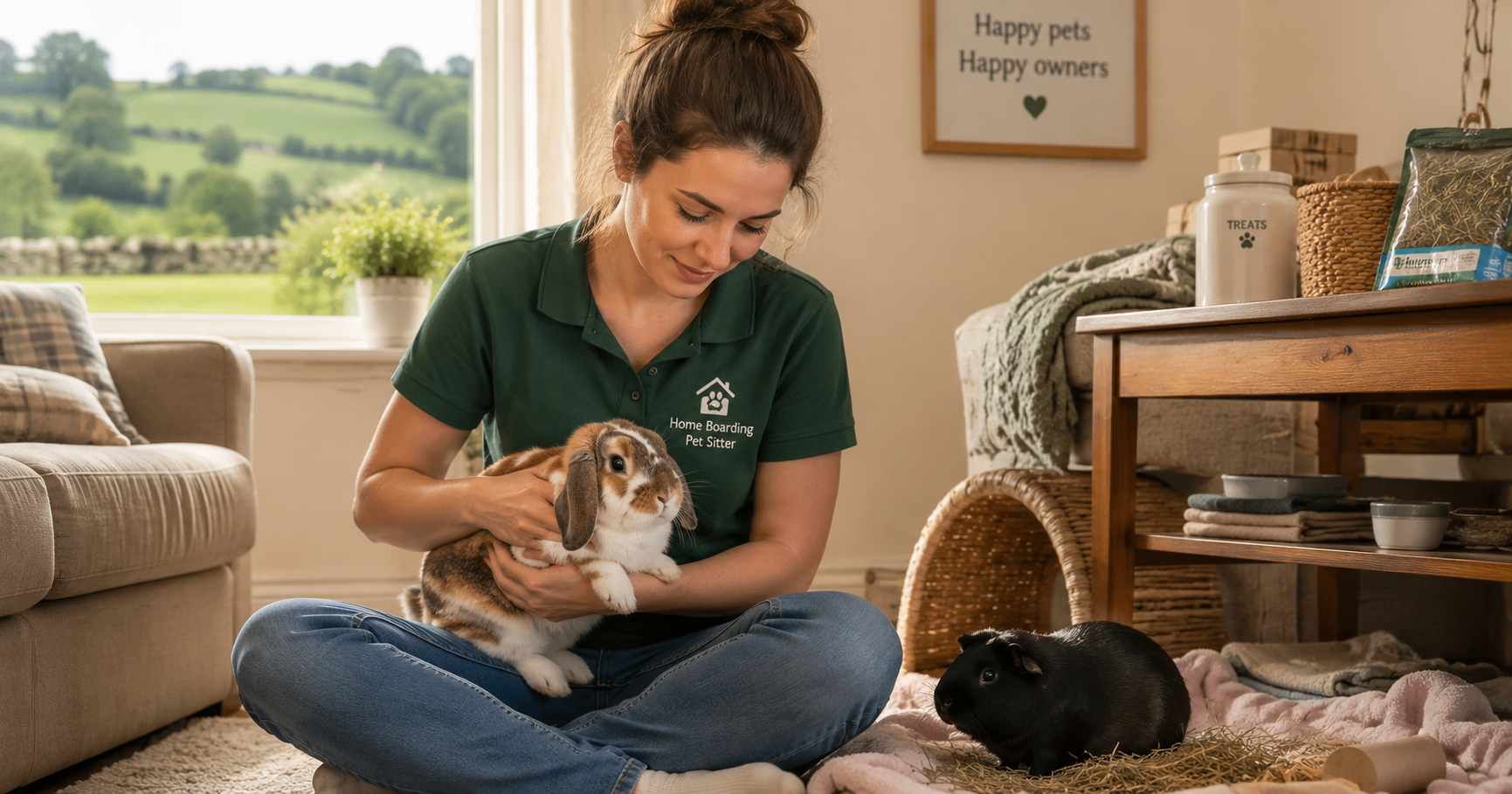
Rabbits aren’t dogs. Guinea pigs aren’t cats. And the person who does a brilliant job with your neighbour’s Labrador might not know that guinea pigs can’t produce their own vitamin C, or that a rabbit can die from sheer fright.
Small animal boarding isn’t regulated in the UK, there’s no licensing requirement, no inspections, no star ratings. That means choosing the right sitter is entirely on you.
Key Takeaways
- Small animal boarding isn’t regulated in the UK, you need to verify experience and credentials yourself
- Species-specific knowledge is essential: guinea pigs need vitamin C, rabbits need unlimited hay, hamsters are nocturnal
- In-home sitting in your pet’s familiar environment usually causes less stress than relocating to a facility
- Always arrange a meet-and-greet, watch how they handle your actual animals
- Professional services typically cost £15-25 per day; specialist boarding facilities charge £20-35
- Written care instructions and emergency vet details are non-negotiable
Understanding Your Options
What Makes Small Pet Care Different
Small animals aren’t smaller versions of cats and dogs, they’re prey species with completely different stress responses, dietary needs, and handling requirements.
Rabbits need unlimited hay, measured pellets, and daily exercise in a secure space. They’re prey animals that stress easily and can, in extreme cases, die from fear alone. Guinea pigs can’t produce vitamin C and must get it through diet, miss this and they develop scurvy. They’re social animals that shouldn’t be housed alone. Hamsters are nocturnal and territorial, needing deep bedding for burrowing and specific wheel types to prevent spinal injuries.
A sitter who doesn’t know these basics isn’t safe with your animals. For more on what good small animal boarding looks like, our guide to small animal boarding in the UK covers the full picture.
Types of Care Available
In-home sitting, someone visits your home to care for your pets. Keeps animals in familiar surroundings, which matters enormously for stress-sensitive species. Daily visits work for most small animals, though rabbits benefit from longer visits that allow proper exercise time.
Specialist boarding facilities, purpose-built environments designed for rabbits, guinea pigs, and other small animals. They understand species-specific needs but your pets face relocation stress. These facilities are less common than dog or cat boarding, mostly concentrated around larger cities.
House sitting, someone stays in your home for the duration of your trip. Maximum continuity for your pets but requires finding someone willing to commit to your full absence. House-sitting exchanges (care in return for accommodation) suit longer trips.
General pet sitters, convenient but often lacking in small animal expertise. A sitter who’s excellent with dogs may not recognise the signs of GI stasis in a rabbit or know that cedar shavings are toxic to guinea pigs.
Finding Qualified Sitters
Ask specifically about the species they’ve cared for, how many, and for how long. “I love animals” isn’t a qualification.
Professional services often carry public liability insurance, not legally required, but a strong signal of professionalism. Some sitters hold City & Guilds Animal Care certificates or have veterinary backgrounds, though neither is mandatory.
If you have rabbits, our guide to finding safe rabbit boarding covers species-specific things to look for.
Evaluating Sitters
Questions to Ask
How many of your specific species have they cared for? What challenges have they faced? What’s the longest period they’ve managed similar pets? Have they dealt with any health emergencies?
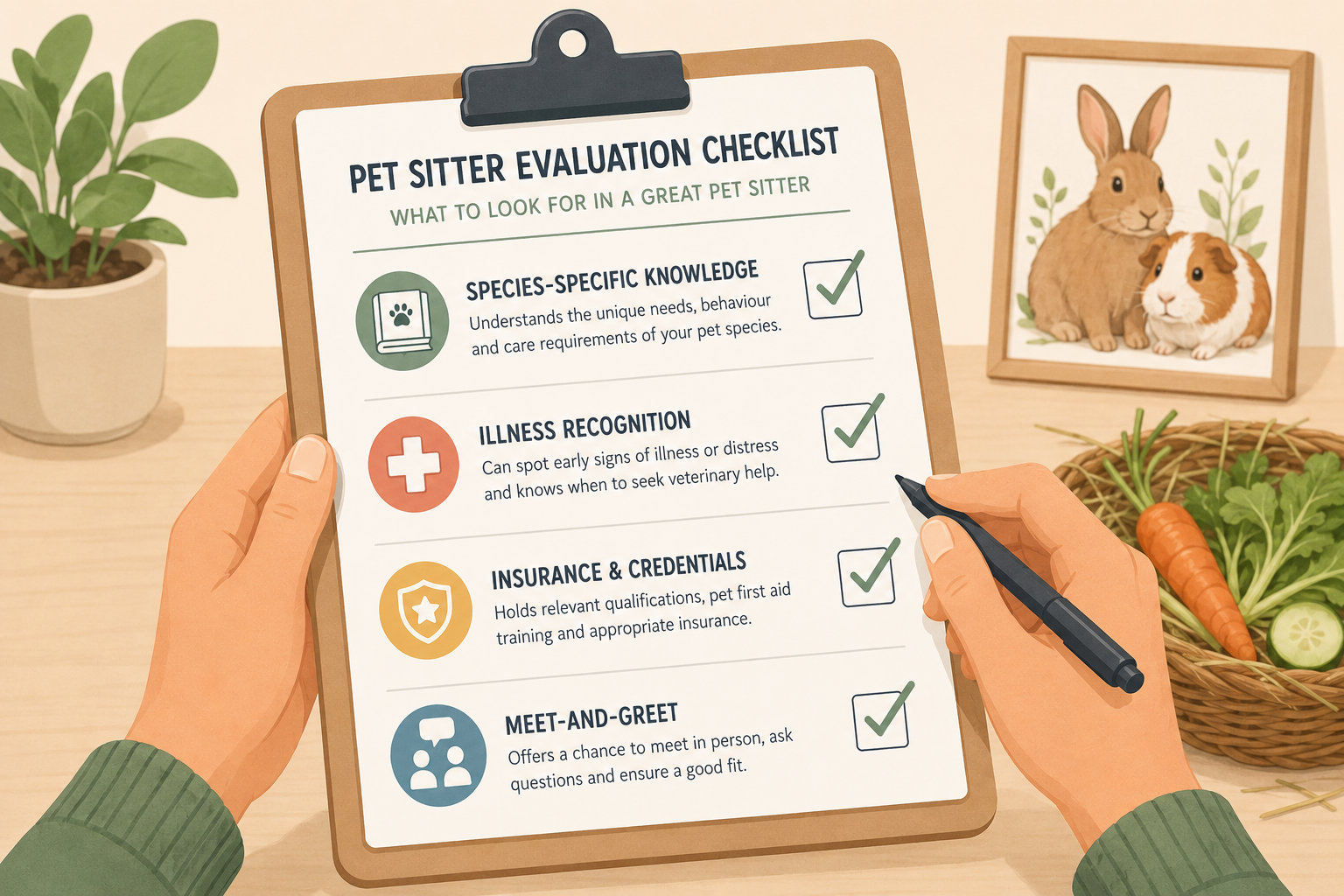
Discuss your pet’s feeding schedule in detail, guinea pigs need twice-daily pellets plus constant hay access. Rabbits require specific pellet amounts based on weight. How will they handle exercise time for rabbits or play sessions for ferrets?
Ask about illness recognition. Small animals deteriorate fast. Can they name the warning signs for your specific species? Do they know your vet and the nearest emergency clinic?
For boarding facilities, ask to see where your pets will stay. Check ventilation, temperature control, and security. If your rabbits usually have garden access, how will exercise be managed?
Costs
In-home sitters typically charge £15-25 per day for small animals. Specialist boarding facilities charge £20-35, reflecting their expertise and purpose-built environments. London and other major cities run higher.
Multiple pets usually get discounts, though each extra animal adds £5-10 per day. Holiday periods can cost 50-100% more than normal rates. The cheapest option isn’t always the best value, an inexperienced sitter who misses signs of illness could cost you far more in emergency vet bills.
Red Flags
Uncomfortable handling your pets during the initial meeting. Can’t answer basic questions about your species. Suggests inappropriate foods (iceberg lettuce for rabbits causes digestive issues). Won’t provide references or proof of insurance. Suggests separating bonded pairs.
Any of these is a reason to walk away.
Reviews and References
Reviews from other small animal owners carry the most weight. Look for mentions of specific species care and how the sitter handled problems. Ask for references from customers with similar pets, expertise with hamsters doesn’t automatically transfer to free-range rabbits.
Making It Work
The Meet-and-Greet
Always meet in person before committing. Watch how they interact with your pets, are they confident and gentle, or hesitant and clumsy? Let your animals meet the sitter while you’re present, and gauge their reaction.
Trust your instincts. If something feels off, find someone else. The best credentials on paper don’t matter if you’re not comfortable with their approach.
Preparing for the Stay
Write detailed instructions covering feeding amounts, exercise routines, cleaning schedules, and medication. Photos of correct food portions help. List all emergency contacts: your vet, out-of-hours clinic, and a local person who knows your pets.
For extended trips, arrange a trial day or overnight stay first. Agree on communication, daily photo updates reassure most owners. Confirm everything in writing: dates, rates, services, emergency procedures, and cancellation terms.
If you’re packing supplies for a boarding stay, our rabbit boarding packing guide covers what to bring.
Many pet hotels also cater to small animals alongside dogs and cats, you can browse boarding options on Tailstays to see what’s available in your area.
Frequently Asked Questions
Do small pet sitters need a licence in the UK?
No. The 2018 Animal Welfare Regulations primarily cover dog and cat boarding. Small animal sitting is unregulated, which makes it especially important to verify experience and credentials yourself.
How far in advance should I book?
At least 2-4 weeks for regular periods, 6-8 weeks for Christmas and summer holidays. Good sitters with genuine small animal experience get booked up quickly.
What if my rabbit or guinea pig gets ill while I’m away?
Make sure your sitter knows species-specific warning signs and has your vet’s contact details. Small animals deteriorate rapidly, quick action is essential. Always provide emergency clinic details too.
Can I use a general pet sitter for my small animals?
You can, but verify they have specific experience with your species. The care requirements for rabbits and guinea pigs are genuinely different from dogs and cats. Ask detailed, species-specific questions before booking.
Should bonded rabbits or guinea pigs stay together?
Always. Separating bonded pairs causes significant stress and can trigger health problems. Any sitter or facility that suggests splitting bonded animals doesn’t understand small pet welfare.