
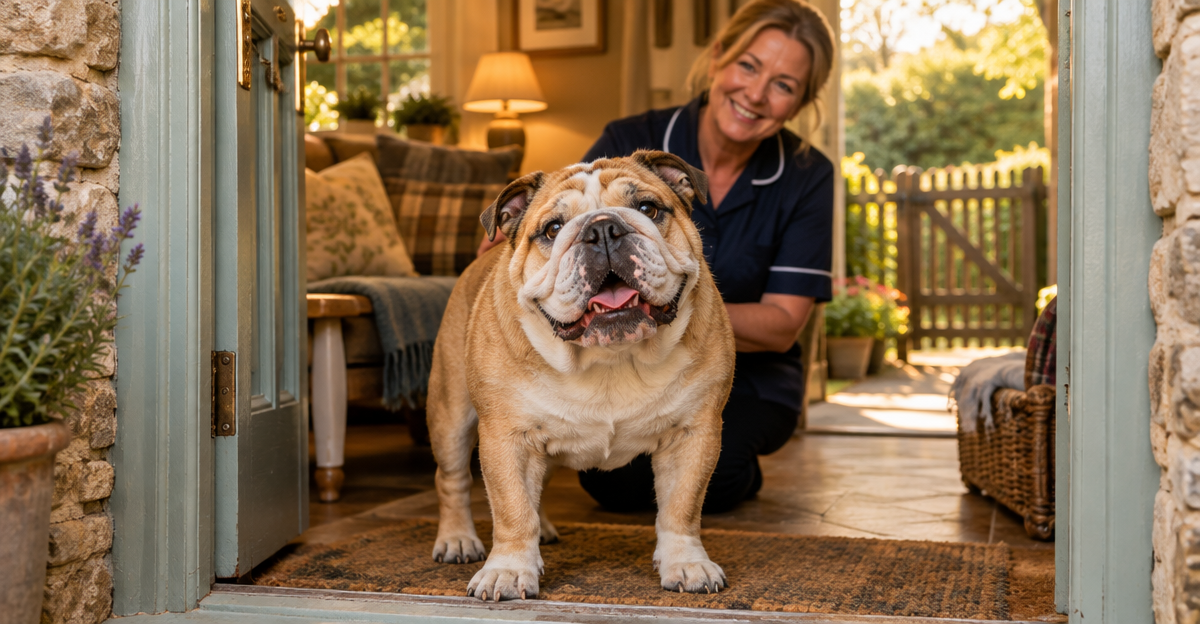
Dog boarding means your dog stays with a paid carer while you are away, either in a kennel or boarding hotel or in the carer's own home. (A sitter who stays at your house is a different arrangement, covered below.) In England, kennels and home boarders must both be licensed if they operate as a business, so the licence is where any sensible search starts.
Handing over the lead is rarely easy. Most owners feel a knot in the stomach at the kennel gate, and the best cure is knowing you did your homework. This guide takes you through it in order: choosing the type of boarding, checking the licence, shortlisting, visiting, preparing your dog and booking. There are also tips on getting a place when everyone else wants the same dates.
Key Takeaways
- In England, any commercial dog boarding needs a licence, whether it is a kennel or a home boarder.
- Ask for the licence number and star rating, and verify both with the local council.
- Visit before you book. A provider who will not show you around is telling you something.
- Match the boarding type to your dog's temperament, age and health, not just the price.
- Book early for school holidays, summer, Easter and Christmas.
Which type of dog boarding suits your dog?
Your dog's personality matters more than price here. Kennels suit confident, sociable dogs, while home boarding often suits those who find busy environments stressful.
Kennels and boarding hotels
Purpose-built kennels offer a structured routine, staff on site and facilities designed for dogs. Some are fairly basic; others feel more like hotels, with heated floors and webcams. Those extras are nice, but in our view the staff matter far more than the fittings. Kennels generally work best for dogs who cope well with noise, routine and other dogs nearby. If you are still torn, our comparison of home boarding vs kennels goes into the trade-offs in more detail.
Home boarding
Your dog stays in the carer's family home, usually alongside far fewer dogs. Many anxious and older dogs settle better this way. It is not a looser option, though. A commercial home boarder needs a licence just as a kennel does, with standards adapted to a domestic setting.
Charity and rescue-run boarding
Some rescues run boarding to raise funds. The National Animal Welfare Trust (NAWT), for example, says that proceeds from its boarding go back into caring for homeless animals. Places are limited and the species accepted vary by centre, so check what each one offers, and ask for the licence number exactly as you would anywhere else.
Dog sitters in your own home
A sitter who stays in or visits your home is a separate arrangement. Confusingly, "dog sitter" is also used for home boarders, so always ask which one you are dealing with. House sitting in your own home generally does not require a licence, whereas a carer looking after your dog in their home does. This option keeps your dog's routine intact, but it relies heavily on trust. Ask for references and meet first.
Matching the type to your dog
- Anxious dogs: home boarding or a sitter at your home, with a meet-and-greet first.
- Senior dogs: quieter home boarding, or a kennel with calm, separate areas and staff comfortable with mobility needs.
- Puppies: check vaccinations are complete, and choose a provider experienced with young dogs.
- High-energy dogs: kennels with generous exercise and large outdoor areas, or an active home boarder.
- Multi-dog households: ask whether your dogs can share a kennel or space, and how this is priced.
- Dogs with medical needs: choose staff who are confident giving medication, and confirm vet arrangements in writing.
How to check a dog boarding licence
A licence is the baseline, not a bonus. If a provider cannot show you a valid one, stop there, however lovely their photos look.
Which rules apply
In England, boarding is regulated under the Animal Welfare (Licensing of Activities Involving Animals) (England) Regulations 2018, with statutory guidance from Defra for local councils. Wales has similar requirements under separate legislation, and Scotland and Northern Ireland have their own regimes, so check the local rules if you live outside England. For a fuller explanation of what the rules cover, see our guide to UK dog boarding regulations.
Who needs a licence
Defra's statutory guidance says all dog kennel boarding activities need a licence if carried out as a commercial business. The test is whether the operator makes a sale, earns a profit, or takes a commission or fee. That covers kennels, home boarders and anyone who arranges boarding for a fee. Dog day care is licensed separately, so a day care licence does not automatically mean overnight boarding is covered. Worth checking if your dog goes to the same place for both.
Where to find the licence number
The guidance expects the licence to be displayed on the premises and the licence number to appear in the operator's advertising, including their website. That gives you a quick first test. No number online? Ask why.
Verifying a licence with the council
Contact the licensing team at the local council where the business operates. They can confirm whether the licence is current, which activities it covers and what star rating it holds. Keep their reply for your records.
What the star ratings mean
Licensed boarding businesses in England are rated from 1 to 5 stars under Defra's guidance, reflecting how well they meet the required standards. Operators who meet the higher standards can earn higher ratings, which may come with longer licence periods, and all licensed businesses are subject to inspection. A high rating is a useful signal, but it is a snapshot from inspection day. You still need to see the place for yourself.
Licence red flags
- No licence number on the website or in adverts.
- Vague or evasive answers when you ask about the licence.
- Reluctance to show you the licence itself.
- Claims like "fully approved" with no detail behind them.
Shortlisting by location, availability and price
A "dog boarding near me" search is a fine starting point. Then narrow it down by licence, type, availability and budget. Staying reasonably close to home makes drop-off easier and matters a great deal if you ever need an emergency pick-up.
Tailstays lists 2,704 hotels, and you can find options near you and compare providers side by side. Our coverage is strongest in London (31 listings), Leeds (25), York (25), Nottingham (22) and Bristol (20), followed by Southampton, Stoke-on-Trent and Swansea (19 each), Derby (18) and Liverpool (17).
What affects the price
Tailstays does not hold pricing data, so ask each provider for a written quote. Prices typically vary with:
- Dog size, and whether you are boarding more than one dog.
- Peak or off-peak dates, with holiday supplements common.
- Extras such as additional walks, grooming, medication or collection.
- Whether multi-dog discounts or long-stay rates are offered.
Booking for school holidays and peak dates
This is where planning pays off. The best places go first over summer, Easter and Christmas, and reputable kennels and home boarders often run waiting lists for those dates. Start looking as soon as your plans are firm. If your first choice is full, ask to join their cancellation list and keep a backup from your shortlist ready.
Visiting a kennel or home boarder: what to check and ask
A visit tells you more than any website. Good providers welcome questions, and how they respond to yours is part of the test. Use the lists below as your checklist on the day.
The premises
- Secure entrances, ideally with a double barrier so a dog cannot slip out.
- Clean, dry kennels or rooms with non-slip floors.
- Safe outdoor areas, good ventilation and a comfortable temperature.
- Separate spaces, so dogs are not forced together.
- The licence on display, with the number matching what you were told.
Staffing questions
- How many dogs does each staff member look after? Defra's guidance sets minimum and higher standards for staffing levels, so ask how this provider's ratio compares and whether it changes overnight.
- What training do staff have? The Regulations do not mandate a specific qualification, but the licence holder must show competence, so ask how they train their team.
- Is anyone supervising overnight, or on call?
Care questions
- What and when do they feed, and can they follow your dog's usual diet?
- How often is each dog exercised, and for how long?
- How do they handle socialisation, and can your dog opt out?
- What happens if your dog becomes unwell, and which vet do they use?
- What are their emergency and evacuation plans, for example in a fire?
Records and policies
- Which vaccinations do they require, including kennel cough?
- Do they carry insurance? Most do, though it is not a legal requirement.
- What are the cancellation and deposit terms?
Visit red flags
- You are not allowed to see where your dog will actually sleep.
- Strong smells, damp or visible dirt.
- Staff cannot answer basic questions about emergencies.
- Pressure to pay a deposit on the spot.
Any one of these is enough reason to walk away. If you have not built a shortlist yet, compare providers on Tailstays and arrange visits to your top two or three.
Getting your dog ready for boarding
Good preparation makes the stay smoother for everyone, your dog included. Give yourself a few weeks, and more in peak season.
Vaccinations and health
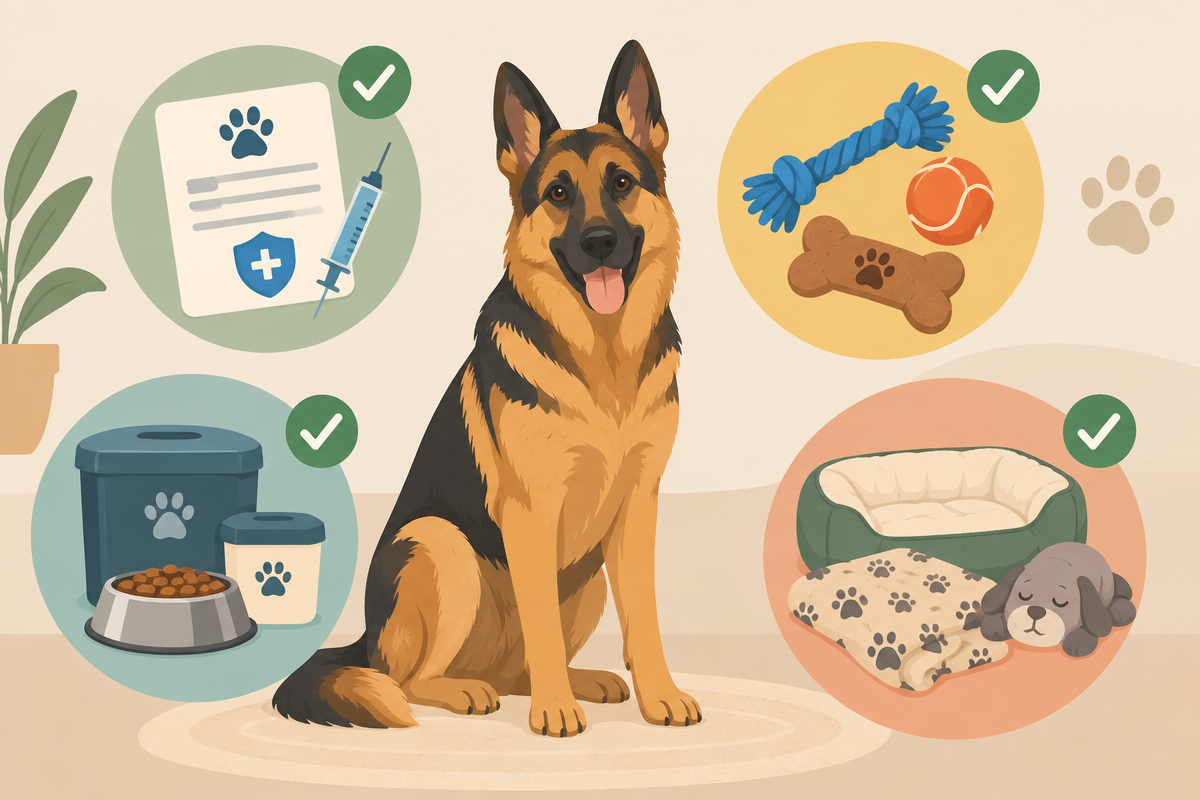
Most providers ask for up-to-date core vaccinations and kennel cough cover, plus flea and worming treatment. Timing depends on the vaccine: intranasal kennel cough vaccines generally take effect faster than injectable ones, so ask your vet and check what your provider requires. Our guide to kennel cough before boarding explains the options. Book the vet appointment early so you are not caught out the week before you leave.
Try a trial stay
A trial day or overnight stay is a gentle introduction, and it shows you how your dog copes before a longer booking. For anxious dogs, puppies and first-timers, we would call it essential rather than optional.
What to pack
- Their usual food, pre-portioned if possible.
- Bedding and a familiar toy or blanket.
- Medication with clear written instructions.
- Vaccination records and microchip details.
- Your emergency contacts and your own vet's details.
For a fuller list, see what to pack for dog boarding.
Medication and special diets
Write everything down: doses, times and how your dog prefers to take tablets. Confirm the provider is happy to give the medication, then go over it again in person at drop-off.
Drop-off, pick-up and what to do if something goes wrong
Get everything in writing before you hand over the lead. It protects you and the provider.
- Check the booking confirmation for dates, price, deposit and cancellation terms.
- Keep goodbyes short and calm. Dogs pick up on our nerves.
- Ask what updates they offer, such as photos or messages.
- At pick-up, ask how your dog ate, slept and behaved.
- Expect a tired dog for a day or two, and keep things quiet at home.
If something goes wrong
Raise it with the provider first, calmly and in writing. If the response is poor or you have welfare concerns, contact the licensing team at the local council, which can investigate licensed premises. If your dog needs treatment, see your vet and keep the records.
When you are ready to start looking, search licensed dog boarding near you on Tailstays.
Dog boarding FAQs
How much does dog boarding cost in the UK?
It varies by region, dog size, season and extras. Tailstays does not hold pricing data, so look at recent published surveys and ask each provider for a written quote. Compare what is included, such as walks, medication and collection, rather than the headline figure alone.
Is dog boarding legal without a licence?
In England, not if it is run as a business. The 2018 Regulations apply to kennels and home boarders alike. Wales, Scotland and Northern Ireland each have their own rules.
Kennels or home boarding: which is better?
Neither suits every dog. Home boarding often works for anxious or older dogs, while kennels suit sociable, confident dogs who like structure. Judge on your dog's temperament and the standards you see on your visit.
How far in advance should I book?
For peak dates, as soon as your plans are fixed. Outside those periods, a few weeks is often enough. If your dates are already full, ask about a waiting or cancellation list.
Can my dog be boarded if they are not vaccinated or have kennel cough?
Most providers will not take unvaccinated dogs, and they will not accept a dog with kennel cough because it spreads easily. Speak to your vet about vaccine timing, and tell the provider straight away if your dog is unwell.