
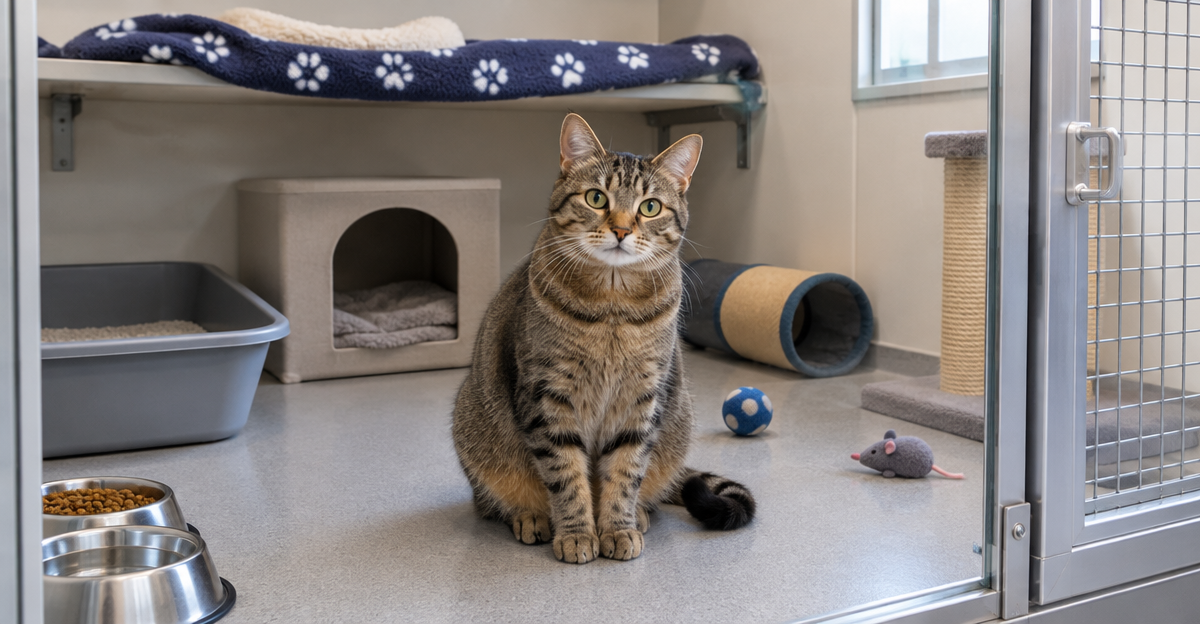
Cats and moving home are a difficult mix, because cats bond to places far more than most owners realise. For many households, a short cattery stay from the day before the move to the day after is the least stressful way through it. A trusted friend, or keeping your cat with you in a closed room, can work too.
This guide covers where your cat should be on moving day, a timeline you can follow and how to settle them in afterwards. It also answers the question almost every outdoor-cat owner asks: when can they go out again?
Key Takeaways
- Cats are territorial and bond to their home environment, so a move can unsettle them even if you stay calm.
- Choose the least stressful option for the shortest time: a cattery, a trusted friend, or staying with you in a closed safe room.
- Use a safe room at both ends of the move, with familiar bedding, litter, water and a hiding place.
- Keep outdoor cats in for at least 2-3 weeks, and longer for anxious cats or short-distance moves.
- Update your cat's microchip details as soon as you have your new address.
Why Is Moving Home So Stressful for Cats?
Cats are a territorial species and form strong bonds with their surroundings, which is why International Cat Care describes house moves as potentially very stressful for them. Your cat has no idea you are moving somewhere better. All they know is that the smells, sounds and routines they rely on have vanished.
Scent is a big part of this. Cats mark their territory by rubbing their cheeks on furniture, doorframes and corners, and that scent map tells them a space is safe. Boxes, strangers and a changed layout wipe it out all at once. It's why Cats Protection stresses planning ahead at every stage of a move.
Signs of stress to watch for
Every cat shows stress differently, and some hide it very well. Common signs include:
- Hiding for long periods, or refusing to come out at all
- Over-grooming, sometimes leaving thin or bald patches
- Eating less, or not eating
- Toileting outside the litter tray
- Spraying or scratching furniture to re-mark territory
- Unusual vocalising, especially at night
A little of this in the first few days is normal. If it carries on, see the section on professional help further down.
Where Should Your Cat Be on Moving Day? Cattery, Friend or With You
There are three realistic options, and Cats Protection lists all of them: a cattery, a trusted friend or relative, or keeping your cat with you. The right choice depends on your cat's temperament and how chaotic your move is likely to be. Be honest with yourself about the second part. Most moves end up busier than planned.
Is a cattery right for your cat?
This table gives a quick steer.
| Your cat or situation | Best option |
|---|---|
| Nervous, shy or easily spooked | Cattery, or a friend they already know |
| Long-distance or multi-day move | Cattery |
| Young children or many helpers in and out | Cattery |
| Several cats who don't all get on | Cattery with separate housing |
| Calm cat, short local move, few people involved | With you in a closed safe room |
| Bonded cat with a friend who has no pets | Trusted friend or relative |
| Older cat or one on regular medication | With you, or a cattery experienced in senior care |
In our view, a cattery is the safest bet whenever moving day will be noisy or unpredictable: removal crews propping doors open all day, an overnight gap between homes, or several cats to contain at once. Most people book from the day before the move to the day after. That keeps your cat out of harm's way while the doors are open, and gives you time to set up their safe room before they arrive.
Staying with a friend or relative can work if your cat already knows the person. Ideally the home has no other pets, or your cat can have a room to themselves. Keep them indoors throughout, because a cat in a strange neighbourhood can bolt, and ask your friend to use the same safe-room set-up you would.
Keeping your cat with you suits calm, confident cats, short local moves and households with few helpers. It relies on a closed safe room and someone reliable watching the door. If you can't guarantee both, one of the other options is safer.
Checking a cattery's licence
In England, catteries need a licence under the Animal Welfare (Licensing of Activities Involving Animals) (England) Regulations 2018, and Wales has similar requirements under separate legislation. Scotland has its own arrangements, so it is worth asking any cattery there how it is licensed and inspected. Our guide to UK pet laws on welfare, boarding and renting explains the differences in more detail.
You can compare catteries and pet hotels near you on Tailstays, then check each provider's licence with them directly.
- Ask what vaccination proof they need and how far ahead of arrival it must be in place. Requirements and timings vary between catteries, so don't assume.
- Book early. Moving dates often land in busy periods such as school holidays and weekends, and good catteries fill up.
- Red flag: in England, a cattery that can't show you a current licence.
What to ask before you book
A cattery stay is itself a change for your cat, so it pays to look closely at how each one operates.
- Visit first if you can. Reputable providers are happy for you to look round. Red flag: a cattery that refuses visits.
- Ask how they handle anxious cats. If you're worried about this, our guide to why cats get stressed at the cattery covers what good care looks like.
- If you have several cats, ask whether they get separate housing or shared space.
- Ask whether staff can give medication and follow a feeding plan. For older cats or those with medical needs, put medication schedules and vet details in writing.
- Check they can take a short-notice booking if your dates shift.
Drop-off, collection and what to pack
- Agree a drop-off time before the removal crew arrives.
- Agree a collection window with some slack in it, and ask whether they'll accept a late collection if the move overruns. Red flag: a cattery that won't.
- Bring a blanket or bedding that smells of home, and pack their usual food so their diet doesn't change on top of everything else. Our cat boarding checklist covers the rest.
Got your moving dates? Search catteries near you and check availability before the busy weeks book up.
Your Moving Timeline, From Six Weeks Out to Moving Day
Moves are full of big jobs, and the small cat-related ones are easy to forget. This countdown keeps them on track.
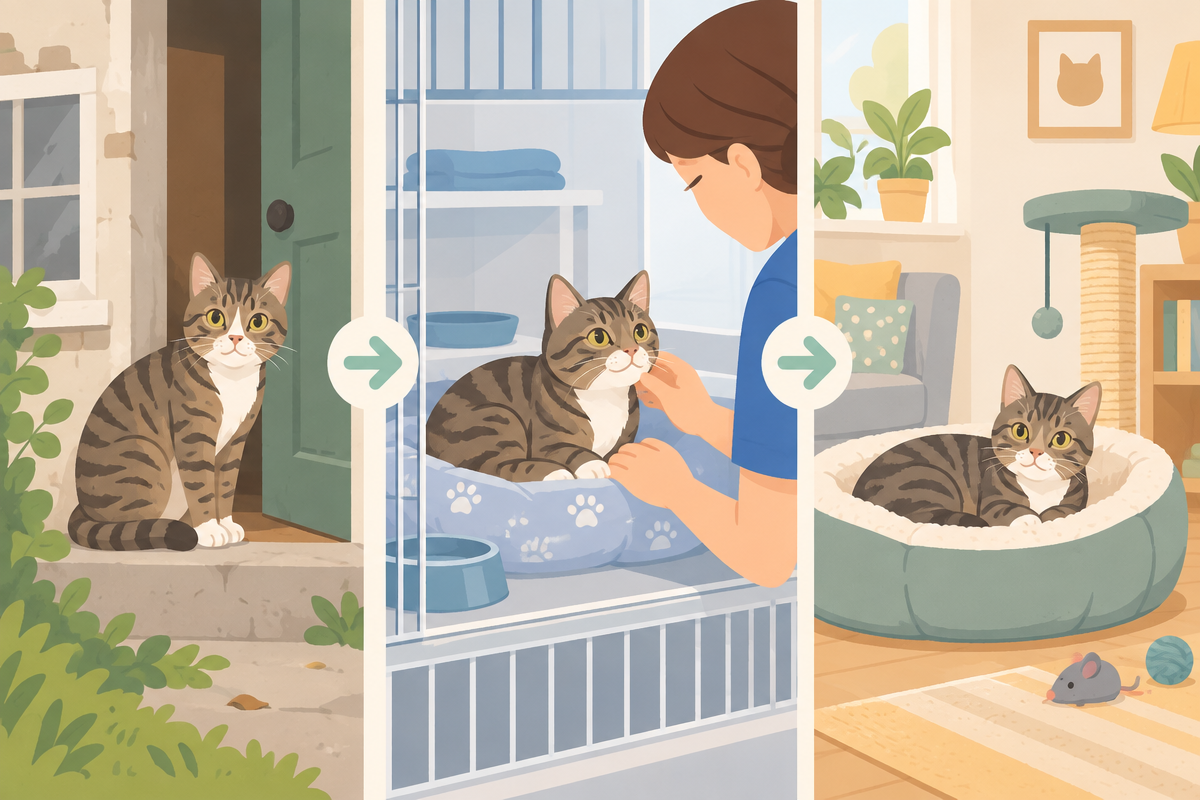
4-6 weeks before (or as soon as you have a moving date)
- Book your cattery if you're using one.
- Check your cat's vaccination status against the cattery's policy, and book a vet appointment if a booster is due.
2 weeks before
- Confirm dates with the cattery, friend or whoever is helping.
- Start carrier training: leave the carrier out, add treats and bedding, and feed some meals inside it. If yours is flimsy or hard to clean, see our advice on choosing the right cat travel carrier.
- Order a pheromone diffuser for the new home.
- Check your cat's microchip details are correct and ready to update.
1 week before
- Set up the safe room with a bed, litter tray, bowls and the carrier.
- Leave existing litter and water spots elsewhere untouched, so the rest of the house feels normal for now.
The evening before
- Move the scratching post, toys and water into the safe room.
- Secure windows and check the door closes properly.
- If your cat gets travel sick, withholding food for 3-4 hours before the journey is commonly advised. Check with your vet if you're unsure.
Moving day
- Put your cat in the safe room with a clear sign on the door so the removal crew knows to keep it shut.
- Load your cat into the carrier last, just before you leave.
- Secure the carrier on a back seat or in the footwell with a seatbelt. Never put it in the boot or the removal van.
- In hot weather, keep the car cool and never leave your cat in a parked car.
- On long journeys, take breaks, but don't let your cat out of the carrier.
If your cat is at a cattery, the only job today is to stick to the collection window you agreed.
How Do You Settle a Cat Into a New Home?
Start with a single safe room, then build outwards one room at a time. Go slowly. Rushing almost always backfires, because a cat who feels overwhelmed tends to hide for longer.
Set the safe room up before your cat arrives, ideally with a pheromone diffuser plugged in a few hours earlier. Take your cat straight there, open the carrier and let them come out in their own time. Provide a hiding place and something that smells of you, such as a worn T-shirt.
Then expand their territory gradually:
- Once your cat is eating, using the litter tray and seems relaxed, open the door to one more room.
- Spread their scent: wipe a soft cloth gently on your cat's cheeks, then rub it on furniture and doorframes at cat height.
- Repeat room by room, letting them retreat to the safe room whenever they want.
Keep routines steady. Small, frequent meals and regular play sessions give your cat something predictable while everything else is new. Permanently indoor cats can take longer to adjust because they have no outside world to fall back on, so familiar furniture and bedding matter even more.
If you're moving to a flat or rental and plan to fit a cat flap, check your tenancy agreement early, as landlords often need to approve it.
Multi-cat homes
Give each cat their own food, water, litter tray and bed. A common rule of thumb is one of each resource per cat plus one extra, spaced apart so no cat has to guard a single spot. That matters most when you're downsizing. If your cats don't get on, use separate safe rooms and reintroduce them gradually once each has settled. Stress can make even friendly cats snappy with each other.
Pheromone diffusers
Lily's Kitchen vet Rory Cowlam suggests using a pheromone product for the first three months in the new home. That is one vet's advice rather than a standard, so treat it as a guide and ask your own vet what suits your cat.
Outdoor Cats: How Long to Keep a Cat Indoors After Moving
Keep an outdoor cat inside for at least 2-3 weeks after moving. Advice differs slightly between sources: Cats Protection says at least three weeks, International Cat Care says two to three, and Lily's Kitchen says at least two.
The gap is small, and the reason is simple: every cat adapts at their own pace. We'd treat 2-3 weeks as a floor, not a target, and go longer for anxious cats or short-distance moves, where the pull back to the old home is stronger. A few extra days indoors costs you nothing. A lost cat costs a great deal.
How to do the first outing
- Choose morning or early afternoon, so your cat has plenty of daylight to explore.
- Go before a meal, so they're hungry and more likely to come back.
- Go out with them, leave the door open and let them walk out rather than carrying them.
- Keep the first trips short, then lengthen them gradually.
Microchip first
Make sure the microchip is registered to your new address before any outing. Under the Microchipping of Cats and Dogs (England) Regulations 2023, microchipping is compulsory for pet cats over 20 weeks old in England, with the requirement in force since 10 June 2024. That rule applies to England only, so check the current rules on gov.uk if you live in Scotland or Wales, where arrangements differ.
Cat flap and neighbourhood cats
A microchip-activated cat flap keeps strange cats out of your home. Expect some curiosity, or even a scuffle, with local cats while yours establishes itself, and stay nearby on early trips if you can.
Will My Cat Try to Go Back to the Old Home?
Some cats do, and the risk is highest after a short-distance move. If the old home is only a few streets away, your cat may well recognise the area and head straight for it.
To reduce the chance:
- Keep your cat indoors for longer than the minimum, especially after a local move.
- Ask the new occupants not to feed or encourage your cat if they turn up.
- Make the new home the place where food, warmth and attention are.
Stories of cats crossing huge distances to reach a former home get repeated a lot, but they're hard to verify and not something to plan around. The safer assumption is that a cat who feels secure in the new home is far less likely to wander. The risk is lower on a long-distance move, but the same careful indoor period still applies.
If your cat keeps turning up at the old address despite all this, talk to your vet or a qualified behaviourist.
Admin Checklist After the Move
- Microchip database: update your address and phone number straight away, then use a lookup tool to confirm the change has gone through.
- Vet: register with a local practice and ask your old vet to send your cat's records.
- Insurance: tell your pet insurer your new address.
- Collar tag: replace it if it carries your old details.
When to Seek Professional Help
A few unsettled days are normal. Contact your vet if your cat:
- Hasn't eaten for 24 hours or more
- Is still hiding constantly after a couple of weeks
- Keeps toileting outside the litter tray
- Shows aggression that is out of character
- Is over-grooming
Start with the vet to rule out medical causes, then consider a qualified behaviourist if stress seems to be the root of it.
FAQs
How long does it take a cat to settle after moving?
It varies. Many cats start exploring within days, while others need several weeks to feel secure. Go at your cat's pace and keep routines steady.
Should I put my cat in a cattery when moving house?
It's a good option if your cat is nervous, the move is long or complicated, or doors will be open all day. A short stay from the day before the move to the day after keeps them safe while you get the new home ready.
Can I move house with an indoor-only cat?
Yes. Indoor cats can take longer to adjust, so use a safe room, keep familiar furniture and bedding, and expand their space gradually.
How do I stop my cat running back to the old house?
Keep them indoors for longer than the minimum, especially after a short-distance move. Ask the new occupants not to feed them, and make the new home rewarding with food, play and comfort.
Should I use pheromone diffusers, and for how long?
Many owners find them helpful. One vet suggests the first three months, but there's no fixed rule, so ask your own vet what suits your cat.
Is it cruel to move an outdoor cat to a flat?
Not necessarily, but it needs thought. Some outdoor cats adapt well with enrichment such as climbing space, play and a secure balcony or catio, while others struggle. Watch for signs of stress and talk to your vet if you're unsure.