
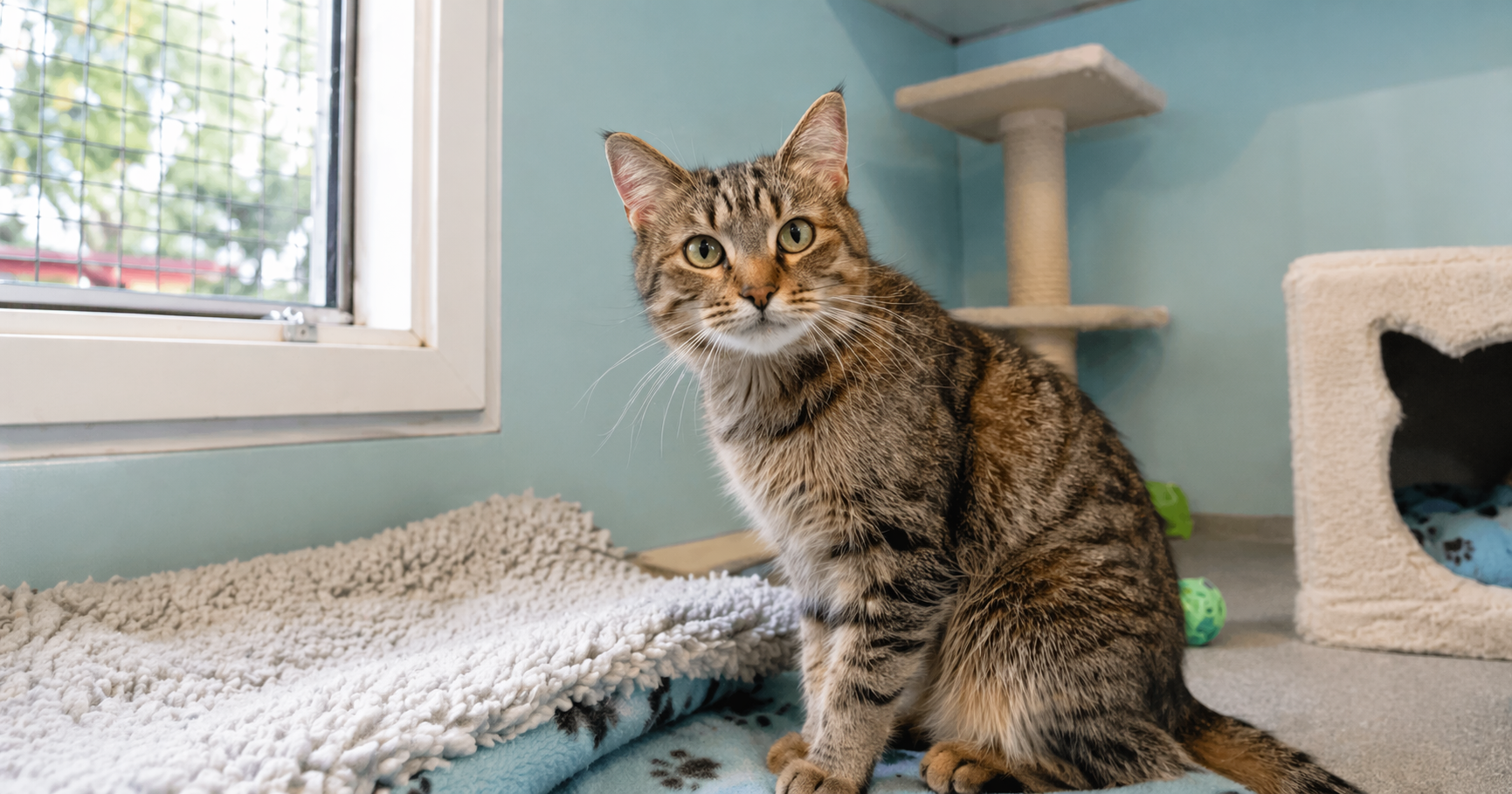
Cattery visits can be overwhelming for cats, even confident ones. Unlike dogs who may treat boarding as an adventure, cats are territorial creatures who depend on familiar surroundings for security. Understanding why your cat gets stressed, and what actually helps, makes the difference between a manageable stay and a traumatic one.
Key Takeaways
- Cat stress at catteries comes from territory disruption and unfamiliar scents, not just missing you
- Normal adjustment stress resolves within 2-3 days, anything lasting over a week needs veterinary attention
- Prevention beats treatment: choosing the right cattery and preparing properly reduces stress significantly
- Some cats never adjust to cattery boarding, in-home cat sitting may be the better long-term option
Why Catteries Stress Cats Out
Your cat's stress begins the moment they enter an unfamiliar space. Catteries smell of cleaning products, other cats, and strange humans, a sensory assault for creatures who rely on scent to navigate their world. The confined space compounds this: even roomy catteries restrict your cat's territory to a single pen, removing their ability to retreat to safe spaces when overwhelmed.
Then there's the social pressure. Most cats don't enjoy being near unknown cats, despite popular belief. The sound and scent of other cats nearby creates constant low-level anxiety. Some become hypervigilant, spending the entire stay watching for threats rather than resting. Others shut down completely, hiding and refusing to engage.
Routine disruption matters too. Your cat might eat at 7am and 6pm at home but face meals at 9am and 4pm at the cattery. These seemingly small changes feel significant to routine-dependent animals. The absence of familiar cues, your movements around the house, everyday sounds, regular lighting, leaves them disoriented.
Cats bonded closely to one person or from single-cat households tend to experience the strongest stress. But even independent cats can struggle with the combination of territory loss, strange smells, and forced proximity to other animals.
How to Spot Stress
Physical signs: appetite loss is the most common indicator, stressed cats often refuse food for 24-48 hours. Excessive grooming around the neck and flanks (or stopping grooming entirely), digestive upset, and hiding are all typical.
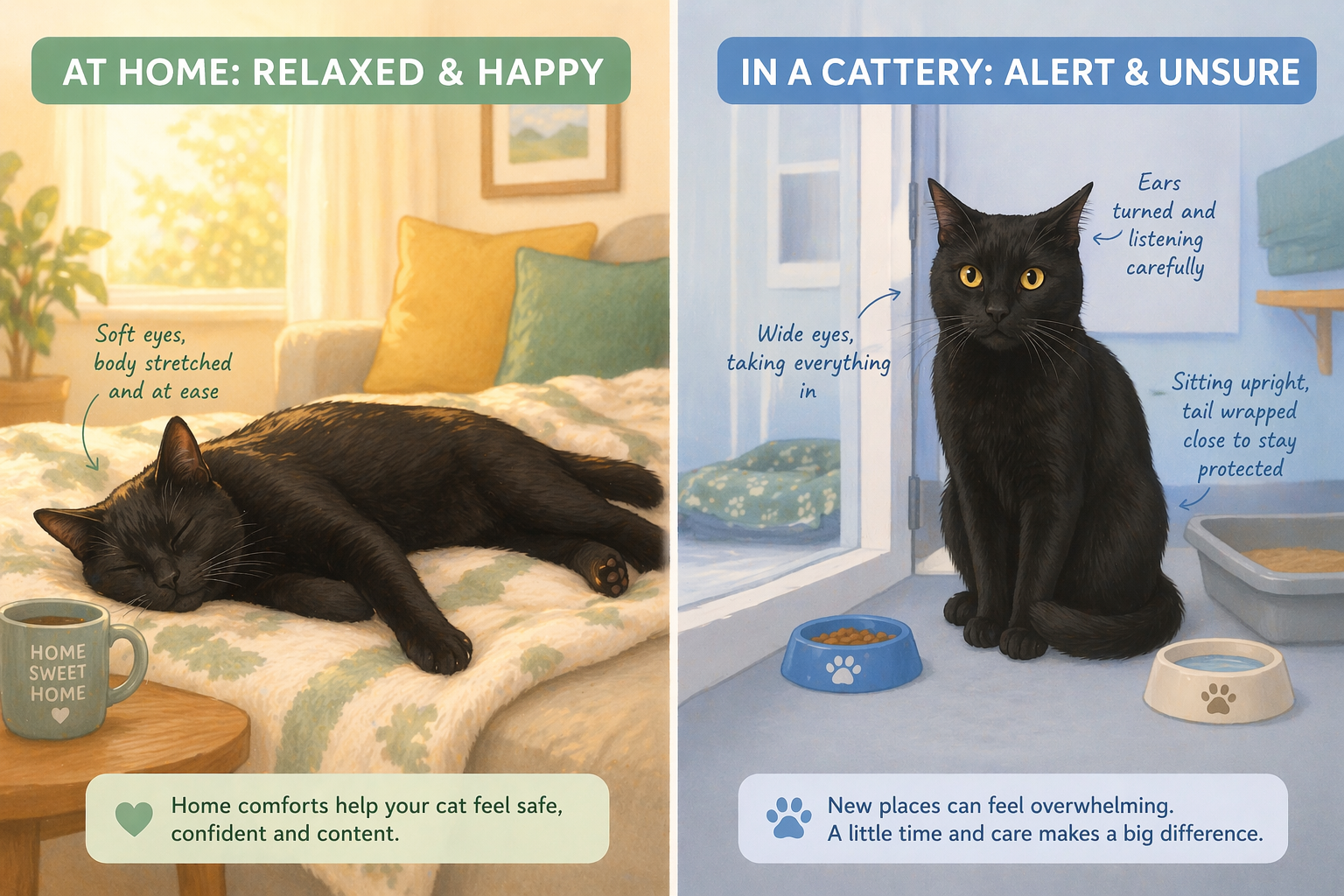
Behavioural changes: hiding is normal initially but should decrease after 24 hours. Cats who remain hidden throughout their stay are significantly stressed. Aggression toward staff, hissing, swatting, indicates fear rather than bad temperament. Litter tray avoidance reflects both stress and territorial anxiety in the unfamiliar space.
After returning home, expect some continued oddness. Your independent cat might suddenly follow you everywhere, or mark furniture by rubbing against it excessively. Sleep patterns may be disrupted for a few days. This is normal and usually resolves within 48-72 hours.
When to worry: stress symptoms lasting more than a week after returning home need veterinary attention. Complete food refusal beyond 48 hours at the cattery, self-harming behaviour, or aggression toward family members after returning all suggest the experience was genuinely traumatic.
Choosing a Cattery That Suits Your Cat
Not all catteries suit all cats, and visiting yourself matters more than reading reviews. Your anxious cat needs a calm, quiet environment, not necessarily the fanciest facility.
Look for individual pens with outdoor runs rather than communal areas. Cat-only facilities tend to work better for nervous cats than mixed dog-and-cat operations. Check how they handle shy cats: good catteries provide extra hiding spaces, minimal handling, and ask detailed questions about your cat's preferences before you've even booked.
All catteries in England operating commercially should be licensed under the 2018 Regulations. Ask to see the licence and check it's current.
Warning signs: staff who dismiss your concerns about anxiety, overcrowded pens, strong chemical smells, or cats who look stressed when you visit. Trust your instinct, if the place doesn't feel right to you, your cat will agree.
Preparing Your Cat
Start 2-3 weeks before departure, not the day before.
Carrier training: Make the carrier a comfortable space rather than something that only appears for vet visits. Leave it open in the house with a blanket inside. Feed treats near it. The goal is neutralising the association between carrier and stressful journey.
Routine adjustment: If the cattery feeds at different times, gradually shift your home schedule to match. This reduces the shock of sudden change.
Comfort items: Pack an unwashed t-shirt you've worn, your scent works better than any calming product. Bring their regular food for the entire stay; dietary changes compound stress, and most catteries accommodate this.
Communication sheet: Write down your cat's normal behaviour, feeding preferences, favourite hiding spots, how they show stress, and what calms them. Include handling preferences, if your cat hates being picked up but tolerates brushing, say so. The more the cattery knows, the better they can adjust.
If your cat needs exploring different options, our cattery vs cat sitter comparison covers the pros and cons of each approach.
Helping Your Cat Recover
The first 48-72 hours at home are crucial. Resume normal feeding times and routines immediately. Avoid any other changes, no new furniture, cleaning products, or household disruptions for at least a week.
Give them space. Resist the urge to immediately cuddle a cat who's just been through a stressful experience. Let them approach you when ready, even if that takes hours or days. If they want to spend the first evening under the bed, that's fine, forced interaction prolongs recovery.
Feliway diffusers can help during readjustment, though they work best when started before the cattery visit. Avoid sedatives unless your vet prescribes them specifically.
If stress symptoms persist beyond a week, continued hiding, aggression, appetite loss, or litter problems, see your vet. Some cats develop generalised anxiety around travel or carriers after a bad cattery experience, and early intervention prevents these associations becoming permanent.
For cats who consistently struggle with catteries, in-home cat sitting is often the better long-term solution. Your cat keeps their territory, their routine, and their familiar scents while someone checks in daily or stays overnight. Browse cat-friendly boarding and sitting options near you on Tailstays.
Frequently Asked Questions
How long does cattery stress typically last?
Normal stress begins improving within 24-48 hours of returning home and should resolve within a week. Cats still showing stress signs after seven days may need veterinary attention.
Can some cats never adjust to catteries?
Yes. Highly territorial cats, those with anxiety disorders, or cats with very strong single-person bonds may never be comfortable in a cattery. These cats typically do better with in-home pet sitting where their territory stays unchanged.
Should I medicate my anxious cat before boarding?
Only use medication prescribed by your vet specifically for your cat. Human anxiety medications are toxic to cats. Discuss options well before your departure date so you can trial any medication at home first.
Is a cattery or cat sitter better for anxious cats?
For genuinely anxious cats, in-home cat sitting is almost always better. The cat keeps their territory, routine, and familiar scents. See our full comparison for a detailed breakdown of both options.