
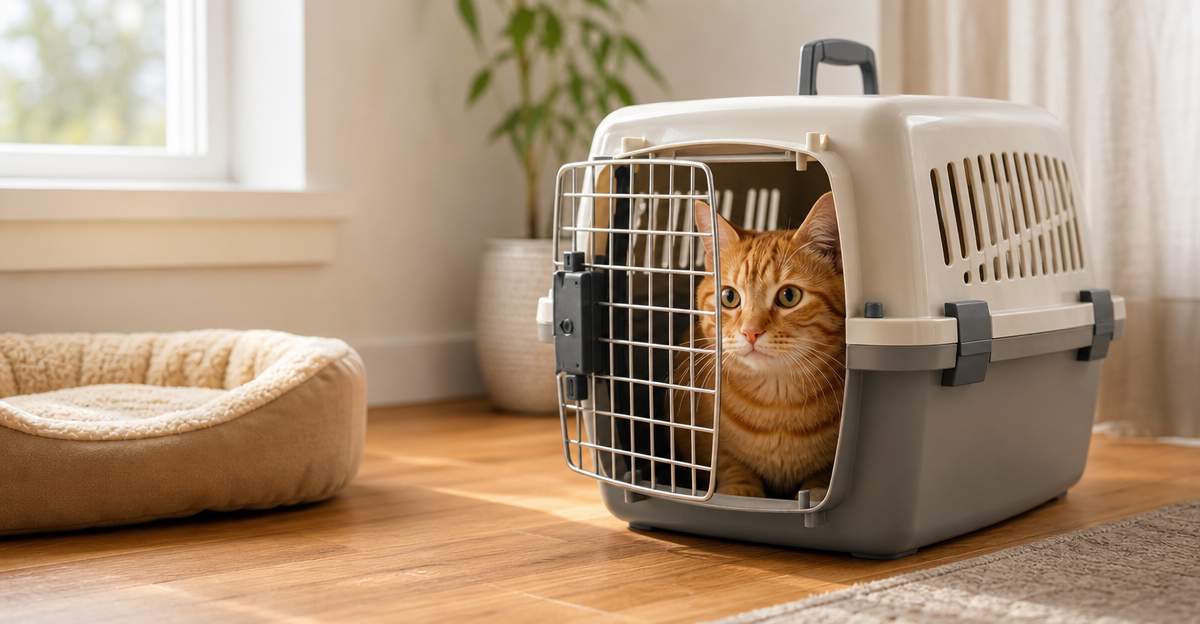
A good cat carrier is one of the most important pieces of kit you'll ever buy for your pet. Whether you're heading to the vet, travelling across the country, or dropping your cat off at a cattery for the first time, the carrier is their entire world for that journey, and the wrong one makes everything harder.
Key Takeaways
- Size matters: your cat should be able to stand, turn around, and lie down comfortably
- Hard-sided carriers generally offer better security and ventilation; soft-sided ones suit calmer cats and cabin air travel
- Top-loading access can be much easier for reluctant cats, and for vets
- Familiarise your cat with the carrier well before any journey, ideally weeks in advance
- Secure the carrier in the car using a seatbelt or footwell placement; never leave it loose on the back seat
- For longer stays, check what carrier drop-off requirements your cattery has ahead of arrival
What Size Carrier Does Your Cat Need?
Your cat should be able to stand at full height without crouching, turn a full circle, and stretch out to lie down. A carrier that's too small causes stress and discomfort, especially on longer journeys, but going too large isn't ideal either. A vast empty space can feel less secure to a cat, who naturally seeks snug, den-like environments.
As a rough guide, measure your cat from nose to base of tail, then add about 10-15 cm. Do the same for height, floor to top of head when standing. Those two measurements will tell you whether a carrier on the shelf is genuinely big enough, rather than relying on the manufacturer's weight guidance alone.
If you have a particularly large or heavy breed, a Maine Coon or a Norwegian Forest Cat, for instance, standard carriers often fall short. It's worth seeking out carriers marketed specifically for large cats, which tend to have a more generous internal footprint.
Hard-Sided vs Soft-Sided: Which Should You Choose?
This is the first decision most people face, and there's no universal right answer, it depends on your cat, your mode of transport, and how you'll be using the carrier.
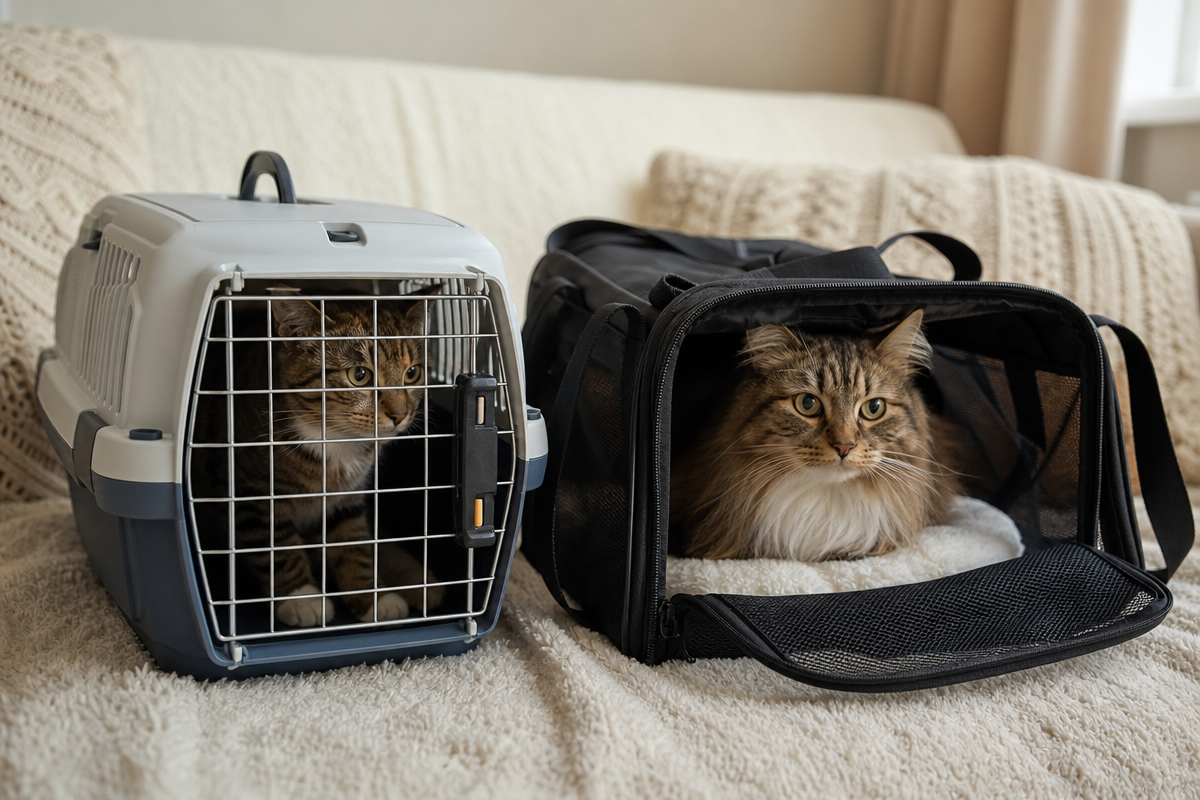
Hard-sided carriers
Rigid plastic carriers are the most widely used option, and for good reason. They're robust, easy to clean, and offer structural protection if something falls onto the carrier or it gets bumped in transit. Most open at the front, though many now also have a top-loading hatch, invaluable if your cat is reluctant to walk in voluntarily (which, frankly, most are).
Hard carriers typically have better ventilation built in through moulded vents on the sides and rear, which matters more than people realise on warm days. They also sit stable on a surface, which helps a nervous cat feel less unsettled.
Soft-sided carriers
Fabric carriers with a collapsible frame are lighter, easier to store, and generally more comfortable against your body if you're carrying the cat any distance on foot. They tend to have mesh panels on two or three sides, which gives good airflow and lets your cat see out if they want to.
The main drawback is structural. A determined or distressed cat can work at zips, and the sides offer little protection if the carrier is knocked or compressed. They're better suited to calmer cats, short journeys, or airline cabin travel where a hard carrier won't fit under the seat in front. Always check your airline's specific requirements before travelling, approved dimensions and construction vary.
What Features Are Actually Worth Having?
The pet product market is full of carriers with features that sound useful but add little in practice. A few, though, genuinely make a difference.
- Top-loading door: Makes getting a nervous cat in and out significantly easier. Some carriers are top-load only; others combine a front door and a removable lid. Either works well.
- Removable base: A base tray that pulls out separately is far easier to clean than trying to reach inside with a cloth. Essential for longer trips or a cat prone to travel sickness.
- Secure fastening: Look for carriers where the two halves clip together firmly at multiple points. Some cheaper models separate too easily if dropped or knocked, a frightening and dangerous outcome.
- Seatbelt loop or attachment point: Allows you to thread a seatbelt through or around the carrier to keep it stationary in the car. Not a luxury, a sliding carrier is unsafe for your cat and distracting for you.
- Ventilation on multiple sides: Single-side ventilation can cause heat to build up. Look for vents or mesh on at least two sides.
You don't need a heated carrier, a built-in water bowl, or a GPS tracker for most journeys. A well-built, well-ventilated carrier with secure fastenings will serve you far better than a feature-heavy one that compromises on the basics.
How to Get Your Cat Comfortable with the Carrier
This is where most owners underinvest, and it's the single biggest factor in how well your cat travels. A carrier that only comes out on vet day becomes a source of dread. Your cat learns quickly that the carrier precedes something unpleasant, and the battle to get them in begins well before you've even picked up the lead.
The solution is to make the carrier a normal part of the furniture. Leave it out in a room your cat uses regularly, with the door propped open. Put a familiar blanket or item of your clothing inside. Let your cat investigate, sleep in it, and generally lose interest in it as a threat. This can take a few days for some cats and several weeks for more anxious individuals, start well ahead of any planned travel.
Once your cat is going in voluntarily, begin closing the door briefly while they're calm and relaxed inside. Then try short periods of being carried around the house. Then a short car journey. Build up gradually, and never rush a step just because you have a deadline approaching.
A small amount of a synthetic feline pheromone spray, the kind designed to reduce travel anxiety, applied to the bedding inside the carrier roughly 30 minutes before you put your cat in can help take the edge off. Your vet can advise on this and, for very anxious cats, on whether a short-acting prescription option is appropriate.
Carrier Safety in the Car
Loose carriers are a genuine hazard. In an emergency stop, an unsecured carrier can become a projectile, dangerous for your cat, your passengers, and potentially you. Most hard carriers have a handle slot or design that allows a seatbelt to be looped through and across the carrier; use it.
The front passenger footwell is a stable, low option for short journeys if the carrier fits. The back seat, secured with a seatbelt, works well for longer trips. Avoid placing the carrier directly in the boot of a hatchback where exhaust fumes could enter, and never leave a cat in a parked car in warm weather, even a short time can be dangerous.
Cover three sides of the carrier with a light blanket once your cat is inside and settled. Reducing visual stimulation can lower anxiety considerably, particularly for cats who become agitated watching passing traffic. Leave the front uncovered so air circulation isn't compromised.
Carriers for Cattery Stays
If you're using a cattery, your carrier choice has a small practical dimension beyond the journey itself. Most catteries will ask you to bring your cat in the carrier and may keep it in or near the pen during the stay, a familiar-smelling object can help your cat settle. Check with your specific cattery beforehand, as practices vary.
A carrier that's easy to open from multiple directions is particularly useful here, since staff need to be able to access your cat calmly on arrival without a wrestling match. Top-loading carriers earn their place again in this context.
Frequently Asked Questions
Can I use a dog crate for transporting my cat?
A small dog crate can work in some situations, particularly for cats who need more space, or when travelling by car on a longer journey. The main drawbacks are that they're bulky, difficult to carry, and the open mesh structure offers less of the den-like security most cats prefer. For routine journeys, a dedicated cat carrier is the better option. If you do use a crate, cover most of it with a blanket to create an enclosed feel inside.
How do I clean a cat carrier after an accident?
Remove any bedding and wash it separately. Take apart the carrier if it has a removable base tray. Clean all surfaces with a pet-safe, enzymatic cleaner rather than household disinfectants, many common cleaning products contain phenols or other compounds that are toxic to cats. Rinse thoroughly and allow to dry fully before use. Leaving the carrier out in fresh air helps eliminate lingering odours that might make your cat reluctant to use it again.
My cat screams throughout every car journey. What can I do?
Vocalising during travel is common and is usually a sign of anxiety rather than physical discomfort. First, rule out motion sickness, a vet can advise. Then work on the gradual familiarisation process described above; many cats who travel badly have simply never had the chance to associate the carrier with anything neutral or positive. For persistently anxious cats, your vet may suggest a short-acting anti-anxiety medication for specific journeys. Covering the carrier, playing soft classical music or species-specific calming sounds, and avoiding food for a few hours before travel can all help.
How long can a cat stay in a carrier?
As a general guide, most cats can manage two to three hours in a carrier comfortably, provided they've had the chance to use a litter tray beforehand. For longer journeys, plan rest stops every two to three hours where you can offer water (in the carrier, with the door open but in a secure space) and allow the cat to use a travel litter tray. Never open the carrier in an unsecured environment, a frightened cat can bolt and be extraordinarily difficult to recover.
Does my carrier need to be airline-approved even for car travel?
No. Airline-approved specifications, which relate to dimensions, construction, and ventilation standards set by the airline or IATA, are only relevant if you're flying. For car or train travel, what matters is that the carrier is secure, well-ventilated, and appropriately sized for your cat. If you think you might fly with your cat in the future, it can be worth buying an airline-approved soft carrier from the outset, but it's not a requirement for ground travel.