
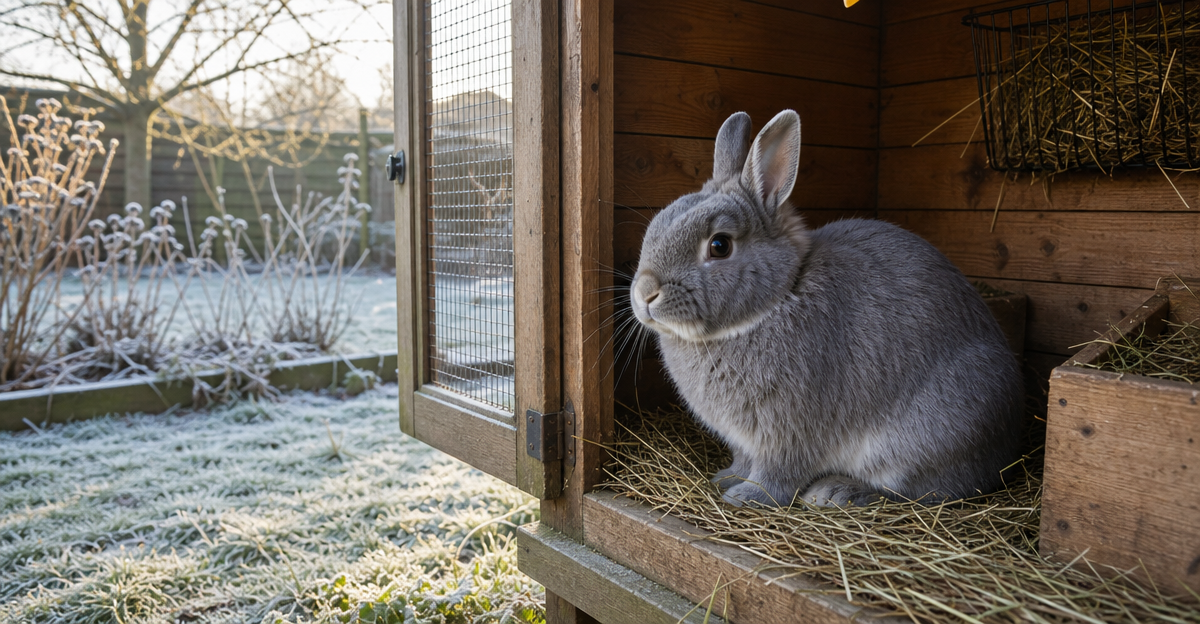
Winter rabbit care means far more than piling in extra straw. Rabbits are tougher than many owners realise, but they are genuinely vulnerable to damp, draughts and sudden temperature swings, and those risks apply whether your rabbit lives outside or in a centrally heated sitting room.
The good news is that most winter problems are preventable once you understand what actually harms rabbits in cold weather. Spoiler: it is rarely the temperature reading on its own.
Key Takeaways
- Damp, draughts and temperature fluctuation harm rabbits most in winter, not low temperature alone.
- Both outdoor and indoor rabbits need attention in winter; centrally heated homes carry their own risks.
- Frozen water that goes unnoticed can trigger dehydration and, in turn, GI stasis, a potentially life-threatening condition.
- Use soft, dust-extracted straw for bedding warmth; keep hay as a separate food source. They are not interchangeable.
- Bonded pairs share body heat, but rushing a new companion bond in winter can backfire and increase stress.
- Rabbits should retain access to their run year-round. Restricting exercise to "keep them warm" is counterproductive and harmful to welfare.
- Soiled, damp bedding is a hypothermia risk even in winter; clean-outs remain non-negotiable.
- Persistent shivering, lethargy or not eating for more than a few hours requires urgent veterinary attention.
Do Rabbits Feel the Cold?
In the wild, rabbits live in underground warrens where the temperature stays at around 10°C year-round, as the Rabbit Welfare Association and Fund (RWAF) notes. Pet rabbits do not have that buffer. They rely on you to provide the stable, insulated sleeping environment that a warren would naturally offer.
Breed size matters too. According to Four Paws, smaller breeds conserve heat less efficiently than larger ones because they have a higher surface area relative to their body mass, meaning they lose heat faster in cold air.
Here is the nuance most guides gloss over: it is not simply cold temperatures that cause harm. Rabbits can tolerate a sustained cool temperature far better than they can cope with damp, draughts or an environment that swings sharply between warm and cold. The physiological reason is that rapid temperature change forces the body to work harder to regulate core temperature, a process that burns energy and suppresses immune function. A dry, still, consistently cool hutch is safer than one that is warm during the day and frigid at night.
Indoor rabbits are not automatically protected. Central heating creates its own problems: dry air, overheating and the risk of coat loss that leaves a rabbit poorly insulated if it spends any time outdoors. An indoor rabbit positioned near a cold window or a draughty door faces genuine cold stress despite being inside a heated home.
7 Signs Your Rabbit Is Too Cold
Knowing what to look for is your first line of defence. These signs, drawn from veterinary guidance including The Hampshire Vet's winter advice, indicate your rabbit may be struggling with cold.
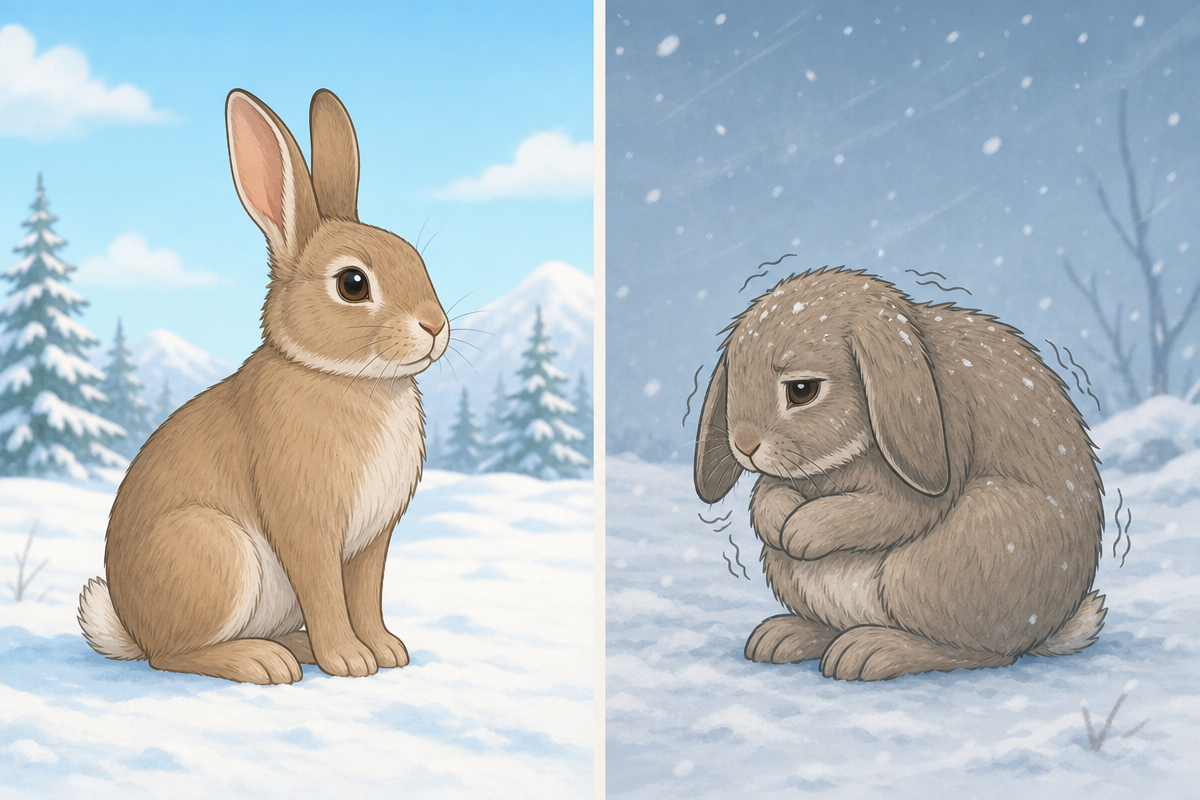
- Shivering or trembling: the body's automatic attempt to generate heat through muscle movement.
- Huddling or curling tightly into a ball: a posture that minimises surface area and slows heat loss.
- Cold ears and feet to the touch: poor peripheral circulation is an early indicator that the body is prioritising core warmth over the extremities.
- Lethargy or reduced movement: sluggishness that is out of character for your rabbit.
- Actively seeking heat sources: pressing against a heat pad, another rabbit or a warm wall.
- Hunched, ground-close posture: a deliberate attempt to minimise the body surface exposed to cold air.
- Reduced eating or drinking: this one deserves particular attention. A rabbit that stops eating or drinking for more than a few hours faces a serious risk of GI stasis, a condition where gut motility slows and can stop entirely. In rabbits, GI stasis is a medical emergency. If your rabbit has not eaten or produced droppings, contact your vet without delay.
Setting Up Outdoor Housing for Winter
Hutch Positioning and Weatherproofing
Start by assessing where your hutch sits. It should face away from prevailing wind and rain, and be elevated off the ground so that ground frost cannot transfer cold directly through the base. Four Paws specifically recommends multiple elevated levels within the enclosure, with the sleeping compartment kept away from ground level.
Cover the front with a fitted hutch cover or a tarpaulin secured with eyelets and cable ties. A loose blanket draped over the hutch is not a safe option: rabbits will reach and chew it, and the Blue Cross advises caution here specifically. A tarpaulin with eyelets, fitted snugly and secured so it cannot flap loose, is more practical and safer. Crucially, always leave adequate ventilation even when the hutch is covered. Sealing it completely creates damp, which is more dangerous than cold.
Insulating the Sleeping Area
For lasting results, the RWAF recommends lining the interior walls of the sleeping compartment with plywood, leaving a cavity that can be filled with roof insulation, essentially a miniature cavity wall system. This is more effective than any amount of extra bedding on its own, and once installed it protects your rabbits for multiple winters.
Thick polystyrene works as an alternative insulator, but it must be covered so rabbits cannot chew it, as Four Paws notes. Exposed polystyrene is a chewing hazard and an ingestion risk.
Bedding: Straw vs Hay
This is where a lot of owners go wrong. Straw and hay look similar but serve entirely different purposes, and using one in place of the other causes problems.
Straw is a bedding material. Soft, dust-extracted straw is warmer than hay because its hollow stems trap air and insulate. The RWAF recommends it specifically for the sleeping area in winter. It is not a food source, as rabbits gain little nutritional value from eating it.
Hay is food. It must always be available as the primary dietary component and should never be replaced by straw for feeding purposes. The two need to be present simultaneously: straw for sleeping in, hay for eating.
A simple, effective upgrade is a cardboard box filled with straw and cut with two entry holes so your rabbit can get in and out easily. Blue Cross recommends this as a cheap but genuinely warm nesting option. Lay newspaper underneath the straw as a base layer; it adds a further small insulating effect.
Managing Water in Freezing Temperatures
Frozen water is one of the more overlooked winter risks. A water bottle can freeze without you noticing, and a rabbit that has no access to water for several hours faces dehydration. Dehydration slows gut motility, which contributes directly to GI stasis, a condition where gut motility slows and can stop entirely, with potentially fatal consequences. The link between frozen water and GI stasis is real, and it can develop faster than owners expect in cold weather.
The ball-bearing inside a water bottle tends to freeze before the water itself does. Blue Cross recommends pressing it every few hours to keep it moving. Bottle covers help slow freezing but will not prevent it in a hard frost. Commercially available heated water bowls eliminate the problem. A low-tech alternative from Four Paws is a heated flat stone: warm a suitable stone in the oven and place it under the water bowl to slow freezing. Check water multiple times on cold days, and replace it with fresh tepid water if it has frozen. Never use hot water.
Heat Pads and Supplementary Heating
Microwaveable heat pads such as SnuggleSafe are a practical option for extreme cold. Bury the pad under bedding rather than leaving it exposed, so heat reaches your rabbit indirectly. The RWAF and Blue Cross both emphasise this point. Placing a heat pad on the surface where it is in direct contact with skin risks burns.
One often-ignored detail: always offer two sleeping areas, one with the heat pad and one without. This lets your rabbits self-regulate rather than being forced into contact with a heat source they may find too warm. The RWAF specifically advises giving rabbits this choice.
A word on heat lamps: these require proper, secure installation. Straw is highly flammable, and an improperly fitted heat lamp near straw bedding is a genuine fire risk. If you are considering a heat lamp, treat the installation as seriously as you would any electrical fitting near combustible material. This is not a casual DIY project.
Also be alert to chewing. Rabbits will investigate any cable or casing within reach, so any heat source must be positioned where your rabbit cannot access it. The Hampshire Vet's guidance echoes this caution.
The Role of Companionship in Winter Warmth
Bonded pairs are, quite literally, a heat source for each other. The RWAF describes shared body warmth as a vital part of a rabbit's winter toolkit: two rabbits sleeping together generate significantly more warmth than a lone rabbit with extra bedding.
Any companion rabbits should be neutered and vaccinated before being housed together, as Four Paws advises. And one important caution: if your rabbit is currently solo, do not attempt to rush a new companion bond in winter as a quick fix for keeping them warm. Bonding takes time, and a failed or stressful bonding attempt will undermine your rabbit's immunity rather than support their wellbeing. A single rabbit needs more insulation and more frequent welfare checks in cold weather, which is the more practical short-term approach. If you are considering matching your rabbit with a companion, our guide on choosing small pet sitters for rabbits and guinea pigs is also worth a read when you next need to arrange care.
Exercise and Outdoor Access in Winter
Rabbits should have access to their run throughout the year, outside of veterinary-advised recovery periods. Permanent confinement to a hutch, even a warm, insulated one, is harmful to rabbit welfare. This is a firm position from the RWAF, and it conflicts with advice from some other sources suggesting outdoor play should be limited in cold weather. Movement generates body heat, and restricting exercise is counterproductive.
That said, the condition of the run matters. Check for ice, standing water and frost before letting your rabbits out. Frozen ground can be hard on paws, and a rabbit slipping on ice risks injury. UK winters bring another specific problem: mud. A run that becomes a waterlogged muddy patch is unpleasant and unhygienic. If your run surface turns to mud in wet weather, consider laying a section of rubber matting, a paving slab path, or raising part of the run so your rabbits have dry ground to stand on even when conditions are wet.
Many rabbits genuinely enjoy brisk, clear winter days. As Blue Cross points out, owners sometimes project their own reluctance to be outside in the cold onto their pets. If the ground is safe and dry, your rabbits are likely to appreciate the exercise.
When to Bring Outdoor Rabbits Inside
There are situations where bringing an outdoor rabbit in temporarily is the right call. Severe cold snaps are the obvious one. The RWAF also highlights the fireworks period, which now extends well beyond 5 November in the UK, as a reason to bring rabbits in, since the stress of fireworks has a real physiological impact.
Choose your indoor location carefully. A room that is very warm will cause your rabbit to shed their winter coat. That sounds harmless, but it leaves them without their cold-weather insulation when they return outside. Aim for a room that is comfortable without being hot: a temperature that does not dramatically exceed what they experience in their insulated hutch is safer than a centrally heated living room at full blast.
Rabbit-proof the space before letting them loose. Cover or remove cables, block access behind furniture, and lay something non-slip over smooth flooring, as rabbits can injure themselves scrambling on laminate or tiles. Bring familiar bedding and enrichment items with them. Rabbits are prey animals and find new environments stressful; familiar smells make the transition easier.
If your rabbit has been inside for more than a few days, reintroduce them to outdoor temperatures gradually. Moving a rabbit from a warm room directly back to a cold hutch creates exactly the kind of rapid temperature shift that rabbits handle poorly. Spend a few days transitioning them: bring them out for progressively longer periods while the hutch temperature adjusts, rather than making one abrupt move.
Winter Care for Indoor Rabbits
Indoor rabbits get very little attention in most winter care guides, which is odd given how many UK rabbits now live inside. Being indoors does not mean being safe from winter-related problems.
Central heating dries the air. Dry air affects respiratory health and can subtly reduce a rabbit's desire to drink, which in turn increases the risk of dehydration and GI stasis (see the water management section above for a full explanation of this risk). A room humidifier can help if your home is very dry in winter.
Keep your rabbit's enclosure away from radiators and direct heat sources. Overheating is a real risk for indoor rabbits, and a rabbit that is too warm near a radiator may drink less and become lethargic, signs that owners can mistake for contentment. Equally, position the enclosure away from cold spots: an alcove next to a draughty external door or a window that lets in a cold draught can subject your indoor rabbit to temperature fluctuations not unlike those outdoors.
Exercise is another area where indoor rabbit owners can slip in winter. Fewer daylight hours and colder conditions outside mean owners spend less time managing their rabbit's run time. Monitor this actively. An indoor rabbit still needs daily exercise to maintain gut health, and reduced movement contributes to the same GI stasis risk that cold and dehydration create outdoors.
Winter Nutrition: Does Your Rabbit Need More Food?
A rabbit living outdoors in cold weather burns more calories maintaining body temperature. Both Blue Cross and Four Paws recommend a modest increase in hay during colder months to support this. Hay should always be the foundation of your rabbit's diet regardless of season; this does not change in winter.
Four Paws suggests some extra food to help build fat reserves, but this is general guidance rather than a precise prescription. Obese rabbits have their own set of health risks, so any increase in portions should be moderate and monitored, not open-ended. If your rabbit is already overweight, consult your vet before increasing food allowances.
One practical point that gets almost no attention elsewhere: fresh vegetables left in a cold hutch can freeze. A frozen piece of leafy greens that your rabbit then eats can cause digestive discomfort. Check and remove any uneaten fresh food quickly in cold weather, especially if overnight temperatures are dropping near or below freezing. Keeping their teeth in good shape helps them process all this too; if you own guinea pigs alongside your rabbits, our guide to guinea pig dental care covers similar territory for the whole small-pet household.
Cleaning Routines: Don't Let Winter Slide
Rabbits spend longer periods in their sleeping areas in winter, which means bedding soils faster than in warmer months. The RWAF is clear that clean-outs must continue regardless of the season.
Damp, soiled bedding presents two specific winter risks worth naming. First, a wet sleeping area dramatically reduces insulation, as damp straw is far less effective at trapping warm air than dry straw. A rabbit huddled in wet bedding is at genuine hypothermia risk. Second, while flystrike is predominantly a summer condition, mild UK winters can still produce enough warmth for flies to be active. The risk is lower than in summer, but soiled bedding remains an attractant and a welfare hazard year-round.
Cold and dark evenings make it tempting to do a quick top-up rather than a full clean. Do the full clean anyway. Your rabbit's health through winter depends on it.
When to Call the Vet
Contact your vet promptly if you notice persistent shivering, unusual lethargy, or your rabbit has not eaten or produced droppings for more than a few hours. These are not signs to monitor. They are signs to act on.
Rabbits recovering from surgery or illness need specific veterinary guidance on whether outdoor housing is appropriate. The RWAF notes this explicitly. A rabbit with patches of missing fur, whether from a recent procedure, mange or moulting at an unusual time, is particularly vulnerable to cold because their insulation is compromised.
GI stasis becomes more likely in winter through the combination of cold stress, reduced movement and dehydration from frozen water going unnoticed. Know the signs: reduced or absent droppings, a hunched posture, a bloated or hard abdomen, and refusal to eat. This is always an emergency, so do not wait to see if it resolves on its own.
In a severe UK cold snap, hypothermia and frostbite are genuine risks rather than theoretical ones. Signs of hypothermia include extreme lethargy, cold body temperature, very slow breathing and unresponsiveness. If you suspect hypothermia, warm your rabbit gradually, not rapidly with direct heat, and get to a vet immediately. If your winter plans involve travel and you need to arrange care, it is worth knowing how to find safe rabbit boarding in the UK and what to pack for rabbit boarding before the cold weather sets in.
Frequently Asked Questions
What temperature is too cold for a rabbit?
There is no single, universally agreed minimum temperature that applies to all rabbits. What matters more than the specific reading on a thermometer is stability and conditions. Damp, draughts and sudden swings in temperature are more dangerous than a sustained cool temperature. Smaller breeds lose heat faster than larger ones and need more protection. If temperatures drop well below freezing and your hutch is not thoroughly insulated, bring your rabbit inside or add supplementary heating. When in doubt, speak to your vet, who can give advice specific to your rabbit's breed, age and health.
Can rabbits stay outside in UK winters?
Yes, provided their housing is properly insulated, dry, draught-free and positioned away from prevailing wind and rain. A well-prepared outdoor setup (elevated hutch, cavity-style insulation, deep straw bedding, a secured cover and a bonded companion) can keep rabbits safe through a typical UK winter. The RWAF is clear that outdoor rabbits can thrive in winter with the right preparation. Severe cold snaps or extreme weather are exceptions worth monitoring, and some owners choose to bring rabbits in temporarily during those periods.
How do I stop my rabbit's water from freezing?
No single method is foolproof in a hard frost. Pressing the ball-bearing in a bottle several times a day helps keep it moving before it freezes, as Blue Cross advises. Bottle covers slow the process but will not prevent freezing overnight. Commercially available heated water bowls are the most reliable solution. A warmed flat stone placed under a bowl is a practical low-tech alternative. Always check water multiple times on cold days and replace with tepid water if frozen. Unnoticed frozen water is a dehydration risk that can trigger GI stasis.
Is straw or hay better for rabbit bedding in winter?
Straw is better for bedding because its hollow stems trap air and insulate effectively. Use soft, dust-extracted straw in the sleeping area. Hay is not a bedding material. It is food, and it must always be available separately as your rabbit's primary dietary source. Using straw in place of hay for feeding is a mistake, as rabbits gain little nutrition from eating straw. Both should be present in winter, serving their respective roles.
Can a single rabbit survive winter outside?
A single rabbit does not have the benefit of shared body heat from a bonded companion, which the RWAF identifies as a meaningful factor in winter warmth. A solo rabbit can survive outside in winter, but it requires more thorough insulation, more frequent welfare checks and careful attention to signs of cold stress. For full guidance on companion bonding and why it should not be rushed as a quick winter fix, see the companionship section above. If your rabbit is alone, focus on excellent housing preparation and monitor them closely throughout the colder months.