
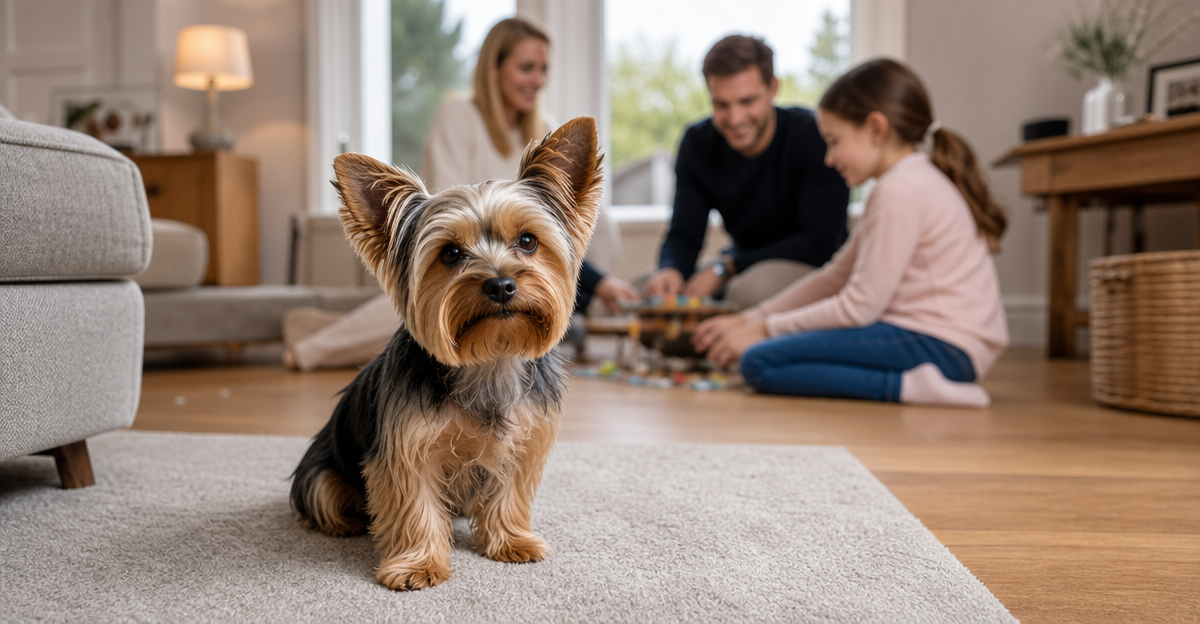
The best first dog for a family isn't a single breed. It's the breed that fits your specific household right now: the ages of your children, the size of your home, how active you genuinely are, and how many hours the dog will spend alone each week.
Most breed guides hand you a ranked list. This one works differently. It starts with your family, then finds the dog.
Key Takeaways
- The best first family dog is the one that matches your actual household, not your aspirational version of it.
- Trainability and temperament matter more than popularity rankings or how a breed looks.
- Your children's ages should heavily influence the size and energy level you choose.
- Rescue dogs can make excellent first family dogs when matched carefully by a reputable rescue organisation.
- In England, breeders selling more than three litters per year must be licensed under the Animal Welfare (Licensing of Activities Involving Animals) (England) Regulations 2018. Always verify a breeder's licence or use a reputable rescue.
- Holiday and boarding planning is part of responsible first-dog ownership. Most new owners don't think about it until it's urgent.
Before You Choose a Breed: What Your Family Actually Needs to Decide First
Skipping this section and jumping straight to breed lists is exactly how families end up with a dog that's wrong for them. Spend ten minutes here and you'll save yourself years of frustration.
How old are your children?
Children's ages are arguably the single most important variable in breed selection, yet every competitor article we reviewed ignores it entirely. A family with a three-year-old and a family with a thirteen-year-old have fundamentally different needs.
Under five: You need a calm, tolerant, physically robust breed. Toddlers are unpredictable. They grab, fall, shriek, and approach dogs face-first. A nervous small dog may snap defensively. A powerful large breed in an excited state can knock a toddler over without any aggression involved. The sweet spot is a medium-to-large breed with a documented history of patience and low reactivity.
Primary school age (five to eleven): Children in this range can handle more energetic breeds and are old enough to actively participate in training, which builds a meaningful relationship between child and dog. This is one of the best ages to bring a dog into a family.
Teenagers: A much broader range works here. Teens can help with daily exercise and training, which opens up more active and intelligent breeds that would be too demanding for a household relying solely on adult availability.
The Dogs Trust and RSPCA both advise clearly that no dog should ever be left unsupervised with children, regardless of breed or temperament. Breed selection reduces risk; it doesn't eliminate it.
What does your household actually look like day-to-day?
Be honest here. The dog you choose needs to fit your actual life, not the version you imagine having once the dog arrives.
- Working hours: Most breeds struggle when left alone for more than four hours. If you work full-time, factor in dog walkers, doggy day care, or whether a family member is typically home. This isn't optional for the dog's welfare.
- Home size and garden: The key question isn't just flat versus house. It's whether your garden is securely fenced, and whether there's enough indoor space for the breed's resting and play needs.
- Activity level: A dog matched to your aspirational self rather than your actual self is a recipe for an under-exercised, under-stimulated animal and a frustrated family.
- Budget: The PDSA's Animal Wellbeing Report estimates that a medium dog costs between £1,000 and £2,500 per year to keep, once food, insurance, vet care, and grooming are accounted for. This is on top of purchase or adoption costs. The RSPCA's cost guides reflect similar figures. Factor this in before you commit.
Puppy, adolescent, or adult rescue dog?
The puppy default isn't always the right one for families. Each option has genuine advantages.
Puppies offer predictable breed traits and the chance to socialise from the start. But the first year is intensive: toilet training, puppy classes, teething, separation anxiety management, and the energy of a young dog that hasn't yet learned the rules. Two working parents with a toddler and a new puppy is a lot. If you do go this route, our new puppy advice for UK owners covers the essential first steps.
Adult rescue dogs are often calmer, sometimes already house-trained, and, from a reputable rescue, will have been assessed for suitability with children. Dogs Trust, the RSPCA, Blue Cross, and breed-specific rescues all carry out temperament assessments. A good rescue will be transparent about a dog's history and honest if a particular dog isn't right for young children.
Adolescent dogs (roughly six to eighteen months) are the most overlooked option. They're past the most chaotic puppy phase, but still young and adaptable. Many end up in rescue precisely because their first family underestimated adolescent energy. For a family that's done their research, they can be an ideal match.
If a rescue isn't forthcoming about a dog's history or suitability with children, walk away. The right rescue will always prioritise the match over the placement.
The Best First Dogs for Families: Breeds That Actually Work for Beginners
Rather than an arbitrary top-ten list, these breeds are grouped by family situation. Find the category that fits your household.
For families with young children (under seven): patient, robust, tolerant breeds
Labrador Retriever is consistently the UK's most popular family dog, and for good reason. Labs are gentle with young children, genuinely eager to please, and highly responsive to positive reinforcement training. They're not a perfect fit for every home, though. As puppies, Labs are boisterous and will knock small children over through sheer enthusiasm, not aggression. They need one to two hours of exercise daily and suit homes with a garden. Weight typically runs 25 to 36kg, with a lifespan of around ten to twelve years.
Golden Retriever shares much of the Labrador's temperament: affectionate, patient, intelligent, and excellent with children. The main difference for most families is grooming. Goldens need daily brushing and shed heavily, especially seasonally. They suit active families with space, and they're worth the coat maintenance if you can commit to it.
Cavalier King Charles Spaniel is calm, lap-sized, and manageable in smaller homes. For families with young children in a flat or terrace, the Cavalier is one of very few genuinely small breeds with the temperament to handle unpredictable toddler behaviour without becoming anxious or defensive. However, there's a health conversation most articles skip entirely. Mitral valve disease is so prevalent in the breed that the majority of Cavaliers show signs of it by the age of ten, and syringomyelia (a painful neurological condition caused by skull malformation) is a serious welfare concern. These aren't edge cases. Before buying a Cavalier, ask specifically about the cardiac and MRI health test results of both parents. A reputable breeder will offer them without being asked.
Staffordshire Bull Terrier is one of the UK's most misunderstood family dogs and one of its most common. You'll find them in rescue in large numbers, which makes them accessible, and their actual temperament with families is far better than their reputation. Staffies are affectionate, people-focused, physically robust, and patient with children. They need firm, consistent positive reinforcement training and regular exercise. A note on the so-called 'nanny dog' label: this term has been widely repeated online, but it has no verified 19th-century source and was most likely coined in the 1970s. The Staffie doesn't need a dubious claim to justify it as a family dog. Its temperament speaks for itself.
For families in flats or smaller homes
Living without a garden doesn't rule out dog ownership, but it does narrow the options. These breeds adapt well to smaller spaces, provided their exercise and mental stimulation needs are genuinely met.
Whippet is consistently underestimated as a flat dog. Indoors, they're calm, quiet, and low-shedding. They need around an hour of exercise daily, including the opportunity for a good sprint in a secure space, but they don't need acres of garden. They have a sensitive temperament and respond well to gentle, positive training. Good with children, easy to groom, and considerably hardier than they look.
Bichon Frise is cheerful, low-shedding, and adaptable to apartment living. Around thirty to forty-five minutes of daily exercise is sufficient. They do need professional grooming every six to eight weeks, which adds to running costs. Good with children and generally sociable with other dogs.
Shih Tzu is calmer and lower-energy than many small breeds, with minimal exercise demands. Their long coat requires daily brushing if kept full-length, or regular clipping. They're a quiet breed, which matters if you're in a shared building.
Miniature Schnauzer is spirited and engaging, but manageable for a first-time owner. They need regular grooming and clipping, and some individuals are prone to barking, which is worth considering in flats or terraced houses.
For active families who want an energetic companion
Poodle (Standard or Miniature) is consistently among the most intelligent breeds available. Fast to train, low-shedding (useful for families with mild sensitivities, though no dog is truly hypoallergenic), and available in sizes suited to most homes. Standard Poodles need significant daily exercise and mental stimulation. Miniatures are more manageable in smaller spaces. Both are highly rewarding for owners who engage with training. If anyone in your household reacts to dogs, our guide to managing dog allergies is worth reading before you decide.
Cocker Spaniel is enthusiastic, loving, and great with children. Moderate-to-high grooming needs mean regular brushing and periodic clipping. Worth noting: Cockers can be prone to separation anxiety, which matters for working families. Factor this honestly into your decision before choosing one.
Border Terrier is often described as the ideal all-rounder for active UK families. Tough, hardy, adaptable, and easier to train than many terrier breeds. Relatively healthy as a breed and well-suited to families who want a real dog without the intensity of a working breed.
Breeds that look appealing but are harder for first-time family owners
This section matters. Several breeds are widely marketed as easy, low-maintenance options, and that characterisation ranges from incomplete to outright misleading.
French Bulldog: Several competitor articles recommend French Bulldogs as low-maintenance flat dogs for first-time owners. This is misleading, and families deserve the full picture. Brachycephalic obstructive airway syndrome (BOAS) is widespread in the breed, causing breathing difficulties, heat intolerance, and significant exercise restriction. The British Veterinary Association (BVA) and the RSPCA have both run sustained campaigns flagging the welfare concerns associated with brachycephalic breeds. Many French Bulldogs require corrective surgery. Lifetime vet costs for a Frenchie can be substantially higher than for a non-brachycephalic breed of similar size. The Animal Welfare (Sentience) Act 2022 specifically acknowledges animal sentience in ways that have renewed focus on these welfare questions. French Bulldogs can make wonderful companions for owners who go in fully informed. They are not a default easy option, and recommending them as one to a first-time family owner does those families a disservice.
Border Collie: Exceptional intelligence becomes a serious problem without adequate mental and physical stimulation. Herding instinct can manifest around young children, including behaviours like nipping at heels or circling. Not recommended as a first family dog, particularly with children under ten.
German Shepherd: Loyal, intelligent, and capable of being excellent family dogs in the right hands. That qualifier matters. They're high-energy, need a confident handler, and their size and excitability around young children requires careful management. A better choice for families with older children and previous dog experience.
Dalmatian: Culturally appealing, but historically bred for endurance running. High exercise demands, needs early and consistent socialisation, and not a natural beginner family dog despite the recognisable look.
What 'Good with Children' Actually Means
Every breed guide uses the phrase. Almost none of them explain it. It's worth unpacking, because it's doing a lot of work.
A dog that is 'good with children' is not simply a friendly dog. Friendliness and tolerance are different things. What you're looking for is a combination of specific traits.
- Tolerance of unpredictable movement, noise, and touch. Children approach dogs differently to adults. They move suddenly, reach for faces, and make loud noises at close range. A dog that is genuinely good with children accepts this without escalating.
- Bite inhibition. This is learned through proper socialisation during the critical window of approximately three to fourteen weeks of age. A dog that has been well-socialised in early puppyhood learns to modulate the force of its mouth. A dog that hasn't been through this process may have gaps in bite inhibition regardless of breed.
- Low prey drive and low resource-guarding tendency. A dog with high prey drive may react to running children in ways that are concerning. A dog that resource-guards food or toys creates real risk in a household with young children who may not read the warning signs.
Individual temperament matters as much as breed. Two dogs of the same breed, raised differently, can have very different responses to children. This is one reason that rescue dogs assessed by professionals who have observed them with children can actually be a safer choice than an unknown puppy from a breed known to be 'good with kids.'
The RSPCA and Dogs Trust both publish guidance on introducing dogs and children safely. Read it before the dog comes home, not after. And regardless of breed, supervision is not optional: no dog should be left unsupervised with children.
The Hidden Costs First-Time Family Dog Owners Underestimate
Purchase price or adoption fee gets most of the attention. The ongoing costs are what catch people off guard.
A Labrador puppy from a Kennel Club registered breeder typically costs between £800 and £2,000, depending on lineage. But annual running costs for a medium dog run to £1,000 to £2,500 (per the PDSA figures above), covering food, insurance, routine vet care, and grooming. Over a ten-year lifespan, that's a meaningful financial commitment.
Here's where breed choice has a direct impact on those running costs:
- Grooming: Short-coated breeds such as Labradors, Staffies, and Whippets need minimal professional grooming. Long or curly-coated breeds including Poodles, Cocker Spaniels, and Bichon Frises will need a groom every six to eight weeks, typically costing £40 to £80 per session.
- Insurance: Monthly premiums vary significantly by breed. Breeds with documented health conditions, particularly Cavaliers, French Bulldogs, and Dachshunds, attract higher premiums. Pet insurance is strongly recommended for these breeds, because the potential vet costs make going without a significant financial risk.
- Training: Puppy classes are strongly recommended and worth treating as a priority in your first-year budget, not an optional extra. A typical six-week course runs £60 to £150. It's one of the best investments you can make in a first year.
- Boarding and holidays: This is the cost almost nobody thinks about when choosing a dog, and it matters more than most people realise. Every family holiday, work trip, or family emergency requires a plan for the dog. Boarding, home sitting, or pet hotels all have costs that recur for the dog's entire life. Our UK dog sitter price guide breaks the numbers down.
There's also an emotional dimension to the boarding question. Leaving your dog for the first time is genuinely stressful, particularly if it coincides with an urgent trip rather than a planned one. Getting your dog comfortable with a boarding environment before you actually need it is genuinely good welfare practice, not just a logistical convenience.
How to Find Your First Family Dog Responsibly in the UK
Competitors largely skip the regulatory detail here. It's actually important.
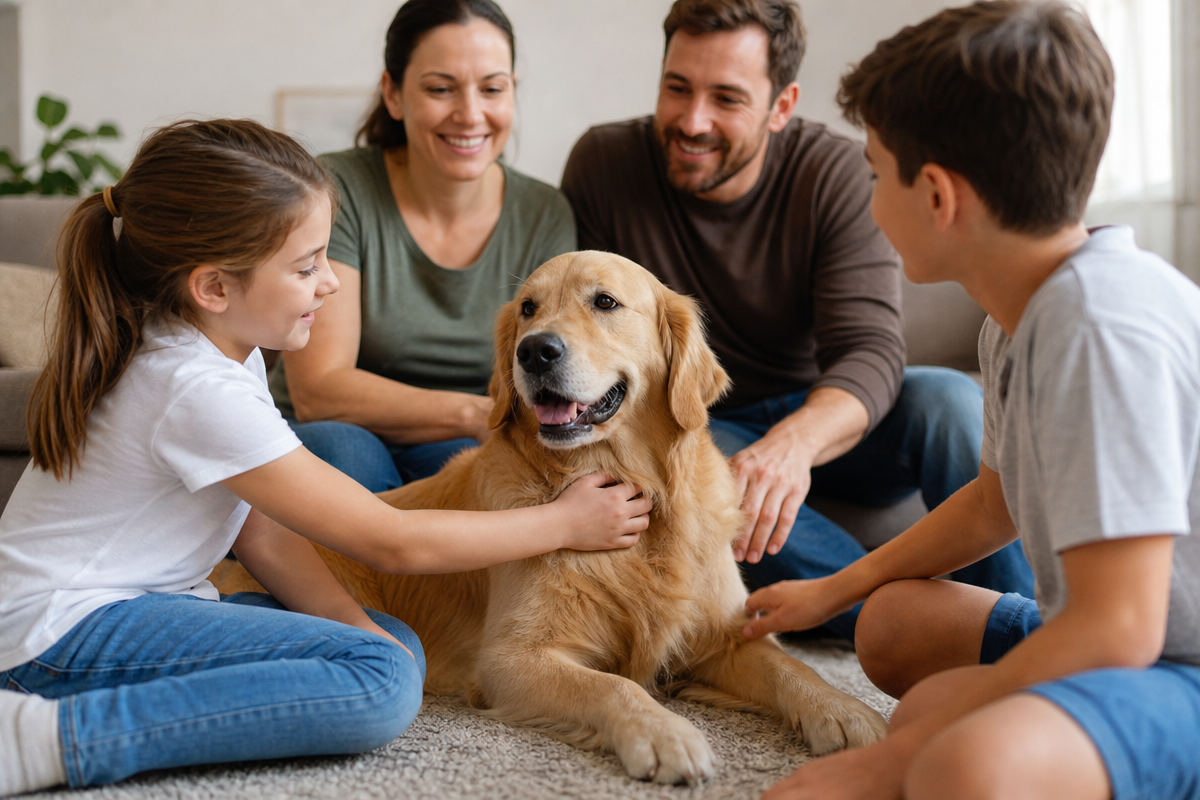
Using a licensed breeder
In England, under the 2018 Regulations (with Wales having similar requirements under separate legislation), breeders who sell more than three litters per year must be licensed by their local council. Ask to see the licence. If a breeder is reluctant to show it, that's a red flag.
Beyond the licence, look for puppies raised in a home environment (not in a shed or outbuilding), the mother present and visibly comfortable, and health tests relevant to the breed completed. The Kennel Club Assured Breeder Scheme provides an additional layer of verification and is worth using as a starting point.
Red flags that should end the conversation: puppies available immediately with no waiting period, multiple different breeds available at once, meeting in a car park or service station, and no mum present. These are hallmarks of puppy farm supply chains regardless of how professional the listing looks.
Adopting from a rescue
Dogs Trust, the RSPCA, Blue Cross, and breed-specific rescues all assess dogs for temperament and suitability with children before placing them. Adoption fees, typically between £100 and £250, usually include vaccinations, microchipping, and neutering. That's good value relative to the equivalent costs for a puppy from a breeder.
Some rescues have waiting lists for dogs suitable for families with young children. Factor this into your timeline if you're planning around a specific date.
Avoiding puppy farms and online scams
Lucy's Law, which came into force in England in 2020, bans the sale of puppies and kittens by pet shops and third-party dealers. All puppies must now be sold directly by the breeder or by a rescue centre. This was a significant legal change and it matters for your search.
Common scam patterns to recognise: professional-looking photos of puppies, prices noticeably below market rate, 'delivery available' as an option, and a seller who avoids meeting you at the property where the litter was raised. These are frequently signs of puppy farm supply or overseas imports in poor condition.
The Pet Advertising Advisory Group (PAAG) sets minimum standards for online pet adverts. Check that any listing you're considering meets them.
Planning for Holidays and Time Away: The Part New Dog Owners Forget
This is genuinely absent from every competitor article on this topic. It deserves attention.
The moment you commit to a dog, every holiday for the next ten to fifteen years requires a plan. UK pet boarding options range from kennels and pet hotels to home boarding (where your dog stays in the carer's home) and house sitters who come to you. Each has advantages depending on the breed and the individual dog. If you're weighing the two most common options, our home boarding vs kennels comparison lays out the trade-offs.
What to look for in a boarding facility: in England, dog boarding kennels and home boarding services operating from the carer's home must be licensed under the 2018 Regulations (with Wales having similar requirements under separate legislation). A licence, good reviews, a sensible staff-to-dog ratio, daily exercise provision, and a policy that allows familiar bedding or toys are all positive signs. Most reputable providers will let you visit before committing.
Some breeds settle into boarding more easily than others. Adaptable, sociable breeds such as Labradors, Golden Retrievers, and Staffies tend to cope well in a kennel environment. Breeds that bond very intensely with their owners, such as Cavalier King Charles Spaniels and Cocker Spaniels, may need more careful preparation and a gradual introduction. If you're worried about how your dog will cope, our guide on first-time boarding for nervous owners walks through the whole process.
The best advice here is simple: don't leave the first boarding experience until a family emergency forces it. A short introductory stay well before you actually need the provision is genuinely one of the kinder things you can do for your dog. Based on listings in our directory, Tailstays lists 2,708 pet hotels across the UK, including options in London (31), Leeds (25), York (25), Bristol (20), and Liverpool (17). Finding somewhere local to introduce your dog early is easier than most families assume.
Frequently Asked Questions
What is the best first dog for a family with toddlers?
For families with children under five, the most consistently reliable choices are Labrador Retrievers, Golden Retrievers, and (in smaller homes) Cavalier King Charles Spaniels. All three have the tolerance and patience that unpredictable toddler behaviour demands. Labs and Goldens are boisterous as puppies, so supervision is particularly important in the first year. Cavaliers are calmer but come with significant breed health concerns, in particular mitral valve disease and syringomyelia. Ask any breeder about parent health test results before committing. For the full detail on these conditions, see the breed recommendations section above.
Are rescue dogs suitable as first family dogs?
Yes, in many cases. Reputable rescues such as Dogs Trust, the RSPCA, and Blue Cross carry out thorough temperament assessments and will be clear about a dog's suitability with children of specific ages. Adult rescue dogs are often calmer than puppies and may already be house-trained. The key is to use a rescue that assesses honestly and isn't simply trying to place dogs quickly. If a rescue can't tell you how a dog has responded around children during its assessment period, that's a sign to look elsewhere.
Is a French Bulldog a good first family dog?
The honest answer is: not without going in fully informed. French Bulldogs are popular, affectionate, and manageable in smaller homes. But brachycephalic obstructive airway syndrome (BOAS) affects a significant proportion of the breed, causing breathing difficulties, exercise intolerance, and substantial vet costs, including potential surgery. The BVA and RSPCA have both flagged brachycephalic breed welfare as a serious concern. Several competitor articles describe French Bulldogs as low-maintenance first dogs, and that characterisation is misleading. If you choose a Frenchie, understand the health costs involved and ensure you have robust pet insurance in place from the start.
What dogs are best for families in flats?
The Whippet is arguably the most underrated flat dog available. Calm indoors, low-shedding, and good with children. The Bichon Frise, Shih Tzu, and Miniature Schnauzer also adapt well to smaller spaces. Note that 'suited to flats' doesn't mean 'no exercise needed': all of these breeds need daily walks, and some need access to a secure outdoor space for more energetic runs. Miniature Schnauzers can be barkers, which is worth considering in shared buildings.
What should I do with my dog when we go on holiday?
Your options are licensed boarding kennels, pet hotels, home boarding (where the dog stays in the carer's home), or a house sitter who comes to you. In England, dog boarding in a carer's home must be licensed under the 2018 Regulations, the same as a kennel. The most important advice is to introduce your dog to boarding before you actually need it: see the Planning for Holidays section above for full guidance. You can find pet hotels near you through Tailstays.
Is a Border Collie suitable for first-time family owners?
Not recommended, particularly for families with young children. Border Collies are exceptionally intelligent, which becomes a liability without consistent mental and physical stimulation on a level most households can't realistically provide. Their herding instinct can manifest around children, including nipping at heels and circling behaviour, which is alarming even when the dog isn't being aggressive. Border Collies thrive with experienced owners who can channel their energy and intelligence purposefully. They deserve better than a home that underestimates what they need.