
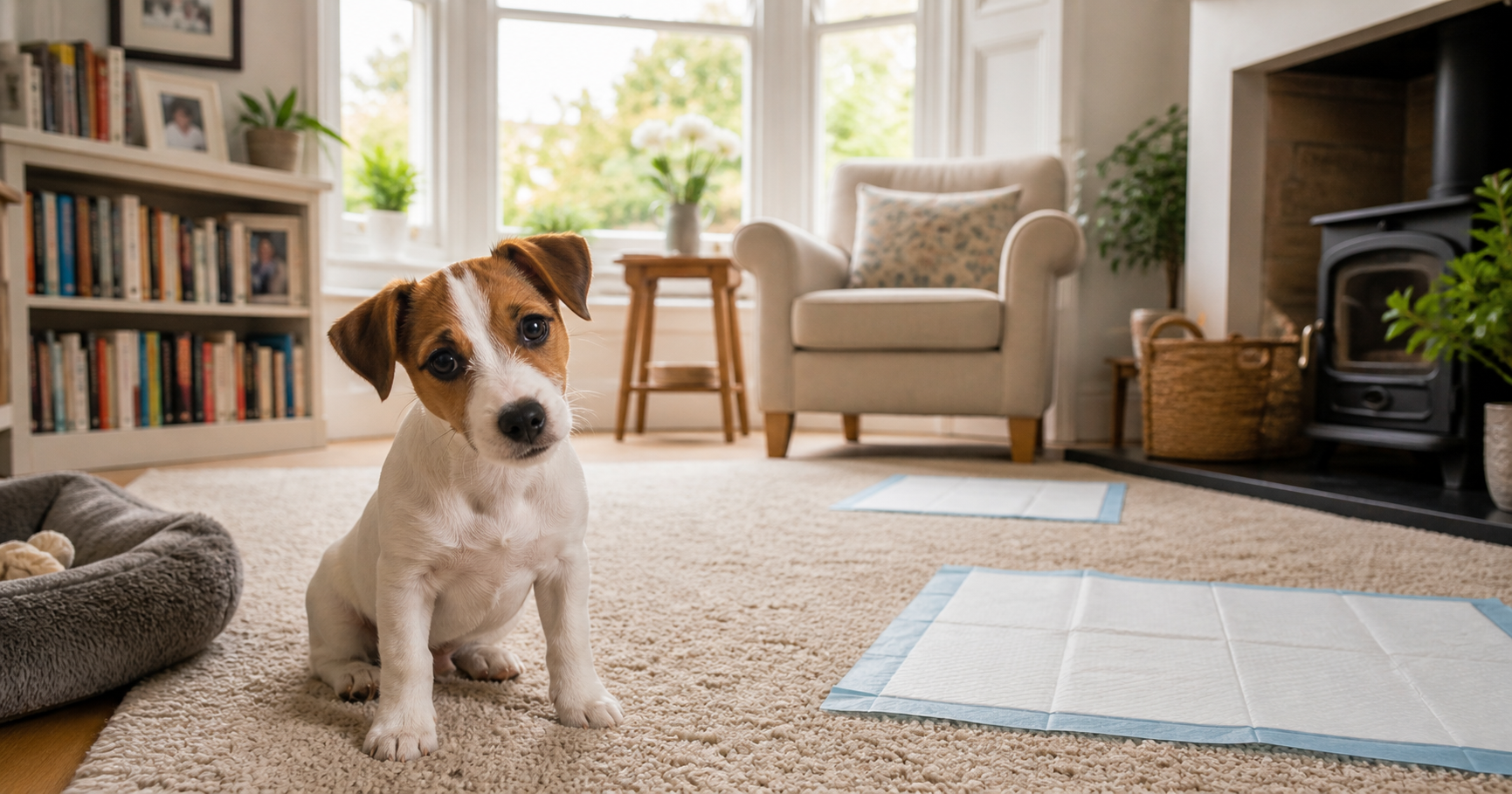
Your first month with a new puppy sets the tone for everything that follows, health, behaviour, and the bond you'll share for years. Most of what goes wrong early on comes down to lack of preparation, not lack of love.
This guide covers what to do before you bring your puppy home, how to handle the first week, vaccination timing, basic training, and when something actually needs a vet.
Key Takeaways
- Register with a vet and arrange insurance before your puppy arrives
- Puppies must be microchipped by 8 weeks old in England (Wales, Scotland, and Northern Ireland have similar requirements)
- Expect toilet breaks every 1-2 hours, feeding 3-4 times daily, and 18-20 hours of sleep
- First vaccinations at 6-8 weeks, second at 10-12 weeks, no public walks until 2 weeks after the final jab
- The critical socialisation window closes at 14 weeks, so start safe exposure early
- Book puppy training classes before your puppy arrives, popular ones fill fast
Before You Bring Your Puppy Home
Vet, Insurance, and Microchip
Register with a local vet first. Ask whether they handle out-of-hours emergencies or if another clinic covers nights and weekends, you'll likely need a vet within the first few days for a health check.
Arrange pet insurance before your puppy arrives. Most insurers won't cover conditions that develop in the first few days if you don't already have a policy in place. Compare carefully, coverage for hereditary conditions varies a lot between providers.
Check your puppy's microchip status with the breeder. Under the Microchipping of Dogs (England) Regulations 2015, puppies must be microchipped by 8 weeks of age. Wales, Scotland, and Northern Ireland have their own similar requirements. Make sure the database details get transferred to your name on collection day.
Puppy-Proofing
Get down to puppy eye level and look for hazards. Secure electrical cables, remove toxic plants, pick up small objects that could be swallowed, and move anything valuable off the floor.
Install stair gates and decide which rooms are off-limits initially. Keeping your puppy to one or two rooms for the first week reduces accidents and helps routines stick.
Buy enzymatic cleaners designed for pet accidents, not regular household cleaner. Standard disinfectants often contain ammonia, which smells like urine to dogs and draws them back to the same spot.
Shopping List
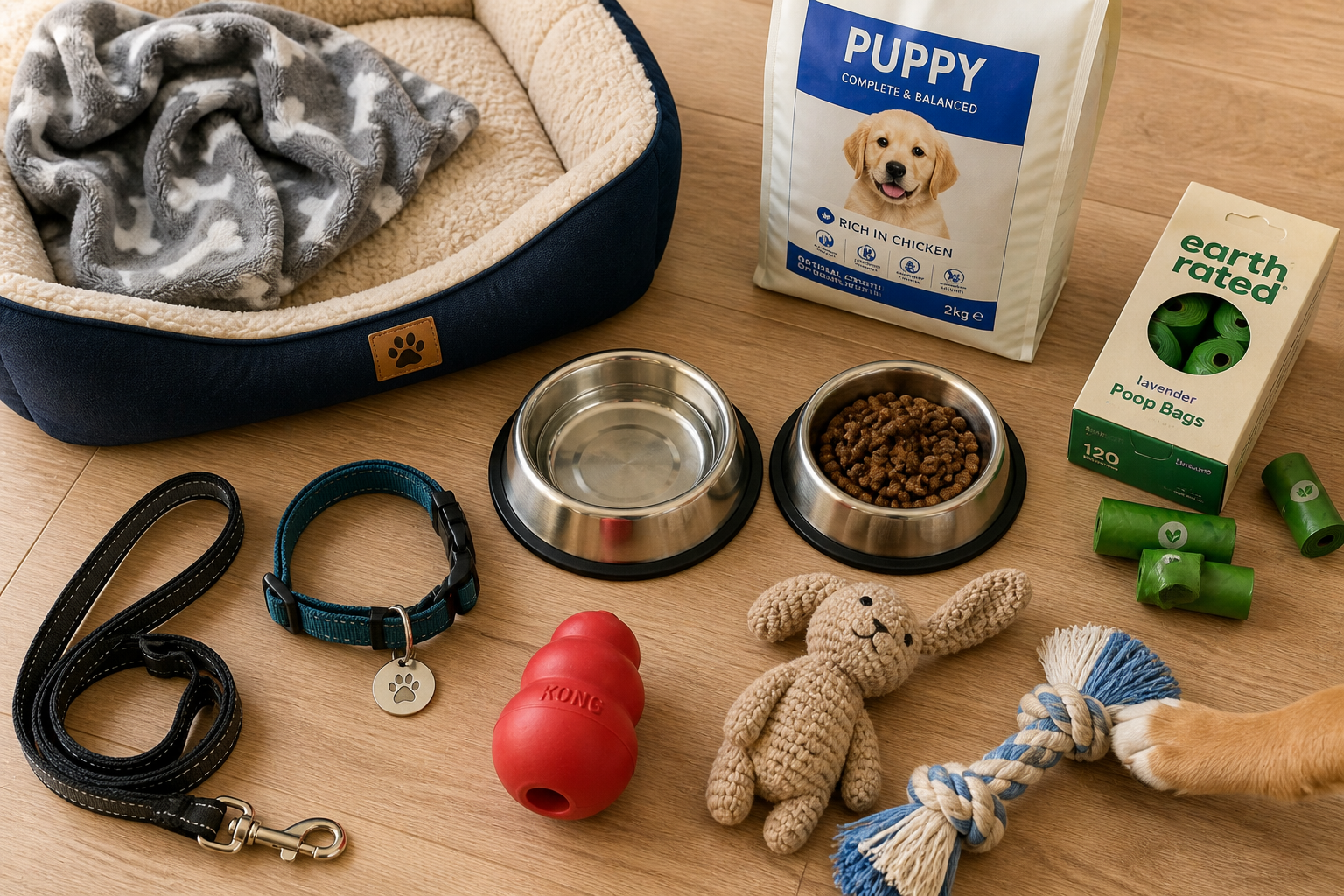
Day 1 essentials:
- Food and water bowls (stainless steel or ceramic)
- Puppy food, same brand the breeder used initially
- Collar with ID tag and lead
- Bed and blankets
- Crate or playpen
- Poo bags and enzymatic cleaner
First week additions:
- Chew toys (variety of textures)
- Puzzle toys and a Kong for mental stimulation
- Grooming brush suited to your breed
- Car safety harness or travel crate
The First Week
Days 1-3: Settling In
Keep the first day quiet, immediate family only. Let your puppy explore their area at their own pace without being passed around or overwhelmed.
Put their bed somewhere they can see you but won't be constantly disturbed. A worn item of your clothing placed near the bed helps, your scent is comforting.
Expect crying at night for the first few days. This is normal, they've just left their mother and littermates. Resist the urge to constantly comfort them, as this can reinforce the crying. Most puppies settle within 3-7 nights.
Routines
Feed at the same times every day, three to four meals for puppies under six months. Take your puppy outside immediately after eating, sleeping, and playing.
Young puppies need toilet breaks every 1-2 hours when awake. Set phone alarms to stay consistent, even when you're busy with something else.
Create a bedtime routine: final toilet break, settle in their sleeping area, minimal fuss. Puppies sleep 18-20 hours a day, so constant napping is normal, not a sign of illness.
Safe Socialisation
Your puppy can't walk on public ground until fully vaccinated, but the critical socialisation window (3-14 weeks) can't wait. Carry them outside to experience different sights, sounds, and people from a safe distance.
Invite friends over and let the puppy approach them, not the other way around. Expose them to household sounds (vacuum, washing machine, doorbell) at low volumes first, building up gradually.
Vaccinations and Health
Most UK practices give first vaccinations at 6-8 weeks, with the second round at 10-12 weeks. Full protection develops 1-2 weeks after the final jab. Until then, avoid parks, pavements, and anywhere unvaccinated dogs may have been.
Annual boosters maintain immunity, your vet will advise on the schedule for your area's disease risks.
Warning Signs
Contact your vet immediately if your puppy shows: persistent vomiting or diarrhoea lasting more than a few hours, difficulty breathing, unusual lethargy, refusing more than one meal, or any signs of pain.
A warm nose doesn't mean your dog is ill, that's a myth. Watch behaviour, eating patterns, and energy levels instead.
Worming and Flea Prevention
Worming typically starts at 2-3 weeks with the breeder, continuing every 2-4 weeks until 6 months old, then every 3-6 months for life. Your vet will recommend the right programme.
Flea prevention can start from 8-12 weeks depending on the product. Year-round treatment is recommended in most of the UK, central heating means fleas survive indoors through winter.
Basic Training
House Training
Take your puppy outside every 1-2 hours, and immediately after meals, naps, and play. Stand quietly and wait. When they go, praise enthusiastically and treat straight away.
Never punish indoor accidents, it teaches them to hide when they need to go, not to go outside. Clean up with enzymatic cleaner and increase supervision.
Most puppies are reliable during the day by 4-6 months, with night-time control following a few weeks later. Smaller breeds often take longer.
First Commands
Name recognition: say their name cheerfully, reward when they look at you. This underpins all other training.
Sit: hold a treat above their nose, move it slowly back over their head. Their bottom goes down naturally. Mark with "yes" and reward.
Come: call when they're already moving towards you. Reward generously. Never call them to come for something they won't like, you'll poison the command.
Training Classes
Book puppy socialisation classes before your puppy arrives, popular ones fill fast. Look for trainers who use positive reinforcement and require proof of vaccination for all attendees.
The play and interaction time in good classes is often more valuable than the formal exercises. Puppies learn as much from each other as they do from you at this age.
Common Challenges
Night Crying
Normal for the first 3-7 nights. Place their bed where they can hear you but not see you. A crate next to your bed works well initially, move it to the final location gradually over a week or two. If your puppy develops persistent separation anxiety beyond the settling period, that's worth addressing early.
Avoid feeding or playing during night wake-ups. A brief, boring toilet break if needed, then straight back to bed.
Chewing
Puppies explore with their mouths, especially during teething at 3-6 months. Provide appropriate chew toys and redirect rather than just saying "no."
Rotate toys weekly to keep them interesting. Frozen Kongs and puzzle toys tire puppies out more effectively than physical exercise. If they're destroying things when left alone, they may need shorter alone periods or a more secure space like a crate.
Feeding Issues
Stick to the breeder's food initially. If you want to change brands, do it gradually over 7-10 days by mixing increasing proportions of the new food. Sudden switches cause digestive upset.
Missing one meal isn't dangerous for a healthy puppy. Contact your vet if they refuse two consecutive meals. For puppies that eat too fast and vomit, slow-feeder bowls or spreading food on a flat surface helps.
When to Seek Professional Help
Medical: persistent vomiting, diarrhoea lasting more than 24 hours, lethargy, loss of appetite, difficulty breathing, or any signs of pain. Don't wait, puppies can deteriorate quickly.
Behavioural: excessive aggression, extreme fearfulness that doesn't improve with gentle exposure, or destructive behaviour that worsens despite consistent management. Early intervention with a qualified behaviourist prevents minor issues from becoming entrenched.
Frequently Asked Questions
When can my puppy go outside for walks?
Usually 1-2 weeks after the final vaccination, around 12-14 weeks old. Before that, carry your puppy outside for socialisation but avoid ground-level contact in areas where unvaccinated dogs may have been.
How long can I leave my puppy alone?
Very young puppies shouldn't be left for more than 2-3 hours. By 6 months, most can manage 4-6 hours. Never leave puppies alone overnight without arrangements for toilet breaks.
What if my puppy won't stop crying at night?
Night crying is normal for the first week. Provide comfort through familiar scents but avoid constantly responding, it reinforces the behaviour. Most puppies settle within 3-7 nights. If it continues beyond two weeks, talk to your vet.
How much does a puppy cost in the first year?
Budget roughly £1,500-3,000 for the first year including vaccinations (£100-150), insurance (£200-600), food (£300-800), neutering (£150-350), and equipment. Costs vary significantly by breed size and where you live.
When should I start training classes?
Puppy socialisation classes can start from 10-12 weeks, usually after the first vaccination. Book early, the socialisation window closes around 14-16 weeks and popular courses fill quickly.