
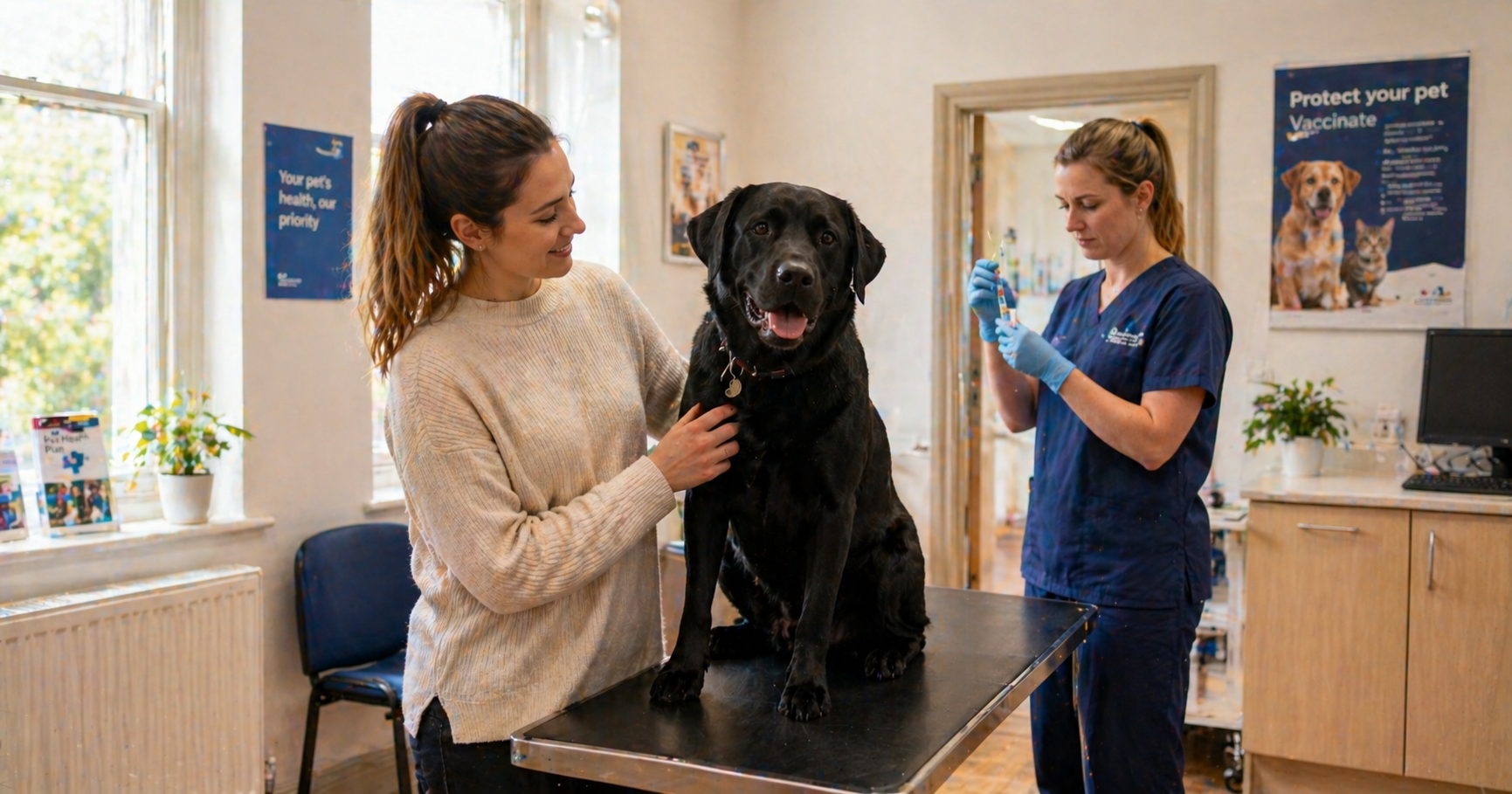
Vaccinations protect your dog against serious diseases, some of which are fatal, most of which are preventable. Core vaccines cover distemper, hepatitis, parvovirus, and leptospirosis. Puppies need a series of jabs in their first few months, then boosters throughout adulthood to maintain immunity.
This guide covers the full UK vaccination schedule, what each vaccine protects against, costs, and what to do if you've missed a booster.
Key Takeaways
- Core vaccines (distemper, hepatitis, parvovirus, leptospirosis) are essential for all UK dogs
- Puppies need three vaccination rounds: at 6-8 weeks, 10-12 weeks, and 14-16 weeks
- Adult dogs need annual leptospirosis boosters and three-yearly boosters for distemper, hepatitis, and parvovirus
- Kennel cough vaccination is recommended for any dog mixing with others, and required by most boarding facilities
- Puppy courses typically cost £100-150; adult annual boosters £50-85
- Puppies shouldn't walk in public spaces until two weeks after their final vaccination
Core Vaccines
Every UK dog needs these four, regardless of lifestyle or breed.
Distemper attacks the brain, lungs, and immune system. Often fatal in puppies. After the initial course, boosters are given every three years.
Infectious hepatitis (adenovirus) damages the liver, kidneys, and eyes. The virus survives in the environment for up to a year. Boosters every three years.
Parvovirus causes severe vomiting and bloody diarrhoea, and can kill within days, especially in young dogs. Highly contagious. Boosters every three years.
Leptospirosis is the one that needs annual boosters, because immunity fades faster than the others. It's a bacterial disease spread through contaminated water (puddles, rivers, rat urine) that can cause kidney and liver failure. Modern vaccines cover multiple strains.
Lifestyle Vaccines
Kennel cough protects against Bordetella bronchiseptica and parainfluenza virus. Any dog that mixes with other dogs, at parks, training classes, groomers, or boarding, benefits from this. Most boarding facilities require proof of current kennel cough vaccination before accepting your dog, so check this well before any planned stay. If you're unsure what to expect, our guide on kennel cough and boarding covers it in detail.
Rabies is only needed for dogs travelling internationally. The UK is rabies-free, but post-Brexit travel to the EU requires current rabies vaccination plus an Animal Health Certificate. Dogs must be at least 12 weeks old for the rabies jab, and there's a 21-day wait before travel.
Puppy Vaccination Schedule
Puppies get some immunity from their mother's milk, but it fades. The vaccination course bridges the gap and builds their own protection.
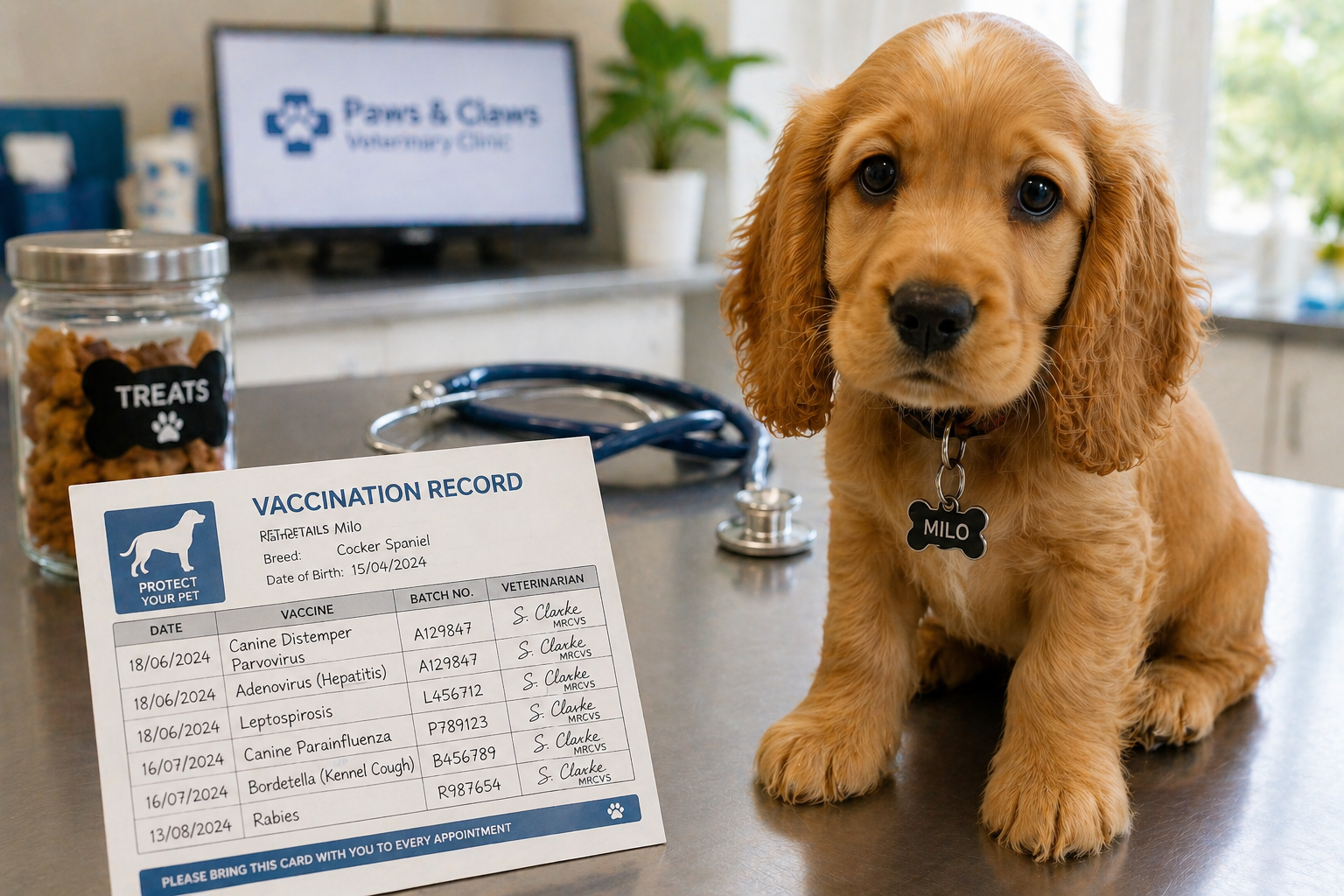
6-8 weeks, first round
Distemper, hepatitis, parvovirus, leptospirosis, and parainfluenza. Some vets also give kennel cough at this stage. Your puppy cannot go on walks or mix with unvaccinated dogs after this, they're still vulnerable.
10-12 weeks, second round
Same vaccines repeated. This reinforces protection and catches any puppies whose immune systems didn't respond fully the first time. Still no public walks or dog parks.
14-16 weeks, final round
Completes the primary course. Two weeks after this final jab, your puppy can safely walk in public, visit parks, and start socialising with other dogs. Mark this date, it's a milestone.
12 months, first adult booster
This isn't just a top-up. It's a critical part of building long-term immunity. Includes all core vaccines. After this, your dog moves to the adult schedule.
Adult Vaccination Schedule
Every year: leptospirosis booster. Book around the same time each year, most practices send reminders.
Every three years: distemper, hepatitis, and parvovirus boosters.
Even in years when three-yearly vaccines aren't due, an annual health check is worth doing. Your vet will check your dog over and catch any issues early.
Titre Testing
A blood test that measures your dog's antibody levels against specific diseases. If levels are high enough, your dog may not need a booster that year.
Titre testing is useful for dogs who've had bad vaccine reactions, elderly dogs, or dogs with immune conditions. It costs more than a standard booster (typically £50-80 for the test alone) and isn't accepted by all boarding facilities as proof of protection. Talk to your vet about whether it makes sense for your dog.
Note: titre testing works for distemper, hepatitis, and parvovirus. There's no reliable titre test for leptospirosis, the annual booster is still needed.
How Much Do Dog Vaccinations Cost?
Prices vary by practice and location, but as a rough guide:
- Puppy primary course (3 rounds), £100-150
- Annual adult booster, £50-85
- Kennel cough, £20-40 (often given as a nasal spray)
- Rabies (for travel), £25-50
London and South East practices tend to charge more. Independent vets are often cheaper than large chains. Some practices offer monthly health plans that spread vaccination costs throughout the year.
Socialising Puppies Safely Before Full Vaccination
Puppies need socialisation during their vaccination course, waiting until 16 weeks means missing a critical developmental window. But you need to do it safely.
- Carry your puppy in public rather than letting them walk on the ground
- Arrange visits with fully vaccinated adult dogs in clean, private gardens
- Puppy training classes often accept puppies after their first vaccination, using strict hygiene protocols
- Avoid dog parks, pavements with heavy dog traffic, and anywhere stray dogs frequent
What If You've Missed a Booster?
A delay of a few weeks usually doesn't require restarting the course. Gaps of several months may mean your dog needs extra vaccines to restore full protection. Contact your vet, they'll assess the gap and recommend the quickest way to get back on track.
Rescued dogs or dogs with unknown vaccination history need a vet assessment. Your vet may blood-test to check existing immunity or simply restart the course. Until immunity is confirmed, keep your dog away from high-risk areas, boarding kennels, dog parks, and places with standing water.
Side Effects
Normal: mild lethargy and reduced appetite for 24-48 hours. A small lump at the injection site may last a few weeks. These don't need treatment.
Call your vet immediately if your dog develops facial swelling, difficulty breathing, repeated vomiting, or collapse. These are signs of a serious allergic reaction. Reactions are rare but need urgent treatment.
Dogs who've had a severe reaction may need a modified protocol for future vaccinations, single vaccines instead of combination shots, or pre-treatment with antihistamines. Your vet will advise. Don't skip vaccinations entirely because of a past reaction, the diseases are far more dangerous.
Frequently Asked Questions
How long do dog vaccines last?
Distemper, hepatitis, and parvovirus vaccines provide at least three years of immunity after the initial adult booster. Leptospirosis lasts roughly one year. Kennel cough protection lasts about 12 months.
Can vaccinated dogs still get ill?
Rarely, but it can happen. No vaccine is 100% effective. Vaccinated dogs who do catch a disease typically have much milder symptoms and recover faster than unvaccinated dogs.
Is titre testing better than boosters?
It depends on the dog. Titre testing is useful if your dog has had vaccine reactions or has health conditions that make vaccination risky. For most healthy dogs, routine boosters are simpler, cheaper, and universally accepted by boarding facilities and insurance providers.
My dog is scared of the vet, should I still vaccinate?
Yes. Talk to your vet about anxiety management, some dogs benefit from calming medication before appointments. High-value treats help too. The injection itself takes seconds. Skipping vaccines because of fear puts your dog at risk of diseases that are far worse than a brief vet visit.
Do boarding kennels check vaccination records?
Licensed boarding facilities in the UK are required to check vaccination status. Most insist on up-to-date core vaccines plus kennel cough. Some accept titre test results in place of boosters, but many don't, check with the facility before booking.