
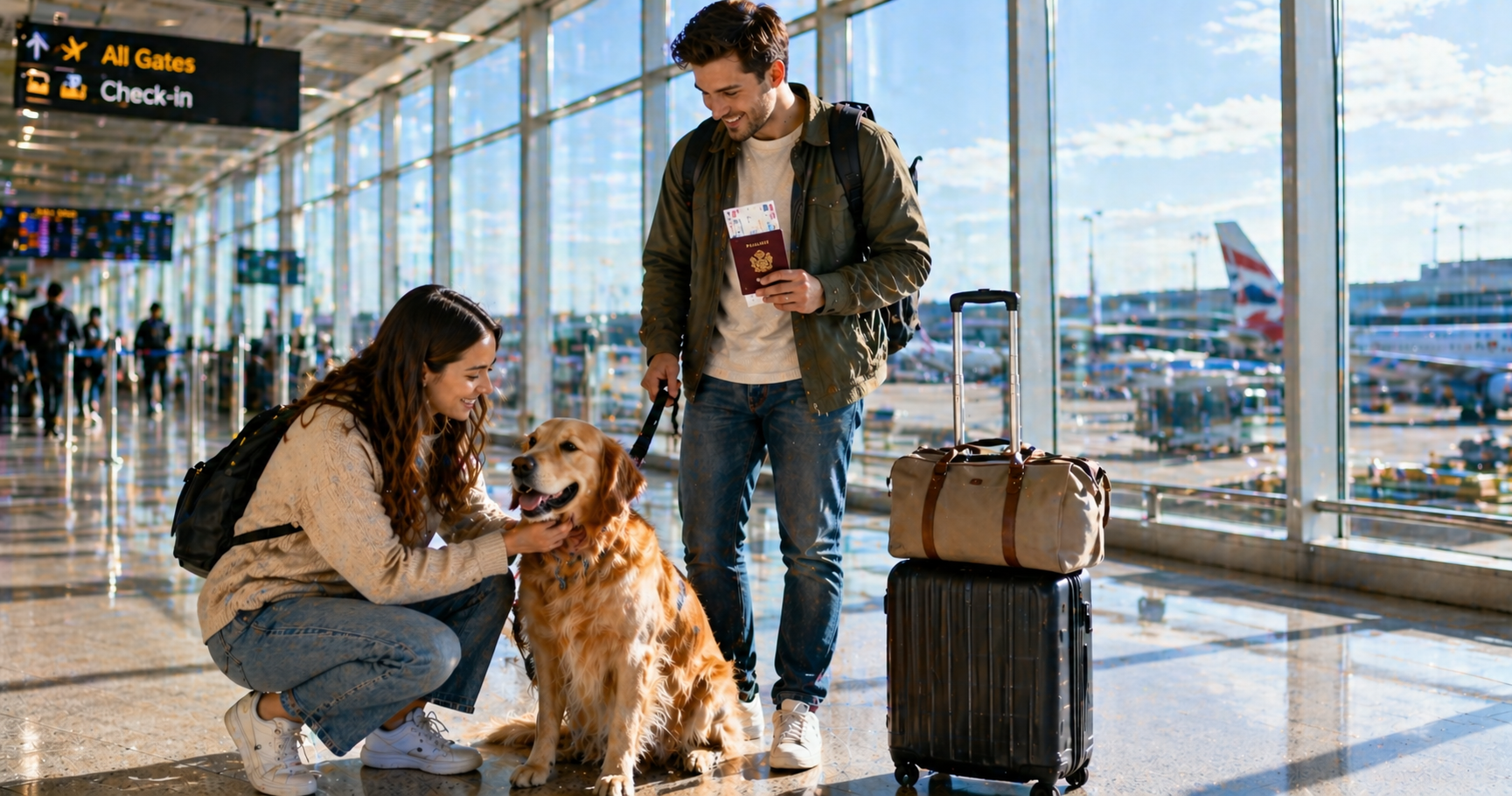
Pet travel insurance covers overseas vet bills, emergency repatriation, and quarantine costs if your pet falls ill or is injured abroad. It's not legally required, but a single emergency abroad can cost thousands of pounds, and your own travel insurance won't cover your pet.
Since Brexit, travelling with pets has become more expensive and bureaucratic. Understanding what pet travel insurance actually covers, what it excludes, and when it's worth the cost will help you make a smarter decision before your next trip.
Key Takeaways
- Pet travel insurance covers overseas vet fees, quarantine costs, emergency repatriation, and trip cancellation, but never pre-existing conditions
- Premiums range from roughly £20-£40 for a short EU trip to £60-£100+ for worldwide or longer travel
- Animal Health Certificates replaced pet passports for UK pets after Brexit, each one costs £100-£250 and is valid for one trip
- Most standard UK pet insurance policies don't include overseas cover, you'll need a travel add-on or standalone policy
- For shorter holidays, professional boarding in the UK often works out cheaper than insurance plus documentation fees
What Pet Travel Insurance Actually Covers
Pet travel insurance is a separate product from your regular pet insurance. Most UK pet insurance policies, even comprehensive lifetime plans, don't cover your pet outside the country. You'll either need a travel add-on to your existing policy or a standalone travel policy.
The core coverage areas are:
- Overseas veterinary fees, emergency treatment, diagnostics, surgery, and medication your pet needs while abroad. Limits typically range from £2,500 to £10,000 depending on your plan level.
- Emergency repatriation, transport costs to get your pet back to the UK if they're too ill to travel normally. This can run into thousands of pounds for specialist animal ambulance services.
- Quarantine costs, if your pet is detained at the border due to documentation issues or health concerns, the policy covers kennel fees and associated costs.
- Trip cancellation, reimbursement if you need to cancel or cut short your trip because your pet has a medical emergency.
- Third-party liability, some policies cover damage or injury your pet causes to other people or property abroad.
- Loss or theft, coverage if your pet goes missing, is stolen, or dies during the trip, though payout amounts are typically capped well below your pet's value to you.
Providers like Petplan, ManyPets, and Animal Friends offer travel add-ons to their standard policies. Standalone travel-only policies are less common but available through specialist brokers. Sainsbury's Bank, for example, offers overseas vet fee limits from £2,500 up to £10,000 depending on plan level.
Post-Brexit Documentation: What's Changed
Brexit fundamentally changed how UK pets travel to the EU. The old EU pet passport system no longer works for UK-issued passports. Instead, you now need an Animal Health Certificate (AHC) for every trip to an EU country.
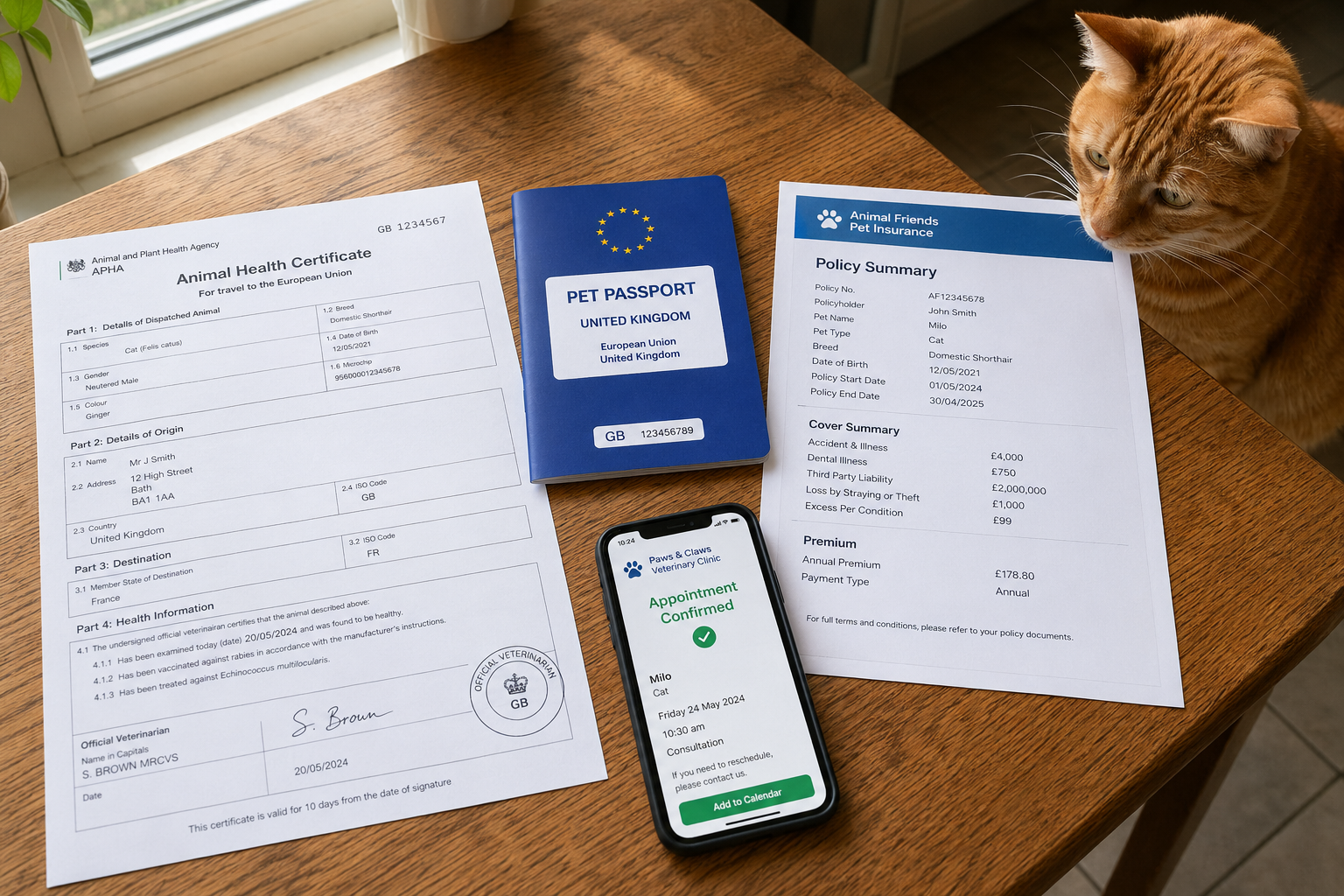
Here's what's required:
- Animal Health Certificate, must be issued by an Official Veterinarian (OV) no more than 10 days before your travel date. It confirms your pet's identity, microchip, rabies vaccination status, and general health. Valid for onward travel within the EU for 4 months.
- Rabies vaccination, must be up to date. If your pet has never been vaccinated, you'll need to wait 21 days after the jab before travelling.
- Tapeworm treatment, dogs must be treated for tapeworm 1-5 days before entering the UK on return. Cats and ferrets are exempt.
- Microchip, your pet must be microchipped, and the chip number must match all documentation.
The cost adds up. AHCs typically cost £100-£250 depending on your vet practice and location, according to Compare the Market. Rural areas often charge more because fewer vets hold OV status. Unlike the old pet passport (which lasted a lifetime), you need a fresh AHC for every trip, making frequent travel significantly more expensive than it was pre-Brexit.
How Much Does Pet Travel Insurance Cost?
Premiums vary based on destination, trip length, your pet's age and breed, and the level of cover you choose. As a rough guide:
- Short EU trip (1-2 weeks), £20-£40 as a travel add-on to existing pet insurance
- Longer EU trip (3-4 weeks), £40-£70
- Worldwide cover, £60-£100+, with higher premiums for destinations with expensive veterinary care like the US, Australia, or Japan
Several factors push premiums higher. Older pets (typically 8+) face steeper rates and may have lower coverage limits. Brachycephalic breeds, bulldogs, pugs, French bulldogs, Persian cats, often attract surcharges because of their higher risk of breathing difficulties during travel. Some insurers won't cover very young pets under 8-12 weeks.
The excess (the amount you pay before the insurer covers the rest) also matters. A policy with a low premium but a £250 excess per claim means you're covering most routine treatments yourself. Look at the total cost of excess plus premium, not just the headline price.
What Pet Travel Insurance Won't Cover
Every policy has exclusions, and these catch many pet owners off guard:
- Pre-existing conditions, anything your vet has previously noted in your pet's records. This includes managed conditions like arthritis, diabetes, epilepsy, or heart disease, even if they're stable.
- Routine and preventative care, vaccinations, flea/worm treatments, health checks, dental cleaning, and grooming are never covered.
- Pregnancy and breeding, complications from pregnancy or planned breeding activities are excluded.
- Behavioural issues, treatment for anxiety, aggression, or stress-related conditions while travelling.
- Countries under travel advisories, if the FCDO advises against travel to your destination, your pet's cover is likely void too.
- Failure to follow entry requirements, if your documentation is incomplete or your pet's vaccinations aren't up to date, any resulting costs (including quarantine) won't be covered.
Read the policy wording carefully, not just the summary. Pay attention to claim notification windows, some insurers require you to report treatment within 48 hours, which can be difficult when you're dealing with an emergency in an unfamiliar country.
Do You Need It for Domestic UK Travel?
Generally, no. Your standard UK pet insurance covers vet treatment anywhere in the country. If your dog needs emergency care in Cornwall while you're on holiday from Edinburgh, your regular policy applies just as it would at home.
The main risks with domestic travel are practical, not financial, finding a vet in an unfamiliar area, travelling with medications, and managing your pet's anxiety in new surroundings. None of these require additional insurance.
The exception is if you're doing something specific like taking your dog to a dog-friendly festival or event where third-party liability might be useful. But for standard UK holidays, your existing pet insurance is sufficient.
When Boarding Makes More Sense Than Travelling
For many shorter trips, the maths favours leaving your pet in professional care rather than bringing them along. Consider a week in Spain: travel insurance might cost £30-£50, plus £150-£200 for an AHC, plus pet-friendly accommodation surcharges. That's £200-£300 before your pet has even boarded the plane.
Quality boarding for a week often comes in under that total, and your pet avoids the stress of airports, cabins, and unfamiliar environments. This is especially worth considering for anxious pets, older animals, cats (who generally handle familiar environments far better than travel), and brachycephalic breeds that face genuine health risks during air travel.
With over 3,000 pet hotels across the UK on Tailstays, you can compare boarding options near you and often find care that costs less than the travel alternative. For dogs with separation anxiety, home boarding, where your dog stays in a sitter's home, can be a particularly good option.
Travel insurance makes clear sense for longer trips (3+ weeks), international relocations, and if you're travelling to remote areas where your pet's familiar vet won't be reachable. For a long weekend in Paris, booking a good boarding facility is almost certainly the smarter financial and emotional choice.
Frequently Asked Questions
Does my regular pet insurance cover travel abroad?
Most standard UK pet insurance policies don't include overseas cover. You'll need to check your policy documents, some comprehensive or lifetime plans offer an optional travel add-on for an extra premium. If yours doesn't, you'll need a standalone pet travel insurance policy.
Do I still need a pet passport after Brexit?
UK-issued pet passports are no longer valid for EU travel. You now need an Animal Health Certificate (AHC) for each trip, issued by an Official Veterinarian within 10 days of travel. EU-issued pet passports held by pets resident in the UK may still be accepted, check with your vet.
What should I do if my pet needs emergency treatment abroad?
Contact your insurer's 24/7 helpline immediately. You'll usually need to pay the vet directly and claim costs back later. Keep all receipts with itemised treatment details and your pet's name, and notify your insurer within their required timeframe, typically 48-72 hours.
Can I get travel insurance for my cat?
Yes, though fewer cats travel internationally than dogs. The same policies apply, travel add-ons or standalone policies cover cats. Bear in mind that cats generally find travel far more stressful than dogs, so consider whether a cattery or cat sitter might be a better option for shorter trips.
Is pet travel insurance worth it for a weekend trip?
For very short trips, the cost of insurance plus an AHC (£150-£300 total) often exceeds the cost of quality boarding. Travel insurance makes more financial sense for trips of two weeks or longer, where the risk of a costly veterinary emergency justifies the premium.