
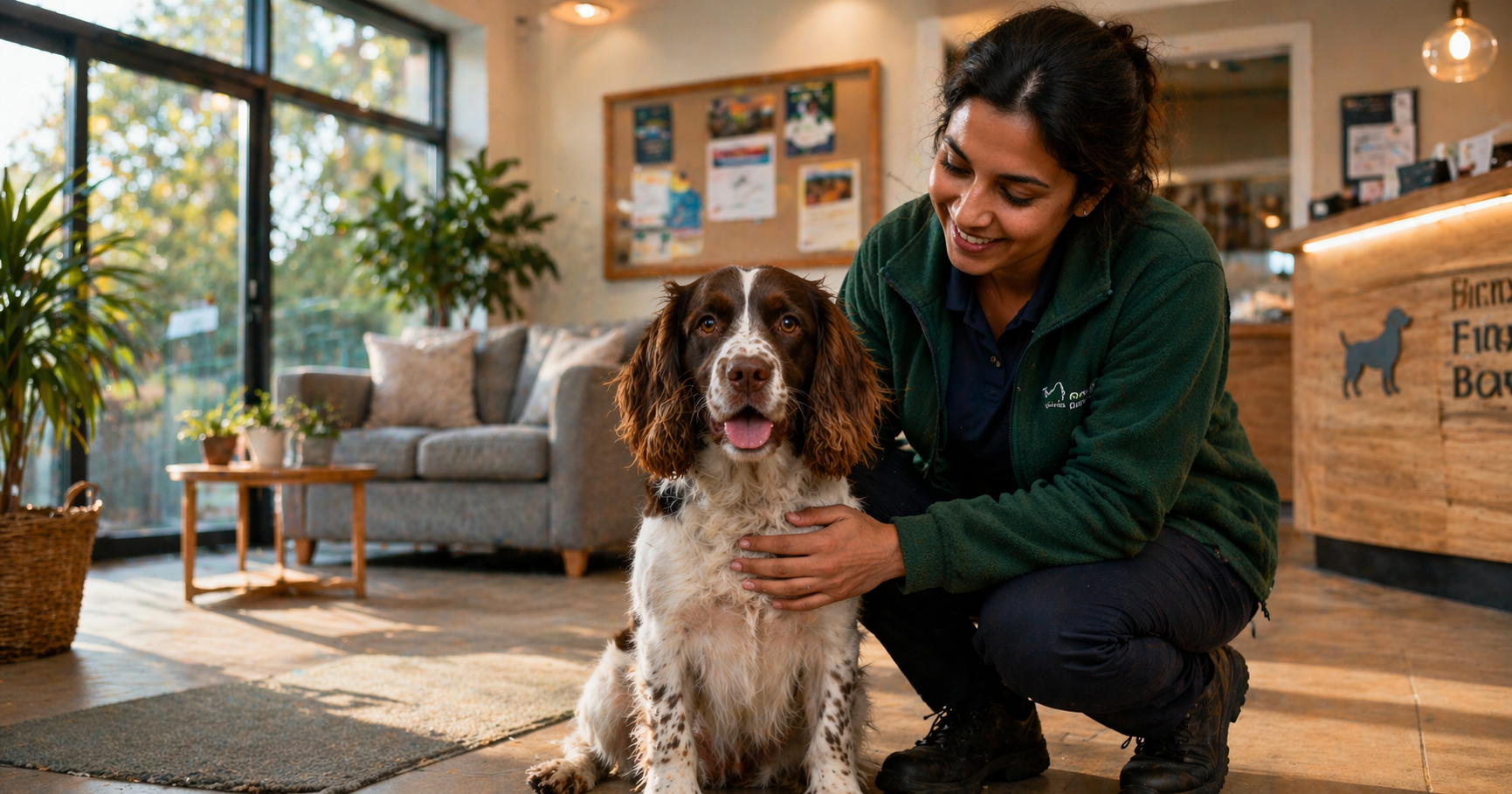
Boarding a dog with separation anxiety takes more planning than most owners expect. Some anxious dogs adapt well with proper preparation; others find boarding genuinely distressing. The difference usually comes down to severity, the facility you choose, and how much groundwork you put in beforehand.
Key Takeaways
- Assess your dog's anxiety severity honestly, only mild to moderate cases are suitable for boarding
- Start preparation 4-6 weeks before boarding with short familiarisation visits
- Home boarding often works better than kennels for anxious dogs due to one-on-one attention
- Severely anxious dogs may need house sitting in their own home instead
Separation Anxiety vs Normal Boarding Stress
Most dogs show some hesitation entering a new environment, that's normal and usually settles within 24-48 hours. Clinical separation anxiety is different. It's a panic response involving destructive behaviour, excessive vocalisation, drooling, or loss of bladder control that doesn't resolve with time.
The key distinction: normal boarding stress fades as your dog adjusts to routines and surroundings. True separation anxiety often begins before you've even left, your dog becomes distressed at pre-departure cues like picking up keys or putting on shoes.
Boarding doesn't cure separation anxiety. For severely affected dogs, combining separation from you with an unfamiliar location can actually make things worse.
Is Your Dog Ready for Boarding?
Be honest about where your dog falls on the severity scale:
- Mild: Brief whining, settles within 30 minutes, eats normally, no destructive behaviour
- Moderate: Distress for 1-2 hours, may refuse food initially, minor destructive behaviour
- Severe: Panic lasting hours, self-injury, complete loss of toilet training, destruction of property
Only dogs with mild to moderate anxiety should attempt boarding. If your dog has never been left alone for more than 2-3 hours successfully, a week-long stay is premature.
Red flags that boarding isn't suitable: self-harming behaviours like excessive paw chewing, complete inability to eat or drink when alone, or destructive behaviour that poses safety risks. For these dogs, house sitting in your own home, where familiar surroundings provide some comfort, is the better option.
Choosing the Right Facility
Not all boarding facilities can properly care for anxious dogs. You need staff specifically trained in canine behaviour, not just experienced with dogs generally. Ask about their track record with separation anxiety cases and what additional support they provide.
Look for facilities with quieter accommodation areas separate from high-energy group zones. Some anxious dogs find constant stimulation overwhelming. The ideal setup includes individual runs with visual barriers and dedicated one-on-one staff time.
Home boarding is often a better fit for anxious dogs than traditional kennels, the domestic environment and individual attention can make a real difference. Both options require licensing in England under the 2018 Regulations.
Questions to Ask
- What additional monitoring do anxious dogs receive?
- How do you handle dogs who refuse to eat or show extreme distress?
- What's the emergency protocol if anxiety escalates rather than improves?
- Can you administer prescribed anti-anxiety medication?
- Do you have quiet spaces away from other dogs?
Warning signs: staff who dismiss separation anxiety as "attention seeking" or promise your dog will "get over it". Reputable providers discuss realistic expectations, not guaranteed outcomes.
Preparing Your Dog: The 4-6 Week Plan
Successful boarding for anxious dogs requires genuine preparation, not a quick drop-off. You're building positive associations with the boarding environment before the stress of actual separation.
Gradual Desensitisation
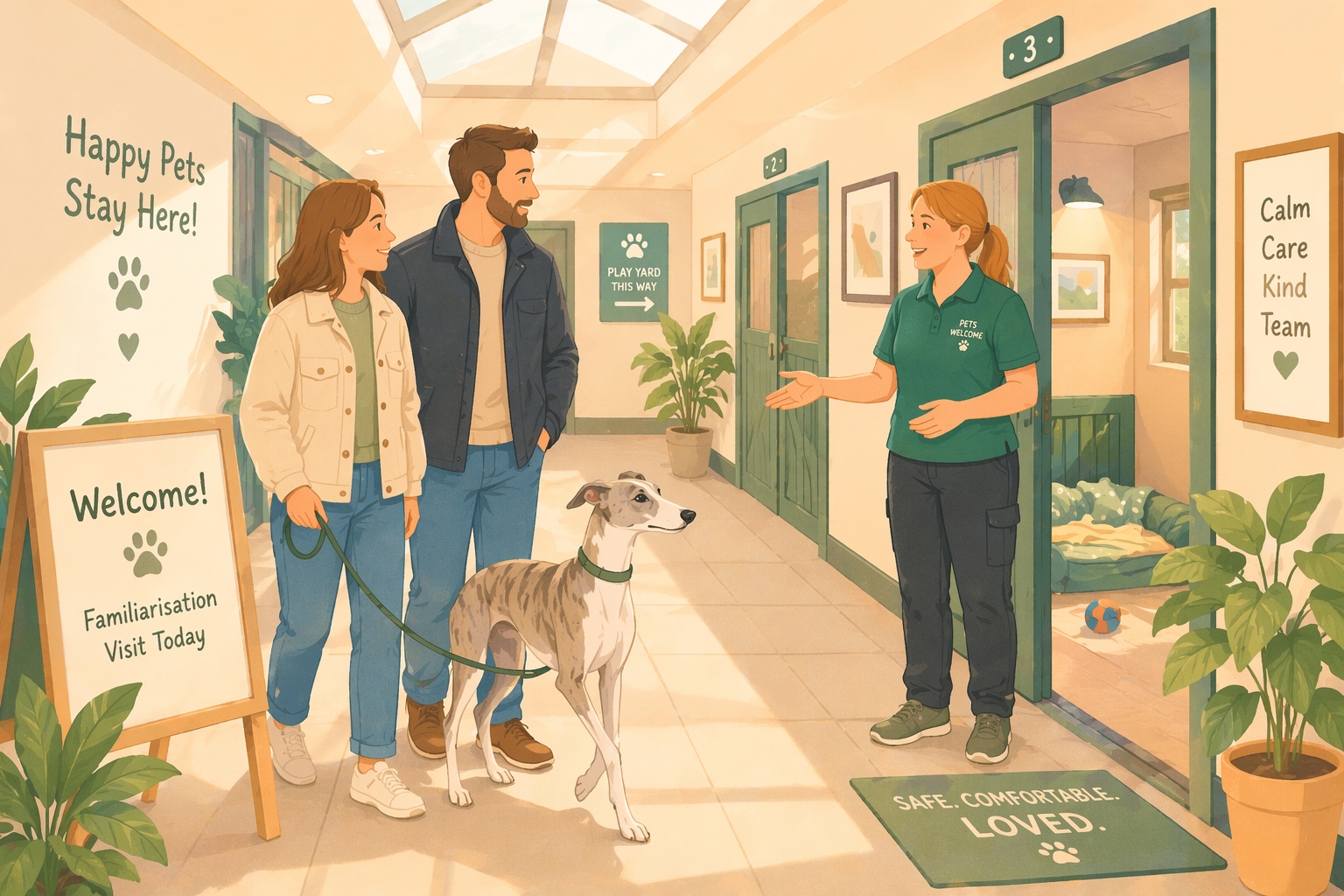
Weeks 1-2: Facility visits only. Brief visits where nothing stressful happens, walk through, let your dog sniff around, then leave. Keep these to 10-15 minutes. You're building familiarity, nothing more.
Weeks 3-4: Short day stays. Leave your dog for 2-4 hours while you remain nearby. They experience the boarding routine without the added stress of you being far away.
Weeks 5-6: Overnight trials. Only attempt these once day stays go well. If your dog is still distressed after day visits, they're not ready for overnights, don't force it.
Pack familiar comfort items: an unwashed t-shirt you've worn, their favourite blanket, a well-loved toy. For a full checklist, see our dog boarding packing guide. If your vet has prescribed anti-anxiety medication, provide detailed administration instructions including timing, dosage, and side effects to watch for.
During and After Boarding
Even well-prepared anxious dogs typically need 48-72 hours to settle. Reduced appetite, increased vocalisation, and restlessness are normal responses that should gradually improve. Good facilities provide extra check-ins during the first 24 hours and will contact you immediately if your dog shows severe distress or refuses all food for more than a day.
Agree on a communication schedule beforehand, daily updates for the first few days, then every other day. Resist the urge to call constantly; excessive checking can increase staff stress, which anxious dogs pick up on.
If anxiety escalates rather than improves after 48 hours, quality facilities will honestly discuss whether continuing the stay is in your dog's best interest.
After returning home, your dog may seem clingy for 24-48 hours, following you everywhere, mild anxiety when you leave briefly. This is normal readjustment. Concerning signs include toilet training regression lasting more than a week, increased destructive behaviour, or new phobias. These suggest the experience was too stressful and may need professional behavioural support.
Compare boarding providers near you on Tailstays, look for experienced carers who understand anxious dogs and offer trial stays.
Frequently Asked Questions
Can boarding make separation anxiety worse?
Yes, particularly for severely affected dogs or if attempted without proper preparation. The combination of separation from you plus an unfamiliar environment can intensify anxiety. This is why honest severity assessment and the 4-6 week preparation plan matter so much.
Should I sedate my anxious dog for boarding?
Never sedate without veterinary guidance. Some medications can increase confusion and distress in unfamiliar environments. If medication is needed, work with your vet to find appropriate options and ensure boarding staff are trained in administration and monitoring.
What if my dog refuses to eat at the facility?
Reduced appetite is common for anxious dogs in boarding. Most facilities expect this and try highly palatable foods or hand-feeding. Complete food refusal for more than 24 hours requires immediate attention and may mean ending the stay early.
Is home boarding better than kennels for anxious dogs?
Usually, yes. The domestic environment, one-on-one attention, and quieter setting suit most anxious dogs better than a busy kennel. Home boarding in England requires the same licensing as kennels under the 2018 Regulations. For severely anxious dogs, house sitting in your own home may be better still.