

Choosing between home boarding and traditional kennels comes down to your dog's personality. A nervous Staffie who sleeps on the sofa every night will have a very different experience to a sociable Spaniel who lights up around other dogs. Both options are licensed under the 2018 Regulations in England, but they offer completely different environments.
Key Takeaways
- Home boarding suits anxious dogs who need one-on-one attention and a domestic routine
- Kennels work better for sociable dogs who enjoy stimulation and interaction
- Home boarding typically costs £26-40 per night; kennels start from around £15-30
- Both require licensing in England, but emergency and veterinary arrangements differ significantly
Side-by-Side Comparison
| Factor | Home Boarding | Traditional Kennels |
|---|---|---|
| Environment | Family home, domestic routine | Purpose-built facility with designated areas |
| Dog-to-carer ratio | 1-3 dogs per household | 10-20 dogs per staff member |
| Typical cost per night | £26-40+ | £15-30 |
| Exercise | Individual walks, home garden | Structured exercise times, communal play areas |
| Vet emergencies | Carer drives to local vet | Often partnered with or near a veterinary practice |
| Peak availability | Limited, book 2-3 months ahead | Higher capacity, better last-minute options |
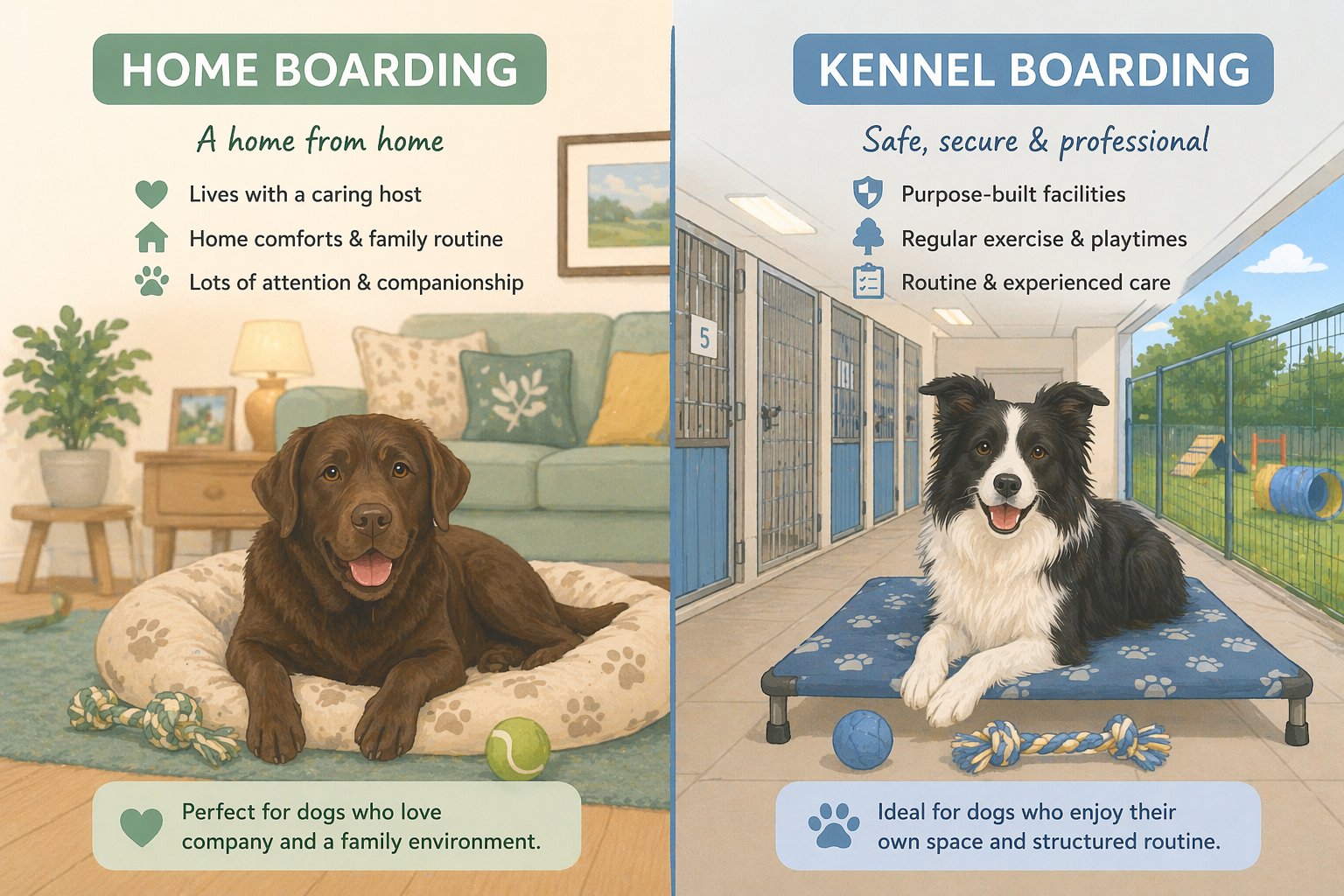
Pricing based on typical UK rates. BarkingMad, one of the larger home boarding networks, quotes £26-32 per day. Traditional kennels vary widely, with premium facilities charging considerably more. For a full pricing breakdown, see our guide to dog sitting and boarding costs.
Home Boarding: Pros and Cons
Advantages
Home boarding is the closest thing to your dog's normal routine. They sleep on furniture, follow family meal times, and get constant companionship. Imagine your elderly Labrador curling up on someone's sofa after a gentle afternoon walk, that's the appeal.
The one-on-one attention means specific needs get immediate response, medication, special diets, or comfort during thunderstorms. Many dogs eat and sleep better because they're in a home rather than an unfamiliar facility.
Disadvantages
Availability is the biggest headache. Individual carers have limited capacity, and during school holidays you might need to book months ahead or struggle with last-minute trips.
Standards vary between households. While all licensed home boarders meet regulatory requirements, the quality of garden space, experience levels, and overall setup differs considerably. A pre-visit is essential.
Emergency vet access depends on the carer's ability to drive your dog to a practice, which can mean delays compared to kennels with established veterinary partnerships.
Traditional Kennels: Pros and Cons
Advantages
Professional facilities are purpose-built, proper drainage, heating, secure exercise areas, and staff experienced in managing multiple dogs and spotting early signs of illness.
Veterinary access is often superior. Many kennels have partnerships with local practices or nearby clinics, meaning faster response times if something goes wrong.
Capacity is higher, so you're more likely to find availability during peak periods or for last-minute bookings.
Disadvantages
Some dogs struggle with the institutional feel, barking from neighbouring runs, unfamiliar sounds, and sleeping in an enclosure rather than on the bed. This can affect eating, sleeping, and general wellbeing, particularly for anxious dogs.
Individual attention is limited by staff ratios. Your dog will be properly cared for, but they won't get the constant one-on-one companionship available in a home setting.
Which Should You Choose?
Choose home boarding if your dog suffers from separation anxiety, is elderly, has complex medical needs, or simply doesn't cope well outside their normal routine. Dogs who are attached to their humans and stressed by unfamiliar environments almost always do better in a home setting.
Choose kennels if your dog is sociable and enjoys other dogs, you need reliable peak-season availability, or your dog has serious health conditions requiring fast veterinary access. Some dogs genuinely enjoy the stimulation of a busy kennel.
Red flags for either option: unlicensed operators, reluctance to allow pre-booking visits, or vague emergency protocols. Always verify the licence, visit in person, and ask exactly what happens if your dog becomes ill.
Compare licensed boarding providers near you on Tailstays to find the right fit for your dog.
Frequently Asked Questions
Which is safer for anxious dogs?
Home boarding typically works better because it provides a calm, domestic environment with one-on-one attention. That said, some dogs find any unfamiliar place stressful. The key is understanding your dog's specific triggers, if other dogs are the problem, home boarding wins. If new places are the issue, a familiar kennel they've visited before might actually be better.
What happens in a medical emergency?
Home boarders transport dogs to their local vet, which involves travel time. Kennels often have established veterinary partnerships or nearby clinics, potentially providing faster response. Both must have clear emergency protocols, ask the specific question before you book.
How far ahead should I book?
Home boarding: 2-3 months during peak periods (summer, Christmas) because individual carers fill up quickly. Kennels have more capacity and can often accommodate bookings within weeks, though popular facilities still fill up during school holidays.
Are home boarders as well regulated as kennels?
In England, yes. Both require licensing under the same 2018 Regulations, with inspections covering welfare standards, record-keeping, and emergency procedures. The specific requirements differ to suit each environment, but the regulatory oversight is equivalent.