
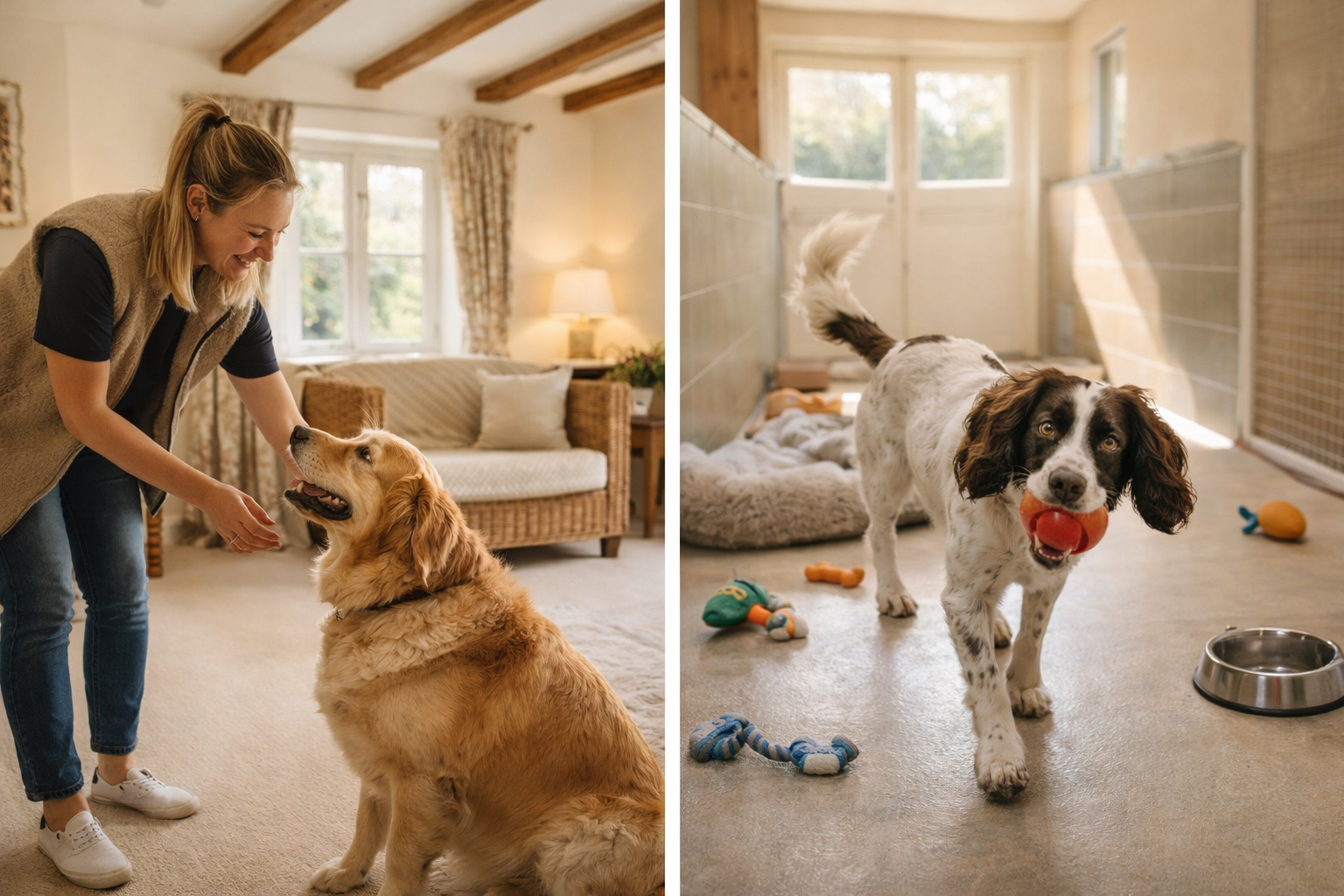
Choosing between a dog sitter and boarding kennel depends on your dog's personality, your budget, and your specific needs. Dog sitting (home boarding) offers one-on-one care in a family home, while boarding kennels provide professional facilities with trained staff. Most UK dog sitters charge £25-45 per night, whilst kennels typically range from £15-35.
Key Takeaways
- Dog sitters provide home-based care with individual attention but cost more and have limited availability
- Boarding kennels offer professional facilities at lower cost but with less personalised attention
- Both require licensing in England under the 2018 Animal Welfare Regulations
- Choose dog sitting for anxious pets or those needing special care
- Choose kennels for social dogs or last-minute bookings
- Always visit facilities or meet sitters beforehand
Side-by-Side Comparison
| Factor | Dog Sitter (Home Boarding) | Boarding Kennel |
|---|---|---|
| Environment | Family home setting | Purpose-built facility |
| Individual Attention | High - often one-on-one | Moderate - shared with other dogs |
| Socialisation | Limited to host's pets | High with multiple dogs |
| Cost (per night) | £25-45 typically | £15-35 typically |
| Booking Notice | Often 2-4 weeks | Usually shorter notice OK |
| Licensing | Required in England under 2018 Regulations | Required in England under 2018 Regulations |
| Staff Training | Varies by individual | Professional staff standards |

Pros and Cons Breakdown
Dog Sitter Advantages
- Individual attention: Your dog often becomes the centre of attention in a family setting
- Familiar environment: Home setting reduces stress for anxious dogs
- Routine maintenance: Can more easily stick to your dog's usual schedule
- Lower disease risk: Fewer dogs means reduced chance of picking up illnesses
- Personalised care: Easier to accommodate special dietary or medical needs
- Updates: Many sitters provide photos and regular updates
Dog Sitter Disadvantages
- Higher cost: Premium service comes with premium pricing
- Limited availability: Popular sitters book up weeks in advance
- Variable standards: Quality depends entirely on individual sitter
- Less socialisation: Minimal interaction with other dogs
- Dependency risk: If sitter cancels, finding alternatives is difficult
Boarding Kennel Advantages
- Professional standards: Licensed facilities with trained staff and protocols
- Cost effective: Generally more affordable for extended stays
- Socialisation opportunities: Interaction with other dogs and staff
- Flexibility: Easier to accommodate last-minute bookings
- Established routines: Fixed feeding and exercise schedules
- Emergency backup: Multiple staff members if primary carer is unavailable
Boarding Kennel Disadvantages
- Less individual attention: Staff care for multiple dogs simultaneously
- Institutional environment: Can be stressful for sensitive dogs
- Disease exposure: Higher risk of kennel cough and other infections
- Noise levels: Barking from other dogs can cause stress
- Additional charges: Extra fees for medication administration or special diets
Cost Comparison
Dog sitting typically costs £25-45 per night in the UK, though rates vary by location and services included. London and the South East command higher prices, whilst rural areas tend to be more affordable.
Boarding kennels generally charge £15-35 per night, with additional fees for extras like grooming or medication. Budget kennels start around £12 per night, whilst luxury facilities can reach £50+.
Hidden costs to consider:
- Collection and drop-off services (vary widely by location and provider)
- Bank holiday surcharges (may apply)
- Medication administration fees
- Special dietary requirements
- Cancellation charges
Which Option is Right for Your Dog?
Choose a Dog Sitter If...
- Your dog suffers from separation anxiety or stress
- You have multiple pets that need to stay together
- Your dog requires medication or special care routines
- Your budget allows for premium personalised service
- Your dog doesn't enjoy socialising with unfamiliar dogs
- You can book well in advance
Choose Boarding Kennels If...
- Your dog is confident and enjoys meeting new dogs
- You need last-minute or flexible booking options
- Budget is a primary consideration for longer stays
- You prefer regulated professional facilities
- Your dog thrives on routine and structured exercise
- You want established emergency procedures
Find licensed providers in your area and compare options on Tailstays.
Red Flags to Avoid
For both options, avoid providers who:
- Cannot show current licensing documentation
- Refuse to let you visit or meet beforehand
- Have no public liability insurance
- Won't provide references or have consistently poor reviews
- Ask for full payment upfront without cancellation terms
- Cannot explain their emergency procedures
- Won't discuss your dog's specific needs in detail
Questions to Ask Before Booking
Essential questions for any provider:
- Can I see your current licence and insurance certificates?
- What is your policy if my dog becomes ill or injured?
- How do you handle dogs who don't settle well initially?
- What is your daily routine for feeding and exercise?
- How will you communicate with me during my trip?
- What are your cancellation and refund policies?
Additional questions for dog sitters:
- How many dogs do you care for simultaneously?
- Do you have your own pets, and how do they interact with visitors?
- What happens if you become ill while caring for my dog?
Additional questions for kennels:
- What is your staff-to-dog ratio during different shifts?
- How do you prevent the spread of infections?
- Can you accommodate my dog's specific dietary requirements?
Frequently Asked Questions
Which is safer for my dog, a sitter or kennel?
Both licensed dog sitters and boarding kennels must meet safety standards, but the risk profile differs. Kennels have professional protocols but higher disease transmission risk due to multiple dogs. Dog sitters offer lower infection risk but depend on individual competence. Check licensing, insurance, and references for either option.
How far in advance should I book?
Popular dog sitters often need 2-4 weeks' notice, especially during school holidays and peak travel periods. Boarding kennels typically accommodate shorter notice, sometimes just a few days ahead. Book as early as possible for Christmas, Easter, and summer holidays when demand peaks.
What happens if my dog gets sick during boarding?
Both licensed sitters and kennels should have emergency procedures involving local veterinary care. Clarify who pays for emergency treatment and how they'll contact you. Most reputable providers will seek your approval for non-emergency treatments and keep detailed records of any incidents.
Can I visit the kennel or meet the sitter beforehand?
Yes, and you absolutely should. Reputable providers welcome visits and meet-and-greets. This helps your dog familiarise themselves with the environment and lets you assess the quality of care. Be wary of anyone who won't allow pre-visits, it's a significant red flag.
Do I need to bring my dog's own food and bedding?
Most providers recommend bringing familiar food to avoid digestive upset, plus favourite toys or bedding for comfort. Some sitters and kennels provide food and bedding, but familiar items help reduce stress. Ask about their policy when booking and what they supply versus what you should bring.
You can compare boarding options near you to see what's available in your area and request to book directly with providers.