
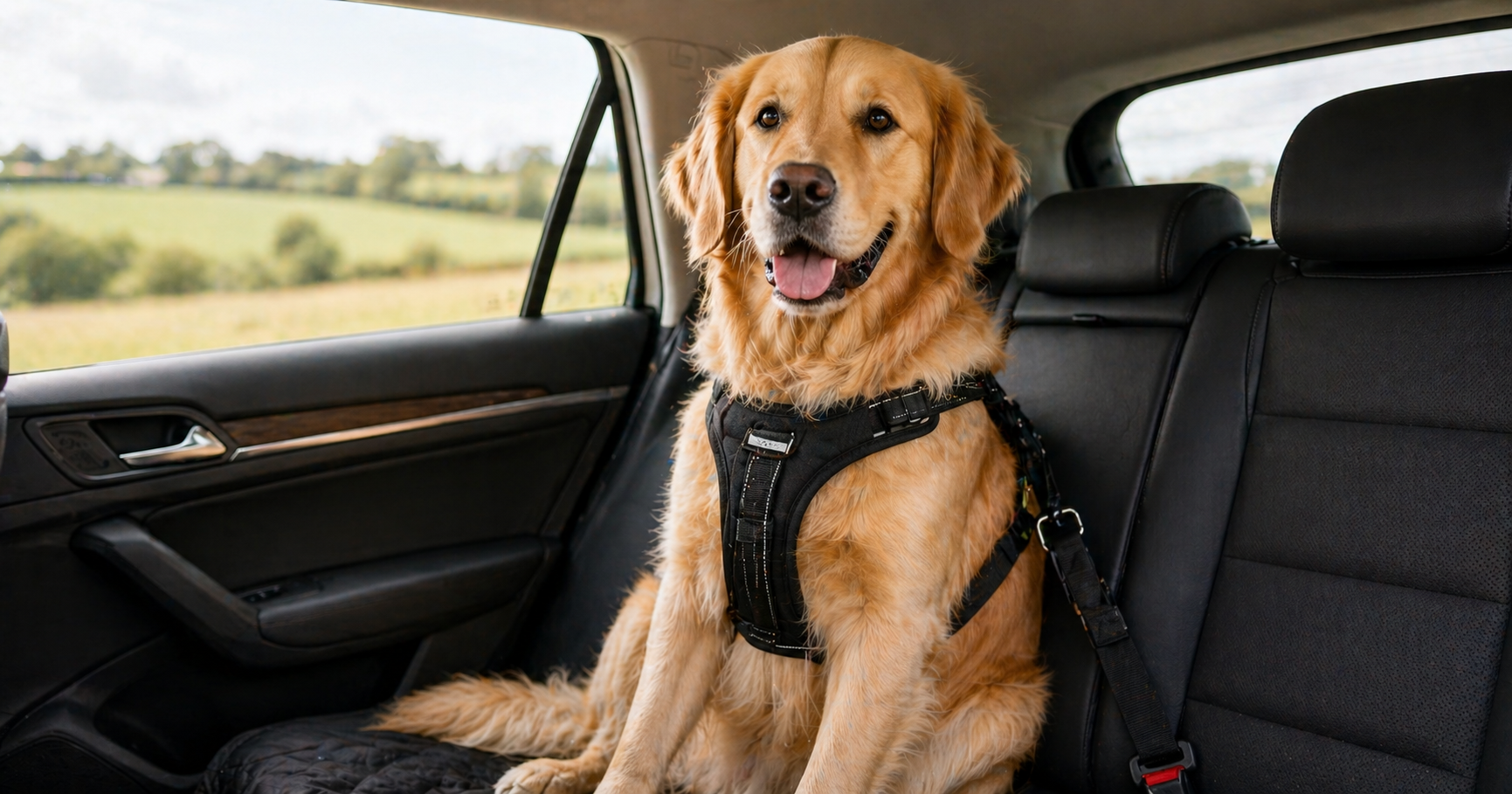
Under Highway Code Rule 57, dogs must be "suitably restrained" in vehicles. Failing to do so counts as driving without due care and attention, carrying fines up to £5,000, penalty points, and possible driving bans. But the legal risk is only part of the picture. An unrestrained dog in a crash becomes a projectile that can seriously injure both itself and passengers.
This guide covers what the law actually requires, which restraint equipment works, and how to make car journeys safe and comfortable for your dog.
Key Takeaways
- Highway Code Rule 57 requires dogs to be suitably restrained, fines can reach £5,000 with 3-9 penalty points
- Only crash-tested products (like SleepyPod and Gunner Kennel) provide proven protection in collisions
- Match restraint type to your dog's size: carriers for small dogs, harnesses for medium, heavy-duty harnesses for large breeds
- Cars heat up dangerously fast, the RSPCA warns that dogs die in hot cars every year, even on mild days
- Inadequate restraint may affect car and pet insurance claims if it contributed to an incident
Why Restraining Your Dog in the Car Matters
In a 30mph collision, an unrestrained dog hits with a force many times its own body weight. A 20kg Labrador generates enough impact to cause fatal injuries to both itself and any passenger it strikes. Rear-seat passengers and children are most at risk.
Beyond crashes, loose dogs cause accidents in the first place. A dog jumping onto the driver's lap, lunging at a passing cyclist, or scrambling across the centre console creates exactly the kind of distraction that leads to loss of control. Most drivers wouldn't text at the wheel, but many travel with a free-roaming dog, the distraction risk is comparable.
Then there's the legal side. Driving with an unrestrained dog is prosecuted as "driving without due care and attention" under the Road Traffic Act 1988. Penalties include:
- Fines up to £5,000
- Three to nine penalty points
- Possible court appearance
- Driving ban in serious cases
Insurance matters too. If your dog wasn't restrained during an incident, your car insurer may argue you were driving without due care, potentially weakening or invalidating your claim. Some pet insurance policies also include clauses about responsible transport.
UK Legal Requirements
Highway Code Rule 57 states dogs must be "suitably restrained" but deliberately doesn't prescribe specific equipment. This gives owners flexibility to choose restraints that suit their dog's size, temperament, and the vehicle.
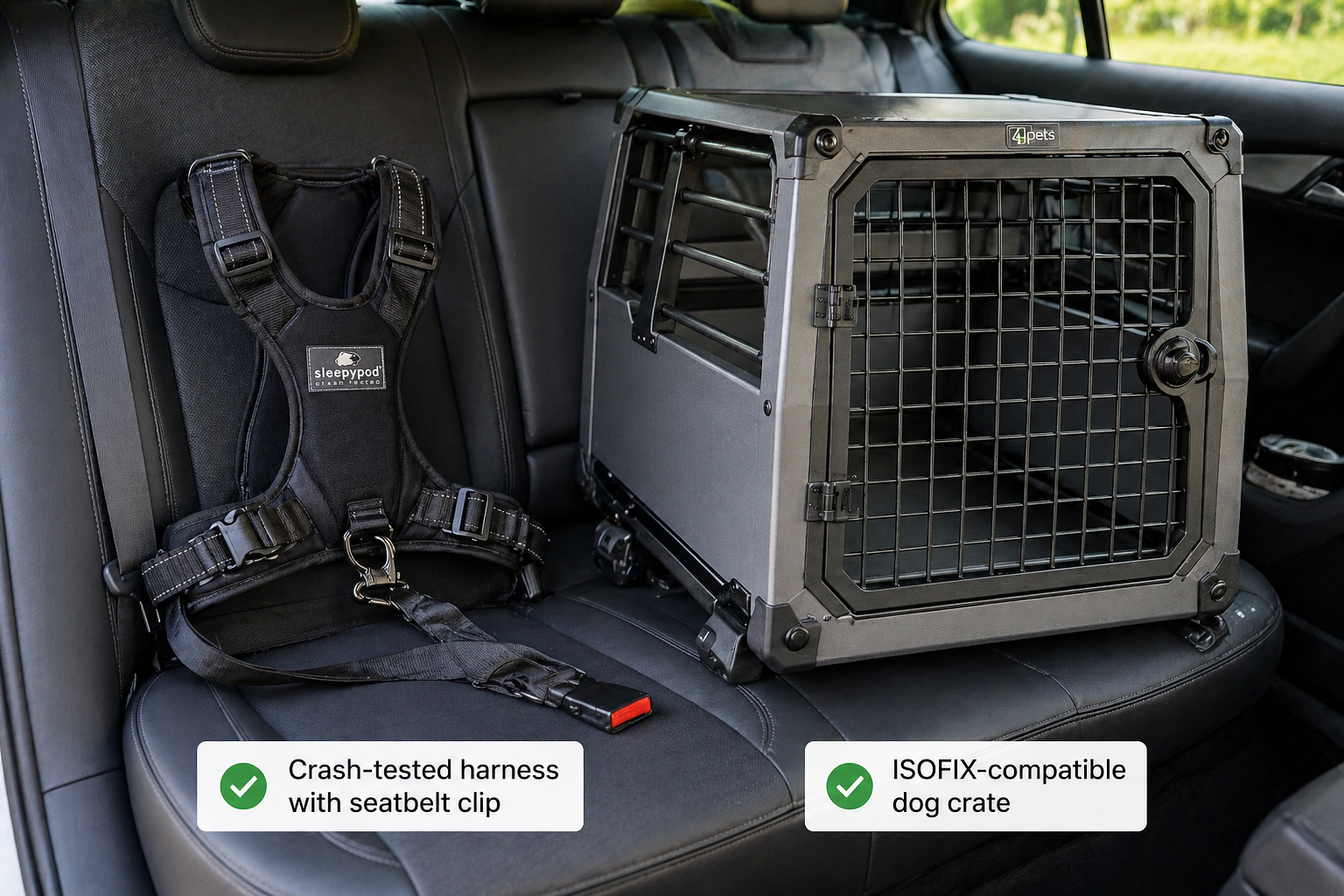
The legal test is straightforward: could your restraint method prevent the dog from distracting the driver or causing injury during sudden braking or a collision? A slip lead clipped to a headrest won't cut it. A properly fitted harness connected to the car's seatbelt system or ISOFIX points would.
Dogs aren't banned from front seats, but the Highway Code strongly advises against it because of airbag danger. If your dog must travel in front, disable the passenger airbag and use appropriate restraint.
Traffic police increasingly check pet restraint during routine stops. Enforcement varies by force, but the broad "driving without due care" charge gives officers wide discretion to act on inadequate restraint.
Types of Dog Car Restraints
Car Harnesses
Car harnesses distribute crash forces across your dog's chest and shoulders instead of concentrating them at the neck. Good ones connect to the vehicle's existing seatbelt system or ISOFIX anchor points.
Choosing the right size is critical, measure your dog's chest circumference and weight, then match to the harness specifications. An undersized harness won't spread forces properly; an oversized one allows too much movement on impact.
The gap between crash-tested and untested products is enormous. Crash-certified harnesses like the SleepyPod Clickit Sport have been tested by the Centre for Pet Safety (CPS) and proven to restrain dogs in simulated collisions. Untested harnesses may keep your dog in place during normal driving but fail completely in a crash. The PDSA recommends choosing CPS-certified products wherever possible.
Carriers and Crates
Rigid carriers with ISOFIX mounting offer the best protection for small to medium dogs (typically under 25kg). They connect directly to the car's structural anchor points and prevent your dog from becoming a projectile.
Size the carrier so your dog can stand, turn around, and lie down comfortably, the same rule used for airline crates. Too tight causes stress; too roomy allows dangerous movement during impacts.
Hard-sided carriers provide better crash protection than soft-sided ones. Soft carriers work for short, low-speed journeys and for anxious dogs who prefer enclosed spaces, but shouldn't be relied on for motorway travel.
Boot Guards and Barriers
Boot guards keep dogs contained in the rear cargo area, protecting human passengers. However, they offer limited protection for the dog itself, in a rear-end collision, an unrestrained dog in the boot can be thrown against the barrier with serious force.
For larger dogs that don't fit comfortably on seats, combine a boot barrier with a harness attached to anchor points in the boot. This gives both space and safety.
Professional fitting matters. DIY barrier installations often fail at mounting points under crash forces, making them useless when they're needed most.
Choosing the Right Restraint
Your dog's size narrows the options quickly. Small dogs under 10kg do well in crash-tested carriers. Medium dogs (10-25kg) need quality harnesses or larger carriers. Large breeds over 40kg require heavy-duty harnesses rated for their weight, standard harnesses aren't strong enough.
Temperament plays a role too. Anxious dogs often settle better in enclosed carriers that feel den-like. Confident dogs usually accept harnesses without fuss. If your dog has never travelled restrained, start with short stationary sessions in the car to build familiarity.
How often you travel should guide how much you spend. Daily commuters should invest in crash-tested equipment despite the higher cost. For occasional trips, simpler restraints that meet the legal minimum are reasonable, just don't confuse "legal" with "safe."
Multi-dog households need individual harnesses with separate anchor points for each dog. Two small dogs can share a large carrier, but check your car has enough anchor points before buying equipment.
Making Car Travel Comfortable
Temperature
The RSPCA warns that dogs die in hot cars every year, even when owners think they'll "only be a minute." On a 22°C day, car interiors can reach over 40°C within an hour. Cracking windows makes almost no difference. Never leave your dog unattended in a vehicle, regardless of weather.
When driving, note that rear passengers, including dogs, often get less airflow than front occupants. Test your car's rear temperature in warm weather and consider cooling mats or portable fans for longer journeys.
Journey Planning
Feed your dog 2-3 hours before departure to avoid travel sickness. Carry water for hydration stops.
Break frequency depends on your dog. Puppies and elderly dogs need stops every hour; healthy adults can manage two-hour stretches. Plan routes around dog-friendly service areas or parks where your dog can stretch and relieve itself.
Spotting Distress
Heatstroke signs: excessive panting, drooling, lethargy, vomiting, collapse. This is a veterinary emergency, move your dog to shade, offer cool (not cold) water, apply damp towels, and get to a vet immediately.
Motion sickness: restlessness, whining, drooling, or vomiting. Most dogs adapt with repeated short journeys. Persistent cases may need veterinary anti-nausea medication.
Travel anxiety: trembling, panting, escape attempts. Address through gradual conditioning, forcing an anxious dog into car travel makes it worse.
Common Mistakes
Heads out the window. It looks fun, but debris, branches, and insects cause eye and ear injuries. It also means your dog isn't properly restrained, and could jump or fall from a moving vehicle.
Using untested equipment for regular travel. A cheap harness might keep your dog seated during normal driving, but it won't protect them in a collision. If you drive with your dog regularly, crash-tested equipment is worth the investment.
Ignoring insurance policy wording. Check both your car and pet insurance policies for restraint clauses before you need to make a claim. Keep receipts for equipment you've purchased.
Wrong size for your dog. A harness rated for a Jack Russell won't contain a German Shepherd. Always match equipment ratings to your dog's actual weight and build.
Emergency Situations
If you see a dog in a hot car showing distress, collapse, blue gums, severe panting, call 999 immediately.
For less urgent situations (dog alert but clearly uncomfortable), call the RSPCA on 0300 1234 999 and try to find the owner. Shopping centres and businesses can make tannoy announcements.
Breaking a car window to rescue a dog carries legal risk unless you can demonstrate immediate danger to life. Photograph the dog's condition, note the time, and record any visible temperature gauges. Police generally won't prosecute genuine rescue attempts backed by evidence.
First aid for an overheated dog: move to shade, offer small amounts of cool water, place damp towels on paws and body. Never use cold water or ice, it causes dangerous shock. Get to a vet even if symptoms seem to improve.
When to See Your Vet
See your vet if your dog shows persistent severe travel anxiety, excessive drooling, vomiting, destructive behaviour, or panic when approaching the car. This may need professional behavioural support beyond simple conditioning.
Motion sickness that doesn't improve after several short practice journeys is also worth a vet visit. Anti-nausea medication can make a real difference.
After any car accident involving your dog, get a veterinary check even if your dog seems fine. Internal injuries and shock don't always show symptoms immediately.
If your dog simply can't cope with car travel despite your best efforts, that's OK. For essential journeys and holidays, professional pet care is the practical alternative. You can find trusted local boarding and pet sitting options on Tailstays, so your dog stays comfortable while you travel.
Frequently Asked Questions
Can my dog sit in the front seat?
The Highway Code advises against it because of airbag danger and increased driver distraction, but doesn't ban it outright. If you must, disable the passenger airbag and use proper restraint. The back seat is always safer.
What's the best type of dog car harness?
Look for harnesses tested by the Centre for Pet Safety (CPS). The SleepyPod Clickit Sport is one of few that has passed independent crash testing. Avoid harnesses that only clip to the collar, they need to distribute force across the chest.
What happens if I'm in an accident with an unrestrained dog?
You could face driving without due care charges (up to £5,000 fine, penalty points). Your car insurer may dispute your claim if they consider you at fault for not restraining the dog. Your dog could also be seriously injured or injure passengers.
How do I get my dog used to travelling in a harness?
Start with short stationary sessions, let your dog sit in the car with the harness on while you're parked. Then try short, slow drives around quiet streets. Gradually increase distance. Use treats and calm praise. Most dogs adapt within a few sessions.