
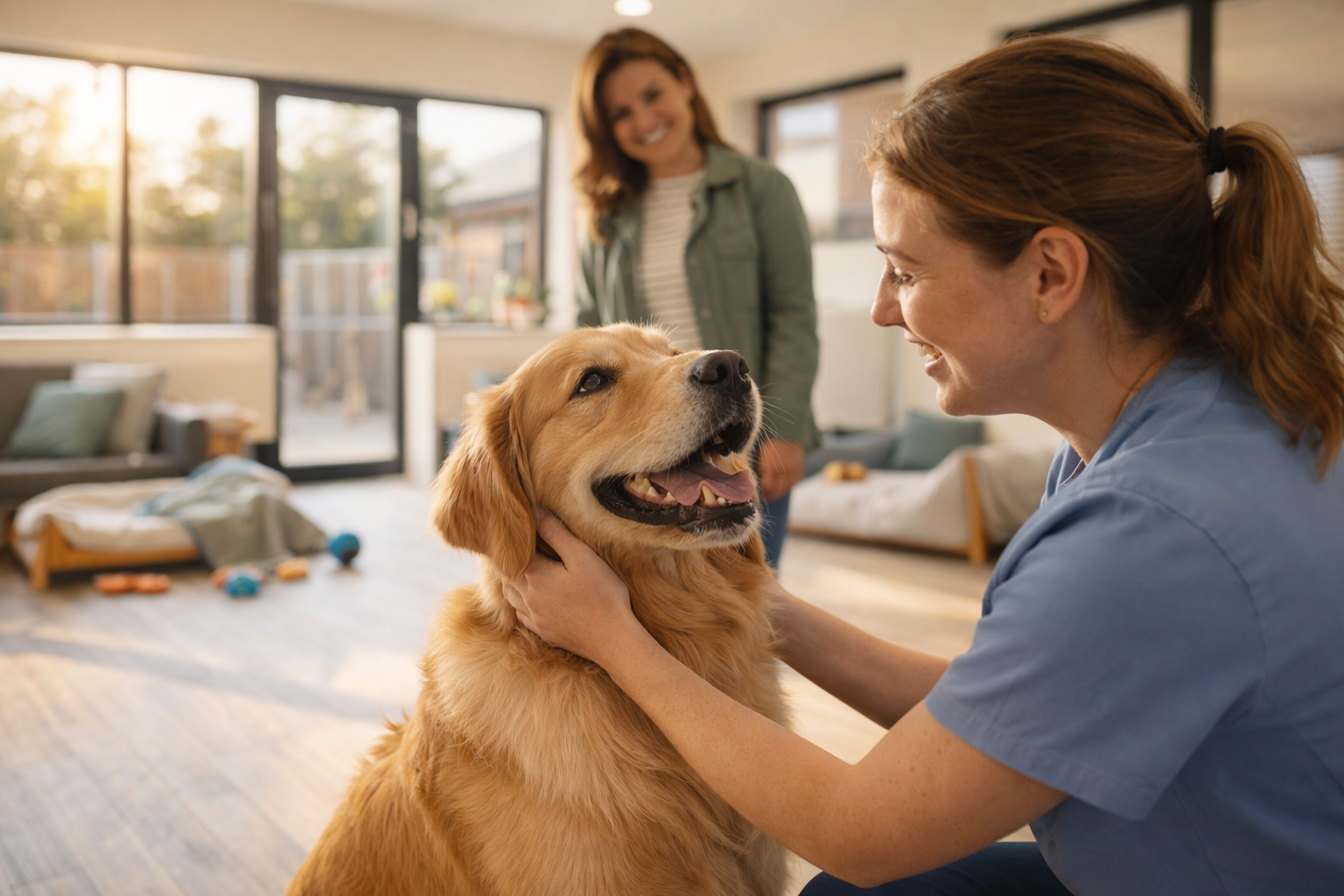
Leaving your dog somewhere new is stressful, for you as much as them. First-time boarding brings a whirlwind of worries: Will they eat? Sleep? Remember you're coming back? The good news is that thousands of dogs board successfully every week across the UK, and with proper preparation, yours can too.
This guide walks you through the entire process, from assessing your dog's needs to helping them readjust after their stay. You'll learn what separates excellent facilities from poor ones, how to prepare your dog weeks in advance, and what to expect on drop-off day.
Key Takeaways
- Start researching facilities at least 4-6 weeks before you need boarding, especially during peak seasons
- All boarding facilities in England require licensing under the 2018 Animal Welfare Regulations, verify this before booking
- Pre-boarding visits are essential, not optional, quality facilities welcome and encourage them
- Most facilities recommend vaccinations be current 7-14 days before boarding to ensure full immunity kicks in
- Most dogs experience some post-boarding tiredness or clinginess, this is normal and resolves within 2-3 days
- Clear communication protocols with your chosen facility reduce anxiety for everyone involved
Understanding Your Dog's Boarding Needs (Step 1: Assess)
Before you start calling facilities, take stock of what your dog actually needs. This isn't about finding the fanciest kennel, it's about finding the right match.
Age and Temperament Considerations
Puppies under four months typically can't board because they haven't completed their vaccination course. Most facilities won't accept puppies until they're fully vaccinated and have settled immunity, usually around 16-20 weeks.
Senior dogs may need facilities with ground-level runs, softer bedding, or more frequent health checks. Dogs with joint issues struggle with raised sleeping platforms or steep kennel steps.
For anxious dogs, look for facilities offering smaller group sizes or individual attention. Some kennels provide "shy dog" programmes with quieter environments and gradual socialisation.
Health Requirements and Vaccinations
Core vaccinations in the UK typically include distemper, hepatitis, parvovirus, parainfluenza, and kennel cough. Most facilities also require current flea and worming treatments.
The vaccination timing matters more than many owners realise. Your dog needs vaccinations administered well before boarding because immunity takes time to develop. A vaccination given the day before boarding offers no protection.
Get a signed vaccination certificate from your vet, not just the appointment receipt. Facilities need proof of what was administered and when.
Special Needs (Medication, Diet, Anxiety)
If your dog takes medication, find out the facility's administration policy early. Some kennels have trained staff who can give tablets or injections. Others require you to arrange veterinary visits.
Dietary requirements go beyond "sensitive stomach." Specify exactly what your dog eats, when, and how much. Many facilities can accommodate prescription diets if you provide the food, but they need advance notice.
Dogs with separation anxiety need specific management. Ask facilities about their approach, some offer extra walks, puzzle toys, or calming music. Others might not be equipped to handle anxious dogs safely.
Researching and Choosing the Right Facility (Step 2: Research)
Not all boarding facilities are created equal. Your research now determines your dog's experience later.
Types of Boarding Options Available in the UK
Traditional kennels house dogs in individual runs, usually with indoor/outdoor access. They suit most dogs and typically cost £15-40 per night depending on location and services.
Home boarding places your dog in someone's house as part of their family. Popular through platforms and local networks, it offers a domestic environment but varies wildly in quality and professional standards.
Doggy day-care centres often offer overnight boarding in familiar surroundings. Your dog stays where they already know the staff and routine, reducing stress.
Veterinary boarding provides medical oversight but typically offers less enrichment or social interaction than dedicated boarding facilities.
Essential Questions to Ask Facilities
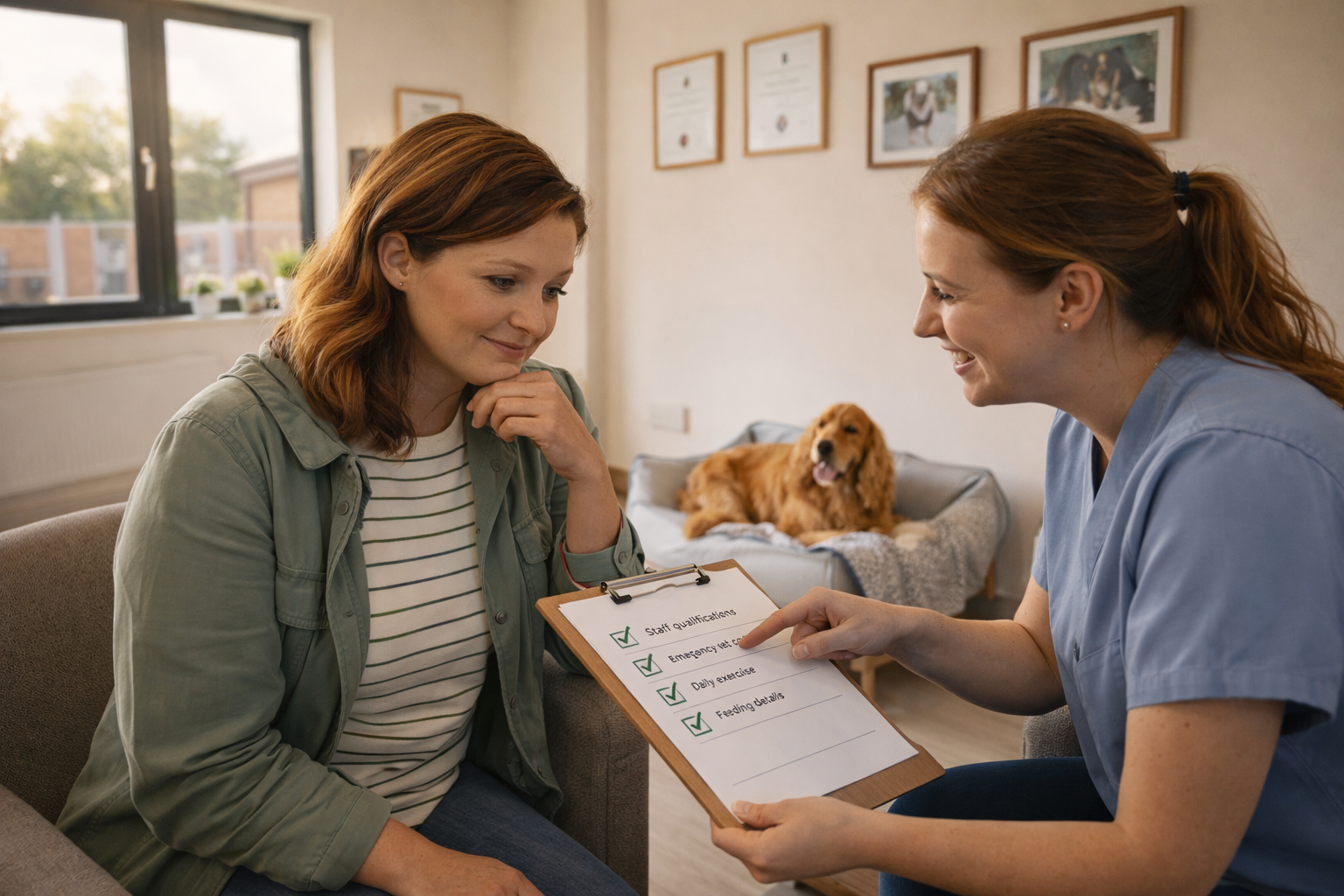
Start with licensing: "Can you show me your current council licence?" In England, the Animal Welfare (Licensing of Activities Involving Animals) Regulations 2018 require all commercial boarding operations to hold valid licences. Don't book anywhere that can't produce one immediately.
Ask about emergency procedures: "What happens if my dog becomes ill after hours? Which vet do you use? How quickly can you reach me?" Quality facilities have 24-hour emergency protocols and relationships with local emergency vets.
Inquire about daily routines: "When do dogs get fed, walked, and let out for toilet breaks? How much individual attention does each dog receive?" Vague answers suggest poor planning.
Check staffing levels: "How many dogs does each staff member supervise? What qualifications do your staff have?" While specific ratios aren't legally mandated, experienced facilities know their limits.
Red Flags to Avoid
Facilities that won't let you visit unannounced have something to hide. Quality kennels operate transparently because they're proud of their standards.
Strong ammonia or faecal odours indicate poor cleaning routines. Some dog smell is normal, but it shouldn't be overwhelming or sharp.
Dogs in obvious distress, excessive barking, pacing, or aggressive behaviour, suggest inadequate care or supervision.
Staff who can't answer basic questions about your dog's breed needs or seem rushed during your visit may lack experience or care.
Missing or expired licensing, insurance certificates, or vaccination records for their own facility dogs indicate poor administration that could affect your pet's care.
Pricing Considerations
UK boarding costs vary significantly by location and services. Basic kennel accommodation typically ranges from £15-25 per night in rural areas, £25-40 in cities like London or Edinburgh.
Additional services, extra walks, grooming, individual play time, usually cost £5-15 each. Some facilities include these in premium packages, others charge separately.
Peak season rates (summer holidays, Christmas, Easter) can significantly increase prices. Book early to secure standard rates and availability.
Ask what's included in the base price versus what costs extra. Hidden fees for administration, collection, or basic care add up quickly.
The Pre-Boarding Visit and Trial Process (Step 3: Test)
Never board your dog somewhere you haven't visited. This isn't just good practice, it's essential for your peace of mind and your dog's welfare.
Why Facility Visits Matter
Photos and websites don't tell the whole story. You need to see how staff interact with dogs, assess the cleanliness standards, and gauge whether your dog feels comfortable in the environment.
Many dogs show stress signals during visits, panting, pacing, or trying to leave. This doesn't automatically rule out a facility, but it helps you understand how your dog might react during a stay.
Visits also let you ask follow-up questions that occur to you in the moment, rather than trying to remember everything over the phone.
What to Observe During Your Tour
Watch how staff greet and handle dogs. Are they confident and calm? Do dogs seem relaxed around them or nervous and submissive?
Check the physical facilities beyond the show areas. Are kennels clean, properly ventilated, and secure? Is there adequate space for your dog's size and energy level?
Listen to the noise levels throughout your visit. Some barking is normal, but constant, stressed barking suggests problems with management or dog welfare.
Observe feeding and exercise routines if possible. Are dogs supervised during meals? Do they get adequate outdoor time and stimulation?
Trial Daycare Sessions (When Available)
Some facilities offer half-day or full-day trials before overnight stays. These help dogs familiarise themselves with the environment, staff, and routine without the stress of an overnight separation.
During trials, staff can identify any behavioural issues, dietary preferences, or social dynamics that might affect a longer stay.
Not all facilities offer trials, and they're not always necessary for confident, social dogs. But for anxious dogs or first-time boarders, a trial day often prevents problems later.
Preparing Your Dog for Their Stay (Step 4: Prepare)
Preparation begins weeks before you drop your dog off. Last-minute preparation often leads to forgotten essentials or stressed dogs.
Vaccination Timeline and Requirements
Book your dog's vaccination appointment at least 2-3 weeks before their boarding date. This allows time for any side effects to resolve and ensures full immunity develops.
If your dog is overdue for vaccinations, they may need a primary course rather than just boosters. This can take 4-6 weeks to complete, so plan accordingly.
Kennel cough vaccination often requires separate administration and can take time to provide protection. Some facilities accept the intranasal version, others prefer the injectable form.
Keep all vaccination certificates together in a folder. Make copies, originals sometimes get misfiled or damaged at facilities.
What to Pack and What to Leave at Home
Pack your dog's regular food in clearly labelled containers. Sudden diet changes can cause upset stomachs, especially when combined with boarding stress.
Include familiar bedding or a favourite toy that smells like home. Avoid expensive or irreplaceable items, things get lost or damaged despite best intentions.
Bring any medications in original containers with clear dosing instructions. Include your vet's contact details in case staff have questions.
Leave expensive collars, toys, or bedding at home. Most facilities provide basic bedding and bowls. Pack practical items, not sentimental ones.
Building Familiarity with the Routine
If possible, drive past the facility with your dog a few times before their stay. Let them see and smell the environment without the pressure of being left there.
Practice short separations at home to build confidence. Start with 30 minutes and gradually increase to a few hours over several weeks.
Maintain your dog's normal routine leading up to boarding. Don't introduce new foods, toys, or activities in the week before their stay.
The Drop-Off Day Strategy (Step 5: Execute)
How you handle drop-off day affects your dog's entire boarding experience. A calm, confident departure sets the tone for everything that follows.
Best Practices for Saying Goodbye
Keep your goodbye brief and upbeat. Extended farewells increase anxiety for both you and your dog. A quick "See you soon!" and confident handover to staff works better than emotional scenes.
Arrive at your scheduled time, not early, not late. Facilities plan their day around arrival and departure slots, and disrupting this creates unnecessary stress.
Bring all documentation organised in a folder: vaccination certificates, feeding instructions, emergency contacts, and any special care requirements.
Don't sneak out while your dog is distracted. A honest goodbye helps them understand what's happening rather than wondering where you've gone.
What to Expect from Staff Communication
Professional facilities conduct an intake discussion covering your dog's routine, any concerns, and expected return date. This usually takes 10-15 minutes and shouldn't feel rushed.
Staff should confirm emergency contact procedures and discuss their daily routine so you know what to expect.
Many facilities offer updates during longer stays, photos, brief messages, or calls if requested. Ask about their communication policy during intake.
Managing Your Own Anxiety
Dogs pick up on your emotional state. If you're anxious or upset, they'll assume something is wrong and become stressed themselves.
Remember that professional boarding staff handle dozens of dogs successfully every week. They're experienced at managing separation anxiety and first-time boarders.
Have a plan for your first day away. Keep busy and avoid constantly checking your phone for updates unless there's an actual emergency.
During Your Dog's Stay (Step 6: Monitor)
Once your dog is settled, resist the urge to micromanage their care. But do stay informed about what good communication looks like.
When and How to Check In
Most facilities don't provide daily updates unless specifically requested or there's a concern. For stays longer than 3-4 days, a mid-stay check-in is reasonable.
Contact the facility directly rather than expecting them to call you. They'll appreciate that you're thinking of your dog, but they're busy caring for multiple animals.
Ask specific questions: "How is she eating?" or "Is he socialising with other dogs?" rather than "How is he doing?", you'll get more useful information.
Signs of a Quality Facility's Communication
Good facilities contact you promptly if your dog seems unwell, goes off their food for more than a day, or shows signs of distress.
They can answer specific questions about your dog's behaviour, eating habits, and daily activities when you call.
Professional facilities maintain daily logs noting feeding, toilet breaks, exercise, and any behavioural observations for each dog.
Emergency Procedures You Should Know
Quality facilities have relationships with local emergency veterinary clinics and clear protocols for after-hours medical issues.
They should have multiple contact numbers for you and know who else to call if you're unreachable during an emergency.
Understand their policy on veterinary treatment, what they'll authorise without your permission and what requires your approval first.
Post-Boarding: Helping Your Dog Readjust (Step 7: Transition)
Your dog's boarding experience doesn't end at pickup. How they readjust tells you a lot about how their stay went and helps you prepare for future trips.
Normal Post-Boarding Behaviours
Most dogs are exceptionally tired after boarding and may sleep more than usual for 24-48 hours. This is normal, boarding environments are stimulating and dogs often don't rest as deeply as they do at home.
Temporary clinginess is common. Your dog may follow you around more than usual or seem reluctant to let you out of sight. This typically resolves within 2-3 days.
Some dogs appear subdued or less responsive initially. They're processing the experience and readjusting to home routines.
Changes in toilet habits for a day or two are normal, especially if the boarding facility used different walking schedules or surfaces.
Re-establishing Home Routines
Return to your dog's normal feeding schedule immediately. If the facility used different food or feeding times, transition back gradually over 2-3 days.
Resume regular exercise routines, but don't overdo it on the first day if your dog seems tired or subdued.
Provide extra attention and reassurance without making a huge fuss. Calm, consistent attention helps them settle back into home life.
When to Be Concerned
Contact your vet if your dog refuses food for more than 24 hours after returning home, shows signs of illness (vomiting, diarrhea, lethargy), or displays significant behavioural changes lasting more than 3-4 days.
Persistent fearfulness, aggression, or regression in house training may indicate your dog had a negative experience during boarding.
If you notice any injuries, unexplained cuts, or signs of poor care, document them with photos and contact the facility immediately.
You can search and compare boarding options in your area on Tailstays to find facilities with strong reviews and transparent practices.
How much does dog boarding cost per night in the UK?
Typical dog boarding rates range from £15-25 per night in rural areas and £25-40 in major cities like London. Additional services such as extra walks, grooming, or individual play time usually cost £5-15 each. Prices often increase significantly during peak seasons like summer holidays and Christmas.
How far in advance should I book first-time dog boarding?
Book at least 4-6 weeks in advance, especially during peak seasons (summer holidays, Christmas, Easter). This gives you time to visit facilities, complete vaccination requirements, and secure your preferred dates. Popular facilities often book months ahead for holiday periods.
Can I visit my dog while they're boarding?
Most facilities discourage visits during short stays as they can disrupt your dog's settling process and increase anxiety. For stays longer than a week, some facilities may allow brief visits. Discuss the policy during your initial enquiry as practices vary between facilities.
What vaccinations does my dog need for boarding?
Core vaccinations typically include distemper, hepatitis, parvovirus, parainfluenza, and kennel cough. Most facilities require vaccinations to be current and recommend they be administered well before boarding to ensure immunity develops. Most facilities also require current flea and worming treatments plus a signed veterinary certificate.
Is it normal for dogs to be tired after boarding?
Yes, most dogs are exceptionally tired after boarding and may sleep more than usual for 24-48 hours. Boarding environments are stimulating and dogs often don't rest as deeply as at home. Temporary clinginess and changes in toilet habits for 1-2 days are also normal as they readjust to home routines.