

If your dog is scratching constantly, chewing their paws, or getting ear infection after ear infection, there’s a good chance allergies are involved. Dog allergies are common, frustrating to pin down, and rarely go away on their own, but once you know what you’re dealing with, they’re manageable.
Unlike humans, where allergies typically mean sneezing and watery eyes, dogs show allergies mainly through their skin. Itching, redness, and inflammation are the battleground, and the specific pattern often points to the cause.
Key Takeaways
- Three main types: Environmental (atopic dermatitis), flea allergy dermatitis, and food allergies, each needs different management
- Primary symptoms: Excessive scratching, red inflamed skin, ear infections, and paw licking
- Professional diagnosis is essential: Home remedies can mask symptoms while the underlying condition worsens
- Most allergies can’t be cured but can be effectively controlled with the right treatment
- Emergency signs: Facial swelling, breathing difficulties, or collapse need immediate vet attention
- Secondary infections are common: Scratching breaks the skin barrier, letting bacteria and yeast in
How Dog Allergies Work
Allergies happen when your dog’s immune system treats a harmless substance, pollen, flea saliva, a protein in their food, as a threat. The resulting inflammatory response is what causes the itching, redness, and skin damage.
Why some dogs develop allergies while others don’t involves genetics and environment. Certain breeds show higher predispositions, and allergies often first appear between six months and three years of age, though they can develop at any point.
Recognising Allergy Symptoms
Skin Symptoms
The most obvious signs appear on the skin. Your dog may scratch excessively around the face, ears, paws, and belly. You’ll notice them licking their paws repeatedly or rubbing their face against furniture and carpets.
Look for red, inflamed patches, especially in areas your dog can reach. Hair loss follows where constant scratching damages the follicles. The skin may thicken and darken, a condition called lichenification, in chronically affected areas.
Secondary bacterial or yeast infections frequently develop when scratching breaks the skin. These bring additional symptoms: unpleasant odours, sticky discharge, and further inflammation that spreads beyond the original area.
Ear Symptoms
Ear infections are one of the most common complications of dog allergies. Head shaking, tilting, red and swollen ear canals, and brown, yellow, or black discharge are all signs. A strong smell from the ears is another giveaway.
Your dog may resist having their ears touched, indicating pain. Recurring ear infections that keep coming back despite treatment often point to an underlying allergy as the root cause.
Emergency Warning Signs
Severe allergic reactions are rare but life-threatening. Anaphylaxis causes rapid swelling of the face (especially the muzzle and eyes), difficulty breathing, collapse, or loss of consciousness.
Seek immediate veterinary care for sudden facial swelling, laboured breathing, excessive drooling, vomiting, or if your dog becomes lethargic and unresponsive. These symptoms progress rapidly.
The Three Main Types
Environmental Allergies (Atopic Dermatitis)
Environmental allergies develop when dogs react to airborne particles like pollen, dust mites, or mould spores. They often follow seasonal patterns, spring and summer symptoms typically indicate pollen, while year-round problems suggest dust mites or mould.
Certain breeds including terriers show particular predisposition. Symptoms usually begin with face rubbing and paw licking, then spread to other areas as exposure continues.
UK-specific factors play a role: the long grass pollen season, damp conditions promoting mould growth, and urban pollution can all worsen reactions in susceptible dogs.
Flea Allergy Dermatitis
Flea allergy dermatitis is the most common skin disease in dogs. It’s caused by hypersensitivity to flea saliva, just one or two bites can trigger severe reactions in allergic animals.
The itching concentrates around the tail base, lower back, and hindquarters. You might spot “flea dirt”, small black specks that turn reddish-brown when moistened, even if you can’t see live fleas.
Fleas spend most of their lifecycle in carpets, bedding, and outdoor areas rather than on your dog. A single flea jumping on can cause weeks of discomfort in an allergic dog.
Food Allergies
Food allergies develop when dogs react to specific proteins, most commonly chicken, beef, dairy, or eggs. They can appear at any age and often involve foods your dog has eaten safely for years.
Food allergies frequently cause digestive symptoms alongside skin problems: intermittent vomiting, diarrhoea, or appetite changes. The skin itching often centres on the face, ears, and paws.
True food allergies (immune system reactions) differ from food intolerances (digestive upset only). The distinction matters because the diagnostic approach and management are different.
Professional Diagnosis
What Happens at the Vet
Your vet will first rule out conditions that mimic allergies: skin mites, bacterial infections, fungal problems, and hormonal imbalances. This often involves skin scrapings, cytology, or other tests.
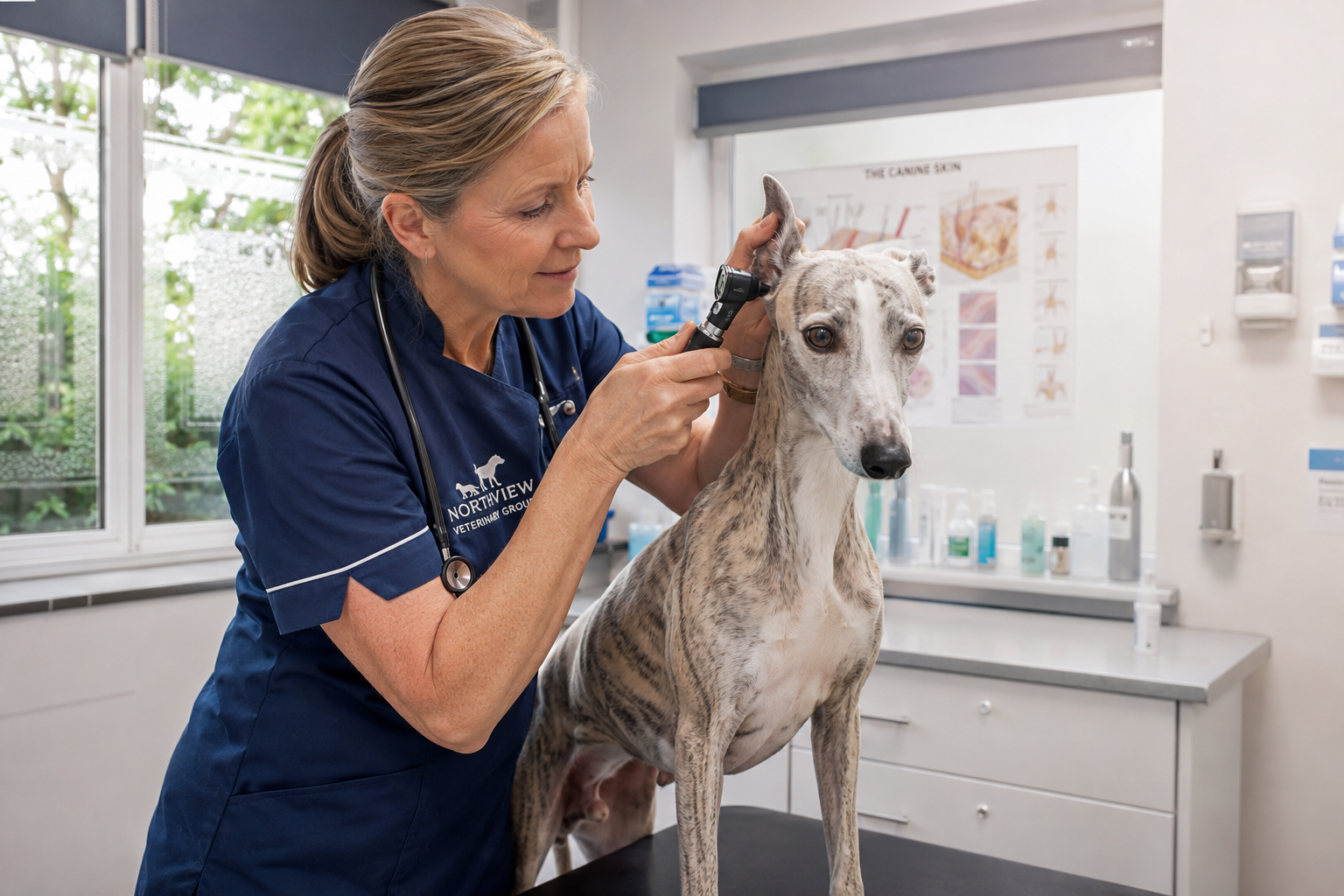
Expect detailed history-taking about your dog’s diet, environment, and symptom patterns. When did symptoms start? Are they seasonal? What have you already tried? This information narrows down the likely cause.
Allergy Testing
For environmental allergies, vets may recommend intradermal allergen testing (IDAT), injecting small amounts of potential allergens under the skin to identify specific triggers. Results guide both avoidance strategies and immunotherapy.
Food allergies require elimination diet trials lasting 6-12 weeks. Your dog eats only proteins they’ve never had before, then suspect ingredients are reintroduced one at a time to identify triggers.
Blood tests for allergies exist but are considered unreliable by most veterinary dermatologists. Skin testing and elimination trials remain the gold standard.
Preparing for Your Vet Visit
Bring your dog’s full diet history, including treats, chews, and flavoured medications. Note when symptoms first appeared and any patterns, worse at certain times of year? After specific activities?
List everything you’ve already tried: shampoos, sprays, supplements. Photos of affected skin areas help if symptoms have changed since booking the appointment.
Treatment Options
Environmental Allergy Management
Treatment usually combines multiple approaches. Anti-itch medications provide immediate relief while immunotherapy (gradually increasing allergen exposure to build tolerance) works on reducing long-term sensitivity.
Home management makes a real difference. Air purifiers reduce indoor allergens. Wiping your dog’s paws and coat after walks removes pollen. Keeping windows closed during high pollen periods and timing walks for early morning or late evening helps too.
Medicated baths with prescribed shampoos containing chlorhexidine or ketoconazole can provide relief and remove allergens from the coat.
Flea Allergy Treatment
Flea allergy management requires treating your dog, every other pet in the household, and the environment. Modern flea treatments are highly effective but must be used consistently.
All household pets need treatment even if only one shows symptoms, fleas move between animals freely. Environmental treatment addresses the 95% of fleas living in carpets, cracks, and garden areas rather than on your pets.
Your vet may prescribe anti-inflammatory medication to break the itch-scratch cycle while flea control takes full effect.
Food Allergy Management
Once trigger ingredients are identified, strict dietary management is essential. This means prescribed foods and treats only, no table scraps, and making sure everyone in the household understands the restrictions.
During elimination trials, even small amounts of forbidden ingredients interfere with results. This includes flavoured medications, dental chews, and training treats. Many owners are surprised that flavoured heartworm preventatives can contain triggering proteins.
Supporting Your Allergic Dog at Home
Regular vacuuming with HEPA filters removes allergens from carpets and upholstery. Washing your dog’s bedding in hot water weekly eliminates dust mites and pollen.
Establish a grooming routine: gentle brushing to remove allergens from the coat, regular nail trimming to minimise skin damage from scratching. Some dogs benefit from protective clothing during high-allergen periods.
Omega-3 fatty acid supplements can support skin health and reduce inflammation, but they should complement vet treatment rather than replace it. Always check with your vet before adding supplements, as some can interfere with diagnostics or interact with prescribed medications.
When Professional Help Is Essential
Seek immediate attention for signs of anaphylaxis, secondary skin infections with discharge or strong odours, or symptoms that suddenly worsen despite treatment.
Chronic cases that don’t respond to initial treatment may need referral to a veterinary dermatologist. These specialists have access to advanced diagnostics and treatment options beyond general practice.
Consider your dog’s quality of life when judging whether treatment is working. If allergies prevent normal activities, disrupt sleep, or cause constant discomfort despite management, more aggressive intervention may be needed.
Frequently Asked Questions
Can dog allergies be cured or only managed?
Most dog allergies can’t be cured but can be effectively managed. Environmental allergies may improve with immunotherapy over time, and some dogs outgrow food allergies, but complete cure is rare. The goal is controlling symptoms to maintain quality of life.
Are hypoallergenic dog breeds truly allergy-free?
No dog breed is completely allergy-free. “Hypoallergenic” typically refers to dogs less likely to trigger human allergies, not dogs that don’t develop allergies themselves. Any dog can develop environmental, food, or flea allergies regardless of breed.
How long do allergy treatments take to show results?
It varies by type. Flea allergy symptoms may improve within days of effective flea control. Food allergy elimination diets need 6-12 weeks for full evaluation. Environmental treatments often show gradual improvement over 4-8 weeks, with immunotherapy taking months to years for maximum benefit.
Can dogs outgrow their allergies?
Some dogs may outgrow food allergies, particularly those developing in puppyhood, but it’s uncommon. Environmental allergies typically persist throughout life and may worsen with age. Early intervention and consistent management give the best long-term outcomes.
What should I tell boarding facilities about my dog’s allergies?
Provide detailed written instructions covering all allergies, medications, dietary restrictions, and your vet’s emergency contact details. Include information about environmental triggers and any special bedding requirements. Good facilities will ask about this during the booking process.