

When your usually well-behaved cat suddenly starts weeing outside the litter tray or attacking your ankles, it's frustrating and worrying. Most cat behaviour problems have underlying causes that, once identified, can be addressed with the right approach.
The key is understanding that cats don't act out of spite. They're trying to communicate something important about their health, environment, or emotional state.
Key Takeaways
- Medical issues often drive sudden behaviour changes, always rule out health problems first
- Inappropriate toileting, scratching, and aggression are the three most common cat behaviour problems
- Environmental enrichment and meeting natural behavioural needs prevent many issues
- Punishment-based methods backfire with cats, positive reinforcement works better
- Early intervention is more successful than waiting until problems become entrenched
- Professional help from certified behaviourists is available for severe cases
When Behaviour Changes Signal Health Issues
Before assuming your cat is being naughty, book a vet check. Pain, illness, and cognitive decline are hidden drivers behind many behaviour problems that seem purely psychological.
Urinary tract infections commonly cause litter box avoidance. Arthritic cats may struggle to climb into high-sided trays or become grumpy when touched. Dental pain can trigger aggression during feeding time.
Watch for these warning signs that need immediate veterinary attention:
- Sudden changes in appetite, drinking, or toileting habits
- Aggression when touching specific body areas
- Excessive vocalisation, especially at night
- Hiding for extended periods or avoiding interaction
- Changes in grooming patterns (over-grooming or neglecting grooming)
Senior cats (over 11 years) are particularly prone to cognitive dysfunction syndrome, which mimics dementia in humans. These cats may seem confused, vocalise more, or forget litter box habits they've had for years.
Root Causes: Understanding Why Cats Misbehave
Modern indoor living doesn't always meet cats' behavioural needs. In the wild, cats hunt 10-20 times per day, climb trees, and patrol territories. Indoor cats need outlets for these instincts.
Boredom manifests as destructive behaviour, attention-seeking, or over-eating. Stress from overcrowding (too many cats in too small a space), lack of routine, or insufficient hiding places triggers many problems.
Genetics play a role too. Some lines are more reactive or fearful, while others are naturally confident. However, environment and early experiences can modify genetic predispositions significantly.
Senior cats face additional challenges. Cognitive decline, sensory loss, and chronic pain conditions like arthritis change how they interact with their environment and other pets.
The Big 7: Most Common Cat Behaviour Problems
Inappropriate Toileting and Litter Box Avoidance
This tops every behaviourist's list. Cats are fastidious about toileting, so when they go elsewhere, there's always a reason.
First, distinguish between spraying and inappropriate elimination. Spraying involves backing up to vertical surfaces and releasing small amounts of urine, it's territorial marking. Inappropriate elimination means normal-sized deposits in wrong locations, usually on horizontal surfaces.
Litter box setup is crucial. You need one box per cat plus one extra, cleaned daily, and placed in quiet, accessible locations. Many cats reject covered boxes or those placed near noisy washing machines.
Multi-cat households face additional challenges. Cats may avoid shared boxes or feel trapped in single-exit locations. Place boxes on different levels of your home and ensure no cat can be ambushed while toileting.
Scratching in Wrong Places
Scratching is normal, necessary behaviour for maintaining claw health and marking territory. The problem isn't the scratching, it's the location.
Provide multiple scratching posts of different materials (sisal, carpet, cardboard) and orientations (vertical, horizontal, angled). Place them near sleeping areas and room entrances where cats naturally want to mark their presence.
Unlike some countries, declawing has been illegal in the UK since 2006 under veterinary ethical guidelines. This ban recognises that declawing is amputation, not nail trimming, and causes long-term welfare problems.
Aggression Towards Humans
Cat aggression takes several forms. Play aggression typically involves young cats treating your hands and feet like prey, pouncing, biting, and kicking with back legs. Fear aggression includes hissing, spitting, and defensive swipes when cats feel cornered.
Redirected aggression is trickier to spot. Your cat sees something upsetting (like a neighbourhood cat through the window), can't reach the trigger, and lashes out at whoever's nearby, often you.
Never use your hands as toys, and don't punish aggressive cats physically. This escalates the situation and damages your relationship. Instead, redirect play onto appropriate toys and give fearful cats space to retreat.
Inter-cat Aggression in Multi-pet Homes
Two cats who lived peacefully for years can suddenly start fighting. Territory disputes often centre around resources, food bowls, water stations, favourite sleeping spots, or access to you.
Ensure each cat has their own resources in different areas. Some cats prefer elevated feeding stations away from others. Provide multiple pathways through your home so cats can avoid each other when needed.
Introducing new cats requires patience. Rushing the process by forcing cats together often creates lasting animosity that's harder to resolve than starting slowly.
Excessive Vocalisation
Some cats are naturally chatty, especially Oriental breeds like Siamese. But sudden increases in vocalisation, particularly at night, often signal distress.
Attention-seeking meowing responds well to scheduled interaction times rather than responding on demand. Ignore demanding calls but ensure you're providing enough enrichment and play.
Distress calls sound different, more urgent, prolonged, or occurring at unusual times. These warrant veterinary evaluation, especially in senior cats who may be experiencing disorientation or pain.
Destructive or Compulsive Behaviours
Some cats develop repetitive behaviours under stress. Wool sucking and fabric chewing are common, particularly in Oriental breeds. Excessive grooming can create bald patches and skin irritation.
Hyperesthesia syndrome causes cats to suddenly race around, attack their tails, or show extreme sensitivity to touch along their backs. These episodes look alarming but usually resolve quickly.
Remove access to tempting materials where possible, but address the underlying stress or boredom causing these behaviours. Increased environmental enrichment often helps.
Fear and Anxiety Issues
Fearful cats spend excessive time hiding, avoid interaction, and may stop eating or using litter boxes in extreme cases. Early socialisation (between 2-9 weeks) shapes lifelong responses to people and situations.
Adult cats can learn to cope better with patient, gentle exposure to their fears. Never force interaction, let cats approach at their own pace while providing positive associations through treats and calm interaction.
Environmental stressors include construction noise, new furniture arrangements, or changes in household routines. Cats thrive on predictability.
Solutions That Actually Work
Environmental enrichment addresses many behaviour problems by meeting natural needs. Provide vertical space through cat trees or shelving, hiding places like cardboard boxes, and puzzle feeders that make cats work for food.
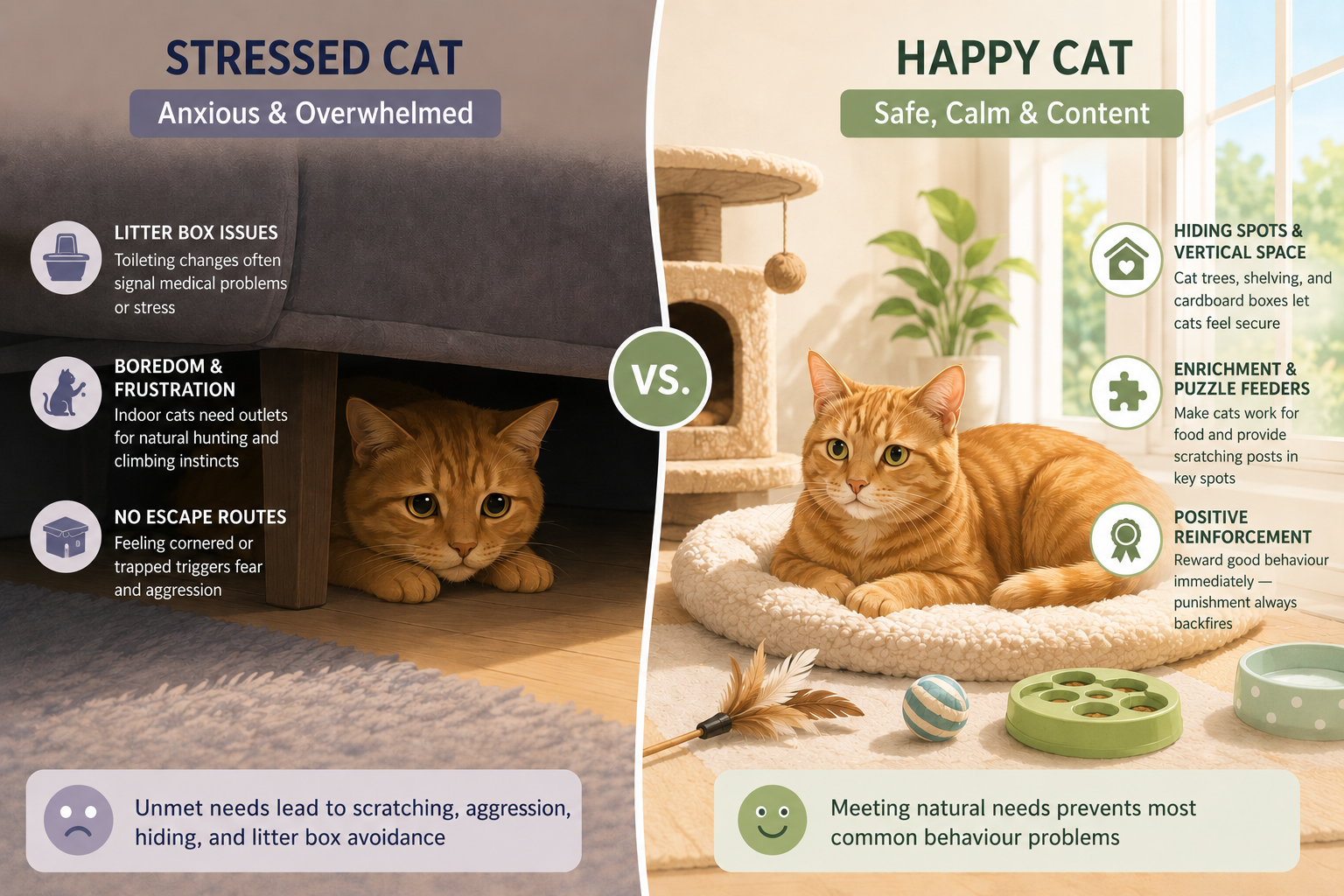
Positive reinforcement training works with cats, despite popular belief otherwise. Reward desired behaviours immediately with treats, praise, or play. Timing is crucial, rewards must come within seconds of the behaviour.
Punishment backfires spectacularly with cats. Water sprays, loud noises, or physical corrections create fear and stress, often worsening the original problem while damaging your relationship.
Create cat-friendly spaces with multiple resource locations, clear sight lines for monitoring territory, and escape routes. Cats feel safer when they can see what's happening and have options for retreat.
In multi-cat households, ensure resources outnumber cats. Three cats need at least four litter boxes, multiple water stations, and several feeding areas. Some cats prefer eating alone.
When Boarding Cats with Behaviour Issues
Cats with behaviour problems need special consideration when choosing boarding facilities. Boarding stress can trigger latent issues or worsen existing ones, particularly in anxious or aggressive cats.
Always disclose your cat's behaviour history when booking. Reputable facilities want this information to provide appropriate care and protect their staff. Hiding aggression issues puts everyone at risk.
Look for facilities that offer individual accommodation rather than communal areas for cats with inter-cat aggression. Browse cat-friendly boarding options near you on Tailstays.
Ask potential boarding facilities these key questions:
- How do you handle cats with litter box preferences or medical toileting issues?
- What protocols exist for aggressive or fearful cats?
- Can you accommodate special dietary requirements or feeding routines?
- Do staff have experience with feline behaviour management?
- What enrichment do you provide for longer stays?
Prepare your cat for boarding by maintaining routines leading up to the stay. Bring familiar bedding, favourite toys, and detailed care instructions including any successful management strategies you've developed at home.
Getting Professional Help
Some behaviour problems need professional intervention, particularly aggression towards people, severe compulsive behaviours, or multi-cat household conflicts that don't respond to basic management changes.
Qualified cat behaviourists hold relevant qualifications and belong to professional bodies like the Animal Behaviour and Training Council (ABTC) or Association of Pet Behaviour Counsellors (APBC). Many work closely with veterinary practices.
Behaviour consultations typically involve detailed history-taking, observation of your cat and environment, and development of tailored behaviour modification plans. Expect follow-up support as you implement changes.
For severe cases, anti-anxiety medications can help alongside behaviour modification. These require veterinary prescription and monitoring, but can make the difference between success and rehoming in extreme situations.
Don't wait until problems become unmanageable. Early intervention prevents behaviour problems from becoming entrenched habits that are harder to change.
Frequently Asked Questions
Why has my cat suddenly started weeing outside the litter box?
Sudden toileting changes usually indicate medical issues like urinary tract infections or arthritis making box access difficult. Book a vet check first, then evaluate litter box setup, cleanliness, and location. Stress from household changes can also trigger avoidance.
How do I stop my cat attacking my ankles when I walk past?
This is typically play aggression in young cats or redirected aggression in adults. Never use hands as toys, redirect play onto appropriate objects like feather wands, and ensure your cat gets enough interactive play. Check for outdoor triggers like other cats that might be causing frustration.
My two cats have lived together for years but now they're fighting. What's changed?
Inter-cat relationships can shift due to illness in one cat, territorial stress from outdoor cats, or resource competition. Separate resources, provide multiple pathways through your home, and consider veterinary checks for both cats. Sometimes reintroduction protocols help reset relationships.
Is it normal for cats to scratch furniture, or does this mean they're unhappy?
Scratching is completely normal behaviour for claw maintenance and territorial marking. The problem is location, not the behaviour itself. Provide appropriate scratching posts near sleeping areas and room entrances, using different materials and orientations to find your cat's preferences.
My cat hides all day and won't come out even for food. Should I be worried?
Extended hiding, especially with appetite loss, warrants immediate veterinary attention. This could indicate illness, pain, or severe stress. Once medical issues are ruled out, work on building confidence through gentle interaction and environmental enrichment, never forcing contact.
Can I train my cat like a dog to stop unwanted behaviours?
Cats respond to positive reinforcement training but not punishment-based methods. Reward desired behaviours immediately with treats or play, but never use water sprays or loud noises as these create fear and stress. Focus on providing appropriate outlets for natural behaviours rather than suppressing them.
How do I know if my cat needs professional behaviour help?
Seek professional help for aggression towards people, severe compulsive behaviours, multi-cat conflicts that don't improve with basic management, or any behaviour that impacts your cat's welfare or your family's safety. Early intervention is more successful than waiting until problems become entrenched.
Will boarding stress make my cat's behaviour problems worse?
Boarding can trigger or worsen behaviour issues in some cats, particularly those with anxiety or aggression problems. Choose facilities experienced with difficult cats, disclose all behaviour history, and look for individual accommodation options. Some cats actually benefit from the structure and routine of good boarding facilities.