
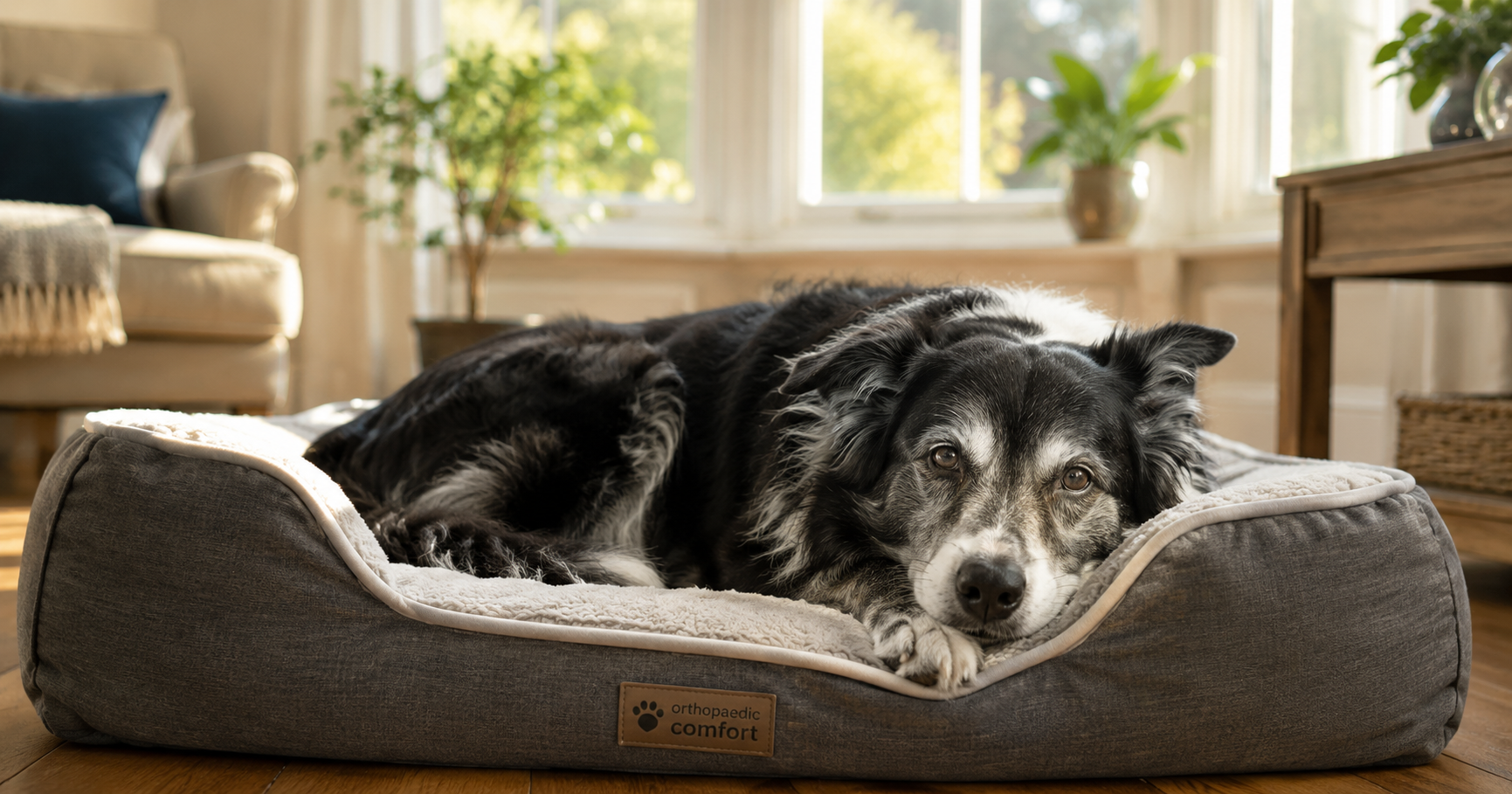
Dogs don’t send you a memo when they become seniors. One week your Labrador is bounding after tennis balls; a few months later you notice them easing themselves down carefully after a nap. The transition is gradual, which is partly why people miss it.
When you start making adjustments matters. Catching the early signs, stiffness, slower mornings, less enthusiasm for long walks, means you can adapt before small discomforts become real problems.
Key Takeaways
- Small dogs typically become seniors at 9-10 years; large breeds may show signs from 6-7 years
- Essential adjustments include modified diet, gentler exercise routines, and home accessibility improvements
- Common senior conditions include arthritis, cognitive changes, sensory loss, and incontinence
- Vet check-ups should increase to every 6 months rather than annually
- Sudden behaviour changes, weight loss, or difficulty breathing need immediate veterinary attention
- Senior dogs can still board successfully with the right facility and preparation
Recognising When Your Dog Becomes a Senior
The timing varies significantly by size. Small dogs like Chihuahuas and terriers often don’t show signs of ageing until 9-10 years old, while giant breeds such as Great Danes may begin slowing down as early as 6. Medium-sized dogs typically transition around 7-8 years, though individual genetics, health history, and lifestyle all play a part.
Physical signs include a greying muzzle, cloudy eyes, reduced energy, and stiffness after rest. You might notice your dog taking longer to get up from their bed or hesitating before jumping onto furniture they once leaped onto without thinking.
Behavioural changes can be more subtle. Senior dogs often prefer quieter activities, may become more attached to their owners, or show less tolerance for young children or other pets. Some become grumpier when disturbed; others seek more comfort and closeness.
The key distinction is pace. Gradual changes over months are typically normal ageing. Sudden shifts, collapsing, refusing food, dramatic personality changes, warrant immediate vet attention.
Essential Care Adjustments
Diet and Weight Management
Senior dogs typically need fewer calories due to reduced activity, but they benefit from easily digestible proteins and nutrients that support joint health and cognitive function. Many commercial senior foods contain added omega-3 fatty acids, glucosamine, and antioxidants.
Don’t automatically switch to senior food based on age alone, consider your dog’s individual health and activity level first. Some active older dogs do fine on adult maintenance food. Others need the switch earlier than expected.
Weight management is crucial. Excess weight puts additional strain on ageing joints, and even a small amount of weight loss can make a noticeable difference to mobility. Work with your vet to create a gradual plan rather than drastically cutting portions.
Small changes help too: raised food bowls reduce neck strain for dogs with arthritis, smaller and more frequent meals aid digestion, and softening dry kibble with warm water helps dogs with dental problems.
Exercise and Mobility
Replace long walks with shorter, more frequent outings, three 15-minute walks instead of one hour-long trek. The total exercise might be similar, but the recovery time between sessions makes a real difference.
Swimming provides excellent low-impact exercise for dogs with joint problems. It gives cardiovascular benefits without stressing arthritic hips or knees. If your dog hasn’t swum before, introduce it gradually with shallow water.
Mental stimulation becomes equally important for less mobile seniors. Puzzle toys, snuffle mats, and gentle training sessions keep minds active. Hiding treats around the house encourages gentle movement without overexertion.
Watch for warning signs: excessive panting, limping that worsens with exercise, or reluctance to continue walking. These mean your dog needs rest or a vet check, not encouragement to push through.
Home Environment Modifications
Simple changes make a big difference. Ramps or steps help dogs reach favourite spots without jumping. Non-slip rugs on smooth floors provide stability for unsteady legs, a dog that slips on a wooden floor once may become anxious about walking on it again.
Orthopaedic beds with memory foam support ageing joints far better than thin cushions. Position them away from draughts but near warmth, which helps relax stiff muscles.
Better lighting in areas where your dog spends time compensates for declining vision. Baby gates can prevent falls down stairs if mobility becomes compromised.
Common Health Issues in Senior Dogs
Joint Problems and Arthritis
Arthritis affects most senior dogs to some degree. Early signs include stiffness after rest, reluctance to jump or climb stairs, and preference for softer surfaces when lying down.
Pain management goes beyond medication. Gentle massage with warm hands using light pressure on muscle areas (avoiding bony prominences) can help. Dog-safe heating pads provide relief, but always supervise, dogs with reduced sensation may not feel when something’s too hot.
Provide multiple comfortable resting spots throughout the house so your dog doesn’t need to travel far to find comfort.
Cognitive Changes and Dementia
Canine cognitive dysfunction causes confusion, disorientation, and anxiety. Signs include getting lost in familiar places, staring at walls, forgetting house training, or disrupted sleep patterns.
Support confused dogs by maintaining consistent routines and keeping furniture in familiar positions. Night-time restlessness often improves with increased daytime mental stimulation and a comfortable sleeping area with soft lighting.
Some dogs benefit from calming supplements or prescription medications, but environmental management remains the foundation of care.
Sensory Loss
Gradual hearing and vision loss is common. Deaf dogs can learn hand signals, stomp gently on the floor to get their attention rather than calling their name. For dogs with declining vision, avoid moving furniture and use verbal cues to guide them.
Use different textured mats to indicate important areas like food bowls or doorways. Both conditions require extra safety vigilance: always keep sensory-impaired dogs on leads outdoors and ensure your garden is securely fenced.
Other Age-Related Conditions
Incontinence becomes more common with age, particularly in spayed females. Waterproof bedding protectors and more frequent toilet breaks help manage accidents. Some cases respond well to medication or hormone supplements, it’s worth discussing with your vet rather than just accepting it.
Dental disease progresses with age, causing pain, difficulty eating, and bacterial infections that can affect other organs. Regular brushing and dental chews help, but professional cleaning may be necessary even with the added anaesthetic considerations for older dogs.
Kidney disease signs include increased thirst and urination, weight loss, and reduced appetite. Early detection through blood tests allows dietary management to slow progression considerably.
When to See the Vet
Senior dogs benefit from check-ups every six months rather than annually. These visits catch age-related conditions early, when treatment is most effective.
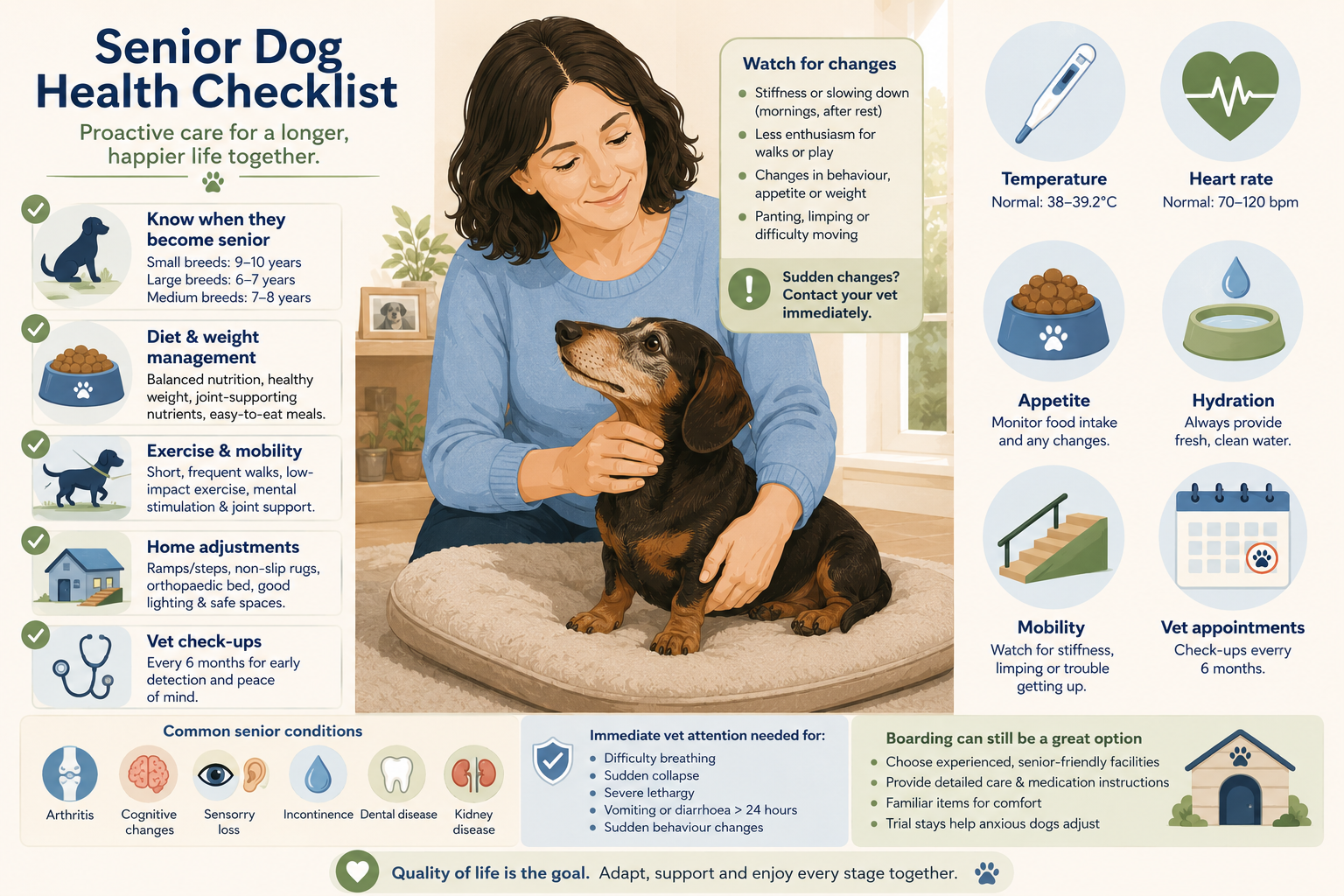
Between visits, monitor your dog at home. Weekly weigh-ins track sudden weight changes. Note eating and drinking habits, toilet patterns, and energy levels, a simple diary helps you spot trends you might otherwise miss.
Seek immediate veterinary attention for: difficulty breathing, sudden collapse, severe lethargy, vomiting or diarrhoea lasting more than 24 hours, or any dramatic behavioural changes. With senior dogs, it’s always better to check something that turns out to be nothing than to wait and see.
Work with your vet to develop an age-appropriate healthcare plan including regular blood tests for organ function, blood pressure monitoring, and honest conversations about quality of life as conditions progress.
Boarding for Senior Dogs
Senior dogs can still board successfully with the right preparation. Choose providers who ask detailed questions about your dog’s health conditions, medications, and comfort preferences, that level of interest is a good sign.
Provide comprehensive written instructions: medication schedules, feeding routines, exercise limitations, and your vet’s emergency contact details. Include notes about any cognitive changes like confusion or night-time restlessness.
For anxious senior dogs, shorter trial stays before longer bookings help build confidence. Familiar bedding, toys, or clothing with your scent provide comfort in the new environment.
Medication management needs clear labelling and detailed administration instructions. Make sure the facility has experience giving medications and access to veterinary care if needed. Our first-time boarding guide covers preparation basics if your dog hasn’t boarded before.
You can browse boarding options on Tailstays to find facilities near you that can accommodate older dogs.
Maintaining Quality of Life
Adapt favourite activities rather than eliminating them. If your dog loved long hikes, try shorter woodland walks with plenty of sniffing opportunities. Beach visits might involve gentle paddling rather than energetic swimming.
Training new tricks, even simple ones, keeps minds active and strengthens your bond. It’s never too late for a dog to learn something new, and the mental engagement matters as much as the result.
Social needs change with age. Some senior dogs prefer quiet companionship to boisterous play; others become more sociable. Respect their preferences while ensuring they don’t become isolated.
Difficult decisions about end-of-life care may eventually arise. Your vet can guide quality of life assessments and help determine when intervention is no longer in your dog’s interest. These conversations are hard, but having them early, before a crisis, gives you time to think clearly.
Frequently Asked Questions
What age is considered senior for dogs?
It depends on size. Large breeds like Great Danes may show ageing signs from 6-7 years, while small breeds like Chihuahuas often remain youthful until 9-10. Medium-sized dogs generally transition around 7-8 years. Individual genetics and health history also play a part.
How often should senior dogs see the vet?
Most senior dogs benefit from check-ups every six months rather than annually. This catches age-related conditions early when treatment is most effective. Dogs with existing health conditions may need more frequent visits.
Can I still leave my senior dog in boarding?
Yes. Choose facilities experienced with older dogs, provide detailed care instructions including medications and special needs, and consider shorter trial stays for anxious dogs. Many boarding providers are well-equipped to handle senior care needs.
What are the first signs my dog is getting old?
Early signs include greying around the muzzle, reduced energy levels, stiffness after rest, and reluctance to jump onto furniture. Behavioural changes like preferring quieter activities, increased attachment, or mild grumpiness when disturbed are also common.