
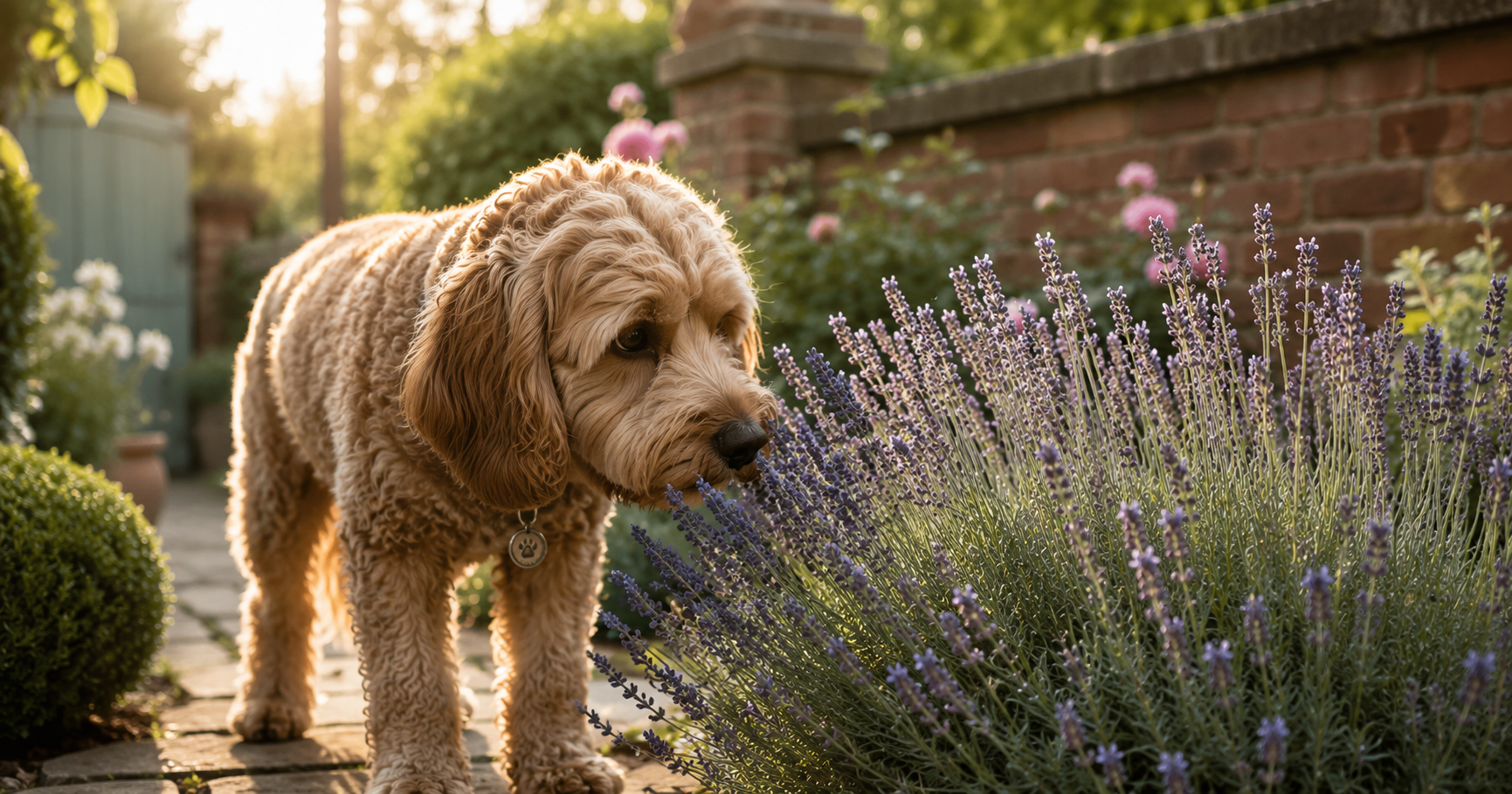
The short answer: it depends what form. A dog walking past your lavender bushes is fine. A dog that licks undiluted lavender essential oil off the counter is a vet visit. The risk scales with concentration, and the jump between fresh plants and concentrated oil is enormous.
Most of the confusion comes from people treating all lavender as the same thing. It’s not. Fresh flowers, dried sachets, diluted products, and pure essential oils sit at very different points on the risk scale.
Key Takeaways
- Fresh lavender plants are mildly toxic if dogs eat large amounts, but garden exposure rarely causes serious problems
- Lavender essential oil is the highest risk form due to concentrated linalool and linalyl acetate
- Never apply undiluted essential oil to a dog, safe dilution requires at least a 1:50 ratio with carrier oil
- Symptoms include vomiting, loss of appetite, skin irritation, and respiratory issues from diffused oils
- Dog-specific pheromone products and chamomile are safer calming alternatives
- Contact your vet immediately if your dog shows poisoning symptoms after lavender exposure
Why Lavender Can Be Risky for Dogs
Lavender contains two compounds, linalool and linalyl acetate, that give it its distinctive scent and also make it problematic for dogs. These terpenes make up a significant portion of lavender essential oil, with much higher concentrations in commercial oils than in the living plant.
Dogs metabolise these compounds differently to humans. Their livers process terpenes less efficiently, which means higher concentrations can accumulate in fatty tissues and stress organs. What’s a pleasant fragrance for you can be a toxic load for your dog.
Individual sensitivity varies. Puppies, senior dogs, and those with respiratory conditions react more strongly to even low concentrations. Some healthy adult dogs tolerate diluted lavender without obvious issues; others develop skin irritation from minimal contact.
Risk by Form of Lavender
Fresh Lavender Plants
English lavender (Lavandula angustifolia) poses minimal risk when dogs brush against it or eat small amounts of flowers. Most dogs find the taste unpleasant and stop on their own.
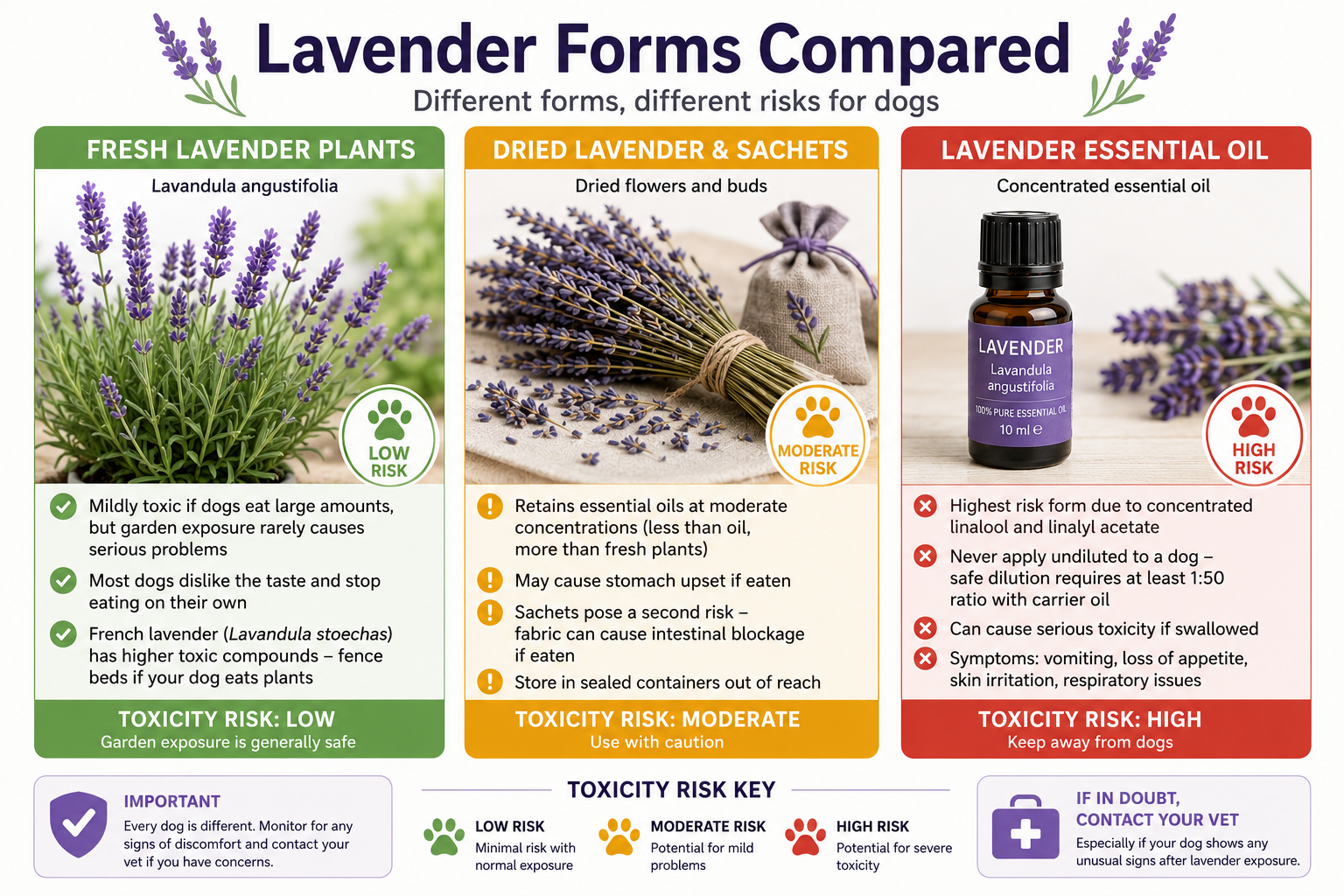
French lavender (Lavandula stoechas) contains higher concentrations of toxic compounds. If your dog is a dedicated plant eater, consider fencing lavender beds, particularly during flowering season when oil content peaks.
Lavender Essential Oil
Pure lavender essential oil is the highest toxicity risk. Undiluted oil can cause chemical burns on skin contact and serious internal damage if swallowed.
Safe dilution requires a minimum 1:50 ratio with a carrier oil like coconut or olive oil. Even diluted, patch test on a small skin area first and never apply near the face or paws where dogs commonly lick.
Dried Lavender and Sachets
Dried lavender retains essential oils at moderate concentrations, less than pure oil but more than fresh plants. Potpourri sachets add a second risk: intestinal blockage if your dog eats the fabric.
Store dried lavender products in sealed containers out of reach. The concentrated scent in enclosed spaces can still trigger respiratory problems in sensitive dogs.
Lavender-Infused Products
Commercial pet products are formulated with controlled lavender concentrations and safety tested for animals. Human lavender products, shampoos, lotions, room sprays, typically contain higher concentrations that aren’t suitable for dogs.
Check ingredient lists. Products listing “lavender essential oil” early in the ingredients contain more than those with “lavender extract” or “lavender fragrance” listed near the end.
Recognising Lavender Poisoning
Digestive symptoms usually appear first: nausea, vomiting, diarrhoea, and loss of appetite within 2-6 hours of exposure. Mild cases often resolve on their own, but persistent symptoms need veterinary attention.
Skin reactions develop from direct contact with concentrated products. Look for redness, itching, swelling, or chemical burn marks around application sites. Dogs may lick affected areas excessively, making the irritation worse.
Respiratory issues come mainly from inhaling diffused essential oils. Excessive panting, difficulty breathing, coughing, or nasal discharge all warrant removing your dog from the scented environment immediately.
Contact your emergency vet for severe symptoms or if mild symptoms don’t improve within 4-6 hours.
Using Lavender Safely Around Dogs
If you diffuse lavender, do it only in rooms where your dog can freely leave. Never in confined spaces like cars or small bedrooms. Limit diffusion to 30-minute sessions with breaks between.
Create dog-free zones for stronger lavender use. Baby gates let you enjoy aromatherapy in specific rooms without risking your dog’s health.
Patch test before any topical use. Apply a small amount of properly diluted lavender to an inconspicuous skin area and wait 24 hours. Any redness or irritation means stop.
Store all lavender products in secure, elevated locations. Dogs investigate scents by tasting, so proper storage prevents accidental ingestion of concentrated products.
Safer Calming Alternatives
Dog-specific pheromone products like Adaptil offer proven anxiety relief without toxicity risks. These synthetic versions of natural calming pheromones work well for travel anxiety, separation issues, and general stress.
Chamomile (German chamomile, Matricaria recutita) is a safer herbal option with mild calming properties, though individual sensitivities can still occur.
For serious anxiety, professional treatment, behavioural therapy, prescription medication, or veterinary-supervised supplements, is more effective than any aromatherapy approach.
Environmental changes often do more than scented products. Safe spaces, consistent routines, and calming music reduce anxiety at its source rather than masking it.
What to Do If Your Dog Encounters Lavender
For ingestion: remove any remaining lavender from reach. Do not induce vomiting unless your vet specifically tells you to, some essential oils cause additional damage coming back up.
For skin contact: rinse the affected area with clean water for 10-15 minutes. Don’t scrub, which can increase absorption. Pat dry.
Call your vet with the product packaging in hand so you can provide exact ingredients and concentrations. Have your dog’s weight, the estimated amount involved, the time of exposure, and current symptoms ready, this helps them assess severity quickly.
Dogs at Higher Risk
Puppies under six months have immature liver function, making them more susceptible to essential oil toxicity. Their smaller body weight means even minor exposure can cause serious symptoms.
Pregnant and nursing dogs face additional risks, essential oil compounds can cross the placental barrier and appear in milk. Most vets recommend avoiding all essential oils during pregnancy and lactation.
Dogs with asthma, allergies, or other respiratory conditions are more sensitive to airborne lavender. Even properly diluted diffusion can trigger breathing problems.
Senior dogs on medication may experience interactions between lavender compounds and common prescriptions. Check with your vet before introducing any lavender products if your older dog takes regular medication.
Frequently Asked Questions
Can I use lavender shampoo on my dog?
Only use shampoos specifically formulated for dogs that list lavender extract rather than essential oil. Human lavender shampoos contain concentrations too high for dogs. Even dog-specific products should be thoroughly rinsed and patch-tested first.
Is lavender essential oil safe in a diffuser around dogs?
It poses respiratory risks, particularly in poorly ventilated spaces. If you diffuse, ensure your dog can leave the room freely, limit sessions to 30 minutes, and watch for panting or breathing changes.
What’s the difference between dog-safe and human lavender products?
Dog-safe products contain significantly lower lavender concentrations and exclude ingredients toxic to dogs like certain preservatives or alcohol. They undergo animal safety testing that human products don’t require.
Should I tell my dog’s boarding facility about lavender sensitivity?
Yes. Many facilities use lavender-scented cleaning products or aromatherapy, and knowing about your dog’s sensitivity lets them make adjustments. Include this information in your care instructions alongside any other allergies or health conditions.
How long do lavender poisoning symptoms last?
Mild symptoms from minimal exposure typically resolve within 12-24 hours with supportive care. Severe poisoning from concentrated essential oils may need several days of veterinary treatment, with full recovery taking up to a week depending on exposure level.