
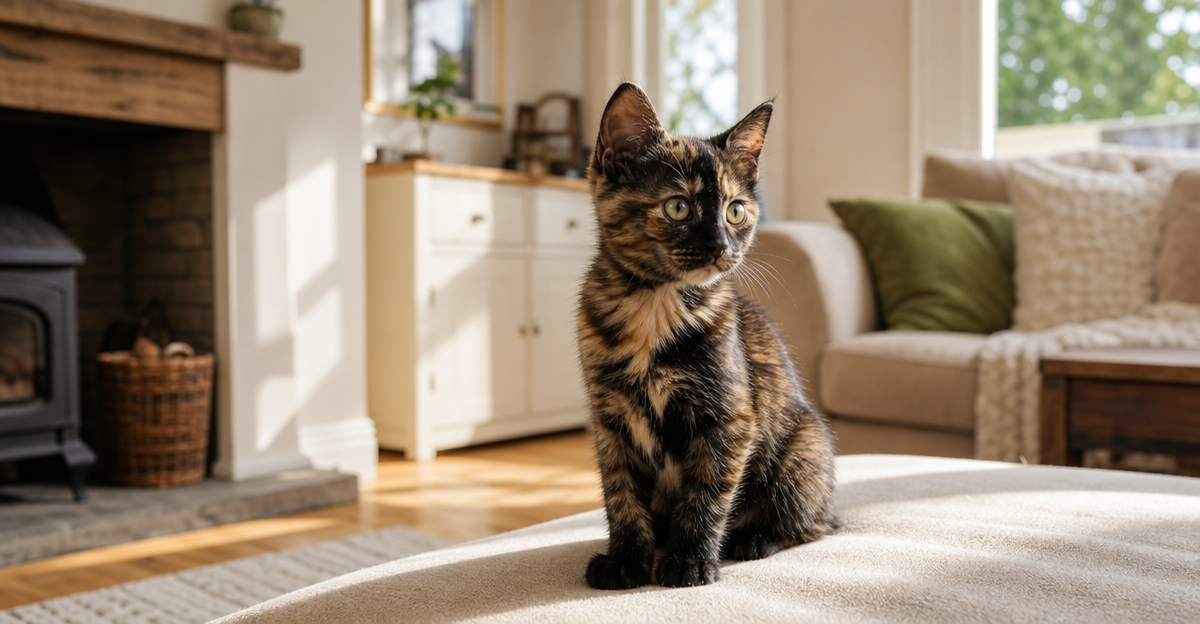
Bringing a kitten home is one of the best things you'll ever do. It's also one of the most genuinely underestimated commitments. This new kitten guide covers what you need to know before collection day, along with the things most kitten articles quietly skip over.
Whether you're bringing home a rescue kitten or a pedigree from a breeder, the fundamentals are the same: plan the first days carefully, get the vet care right early, and don't rush the settling-in process. Take your time with each stage and your kitten will reward you with a confident, sociable adult cat.
Key Takeaways
- Kittens should not leave their mother before eight weeks old. This is a welfare minimum, not a preference.
- The critical socialisation window runs from two to seven weeks. How a kitten was handled during this period shapes their personality for life.
- Set up a single sanctuary room before your kitten arrives. Expand territory gradually once they're settled.
- In England, microchipping cats became a legal requirement on 10 June 2024. Rules differ across Scotland, Wales and Northern Ireland.
- Neutering is typically recommended from four months old. Outdoor access should follow full vaccination and neutering: age alone is not the deciding factor.
- Get pet insurance from day one. Conditions diagnosed before a policy starts are pre-existing and may not be covered.
- You'll need one litter tray per cat in the household, plus one extra.
- Kittens cannot be left alone overnight. Start thinking about boarding and cat-sitting options once vaccinations are complete.
Is a Kitten Actually Right for You?
Cats routinely live for 15 to 20 years. That's not a short-term arrangement, it's a relationship you're entering into, and it's worth being honest with yourself before you fall in love with a photo online.
Kittens are not low-maintenance starter pets. They need frequent feeding, structured play, gradual socialisation and a great deal of supervision in their first months. An adult rescue cat is often a better fit for busy households: calmer, already vaccinated and with a known personality.
The financial reality
The costs of cat ownership are easy to underestimate. Industry estimates and welfare organisation reports consistently suggest UK cat owners spend well over £1,000 per year once food, litter, insurance and routine vet care are combined, and that figure doesn't account for unexpected illness or injury, which can run into hundreds or thousands of pounds without insurance in place. For detailed cost breakdowns, the PDSA's annual Animal Wellbeing (PAW) report is a useful neutral reference.
Before your kitten arrives, budget honestly for kitten food (wet and dry), litter and trays, initial veterinary costs including vaccinations and neutering, parasite treatment and pet insurance. The upfront outlay in the first three months is noticeably higher than the ongoing annual cost.
Lifestyle and household fit
Kittens generally thrive with some activity and company, but they also need quiet time and predictability. A very loud, chaotic household with small children and large dogs isn't impossible, it just requires more careful management and patience during the settling-in period.
Think about who will care for your kitten when you travel. This is a practical question most people put off until it becomes urgent, and it's worth planning early.
One kitten or two?
Two kittens from the same litter can be wonderful company for each other, especially if you're out during the day. However, the picture often changes around 18 months to four years, when cats reach social maturity. Siblings who were inseparable as kittens can develop genuine territorial tension as adults. This is a known pattern, not an exception.
Getting two kittens also means two of everything: two vet bills, two insurance premiums, double the food, double the litter. If you're on the fence, one kitten is a perfectly good choice. Many cats live contentedly as the only pet in the household.
Where to Get Your Kitten
There are three main routes, and each comes with different levels of transparency, risk and cost.
Rescue adoption
Adopting from a reputable rescue organisation like Cats Protection typically includes vaccinations, microchipping and a neutering voucher as part of the adoption. You'll also have the benefit of staff who know the kitten's history and temperament. It's an option far more new kitten owners should seriously consider.
Buying from a breeder
If you're set on a specific breed, find a breeder registered with the relevant breed association and insist on seeing the mother with the kittens at the breeder's own premises. Red flags include the seller offering to meet you in a car park or neutral location, no mother present, kittens advertised as younger than eight weeks, and any reluctance to let you visit before purchase.
Private rehoming
Private rehoming sits in a higher-risk category. There's less transparency about the kitten's early life, socialisation history and health. If you go this route, ask detailed questions: Why is the kitten being rehomed? Has a vet seen them? What litter and food are they used to? Has the mother been health tested? A reluctance to answer any of these is a warning sign.
How old should a kitten be before leaving their mum?
Eight weeks is the minimum, full stop. Before this point, kittens are still developing essential social skills, emotional regulation and independent feeding behaviour. As cats.org.uk notes, the critical socialisation window runs from two to seven weeks of age. During this period, positive experiences with people, sounds and environments shape how confident and sociable the cat will be for the rest of its life.
If a kitten missed out on varied handling or stimulation during those early weeks, perhaps because it was from a large unmonitored litter or a nervous mother, that doesn't mean you'll end up with a feral cat. But it does mean you'll need to work patiently on confidence-building, and you should adjust your expectations for how quickly the kitten settles.
What to Buy Before Your Kitten Arrives
Buy the essentials first. A well-meaning shopping spree in a pet shop will result in beds the kitten never uses and toys gathering dust in a corner. Let your kitten's preferences emerge before you invest in anything elaborate.
Cat carrier
A hard-sided carrier with a top-opening option is the most practical choice. As VetPartners notes, cardboard carriers should be avoided: they can't be cleaned properly and aren't reliably secure. Line the base with a non-slip mat and a worn piece of your clothing. The kitten will be anxious on the journey, and familiar scent helps. If you're weighing up the options, our guide to choosing the right cat travel carrier goes into more detail.
Food and water bowls
Wider, shallower bowls reduce whisker discomfort. Cats' whiskers are sensitive, and deep narrow bowls can cause stress during feeding, according to VetPartners. Position food and water bowls separately from each other, and both well away from the litter tray. These may seem like minor details, but they affect whether your kitten uses each consistently.
Kitten food
Use a complete kitten-specific formula, not adult cat food, which doesn't meet a growing kitten's nutritional needs. Find out what the breeder or rescue was feeding and start with the same. Switching food too quickly causes digestive upset, so any transition to a new formula should be gradual, mixing increasing amounts of the new food over seven to ten days.
Litter tray
The size of the tray matters more than most guides acknowledge. Your kitten needs enough room to dig, turn and position itself comfortably. The standard rule is one tray per cat in the household, plus one extra. In a single-kitten home, that means two trays from the start. In a two-cat home, three. This reduces territorial stress and the likelihood of accidents outside the tray.
Match the litter type to whatever the kitten was already using. An abrupt change of litter is a surprisingly common cause of litter tray avoidance in newly homed kittens. Our step-by-step litter training guide covers this in full if you run into problems.
Scratching post
Scratching is not just about claw maintenance, it's scent marking behaviour, using glands in the paw pads. Your kitten will scratch regardless of what you provide. The question is whether you give them somewhere appropriate to do it. The post needs to be tall enough for a full body stretch, and the base must be heavy and stable. A wobbling post gets abandoned immediately.
Bed and hiding places
Buy one washable bed to start. Cats choose where they sleep and that decision is entirely their own. Boxes, shelves with folded blankets and the corner of a sofa are equally likely candidates. Don't invest heavily until you know what your kitten prefers. What they definitely need is at least one enclosed hiding space: a covered bed, a cardboard box with a hole cut in it, or a blanket draped over a chair.
Toys
Fishing rod-style wand toys are the gold standard for interactive play. Beyond that, a cardboard box and a scrunched paper ball genuinely entertain most kittens. What to avoid: loose threads, small parts that can be swallowed, and unsupervised access to string. String and ribbon are dangerous if ingested and should be put away after play sessions, not left lying around.
Grooming tools and dental care
Match the brush to your kitten's coat length. More importantly, start dental habituation early. VetPartners recommends introducing tooth brushing gradually using a finger toothbrush first, before progressing to a soft cat toothbrush. Even if your kitten still has its baby teeth, the habit you build now is what matters. A cat that tolerates tooth brushing as an adult is significantly less likely to develop serious dental disease later in life. Our guide to keeping your cat's teeth healthy walks through the routine.
Cleaning products
Keep enzymatic cleaners in the house before your kitten arrives. They break down the proteins in urine and faeces that standard cleaners leave behind. That residual scent is what draws a cat back to the same spot. As VetPartners notes, low-scent, pet-safe formulas are best, as heavily fragranced products can deter cats from returning to their litter tray.
What to skip for now
Elaborate multi-level cat trees, electronic toys, multiple beds and any gadget marketed as a cat entertainment system can wait. Your kitten will tell you what they enjoy. Buy those things once you actually know your cat.
Preparing Your Home: Kitten-Proofing Room by Room
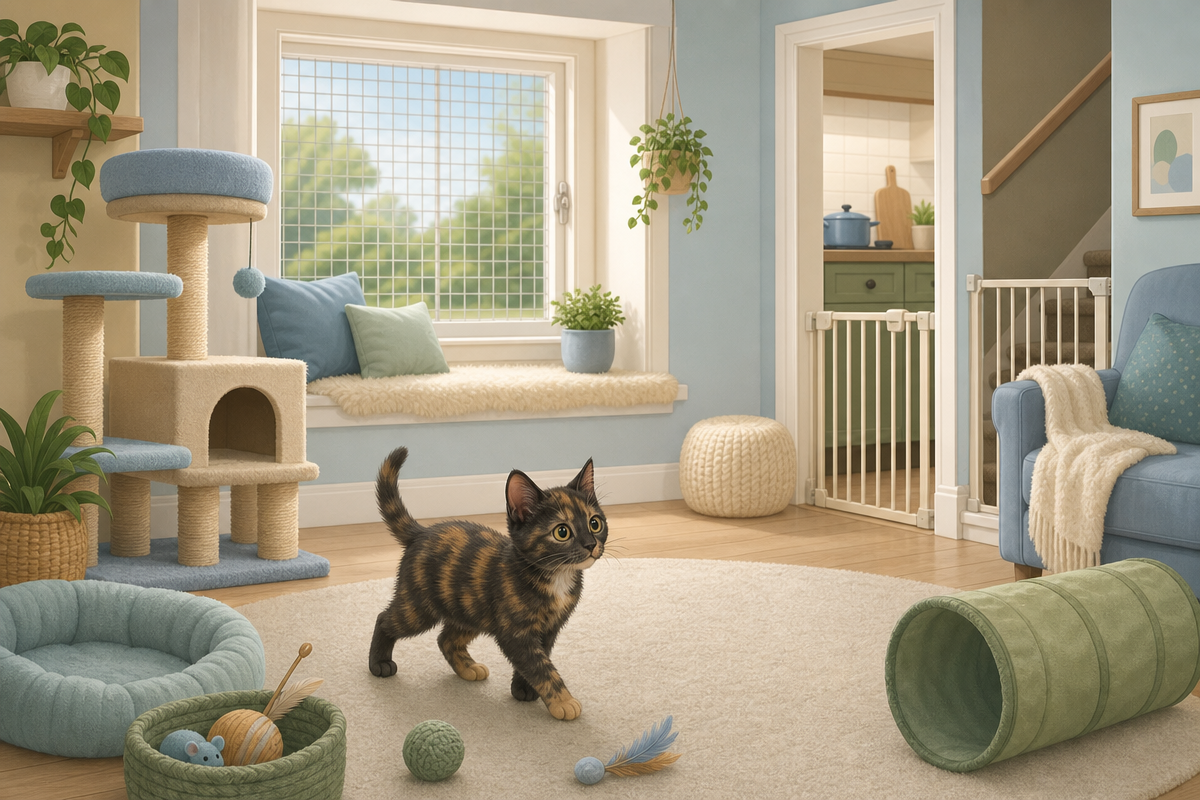
The single most effective thing you can do before your kitten arrives is set up one dedicated sanctuary room. Small, quiet, closeable, away from household traffic. This is where your kitten will spend their first days, and possibly weeks.
What the sanctuary room needs
The room should contain a bed with an enclosed hiding option, food and water bowls positioned separately, a litter tray positioned away from the food area, a scratching post, a few toys, and a high perch option even if it's just a cleared shelf. Some owners find a pheromone diffuser (such as Feliway) helpful in this room during the first week.
Kitten-proofing checklist
- Block gaps behind and beneath large appliances and furniture. Kittens will find every gap.
- Keep washing machines and tumble dryers closed at all times. Cats are drawn to warm, dark spaces and will climb inside. This is a serious and underreported cause of injury and death in kittens. Make checking inside a household habit before every wash.
- Keep toilet lids down.
- Secure or conceal electrical cables and charging leads.
- Remove or relocate toxic plants. Lilies are particularly dangerous: according to cats.org.uk, all parts of true lily plants are highly toxic to cats and can cause fatal kidney failure even in small amounts. Also check PDSA and Cats Protection toxic plant lists, which cover a wider range of common houseplants.
- Lock away medicines, cleaning products and household chemicals.
- Screen off open fireplaces and secure any balcony access.
- Store hazardous human foods (grapes, onions, chocolate) out of reach.
Scent swapping before collection
Before you collect your kitten, leave a worn item of clothing with the breeder or rescue to be placed in the kitten's sleeping area. On collection day, bring back a cloth or blanket that carries the kitten's scent and rub it around the sanctuary room before the kitten enters. This technique, recommended by cats.org.uk, reduces the novelty stress of arriving somewhere entirely unfamiliar.
The First Hours and Days at Home
The journey home sets the tone. Secure the carrier with a seatbelt, keep the car quiet, and resist the urge to open the carrier to check on the kitten. Most kittens will vocalise for part of the journey. This is normal and doesn't mean something is wrong.
On arrival
Go directly to the sanctuary room. Place the carrier on the floor, open the door and wait. Let the kitten come out in their own time, and never pull them out, even if they seem hesitant. Let them investigate the room at their own pace. Sit quietly on the floor rather than looming over them.
Keep early handling sessions brief and calm. Let the kitten approach you rather than the other way around, and allow them to hide if they want to. A kitten that disappears under the bed for the first few hours is not being difficult. They're doing exactly the right thing.
What settling in actually looks like
Settling in can take anywhere from a few hours to several weeks, and the variation is completely normal. Some kittens are eating confidently and exploring within a day. Others hide for a week. Managing your own expectations here matters as much as managing the kitten's environment.
Signs that warrant a call to the vet: not eating at all after 24 hours, persistent hiding combined with hiding the face or eyes, hissing or growling even when not approached, or any signs of physical illness such as discharge, laboured breathing or obvious lethargy.
Expanding territory gradually
Only introduce new rooms once your kitten is confidently exploring the sanctuary room, eating and drinking normally, and using the litter tray. Expanding too quickly, letting the kitten roam the whole house in the first few days, is a common mistake that increases anxiety rather than reducing it. Keep things predictable: consistent feeding times, a calm approach to handling, and limited visitors in the first week or two.
Veterinary Care: What Needs to Happen and When
Register with a vet before you bring your kitten home, or within the first few days of arrival. Don't wait until something goes wrong.
Vaccinations
Core UK kitten vaccines cover cat flu (feline herpesvirus and calicivirus), feline infectious enteritis (panleukopenia) and feline leukaemia virus. The primary course typically begins at eight to nine weeks, with a second dose given three to four weeks later. Your vet will confirm the current schedule based on BSAVA and WSAVA guidance. Your kitten should be kept indoors until the course is complete and they've had time to build immunity. Our cat vaccination schedule sets out the timings in more detail.
Microchipping
In England, microchipping cats became a legal requirement on 10 June 2024, under legislation introduced by the UK government. This applies to England specifically. Scotland, Wales and Northern Ireland each have separate legislative frameworks with different timelines and requirements, so check the relevant devolved government guidance if you're outside England.
Flea and worm treatment
Your kitten will need regular parasite control throughout their life. The frequency changes as they grow. Vet-prescribed treatments are generally more effective and appropriately dosed than over-the-counter alternatives. Ask your vet to set up a parasite prevention plan from the first appointment. It removes the guesswork.
Neutering
Both the RSPCA and Cats Protection recommend neutering from four months old, before a female kitten reaches her first season. Early neutering prevents unwanted pregnancies, reduces roaming and territorial behaviour in males, and carries health benefits for both sexes. It's not something to put off until the kitten is older, as the timing guidance exists for good reasons. Once neutering is complete, outdoor access can follow.
Pet insurance
Take out pet insurance from the day your kitten arrives, or as close to it as possible. This is something nearly every guide underplays. If your kitten is diagnosed with a condition (a heart murmur, a respiratory infection, anything) before a policy is in place, that condition may be classed as pre-existing and excluded from future cover. Starting cover early is not just good practice; it's how you protect yourself from the most expensive scenarios.
Feeding, Play, Sleep and Litter: The Daily Reality
Young kittens need three to four small meals a day rather than one or two larger ones. Their stomachs are small and their energy needs are high. As they approach six months, you can gradually shift toward fewer daily meals. Fresh water should always be available, separately from food.
Wet food vs dry food
Both can form part of a healthy kitten diet. Wet food has a higher moisture content, which supports urinary tract health, as cats are naturally low-thirst animals and don't always drink enough from a bowl. A combination of wet and dry food is common and generally well-tolerated. The most important thing is that whatever you're feeding is a complete kitten formula.
Sleep
Kittens sleep up to 16 to 20 hours a day. This surprises a lot of new owners who expected something more energetic. It's entirely normal, as sleep is when growth happens. Don't try to keep your kitten awake for company. Let them sleep.
Play and predatory behaviour
Structured daily play sessions matter more than leaving toys on the floor. Cats have a predatory sequence (stalk, chase, pounce, catch) and interactive play that follows this pattern is genuinely satisfying in a way that batting at a static toy is not. A wand toy with an unpredictable movement pattern works well. If you're keeping your cat indoors, our indoor cat exercise ideas are worth a look.
Never use your hands as toys. It seems harmless when your kitten is eight weeks old and swatting at your fingers. At eighteen months, with a full set of adult teeth and claws, the same behaviour is painful and difficult to unlearn. Redirect immediately and consistently.
Scratching and litter habits
Never punish scratching. Redirect your kitten to the post and reward them for using it. Initially, place the post near their sleeping area, as cats often scratch on waking as a stretch and scent-marking routine. Once the habit is established, you can gradually move it to a more convenient location.
Most kittens arrive already litter trained. Show them the tray on arrival and let them investigate. Scoop daily and do a full tray change regularly. If accidents happen, clean with an enzymatic product and do not react with any punishment. This never helps and usually makes things worse.
Socialisation at Home: Children, Other Cats and Dogs
Introductions to other household members, human or animal, need to be managed carefully. Rushing them is the most common mistake new kitten owners make.
Introducing to children
Supervise every interaction between children and the kitten, especially in the first weeks. Teach children to support the kitten's hindquarters when holding them, to crouch down rather than pick the kitten up from height, and to recognise when the kitten wants to leave. The kitten must always have an unobstructed escape route. Forced cuddling creates fearful cats.
Introducing to resident cats
Start with scent swapping: exchange bedding between the new kitten and the resident cat before they ever see each other. This is a separate step from the pre-collection scent swap described earlier. That prepares the kitten for their new home; this prepares resident cats for the kitten's arrival. Progress to visual contact through a door gap or baby gate before any face-to-face meeting. Expect hissing and growling, as this is normal and doesn't mean the relationship will fail. The full process typically takes weeks, not days. Don't force it.
Introducing to dogs
Keep the dog on a lead for initial introductions. Let the kitten set the pace and move toward the dog if and when they choose. Make sure the kitten always has access to a high space the dog cannot reach. Never leave them unsupervised until you're confident the relationship is stable, which may take several weeks or longer depending on the dog's history with cats. If you're planning ahead for a mixed household, our guide to dog breeds that get along with cats is a useful starting point.
In any multi-pet household, apply the same one-per-cat-plus-one rule to all resources: bowls, beds, hiding spots and high perches, not just litter trays.
When Can Your Kitten Go Outside?
Outdoor access should follow full vaccination and neutering. That combination, rather than a fixed age, is the meaningful safety criterion, as both the RSPCA and Cats Protection make clear. A vaccinated and neutered kitten at four and a half months is in a safer position than an unvaccinated five-month-old.
In practice, given that neutering is recommended from four months and the post-operative recovery period, most kittens are ready for outdoor access somewhere around five months, but check with your vet based on your kitten's specific situation.
First outdoor sessions
Go outside with your kitten for the first few sessions. Keep them short. Call your kitten back with a treat reward so they associate coming inside with something positive. Cover any ponds, keep them in overnight when accident risk is higher, and consider cat-proof garden fencing if you live near a busy road.
Indoor-only cats
Keeping a cat entirely indoors is a valid choice, particularly if you live in a flat or a high-traffic area. Indoor cats live longer on average. But their enrichment needs are significantly higher than those of cats with outdoor access. Invest in vertical space: wall-mounted shelves, tall cat trees, window perches. Rotate toys to prevent boredom. Use puzzle feeders to extend mealtimes into a mentally engaging activity. Daily interactive play sessions are non-negotiable, not optional extras. For more inspiration, see our creative cat enrichment ideas.
Planning Ahead: Holidays and Boarding
Kittens and young cats cannot be left alone overnight. Even leaving a cat alone for a full day with extra food is not appropriate, and for a young, newly settled kitten, it's genuinely harmful to routine and confidence. You need a plan before you need it.
A trusted friend or family member visiting daily (or staying over) is the lowest-stress option for many cats, particularly those who are nervous by nature. A professional cat sitter visiting your home is another route, as cats generally prefer their own territory. For longer trips, or where home visits aren't practical, a reputable cattery or pet hotel offers structured daily care. If you're weighing up the choice, our comparison of a cattery vs a cat sitter covers the trade-offs.
Start thinking about boarding once your kitten's vaccinations are complete and they've had a few months to settle in their new home. Most catteries require up-to-date vaccination records, so your vet records need to be in order before any boarding stay. When evaluating options, look for individual pens rather than shared spaces with unknown cats, cat accommodation separated from any dogs on site, adequate vertical space within pens, and a willingness to let you bring familiar bedding or toys to help your cat settle. In England and Wales, catteries must be licensed under the Animal Welfare (Licensing of Activities Involving Animals) (England) Regulations 2018 or equivalent, so always ask to see a facility's licence details when you enquire. When the time comes, our cat boarding checklist covers what to pack.
Find licensed pet hotels near you on Tailstays once your kitten is vaccinated and settled.
Frequently Asked Questions
What age should a kitten leave their mum?
Eight weeks is the minimum. Before this point, kittens are still developing the social skills, feeding independence and emotional regulation they need for a well-adjusted adult life. Kittens taken earlier than eight weeks are at higher risk of anxiety, aggression and litter tray problems. Some breeders will keep kittens until twelve to thirteen weeks, particularly for pedigree breeds. This is not unusual and can actually benefit socialisation.
Do I legally have to microchip my kitten in the UK?
In England, yes. Microchipping cats became a legal requirement on 10 June 2024 under UK government legislation. The rules differ in Scotland, Wales and Northern Ireland, each of which has its own legislative framework. Check the relevant guidance for your nation if you're outside England. Most rescue kittens arrive already microchipped; if yours doesn't, your vet can do this at any routine appointment.
How soon should I take my new kitten to the vet?
Ideally within the first few days of bringing them home, even if they appear healthy. A first check-up allows your vet to verify vaccination status, check for parasites, flag anything that wasn't caught before collection, and set up a health plan going forward. Register before collection day if you can, as this avoids delay if your kitten needs care urgently in the first week.
My kitten isn't eating, is this normal?
Reduced appetite in the first 24 hours is common and usually down to stress from the journey and the new environment. Offer small amounts of their usual food rather than trying new things. If your kitten has not eaten anything at all after 24 hours, or if they're showing other signs of illness such as hiding their face, discharge from eyes or nose, or laboured breathing, contact your vet. Young kittens can deteriorate quickly and it's always better to call and be reassured than to wait.
When can I let my kitten meet my other cat?
Not before you've completed a gradual introduction process, and that process typically takes weeks. Start by swapping bedding so both cats can get used to each other's scent. Progress to visual contact through a gap in the door or a baby gate. Only move to unsupervised face-to-face contact once both cats are showing relaxed body language. Hissing during early meetings is normal and doesn't mean the relationship is doomed. Patience is the most important ingredient here.
How do I stop my kitten scratching the furniture?
Redirect, don't punish. Make sure the scratching post is tall enough for a full-body stretch and stable enough that it doesn't wobble. Initially place it near where your kitten sleeps, as cats naturally scratch on waking. You can use double-sided tape on furniture corners as a temporary deterrent, but the long-term solution is giving your kitten a post they genuinely want to use. Positive reinforcement when they use it correctly works far better than any form of telling-off.
When can my kitten go outside?
Once they're fully vaccinated and neutered, not before. For the first outdoor sessions, go with your kitten, keep them short, and call them back with a treat reward each time. Start by letting them explore a small area of the garden and gradually extend their range over several outings. This builds a recall habit and helps your kitten learn the boundaries of their territory at a manageable pace.