
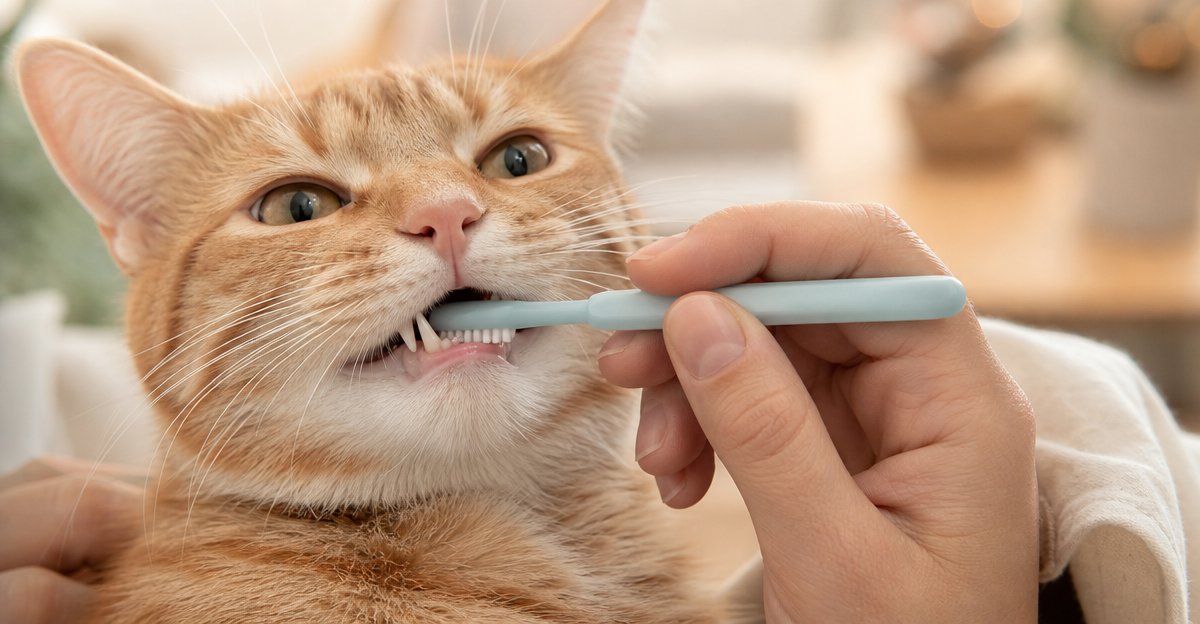
Most cats will develop some form of dental disease by the time they reach three years old, yet tooth and gum problems remain one of the most overlooked aspects of feline health. Keeping on top of your cat's dental care can prevent pain, tooth loss, and knock-on effects to their heart and kidneys further down the line.
Key Takeaways
- Dental disease is extremely common in cats, often developing before they reach middle age.
- Daily tooth brushing is the gold standard, but there are alternatives if your cat won't tolerate a brush.
- Bad breath, drooling, and pawing at the mouth are warning signs worth taking seriously.
- Some cats are prone to a painful condition called tooth resorption, which can only be treated by a vet.
- Regular vet dental checks, typically at your cat's annual health visit, are the best way to catch problems early.
- Diet plays a surprisingly big role, what your cat eats affects tartar build-up every single day.
Why Your Cat's Dental Health Matters More Than You Might Think
A cat in dental pain rarely broadcasts it. Unlike dogs, cats tend to carry on eating and behaving relatively normally even when their mouths are sore, it's a survival instinct. By the time you notice something is wrong, the problem has often been brewing for months.
Bacteria from gum disease don't stay confined to the mouth. They can enter the bloodstream and, over time, place strain on the heart, liver, and kidneys. Addressing dental health isn't just about fresh breath; it's genuinely part of your cat's overall wellbeing.
How to Spot the Signs of Dental Problems
Cats are masters of masking discomfort, so knowing what to look for makes a real difference. Some signs are obvious; others are easy to dismiss as just "getting older."
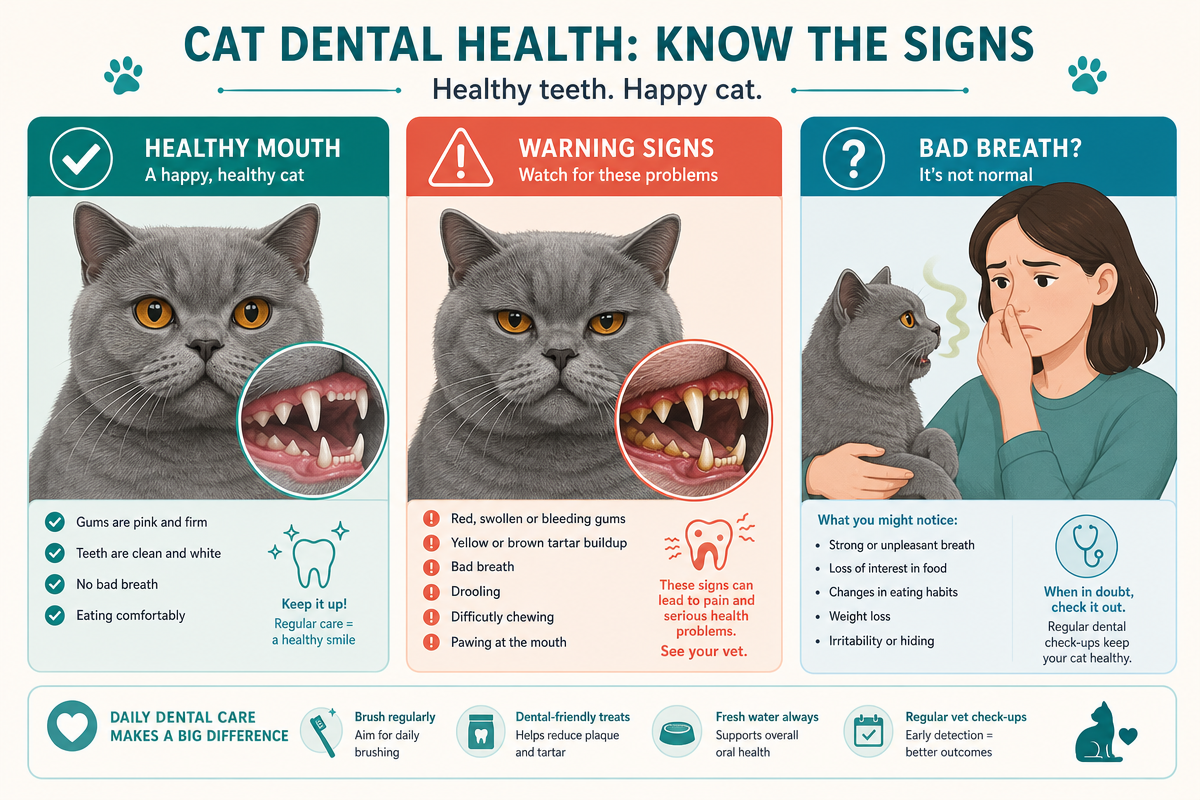
Watch out for:
- Bad breath, a mild, slightly meaty smell is normal; anything sharply unpleasant is not
- Drooling, particularly if it's a new behaviour
- Pawing at the face or mouth
- Dropping food or chewing on one side
- Reluctance to eat hard food despite previously enjoying it
- Red, swollen, or bleeding gums when you gently lift the lip
- Yellow or brown build-up along the gum line, this is tartar
- Chattering jaw movements, which can indicate tooth resorption (more on that below)
If your cat is showing any of these signs, book a vet appointment rather than waiting for their next routine check. Early treatment is almost always simpler and less expensive than dealing with advanced disease.
Brushing Your Cat's Teeth: Yes, It Really Is the Best Option
Daily tooth brushing remains the single most effective thing you can do at home to slow tartar build-up and reduce the risk of gum disease. It sounds daunting, but many cats do come to tolerate it, especially when you start slowly and make it a positive experience.
Getting Started
Don't reach for a brush on day one. Spend the first week or two simply getting your cat used to you touching around their mouth. Once they're relaxed with that, introduce a small amount of pet toothpaste, never human toothpaste, which contains fluoride and sweeteners that are toxic to cats, letting them lick it off your finger.
From there, progress to a finger brush or a small, soft-bristled cat toothbrush. Work on the outer surfaces of the teeth in gentle circular motions; you don't need to scrub the inner surfaces as the cat's tongue does most of the work there. Even 30 seconds of brushing makes a meaningful difference.
If Your Cat Simply Won't Cooperate
Some cats, particularly those adopted as adults, will never fully accept a toothbrush, and that's not a failure on your part. There are alternatives, though it's worth being realistic: none of them match brushing for effectiveness.
- Dental gels and water additives, applied to the gums or added to drinking water, they help reduce bacteria
- Dental chews and treats, look for products with the VOHC (Veterinary Oral Health Council) seal, which indicates proven plaque or tartar reduction
- Dental diets, specially formulated dry foods with larger kibble size and specific textures that help scrape teeth as the cat chews
Used consistently, these alternatives offer some protection. They work best alongside regular professional dental checks, not instead of them.
What Your Cat Eats Matters for Their Teeth
The wet-versus-dry food debate has many dimensions, but from a dental standpoint, the picture is more nuanced than "dry food cleans teeth." Standard dry kibble does provide a little more mechanical action than wet food, but most cats shear through it without much chewing, it's no substitute for brushing.
A species-appropriate diet that supports overall health is the broader goal. Sugary treats and foods high in simple carbohydrates can contribute to the conditions that allow oral bacteria to thrive. If you're unsure whether your cat's current diet is supporting their dental health, it's worth raising at your next vet visit.
Tooth Resorption: The Painful Condition Many Owners Have Never Heard Of
Tooth resorption is one of the most common and most painful dental conditions in cats, yet it rarely gets discussed outside a vet's consultation room. It occurs when the tooth structure begins to break down from the inside or at the gum line, essentially being absorbed by the body.
No one fully understands why it happens. It's not caused by poor hygiene, so even cats with impeccably clean teeth can be affected. The condition is often invisible to the naked eye in early stages and is usually only detectable through dental X-rays, another reason professional dental examinations matter.
Treatment typically involves extracting the affected tooth. That sounds dramatic, but cats cope remarkably well after extractions and are usually far more comfortable eating than they were before, even with fewer teeth.
Professional Dental Care: What to Expect at the Vet
Even with diligent home care, most cats will benefit from a professional dental scale and polish at some point in their lives. This is carried out under general anaesthetic, which understandably concerns many owners, but modern veterinary anaesthesia is very safe, and the risks of leaving dental disease untreated generally outweigh the anaesthetic risk for a healthy cat.
During the procedure, your vet will remove tartar from above and below the gum line, probe for pockets of infection, take X-rays to assess root health, and extract any teeth that can't be saved. It's a thorough process that a toothbrush simply can't replicate.
How often your cat needs professional dental treatment varies hugely. Some cats go years between procedures; others, particularly certain breeds, need more frequent attention. Your vet is the best judge of this based on what they see at your cat's annual health check.
Breeds and Ages That Need Extra Attention
Dental problems aren't spread equally across all cats. Flat-faced (brachycephalic) breeds such as Persians and Exotic Shorthairs are particularly prone to dental crowding because their teeth are packed into a shorter jaw, misalignment makes cleaning harder and disease more likely.
Older cats face greater cumulative risk simply from years of exposure, and their immune systems may be less effective at keeping oral bacteria in check. Kittens, meanwhile, go through a teething phase around three to six months when baby teeth are replaced by adult teeth, occasionally a baby tooth doesn't fall out as it should, and your vet may need to remove it to prevent crowding.
Building a Dental Care Routine That Actually Sticks
The hardest part of cat dental care isn't knowing what to do, it's making it a consistent habit. Cats are creatures of routine, which actually works in your favour once you've established the behaviour.
A few things that help:
- Brush at the same time each day, just before a meal works well, so the reward follows immediately
- Keep sessions short, especially at first; stop before your cat gets fed up
- Stay calm and matter-of-fact, cats pick up on anxiety
- Use a flavoured toothpaste (chicken and tuna are common options) to make the experience more appealing
- Book a dental check into every annual vet visit, even if nothing seems wrong
It genuinely does get easier. Most cats who are introduced to brushing gradually, and without force, become at least tolerant, and some end up almost enthusiastic about the ritual.
Frequently Asked Questions
How often should cats have their teeth cleaned by a vet?
There's no single answer that applies to every cat. Most vets will assess your cat's teeth at their annual health check and recommend a professional scale and polish when tartar build-up or early gum disease is detected. Some cats need this every year or two; others can go much longer. Cats with flat faces or a history of dental disease typically need more frequent monitoring.
Can I use human toothpaste to brush my cat's teeth?
No, never use human toothpaste on cats. It contains fluoride and, in many cases, xylitol (an artificial sweetener), both of which are toxic to cats. Always use a toothpaste formulated specifically for cats. These come in flavours like chicken or fish that make the experience far more tolerable for your pet.
My cat has bad breath, is that normal?
A faint, meaty smell after eating is fairly normal. Persistent bad breath that's noticeably unpleasant, sometimes described as ammonia-like or rotten, is not normal and usually signals a problem, whether that's gum disease, tooth resorption, or occasionally an underlying health issue like kidney disease. A vet check is the right first step.
At what age should I start brushing my cat's teeth?
The earlier the better. Kittens are far more adaptable than adult cats, so if you're getting a kitten, start introducing the concept around 8-12 weeks, even if it's just letting them taste the toothpaste. Adult cats can also learn to tolerate brushing, but it typically takes more patience. It's never too late to start.
Do dental treats actually work for cats?
Some do, some don't, the key is looking for the VOHC (Veterinary Oral Health Council) seal of approval on the packaging. This indicates the product has been independently tested and shown to reduce either plaque or tartar. Dental treats without this accreditation may provide minimal benefit. They're a useful supplement to a dental care routine, but shouldn't be relied on as the sole form of dental care.