
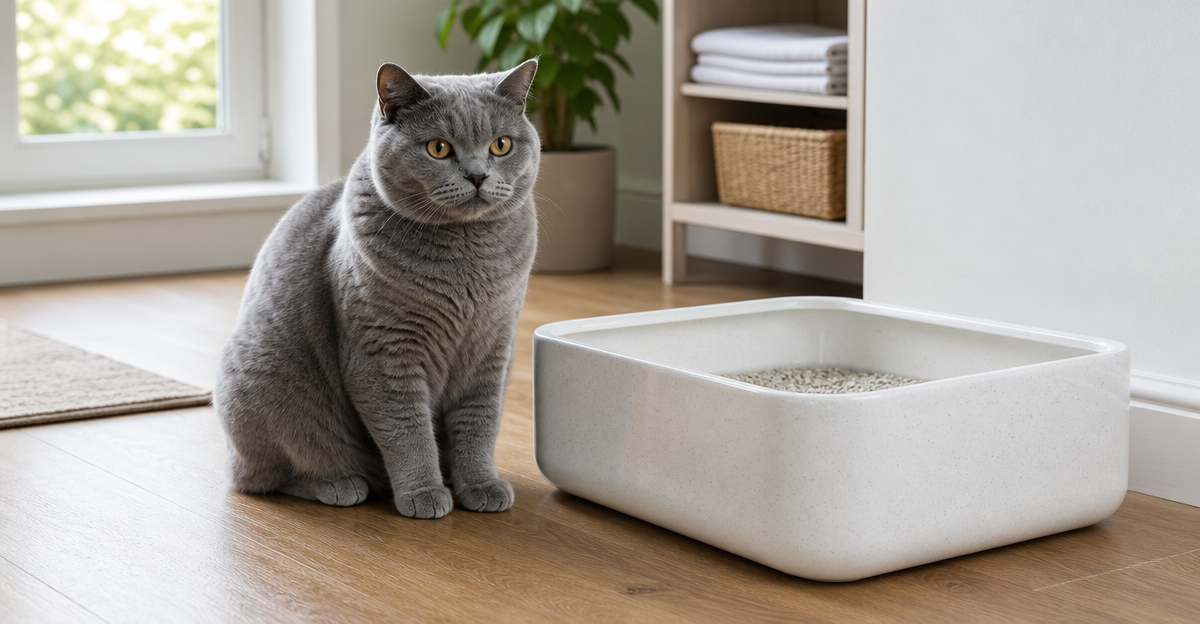
Most cats and kittens take to a litter tray with very little effort, their instinct to bury waste does a lot of the work for you. But if your cat is struggling, or you've just brought home a new kitten, a little structured guidance goes a long way.
Key Takeaways
- Kittens can usually start litter training from around three to four weeks old.
- Placement matters as much as the tray itself, quiet, accessible, and away from food.
- Unscented, fine-grained litter is the safest starting point for most cats.
- One tray per cat, plus one extra, is the widely recommended rule of thumb.
- Accidents are rarely defiance, they usually signal a medical issue, stress, or a problem with the tray setup.
- Punishment never works and almost always makes things worse.
When Can You Start Litter Training?
Kittens begin to eliminate independently at around three to four weeks of age, which is also when their mother stops stimulating them to go. This is the natural window to introduce a tray. If you're adopting a kitten from a breeder or rescue, there's a good chance they've already had some exposure.
Adult cats new to indoor life, rescues, former farm cats, or cats transitioning from outdoor access, may need a more patient approach. They're not starting from scratch behaviourally, but they may have strong preferences about substrate or location that you'll need to work with.
Choosing the Right Tray
There's no single best litter tray, the right one depends on your cat's size, age, and preferences. That said, a few principles hold across the board.
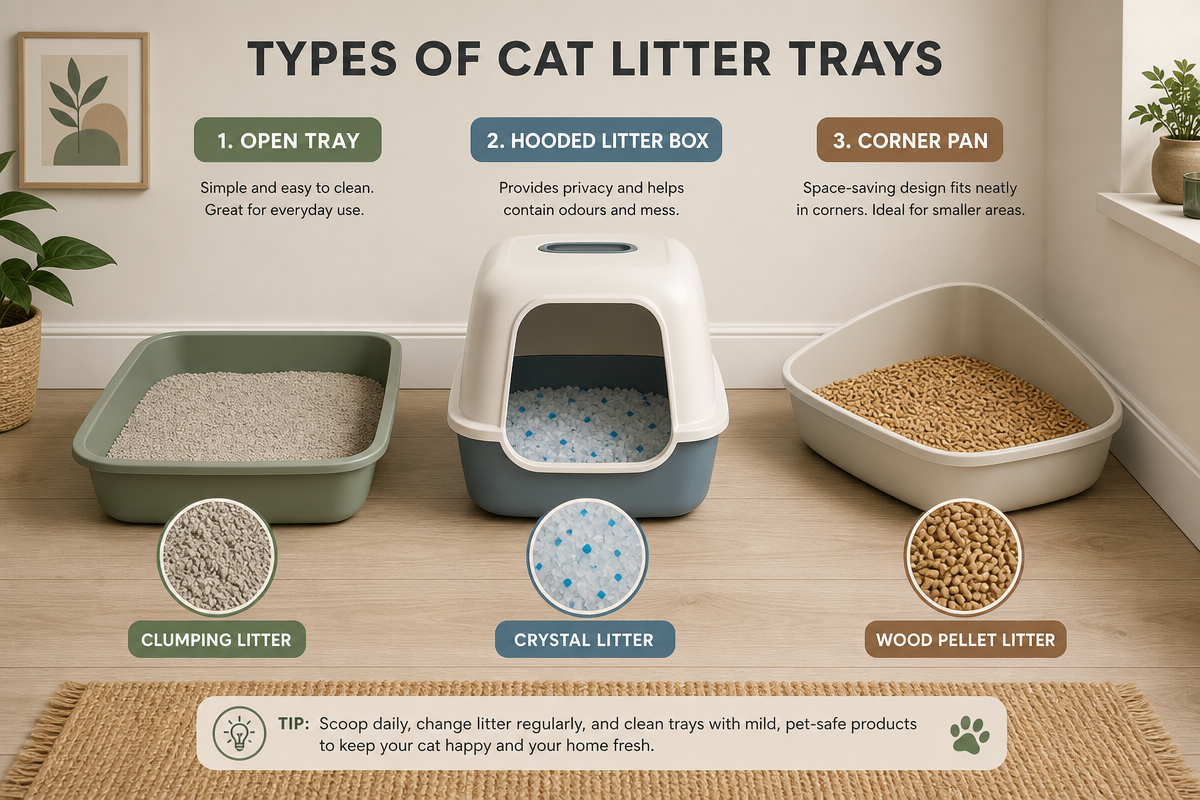
For kittens, low-sided open trays are essential. High sides are a barrier, not a feature. As your cat grows, a larger tray is better, most cats prefer to turn around comfortably before settling.
Covered trays are popular with owners because they contain smells and litter scatter. Many cats tolerate them fine, but some find them claustrophobic or simply dislike the enclosed space. If your cat is reluctant to use a hooded tray, try removing the lid before assuming there's a deeper problem.
Self-cleaning trays exist and work well for some households, but the mechanical noise can startle cats and put them off using the tray entirely. Introduce these slowly if you go that route.
Which Litter Should You Use?
Fine-grained, unscented clumping litter is the most widely recommended starting point. It mimics the texture of soft soil or sand, which is what cats instinctively seek out. Many cats find heavily scented litters off-putting, even if the fragrance seems mild to you.
The main litter categories are:
- Clumping clay: Absorbs liquid and forms solid clumps for easy scooping. Popular and widely available.
- Non-clumping clay: Cheaper but requires more frequent full changes to control odour.
- Silica gel (crystal): Very absorbent, low dust, longer-lasting, but the texture isn't universally liked by cats.
- Wood pellet: Biodegradable and low-dust. Pellets break down into sawdust when wet, which some cats dislike.
- Paper-based: Often recommended post-surgery because it's soft and dust-free, though it absorbs less effectively than clay.
If you want to switch litters once your cat is established, do it gradually. Mix a small amount of the new litter into the old over a week or two rather than making an abrupt change, sudden switches are a common trigger for toileting outside the tray.
Where to Put the Tray, and How Many You Need
Location is one of the most overlooked factors in litter training. A perfectly clean tray in the wrong spot will still be avoided.
Place the tray somewhere quiet and low-traffic, where your cat won't be startled mid-use. Laundry rooms are a common choice, but if the washing machine is nearby, the sudden spin cycle can create an unpleasant association. Avoid placing the tray next to food and water bowls, cats don't eat where they toilet.
The widely repeated rule of thumb is one tray per cat, plus one extra. So two cats need three trays. This reduces competition and gives each cat a fallback option if one tray is in use or hasn't been cleaned recently. In multi-storey homes, it's worth having at least one tray on each floor.
The Training Process, Step by Step
Training a kitten is largely about setting up the right conditions and being consistent. Here's how to approach it.
- Introduce the tray early. As soon as your kitten arrives home, show them where the tray is. Place them gently in it so they can sniff and investigate. Don't force them to stay, let them step out if they want to.
- Time your prompts. Kittens typically need to go shortly after waking up, after eating, and after play. These are the moments to place them near or gently in the tray as a reminder.
- Let instinct take over. Most kittens will start scratching and digging once they feel the litter texture. This is a good sign. Step back and give them privacy.
- Reinforce calmly. When they use the tray successfully, a quiet word of praise or a small treat immediately afterwards helps cement the association. Keep it low-key, over-excited reactions can actually startle a kitten mid-process.
- Clean promptly. Scoop solids at least once a day. Cats are fastidious and will often refuse a tray that hasn't been cleaned. A full litter change frequency depends on the litter type, but regularly refreshing even clumping litter keeps usage consistent.
- Clean accidents properly. If your kitten goes elsewhere, clean the spot thoroughly with an enzymatic cleaner. Standard household cleaners don't fully break down the scent markers, and a cat that can still smell a previous accident may return to the same spot.
What to Do When Things Go Wrong
Toileting outside the litter tray is the most common cat behaviour complaint, and it's almost never stubbornness or spite. If your cat suddenly stops using a tray they've used reliably for months, work through the practical checklist before assuming it's a training issue:
- Is the tray clean enough? Try scooping more frequently.
- Is the location too busy or noisy?
- Has anything changed recently, a new pet, a house move, building work nearby?
- Is the tray big enough for your cat to turn around in?
- Have you recently changed litter brands or type?
Stress is a significant factor for cats. A new baby, another animal in the household, or even rearranged furniture can be enough to cause temporary litter avoidance. Feliway diffusers (synthetic feline pheromones) are commonly used to help cats settle during changes, and many owners find them useful during the adjustment period.
When to See a Vet
Before treating any litter tray problem as a behavioural issue, rule out a medical cause. Urinary tract infections, kidney disease, and other conditions can make using the tray painful or urgent, and a cat in discomfort may start associating the tray with that pain. If your cat suddenly stops using a tray they've used reliably, a vet visit is the right first step, not a behaviour intervention.
Similarly, if excessive or frantic scratching accompanies the litter avoidance, or if you notice blood in urine or signs of straining, contact your vet promptly. Once a medical cause has been ruled out, you can return to the practical checklist above with confidence.
Training a Cat That's Used to Going Outside
Transitioning an outdoor cat to indoor toileting, whether temporarily for recovery, during a house move, or permanently, takes more patience than training a kitten from scratch.
Start by placing a tray in an accessible spot and, if possible, adding a small amount of soil or outdoor substrate to the litter. This bridges the gap between what the cat knows and the new setup. Over subsequent tray changes, gradually reduce the soil content and increase the litter.
Say you've just moved house and your cat won't be allowed out for a few weeks while they settle in. This is a common scenario, and keeping the cat in a smaller area initially, with the tray clearly visible and accessible, makes the adjustment easier than giving them the run of an unfamiliar house immediately.
Frequently Asked Questions
How long does it take to litter train a kitten?
Many kittens pick it up within a few days, especially if they've had some exposure before coming home with you. For others it can take two to three weeks of consistent prompting and reinforcement. Adult cats learning from scratch may take longer, particularly if they have ingrained outdoor habits.
My cat keeps scratching litter out of the tray. What can I do?
Some cats are enthusiastic diggers, it's instinctive behaviour. A larger, higher-sided tray helps contain scatter, as does placing a mat underneath to catch what comes over the edge. If the scratching is excessive and frantic rather than purposeful, it can occasionally signal anxiety worth exploring with a vet.
Can I use one litter tray for two cats?
It's not recommended. Most cats are reluctant to share, and a tray that one cat considers "used" may be avoided by the other. The standard guidance is one tray per cat plus one extra, so two cats would ideally have three trays.
Is clumping litter safe for kittens?
There's some debate here. Very young kittens, under eight weeks or so, may ingest litter while exploring, and clumping clay could theoretically cause problems if swallowed in quantity. Many vets and breeders recommend starting with non-clumping or paper-based litter for very young kittens and transitioning once they've reliably stopped mouthing everything. Check with your vet if you're unsure.
My cat was litter trained, then suddenly started going elsewhere. Why?
A sudden change in a previously reliable cat is nearly always worth a vet check first, urinary tract infections, kidney issues, and other conditions are common culprits. If the vet rules out a medical cause, look at recent changes in the household: a new pet, building work, a moved tray, or a new litter brand are all frequent triggers.