
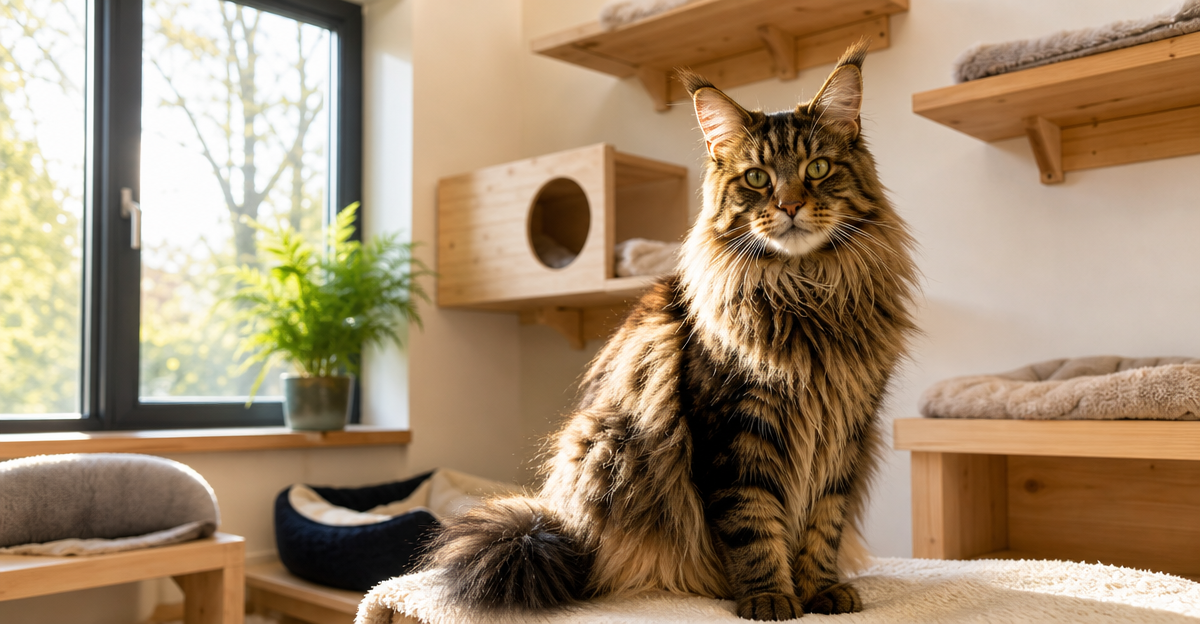
The fastest way to get your cat turned away at the cattery door is to arrive without a current vaccination certificate. A close second is skipping flea treatment. This cat boarding checklist walks you through everything you need to do before drop-off, from booking the right facility to packing the carrier, so you and your cat can both have a calm stay.
Key Takeaways
- Core vaccines (Cat Flu and Feline Enteritis) must be administered at least 14 days before the stay. The certificate must be in-date on the day of drop-off, not just at the time of booking.
- Flea treatment is mandatory at most UK catteries. Use a veterinary-grade product rather than a supermarket spot-on or flea collar, as these may not be effective enough to satisfy cattery requirements.
- Bring the vaccination certificate in the format the cattery accepts (physical or digital, so confirm in advance).
- Pack your cat's own food to avoid digestive upset from sudden dietary changes.
- Write a care sheet for staff: feeding times, portion sizes, medication instructions, anxiety triggers, and how your cat responds to handling.
- Remove your cat's collar before drop-off. Collars are a safety hazard in cattery units and should come off at handover.
Book the Right Cattery Before You Pack Anything
What you need to bring depends on where your cat is staying. Requirements vary between facilities. Some ask for Feline Leukaemia vaccination, others do not; some specify a flea treatment window of 24 to 48 hours, others say within the week. Confirming requirements at the time of booking prevents last-minute surprises.
The most important check when booking is the licence. In England, all commercial catteries must hold a local authority licence under the Animal Welfare (Licensing of Activities Involving Animals) (England) Regulations 2018. Wales has similar requirements under separate legislation. A licensed cattery must display that licence visibly on its premises and on its website. If you cannot see it, ask, and if they cannot produce it, look elsewhere. If you want to go a step further, our guide on how to check if a kennel is licensed in the UK walks through the same verification process that applies to catteries.
Beyond the licence, England's 2018 Regulations (and equivalent Welsh requirements) set out specific welfare standards that translate into things you can actually observe. The gov.uk guidance for local authority inspectors describes minimum and higher standards across environment, staffing, and disease prevention. Here is what that means in practical terms:
- Star rating (1 to 5 stars): All licensed catteries meet a minimum standard. A 4 or 5-star rating means the facility has met higher welfare standards: better space, enrichment, monitoring, and staff ratios. Higher-rated facilities are also inspected less frequently because they have demonstrated sustained compliance, so a 4 or 5-star rating reflects a track record, not just a snapshot.
- Staff-to-cat ratios: The guidance sets minimum and higher staffing standards, so check the gov.uk inspector guidance for current figures. More staff per cat means more daily interaction and faster recognition of problems.
- Escape prevention: Gov.uk minimum environment standards reference double-door or airlock entry systems to prevent cats escaping when doors are opened. Ask whether the unit design prevents a cat slipping out during feeding.
- Temperature: The guidance specifies acceptable temperature ranges for sleeping areas, so check the gov.uk inspector guidance for current figures. In practice, ask whether heating is on overnight and in winter.
One more point worth making: England's 2018 Regulations do not apply in Scotland or Northern Ireland, which have their own separate licensing regimes. If you are booking a cattery in Scotland, the regulatory framework differs from England and Wales, so do not assume the same standards apply automatically.
Red flags to watch for: no licence displayed on the premises or website; staff unable to explain the vaccination policy; unwillingness to let you visit before booking. Reputable facilities welcome visits. For a fuller picture of what separates a good cattery from a mediocre one, our guide to choosing the right cattery goes into more detail.
If you are still searching, Tailstays lists licensed pet hotels across the UK, with strong coverage in cities including London, Leeds, York, Nottingham, and Bristol. You can browse by location to find options near you.
Questions to Ask the Cattery Before Booking
- Do you require proof of vaccination on arrival, and in what format?
- Do you require Feline Leukaemia (FeLV) vaccination as well as Cat Flu and Feline Enteritis?
- What is your flea treatment policy and what is the required window before drop-off?
- Can you administer medication, and is there an additional charge?
- Do you allow personal food and litter?
- What is your procedure if a cat needs emergency veterinary attention?
Sort Vaccinations: the Non-Negotiable
No reputable cattery in the UK will accept an unvaccinated cat. This protects every resident animal in the facility, not just yours.
The two vaccinations required universally across UK catteries cover Cat Flu (feline calicivirus and herpesvirus) and Feline Enteritis (panleukopenia). These are the core vaccines and you will not find a licensed facility that waives them. Feline Leukaemia (FeLV) is required by many catteries, but not all. Do not assume it is either included or excluded. Ask at the time of booking and confirm in writing.
On timing: vaccines must be administered at least 14 days before the stay begins. This allows enough time for full immunity to develop. Vaccinating the day before is not a workaround, and the cattery will still turn your cat away. The certificate must also be in-date on the day of drop-off, not just at the time of booking. If your cat's annual booster falls due mid-holiday, sort it beforehand. Our cat vaccination schedule breaks down when each jab is due and why.
For kittens, a full primary course is typically required before boarding is permitted, usually two doses with an appropriate gap between them. Your vet will advise on timing based on the specific products used.
What the certificate needs to show: vaccination dates, the product names used, and batch numbers. Many catteries now accept a digital certificate, but confirm the accepted format with your specific facility before assuming a photo on your phone will do.
What If My Cat's Vaccinations Have Lapsed?
Book a vet appointment as soon as you realise. Whether your cat needs a booster or a restart of the full primary course depends on how long the gap has been. Your vet will advise based on the specific vaccine history, and generic timelines from the internet are not a reliable guide here.
The practical implication: book the cattery only after you have confirmed vaccination dates with your vet. Booking first and sorting vaccinations second is a common mistake that leaves owners scrambling too close to departure.
Flea and Worm Treatment
Fleas spread rapidly in any environment where multiple cats are housed together. One untreated cat arriving with fleas puts every other animal in the cattery at risk. This is why flea treatment is a firm requirement at nearly every licensed facility, and why catteries take it seriously.
On timing: some catteries specify 24 to 48 hours before the stay; others allow up to one week. The right answer is whatever your specific cattery requires, so ask when you book and note the window in your calendar.
Many catteries specify that veterinary-grade treatments are required and that over-the-counter products may not meet their standard. This is worth taking seriously. Veterinary-grade spot-on or oral treatments recommended or prescribed by your vet are the reliable option. If you have been using an over-the-counter product, check with your vet before the stay whether it meets the standard your cattery expects.
Indoor cats are not exempt from this requirement. Fleas can arrive on clothing, bags, or other pets, so indoor status does not eliminate the risk or the obligation.
Worm treatment is less universally mandated but is good practice before boarding. Check with your cattery and confirm with your vet what is appropriate for your cat.
The Pre-Boarding Vet Check, Especially for Senior or Unwell Cats
Not every cat needs a vet appointment before boarding. But some do, and leaving this too late creates real problems.
It is worth booking a pre-boarding check if your cat is a senior, has a chronic condition such as kidney disease, heart disease, or diabetes, is on regular medication, or has simply seemed off recently. Boarding a cat who is quietly unwell is unfair on the cat and puts staff in a difficult position.
If your cat shows reduced appetite, vomiting, diarrhoea, lethargy, or laboured breathing in the 48 hours before drop-off, postpone the stay and see a vet first. The cattery will understand. Pushing ahead when something is clearly wrong is not worth the risk.
For cats on medication: bring enough supply for the full duration of the stay plus a couple of days extra, in case of travel delays or extended stays. Label everything clearly with your cat's name, the medication name, dose, timing, and administration method, whether it goes in food, on an empty stomach, or requires a specific technique. Include your vet's name, practice, and phone number with the medication.
Confirm with the cattery before booking that they can administer medication, and ask whether there is an additional charge. Some facilities include this as standard; others charge a small daily fee. It is better to know in advance.
The Documents to Bring
Gather these before the day of drop-off. Hunting for paperwork on the morning of departure is a stressful way to start a holiday.
- Vaccination certificate (physical or digital, confirm format with your cattery)
- Vet contact details: name, practice name, and phone number
- Your cat's microchip number
- Pet insurance details and policy number
- Your mobile number and a backup emergency contact
- Written care notes (see the care sheet section below)
Licensed catteries in England are required under the 2018 Regulations to maintain records for a period specified in the Regulations. Your documentation feeds into those records and helps the cattery respond accurately if anything requires attention during the stay.
Write a Care Sheet for Staff
A written care sheet is one of the most useful things you can bring. Staff cannot guess your cat's quirks, but with good notes, they can respond to them.
Cover the following: feeding schedule (times, portion sizes, wet and dry split), any foods that cause digestive upset, favourite treats, medication instructions if applicable, known anxiety triggers, typical hiding behaviour, and how your cat responds to handling. If your cat does not like being approached from above, or needs a few minutes to settle before being touched, say so. If your cat is likely to scratch or bite when stressed, say so clearly, because staff need that information for their own safety and to handle your cat appropriately.
The gov.uk guidance for licensed catteries requires facilities to monitor behaviour and recognise signs of stress. Your notes make that process significantly more accurate and more useful. If you want to understand what stress looks like in a boarded cat, our piece on why cats get stressed at the cattery covers the signs and what helps.
What to Note for Anxious or First-Time Boarders
If your cat has never been boarded before, a trial stay of one or two nights before a longer trip is worth considering. It lets your cat acclimatise to the environment and gives you confidence in the facility before you commit to a two-week holiday booking.
Pheromone diffusers or sprays (the most well-known product in this category is Feliway) can help some cats settle in unfamiliar environments. They are not a cure-all, and the evidence varies, but they are low-risk and worth discussing with your vet if your cat is prone to anxiety.
Be honest in your notes. The cattery staff are on your cat's side. They need accurate information to provide good care, and hedging about difficult behaviour helps nobody.
What to Pack: the Physical Checklist
Print this out and tick it off the evening before. Last-minute packing in a hurry is how vaccination certificates get left on the kitchen table.
- Enough of your cat's usual food for the full stay, plus one or two days extra, pre-portioned and labelled with your cat's name
- Familiar cat litter (same brand and texture, since a different litter in a new environment is a common cause of litter box avoidance)
- A soft blanket or piece of bedding that smells of home
- An unwashed item of your clothing (optional, but genuinely effective for anxious cats)
- A favourite toy if the cattery permits personal items, so confirm their policy
- Regular supplements or probiotics if your cat uses them
- Grooming tools if your cat needs regular brushing
- A secure, well-ventilated carrier for transport, with familiar bedding inside
- All medications, clearly labelled with name, dose, timing, and method
- Vaccination certificate and all documents listed above
If your cat struggles with the litter change, the fundamentals in our cat litter training guide can help you understand why keeping the same brand matters so much.
Carrier Preparation: Don't Leave This Until the Morning
For most cats, the carrier only appears before a vet visit. It becomes a signal that something stressful is about to happen. If you want a calmer journey to the cattery, you need to change that association, and that takes more than a day.
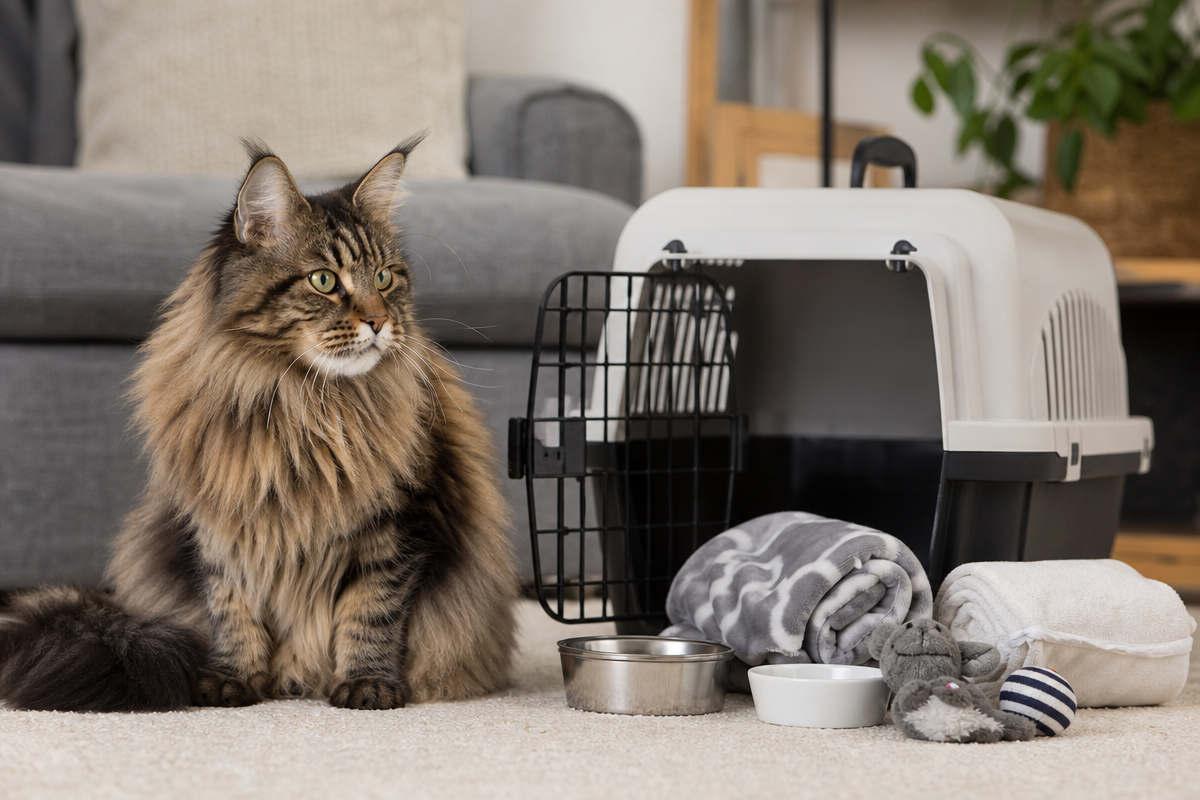
In the weeks before boarding, leave the carrier out as a permanent piece of furniture. Put familiar bedding inside. Feed treats or even meals in or near it. The goal is for your cat to walk into the carrier voluntarily rather than needing to be manoeuvred in under protest. For more on this, our full guide to travelling with cats covers carrier training and journey stress in depth.
On the day, place a piece of your worn clothing inside the carrier before loading. Keep your own demeanour calm during loading and the drive over, because cats read owner anxiety more readily than most owners expect. A tense, rushed departure makes a nervous cat more nervous.
At drop-off, allow time for a proper check-in. Do not rush the handover. Ask any final questions while you are there.
Drop-Off Day: What to Expect
A good check-in takes a few minutes. Staff should review your documentation, confirm feeding and medication instructions, and settle your cat into their unit before you leave. If this feels rushed or cursory, that is worth noting.
Brief the staff verbally as well as in writing, particularly on anything unusual: a new symptom you noticed that morning, a strong dislike of something specific, a medication change your vet made recently. Written notes cover the baseline; a verbal handover catches the last-minute detail.
Remove your cat's collar at handover. Collars can catch on fixtures inside cattery units, creating a safety hazard. Take it off at drop-off rather than at home, so the collar helps identify your cat during transport.
Saying goodbye: keep it calm and brief. Long, emotional farewells increase stress for both cat and owner, and your cat will settle more quickly once you have gone. It feels counterintuitive, but a matter-of-fact goodbye followed by a confident exit is genuinely kinder than a prolonged one.
Agree in advance how the cattery will communicate with you during the stay. Some facilities send daily photo updates; others contact you only if there is a concern. Neither approach is wrong, but knowing what to expect prevents unnecessary worry on your end.
When Not to Board Your Cat
Sometimes the right decision is to postpone. A cat that is unwell needs veterinary attention, not a cattery stay.
Signs that should prompt you to call your vet rather than load the carrier: loss of appetite in the 48 hours before departure, vomiting, diarrhoea, lethargy, visible respiratory distress, or any new or worsening symptoms. If your cat has had recent surgery or illness, get explicit vet sign-off before boarding.
Unvaccinated cats will be refused at any reputable licensed facility. This is not a formality. It is a genuine infection control measure that protects every other cat on the premises, and no legitimate cattery will make an exception.
If your cat cannot board for health reasons, it is worth exploring whether a house-sitting arrangement, where a carer visits or stays in your own home, might be a better fit. That is a different setup with different considerations, and our comparison of cattery versus cat sitter weighs up which suits different cats. When you are ready to look at options, Tailstays can help you see what is available in your area.
Frequently Asked Questions
What vaccinations does my cat need for a cattery in the UK?
Cat Flu (covering feline calicivirus and herpesvirus) and Feline Enteritis (panleukopenia) are required by virtually all UK catteries. Many catteries also require Feline Leukaemia (FeLV) vaccination, but this varies between facilities, so confirm the specific requirement when you book. Vaccines must be administered at least 14 days before the stay begins to allow full immunity to develop. Rabies vaccination is not a domestic cattery requirement in the UK.
Can I bring my own food to a cattery?
Yes, and most reputable catteries actively encourage it. Sudden dietary changes are a common cause of digestive upset in cats, particularly when they are already adjusting to a new environment. Bring your cat's usual brand, pre-portioned and labelled, even if the cattery provides food as standard.
Do I need to remove my cat's collar for boarding?
Yes. Collars can catch on fixtures inside cattery units and pose a genuine safety hazard. Remove the collar at drop-off, as your cat will be identified by microchip number during the stay. The collar can go back on when you collect them.
What if my cat has never been boarded before?
Consider booking a short trial stay of one or two nights before committing to a longer trip. It gives your cat a chance to acclimatise and gives you confidence in the facility. Bring familiar scents from home, provide detailed written care notes, and choose a facility that offers updates during the stay so you are not left wondering.
Can a cattery refuse my cat on arrival?
Yes. The most common reasons for refusal at the door are missing or out-of-date vaccination certificates, flea treatment not completed within the required window, or a cat that appears unwell on arrival. Prevent this by confirming all requirements with the cattery at the time of booking, not the day before drop-off.
How do I know if a cattery is properly licensed?
In England, all commercial catteries must hold a local authority licence under the Animal Welfare (Licensing of Activities Involving Animals) (England) Regulations 2018. Wales has similar requirements under separate legislation. The licence must be displayed visibly on the premises and on the cattery's website. If you cannot see it, ask to see it directly, or verify by contacting your local council. Scotland and Northern Ireland have separate licensing regimes, so the 2018 Regulations do not apply there.