
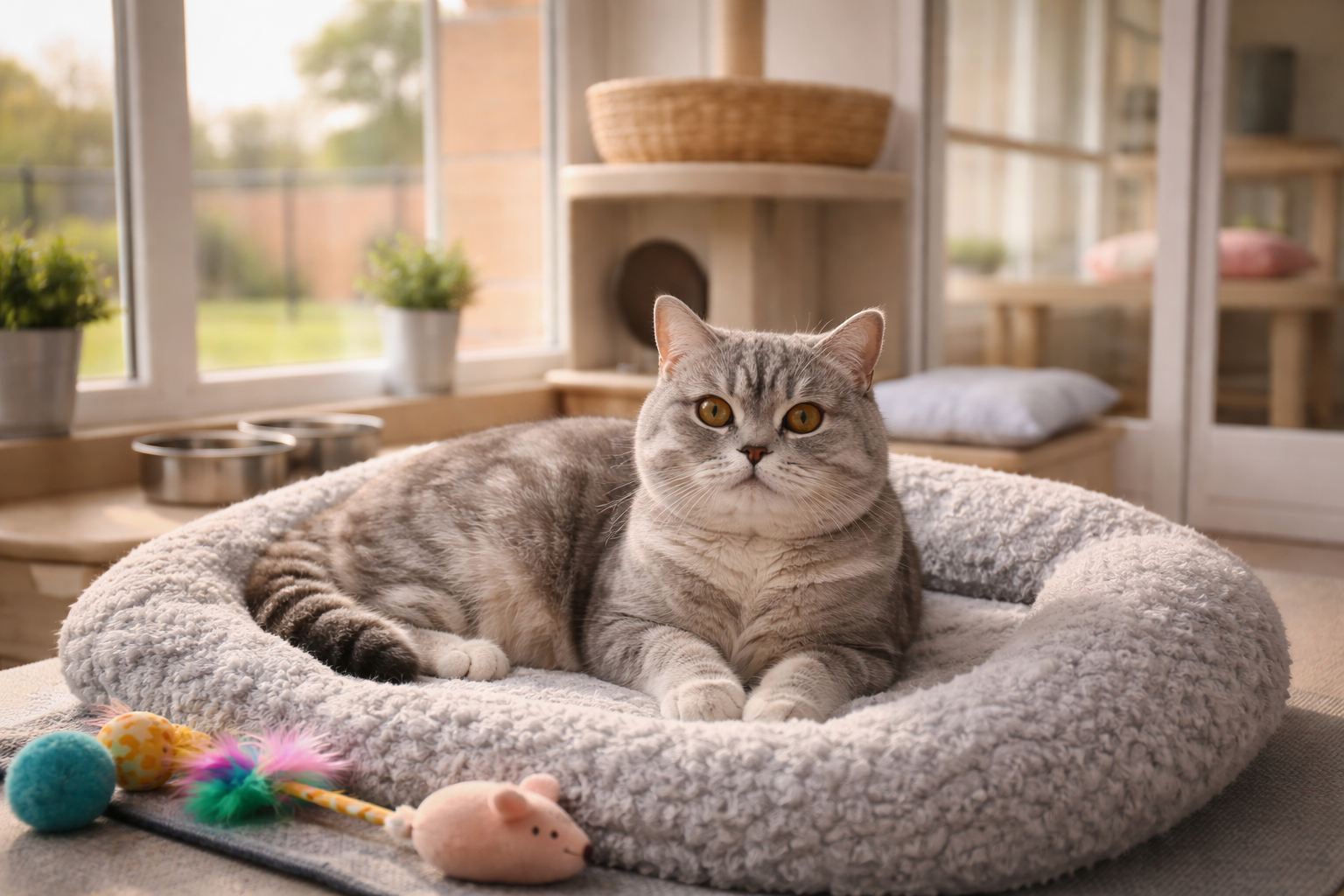
Finding the right boarding facility for your cat involves more than just checking availability. In England, all cat boarding facilities require licensing under the Animal Welfare (Licensing of Activities Involving Animals) (England) Regulations 2018, with Wales having similar requirements under separate legislation. The best catteries and luxury pet hotels combine regulatory compliance with genuine care, but knowing what to look for makes all the difference.
Key Takeaways
- All commercial cat boarding facilities in England must hold a licence under the 2018 Animal Welfare Regulations
- Visit any facility in person before booking, reputable operators welcome tours
- Verify current vaccinations are required at least 2 weeks before admission
- Pricing typically ranges from £12-35 per night depending on location and facility type
- Book early for peak periods, many facilities have limited spaces and minimum stay requirements
- Check 24/7 emergency procedures and veterinary arrangements before booking
Step 1: Research Licensed Facilities
Start by identifying licensed facilities in your area and understanding your options. Don't just book the first available option, your research now prevents problems later.
Traditional Catteries vs Luxury Cat Hotels
Traditional catteries focus on safe, clean accommodation with individual pens, outdoor runs, and basic care. Think secure, practical facilities where your cat gets fed, cleaned, and monitored daily. Most charge £12-20 per night and cater well to cats who prefer quiet environments.
Luxury cat hotels offer premium amenities, larger suites, entertainment systems, grooming services, and enhanced enrichment activities. Expect to pay £25-35 per night for features like climbing towers, heated floors, or webcam access. Some even provide daily updates with photos.
Both must meet the same licensing standards for safety and care. The difference lies in comfort level and extras, not basic welfare requirements.
Essential Licensing and Certifications to Verify
In England, the Animal Welfare (Licensing of Activities Involving Animals) (England) Regulations 2018 require all commercial cat boarding operations to hold a licence from their local council. Wales has similar requirements under separate legislation. Scotland and Northern Ireland operate different regulatory systems.
Licensed facilities receive star ratings from 1-5 based on standards that exceed minimum requirements. Higher-rated facilities undergo less frequent inspections, potentially every 2-3 years rather than annually.
Every legitimate cat boarding facility must display their licence certificate prominently. Check the licence covers your booking dates and matches the business name exactly. You can verify licensing status with the local council if unsure.
Accommodation Standards and Space Requirements
Regulations specify minimum space requirements, but quality facilities typically exceed these. Each cat should have separate areas for sleeping, eating, and toileting within their accommodation. Outdoor access through secure runs is common but not mandatory.
Look for proper heating, ventilation, and natural lighting. The accommodation should be easy to clean thoroughly between guests, with non-porous surfaces and adequate drainage.
Staff Qualifications and 24/7 Care Availability
While specific qualifications aren't legally mandated, competent staff are required. Many facilities employ people with animal care qualifications or veterinary backgrounds, but experience and genuine cat knowledge matter more than certificates.
Ask what "24/7 care" actually means. Some facilities have staff sleeping on-site, others use monitoring systems with on-call arrangements. Both can work, but understand exactly what coverage your cat receives overnight.
Health and Safety Protocols
All cats must be fully vaccinated against feline panleukopenia, feline calicivirus, and feline herpesvirus. Vaccination timing varies by vaccine type, some require 2 weeks between vaccination and boarding, others less. Confirm requirements when booking.
Facilities should require proof of recent worming treatment and flea prevention. Many also request a health check from your vet within a specified timeframe before boarding.
Ask about their procedures if a cat becomes unwell during their stay. They should have arrangements with a local veterinary practice and clear protocols for contacting you immediately.
Step 2: Evaluate Your Options
Once you've identified potential facilities, dig deeper with specific questions and visits. The responses tell you as much about their standards as their facilities do.
Facility Tour Checklist and Red Flags to Spot
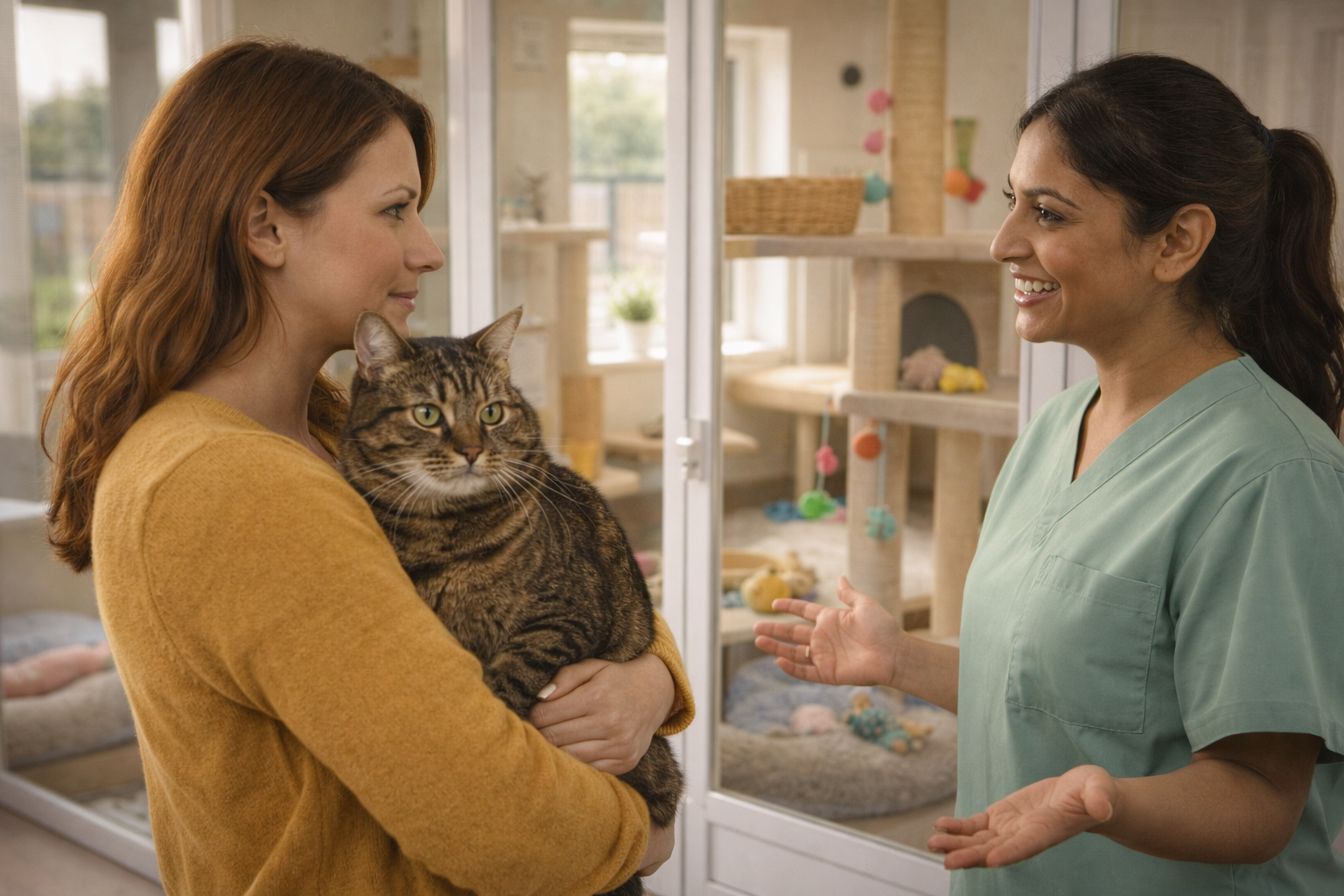
Any reputable facility welcomes pre-booking visits. If they won't let you tour the accommodation areas, look elsewhere.
During your visit, check:
- Cleanliness and odour levels throughout the facility
- Secure boundaries and double-door entry systems
- Cats appearing relaxed and well-cared for
- Staff interacting positively with animals in their care
- Clear separation between different cats to prevent disease transmission
Red flags include reluctance to show accommodation areas, strong ammonia odours suggesting poor cleaning, overcrowding, or staff who seem rushed or disinterested in the animals.
Daily Care Standards and What to Expect
Understanding daily routines helps set realistic expectations and reduces anxiety about leaving your cat in someone else's care.
Most facilities maintain consistent feeding schedules, typically twice daily with dry food available throughout the day. Staff usually spend individual time with each cat for socialisation and health monitoring.
Many facilities provide updates during longer stays, daily for luxury hotels, every few days for standard catteries. Some offer photo updates or webcam access for an additional fee.
Emergency procedures vary, but all licensed facilities must have arrangements for urgent veterinary care and immediate owner contact. Clarify these procedures and ensure your emergency contact information stays current.
Understanding Pricing Structures and Value
Most facilities charge per night, but check what's included. Basic rates typically cover accommodation, feeding with standard food, daily cleaning, and basic care. Extras might include premium food, medication administration, grooming, or collection/delivery services.
Typical rates range from £12-35 per night depending on location and facility type. Budget catteries in rural areas might charge £12-15, standard facilities £18-25, and luxury cat hotels £25-35 per night.
London and South East England command premium prices, often 30-40% above national averages. Northern England, Scotland, and Wales generally offer more affordable options without compromising on care standards.
Ask about minimum stay requirements, many facilities require 5-7 day minimums during peak periods. Some charge collection fees for stays under certain lengths.
Peak season supplements of £5-10 per night are common during summer holidays, Christmas, and Easter periods. Some facilities also charge premium rates for single-night stays or last-minute bookings.
Clarify VAT inclusion. Budget facilities often quote £12-15 plus VAT, while premium facilities usually quote inclusive rates of £25-35.
Special Needs Accommodation
If your cat requires medication, specific diets, or has behavioural needs, discuss this upfront. Not all facilities can accommodate every requirement, and additional charges often apply.
For anxious cats, ask about quiet areas, extra settling-in time, or facilities that limit the number of cats they accept simultaneously.
Additional costs to budget for include vaccination requirements (£30-50 if needed), special dietary food, medication administration (£2-5 per day), and collection services (£10-25 depending on distance).
Regional Variations Across the UK
Pricing varies significantly by location. London facilities typically charge £25-35 per night, while rural areas might offer quality accommodation from £12-20. Cities like Leeds and York offer good choice and competitive pricing with established boarding facilities.
Urban areas generally provide more luxury options and specialist services, but rural facilities often offer larger outdoor spaces and quieter environments that suit nervous cats.
Seasonal availability varies too. Coastal areas see peak demand during summer holidays, while all areas experience high demand during Christmas and school holidays.
Step 3: Make Your Decision
With your research and evaluation complete, it's time to compare options and make an informed decision that suits both your needs and your cat's temperament.
Comparing Quotes and Value Propositions
Don't choose solely on price. A £15-per-night facility with poor care standards offers worse value than a £25-per-night facility with excellent standards. Consider what matters most, basic safe accommodation or enhanced comfort and care.
Factor in extra costs like special dietary requirements, medication administration, or extended collection hours. These can significantly impact total costs.
Cancellation Policies and Booking Terms
Understand deposit requirements, typically 50% to secure your booking. Check cancellation terms, especially for peak periods when rebooking might be difficult.
Some facilities offer flexibility for genuine emergencies, others enforce strict policies. Know where you stand before paying deposits.
Booking Process and Deposit Requirements
Most facilities require booking forms detailing your cat's needs, emergency contacts, and veterinary information. Complete these thoroughly, accurate information helps staff provide better care.
Expect to pay deposits 2-4 weeks before your booking, with final payment on collection. Some accept payment during drop-off, others require settlement in advance.
Book 4-6 weeks ahead for peak periods like summer holidays and Christmas. For off-peak times, 2-3 weeks is usually sufficient, though popular facilities fill up faster.
Preparing Your Cat for Their Stay
Bring familiar items, their usual bedding, favourite toy, or something with your scent. Most facilities welcome these comfort items and often recommend them for settling anxious cats.
Stick to your cat's normal routine in the days leading up to boarding. Sudden changes in food or schedule can increase stress levels.
Consider a brief socialisation visit if the facility offers this. Some cats benefit from a short preliminary visit to familiarise themselves with the environment.
Frequently Asked Questions
How far in advance should I book cat boarding?
Book 4-6 weeks ahead for peak periods like summer holidays and Christmas. For off-peak times, 2-3 weeks is usually sufficient, though popular facilities fill up faster.
What vaccinations does my cat need for boarding?
All facilities require vaccinations against feline panleukopenia, feline calicivirus, and feline herpesvirus. Vaccinations must be current and given at least 2 weeks before boarding (timing varies by vaccine type).
Can I visit the cattery before booking?
Yes, and you should. Reputable facilities welcome tours and often encourage them. Any facility that won't let you see the accommodation areas should be avoided.
What should I bring when dropping off my cat?
Bring vaccination certificates, emergency contact details, feeding instructions, any medication with clear dosing instructions, and familiar comfort items like bedding or toys.
How much does cat boarding cost in the UK?
Expect £12-35 per night depending on location and facility type. Budget catteries charge £12-18, standard facilities £18-25, and luxury cat hotels £25-35 per night. London and South East England are typically 30-40% above these ranges.
What happens if my cat gets ill during boarding?
Licensed facilities must have arrangements with local veterinary practices for emergency care. They should contact you immediately if your cat needs veterinary attention and follow your wishes regarding treatment decisions.
Choosing the right cat boarding facility takes research, but the peace of mind during your time away makes it worthwhile. Focus on licensing compliance, facility cleanliness, staff competence, and clear emergency procedures. Compare boarding facilities in your area to find options that match your cat's needs and your budget.