
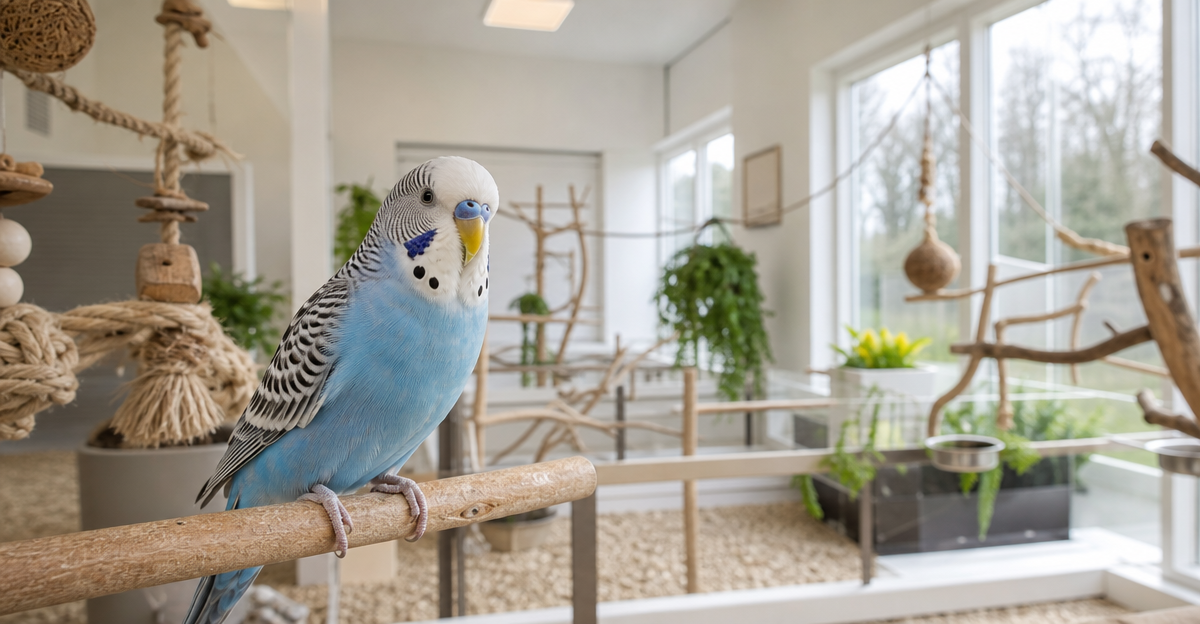
Finding genuinely good bird boarding services in the UK is harder than it looks. Unlike dogs and cats, birds have physiological needs that most standard boarding facilities simply aren't equipped to meet, and the consequences of getting it wrong can be serious. This guide walks you through every stage, from deciding what type of facility suits your bird to the exact questions you should ask before you hand over the travel cage.
Key Takeaways
- Bird boarding is a specialist service. Not all pet hotels accept birds, and not all that do have genuine avian expertise.
- Birds are uniquely vulnerable to airborne toxins, temperature swings, and stress, which makes facility choice critical.
- Pricing varies widely by species and region. Based on published rates from Hest Bank Avian Retreat in Lancaster, costs range from around £3 per day for finches up to £10 per day for macaws.
- Always visit a facility before booking and ask specific questions about air quality, cleaning products, and emergency vet access.
- Specialist avian facilities, especially those accepting large parrots, book up quickly. If you're travelling during school holidays, start looking months ahead.
- Tailstays lists over 2,700 pet hotels across the UK. Use the filters to find bird-friendly facilities near you.
Why Bird Boarding Is Different From Dog or Cat Boarding
Birds are physiologically fragile in ways that catch even experienced pet owners off guard. Their respiratory systems are extraordinarily efficient, which is precisely what makes them so vulnerable: airborne substances that a dog or cat would process without issue can be fatal to a bird within minutes. It's one of the reasons bird boarding services sit in a category of their own.
The most documented hazard is PTFE (polytetrafluoroethylene), the coating used on non-stick cookware. When overheated, it releases fumes that are harmless to humans but lethal to birds. What's less well known, and largely absent from boarding facility guidance, is that scented candles, plug-in air fresheners, aerosol sprays, essential oil diffusers, and even some cleaning chemicals carry similar risks. These hazards are well recognised among experienced bird owners, yet many boarding facility websites don't address them at all. That silence is itself a red flag.
Beyond air quality, birds face stress-related illness in ways mammals don't. A stressed parrot may stop eating, begin feather-destructive behaviour, or develop a serious illness within days. Social context matters too: flock species such as budgies, cockatiels, and finches generally tolerate communal environments well, while pair-bonded or solitary species like African Greys and macaws can find a multi-bird boarding environment deeply distressing.
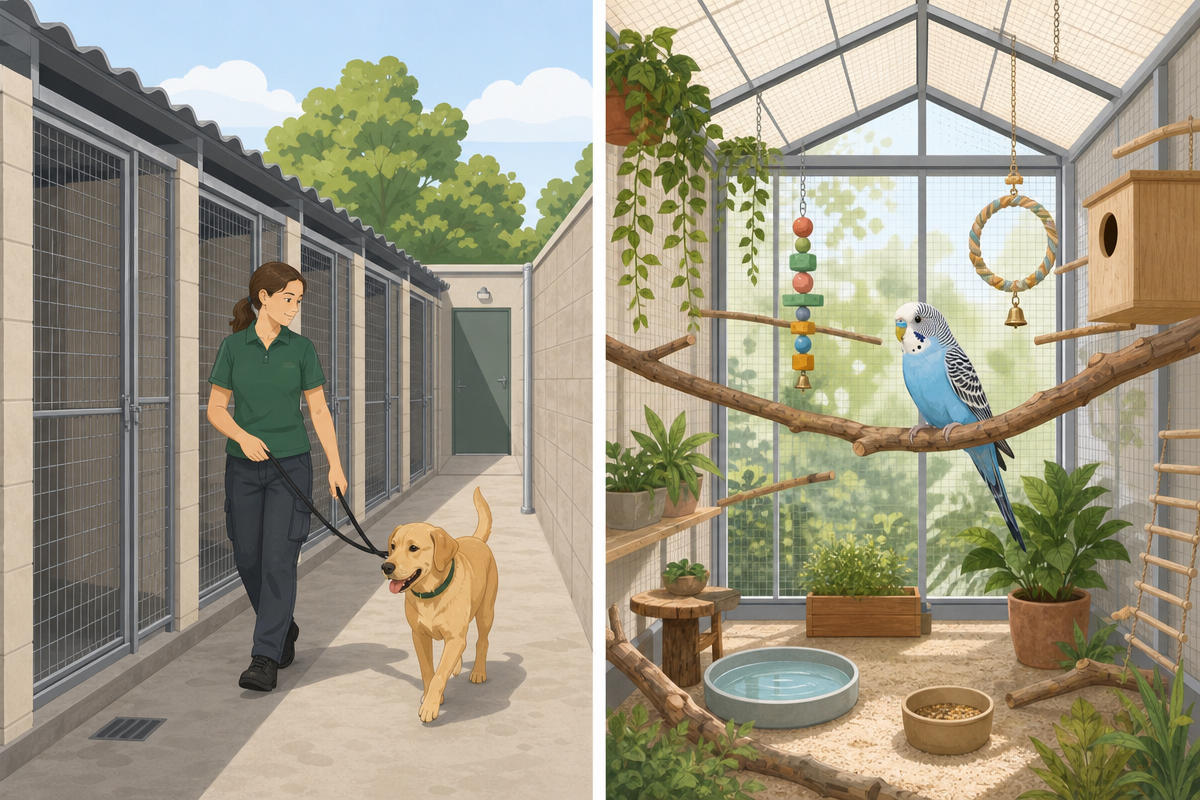
A standard cattery or kennel, however well run, is rarely an appropriate environment for a bird. The sounds, smells, and unfamiliar surroundings that cats and dogs adapt to are actively harmful for many avian species. This isn't a criticism of those facilities. It's simply a different set of needs.
Home-based bird sitting, arranged informally through gig-economy platforms, carries its own risks. There's no professional oversight, no requirement for avian knowledge, and no emergency vet relationship. For a robust small bird staying with a genuinely experienced bird keeper, it can work well. For a parrot, the risks usually outweigh the convenience.
Choosing the Right Type of Bird Boarding
Dedicated Avian Facility vs Mixed Pet Hotel
Dedicated avian boarding facilities, such as Hest Bank Avian Retreat in Lancaster, are purpose-built for birds. Staff are trained specifically in avian care, hygiene protocols are designed around bird welfare, and there are no dogs or cats on site creating noise and stress. For parrots and other sensitive species, this is usually the gold standard.
Mixed pet hotels that also accept birds offer wider geographic coverage. They can be perfectly suitable, particularly for small birds, but the level of avian expertise varies enormously. Some have dedicated bird areas and knowledgeable staff. Others have simply ticked a box on a form. The difference isn't always visible from a website.
Home-based bird boarding, where someone looks after your bird in their own home, sits at the informal end of the spectrum. It tends to cost less and offers a quieter, less institutionalised environment. For small, hardy birds with an experienced keeper, this can be a good option. For parrots or exotic species, the lack of professional oversight and emergency protocols makes it a higher-risk choice. See the FAQ below for a fuller comparison.
What Species Complexity Means for Your Search
Your bird's species is the single biggest factor in determining how many suitable facilities actually exist near you.
- Small birds (budgies, canaries, finches, cockatiels): The widest pool of suitable facilities. Many mixed pet hotels and experienced home boarders can provide appropriate care.
- Medium birds (ringneck parakeets, conures, lovebirds): Require more handling experience, out-of-cage time, and enrichment. Fewer facilities will have staff confident with these species.
- Large parrots (African Greys, macaws, cockatoos): Genuinely specialist knowledge is non-negotiable. These birds need daily enrichment, social interaction, and experienced handling. The pool of facilities that can honestly claim to meet these needs is small. Don't be reassured by a facility that says it accepts parrots without being able to demonstrate why.
- Exotic or rare species: May require a facility with a direct relationship with an avian vet practice. Some avian vet practices offer boarding themselves, or can point you to facilities they trust.
If you have a large parrot, see the FAQ section for guidance on how far in advance to book.
You can start searching by location on Tailstays and filter by pet type to find bird-accepting facilities near you. If you keep other small animals too, our guide to small animal boarding in the UK covers holiday care for rabbits, guinea pigs, and exotic pets.
What to Look For in a Bird Boarding Facility
Physical Environment
The first thing to check is separation. Birds should be housed in a completely separate area from dogs and cats, not just in adjacent rooms. The sounds and smells of predator species are a genuine stressor for birds, even when there's no direct contact.
Temperature consistency matters more for birds than for most mammals. Draughts, sudden temperature drops, and overheating can all trigger illness. Hest Bank Avian Retreat publishes that its facility uses Eco climate control systems to maintain a consistent, comfortable temperature, which is a useful benchmark of what best practice looks like.
Cage sizing should be appropriate for the species, and larger parrots should have access to supervised out-of-cage time and enrichment. A macaw kept in a small cage with nothing to interact with will deteriorate quickly, behaviourally and physically.
On hygiene, look for facilities that use avian-safe disinfectants. F10 is widely regarded as the industry standard in avian settings. Hest Bank publishes that food and water bowls are sterilised and cages cleaned daily. That level of transparency is what you should expect from any reputable facility.
Staff Knowledge and Experience
Ask directly. Can staff identify the early signs of illness in a bird? Puffing up, lethargy, a change in droppings, reduced vocalisation, and reduced food intake are the key indicators. A general kennel worker may not recognise these as urgent. In a bird, they often are.
Do they have experience with your specific species? Looking after a budgie is very different from managing an African Grey. The handling, enrichment, and behavioural cues are not interchangeable.
Most importantly: does the facility have a named avian vet they work with? Not just a general practice down the road, but a vet with actual avian experience. Birds deteriorate fast. An emergency contact that doesn't know how to treat a parrot is not much of a safety net.
Feeding and Routine
Birds thrive on routine. A disrupted diet combined with a strange environment is a reliable recipe for stress. Ask whether the facility will accommodate your bird's existing diet, whether you can bring familiar food, and whether they'll maintain your bird's daily schedule as closely as possible.
For large parrots especially, out-of-cage interaction time isn't optional. It's a welfare requirement. A facility that doesn't offer this for parrot boarders is not offering appropriate parrot boarding, whatever their marketing says.
Health and Admission Policies
Any reputable facility will insist your bird is healthy on arrival. A facility that accepts visibly unwell birds is taking a risk with your bird and every other bird on site. Ask whether they screen for recent illness or exposure to sick birds before admission.
Infectious disease is a genuine risk in multi-bird environments. Psittacine Beak and Feather Disease (PBFD), Avian Bornavirus, and Psittacosis can all spread between birds in a boarding context. A pre-boarding vet health check, particularly for parrots, is strongly recommended regardless of whether the facility requires one.
On insurance and liability, most reputable facilities board birds at the owner's risk. Check whether the facility carries its own commercial liability insurance, and understand that this is not a legal requirement under UK regulations. It's worth clarifying in writing what happens in the event your bird becomes ill or is injured during their stay.
Questions to Ask Before You Book
Visit in person before committing. No reputable avian boarding facility will refuse a viewing. Use the visit to ask the following:
- Is your facility dedicated to birds, or do you also board dogs and cats? How are the areas separated?
- What avian experience do your staff have? Have they worked with my specific species?
- Which avian vet do you use in an emergency, and how far away are they?
- What disinfectants do you use? Are they bird-safe, such as F10?
- Do you use non-stick cookware anywhere on site? Do you use air fresheners, scented candles, or essential oil diffusers?
- Can I bring my bird's own cage, food, and toys?
- What is your procedure if my bird shows signs of illness during their stay?
- Will my bird have supervised out-of-cage time? How often and for how long?
- Can you send updates or photos during the stay?
- What are your admission and discharge procedures, and what documentation do you need from me?
Pay attention not just to the answers, but to how confidently they're given. Hesitation on the question about safe cleaning products, or vagueness about the emergency vet, tells you something important.
Red Flags to Walk Away From
Some things should end the conversation immediately. Walk away from any facility where you encounter the following:
- No physical separation between birds and dogs or cats.
- Staff who cannot answer basic questions about signs of illness or safe cleaning products.
- No named avian vet or emergency plan.
- No admission health screening of any kind.
- Non-stick cookware used anywhere on site, or the use of aerosols, air fresheners, scented candles, or essential oil diffusers.
- Refusal to allow a visit before booking.
- No published or readily explained hygiene protocols.
It's also worth knowing that online directories, including the community-sourced list maintained by Northern Parrots (which Northern Parrots explicitly notes it does not endorse or verify), can contain geographic errors. For instance, that list groups facilities from Lincolnshire under "North East England" and places facilities from Peterborough under "London and South East England." Use directory listings as a starting point, then verify everything independently.
Preparing Your Bird for Boarding
A little preparation makes a significant difference to how well your bird copes, especially if it's their first time away from home.
- Introduce a travel cage early. If your bird will be staying in a different cage or aviary, acclimatise them to a temporary cage at home for a week or two before the stay.
- Get a vet health check. For any stay longer than a few days, particularly for parrots, a pre-boarding check with an avian vet is worth doing. It gives you peace of mind and flags any underlying issues before they become a problem in a boarding environment.
- Pack familiar items. A favourite toy, a familiar perch, a small piece of familiar bedding. These things genuinely help reduce stress.
- Write detailed care notes. Include feeding schedules, preferred foods, behavioural quirks, any medications with dosage instructions, and anything the staff should know about how your bird normally behaves.
- Authorise emergency treatment in writing. Name a contact person who can make decisions if you're unreachable, and be clear about whether you authorise emergency veterinary treatment and who is responsible for the associated costs.
- Acclimatise to new people. If possible, introduce your bird to unfamiliar people in the weeks before the stay. It won't replicate the boarding environment, but it helps.
Much of this mirrors the settling-in advice we give nervous dog owners in our guide on first-time boarding. The principle holds across species: familiarity reduces stress.
What Does Bird Boarding Cost in the UK?
Pricing for bird boarding services varies considerably by species, facility type, and location. Based on published rates from Hest Bank Avian Retreat in Lancaster, here is a realistic guide to what specialist avian boarding costs at a dedicated facility:
| Species | Approximate daily rate |
|---|---|
| Finch | From £3/day |
| Budgerigar / Canary / Cockatiel | From £4/day |
| Ringneck Parakeet | From £6/day |
| African Grey | Around £7/day |
| Macaw | Around £10/day |
Hest Bank also offers a paired rate for two birds sharing a cage, which represents a discount on two individual bookings. Its published pricing labels this as a "two sharing" daily rate, but it's worth confirming directly whether that figure is per bird or for the pair combined, as the table presentation can be read either way.
Facilities in London and the South East typically charge a premium above these figures. Collection and delivery services, where offered, are generally priced separately.
Home-based informal sitters arranged through platforms like Airtasker may advertise rates of £8 to £10 per day, sometimes lower, based on publicly advertised rates. The cost saving is real. So is the trade-off: no regulatory oversight, no guaranteed avian knowledge, and no emergency vet relationship. Whether that balance makes sense depends entirely on the individual sitter and your bird's needs.
Always confirm pricing directly with any facility before booking. Published rates on websites are not always kept up to date.
How to Find Bird Boarding Near You
Bird-accepting facilities are a subset of the broader pet hotel market. Tailstays lists over 2,700 pet hotels across the UK, with strong coverage in cities including London, Leeds, York, Nottingham, and Bristol. Filtering by pet type lets you narrow these down to facilities that accept birds, giving you a searchable, location-based starting point that static lists can't match.
The Northern Parrots website maintains a community-sourced list of parrot boarding facilities across the UK. Northern Parrots explicitly states it is not affiliated with any of the businesses listed and does not verify quality standards. It's a useful reference, but treat it as a starting point. The list contains geographic errors, including facilities from Lincolnshire categorised under North East England and a Peterborough-based facility listed under London and South East England. Cross-check any listing before relying on it.
Avian vet practices are an underused resource for finding boarding. Many have working relationships with local boarding facilities they trust, and some offer boarding themselves. A recommendation from your avian vet carries more weight than a community forum post.
Local parrot and bird owner groups on Facebook and specialist forums can also surface genuine owner experiences. Just bear in mind that these recommendations reflect individual experiences, not quality-assured assessments. If you're planning to book, our advice on choosing small pet boarding covers the same instinct that should guide any bird owner: verify before you commit.
Frequently Asked Questions
Do birds need vaccinations before boarding in the UK?
The UK does not currently require routine vaccination for pet parrots or small birds before boarding. However, some facilities ask for a vet health certificate confirming your bird was in good health shortly before the stay. Always check the specific facility's requirements. Regardless of what's asked of you, a pre-boarding vet check is genuinely worth doing, particularly for parrots. Infectious diseases including Psittacine Beak and Feather Disease (PBFD), Avian Bornavirus, and Psittacosis can spread in boarding environments, and early detection of any underlying health issue is far better than managing a problem mid-stay.
Can my bird be boarded with other birds?
Some facilities offer shared aviaries for compatible species, which can work well for flock birds like budgies or finches. For parrots, individual housing is generally safer unless the birds are already bonded. Ask explicitly how your bird will be housed, and whether there is any contact between birds from different households. Co-housing increases the risk of disease transmission and, for territorial species, stress-related injury.
What happens if my bird becomes ill during boarding?
A reputable facility will have a named avian vet and should contact you, or your nominated emergency contact, immediately. Before the stay, make sure your written care notes include explicit authorisation for emergency veterinary treatment, the name and number of your own avian vet, and clarity on who is responsible for any costs incurred. Don't assume these details are automatically handled. Put them in writing and confirm the facility has read them.
Is home bird-sitting safer than a boarding facility?
Neither is inherently safer. It depends on the individual. A home sitter avoids the disease transmission risk that comes with a multi-bird facility, and a quieter domestic environment can suit some birds better. But a home sitter has no professional oversight, no guaranteed avian knowledge, and typically no emergency vet relationship. A good avian boarding facility offers trained staff, structured hygiene protocols, and an emergency plan. For robust small birds with a genuinely experienced home sitter, informal arrangements can work well. For parrots and sensitive species, the structured environment of a specialist facility is usually the lower-risk option.
How far in advance should I book bird boarding?
Earlier than you think. The pool of facilities with genuine avian expertise, particularly those experienced with large parrots, is small. Popular specialist facilities can fill up months in advance during school holidays and peak summer periods. If you know your travel dates, start your search as soon as possible. Last-minute options for parrots, specifically, are genuinely limited in most parts of the UK.