
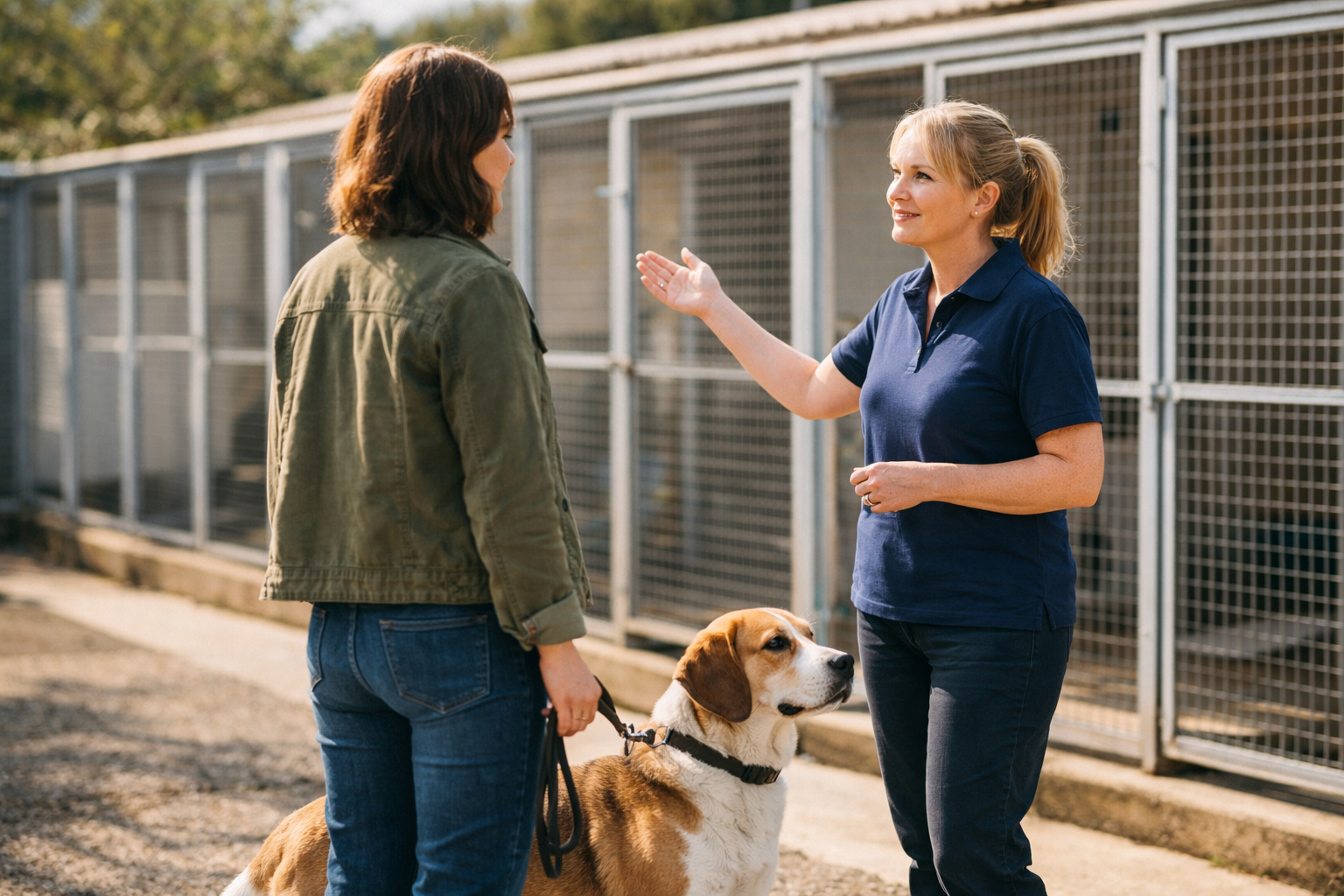
Checking if a kennel is licensed should be your first step before booking dog boarding. Every commercial kennel in England must hold a valid licence under the Animal Welfare (Licensing of Activities Involving Animals) (England) Regulations 2018, with Wales having similar requirements under separate legislation. Here's exactly how to verify this yourself.
Key Takeaways
- All commercial kennels in England need a licence — check your local council's public register to verify
- Licensed kennels must display their licence number and star rating (1-5) prominently on premises and websites since October 2018
- Use your postcode on gov.uk to find your local licensing authority — usually your district or borough council
- Red flags include no visible licence display, reluctance to share licence details, or claims of exemption from licensing
Why Kennel Licensing Matters for Your Dog's Safety
Licensed kennels have passed rigorous inspections covering everything from accommodation standards to emergency procedures. The Animal Welfare (Licensing of Activities Involving Animals) (England) Regulations 2018 set minimum standards for space, temperature, staffing, and veterinary care.
Unlicensed facilities operate without oversight. You have no guarantee they meet basic welfare standards, carry appropriate insurance, or follow proper emergency protocols. This puts your dog at unnecessary risk.
Licensed kennels receive a star rating from 1-5 stars based on DEFRA guidance. Higher-rated facilities (4-5 stars) exceed minimum standards and face less frequent inspections — typically every 2-3 years rather than annually. Lower-rated facilities require more regular monitoring.
Step 1: Find Your Local Licensing Authority
Start by identifying who licenses kennels in your area. Use the government's local council finder service to locate your licensing authority.
Most licensing is handled by district or borough councils, but some areas use shared services across multiple councils. For instance, several councils might jointly manage licensing through a central team.
Make note of your council's exact name — you'll need this to access their public register. If you're near council boundaries, the kennel might be licensed by a neighbouring authority.
Step 2: Access Your Council's Public Register
Every licensing authority maintains a public register of licensed animal activities. Search for "animal boarding licence register" or "animal activities licensing" on your council's website.
Most councils provide online registers showing business names, addresses, licence numbers, star ratings, and expiry dates. Some councils require you to phone or email their licensing team instead.
If you can't find the register online, contact the council directly. Ask for their "animal activities licensing register" or "boarding kennel licence list". This information is publicly available — they cannot refuse reasonable requests.
Step 3: Verify the Licence Details
Once you've found the kennel on the register, check these key details:
Licence number: Should match what's displayed at the kennel premises and on their website. Licence numbers typically include the council code and year of issue.
Star rating: Ranges from 1-5 stars. Higher ratings indicate the kennel exceeds minimum standards in areas like enrichment activities, staff training, or facility design.
Expiry date: Licences run for 1-3 years depending on the star rating. Check the kennel's licence hasn't expired.
Business address: Must match the kennel's operating location exactly. Multi-site businesses need separate licences for each location.
Since October 2018, licensed kennels must display their licence prominently on premises and show their name and licence number on any website they operate.
Red Flags: When a Kennel Cannot Provide Licence Information
Licensed kennels are legally required to display their licence clearly. Be wary if:
- No licence is visible at the premises during your visit
- Staff cannot or won't provide the licence number when asked
- The kennel claims exemption from licensing (commercial dog boarding always requires a licence)
- Their website shows no licence information
- They say they're "waiting for renewal" but cannot show an existing valid licence
If you suspect a kennel is operating without a licence, report this to the local council's licensing team. They can investigate and take enforcement action if needed.
Understanding Your Council's Licensing System
Councils apply the same national regulations but manage their registers differently. Some provide detailed online databases with photos and inspection reports. Others offer basic lists with minimal details.
Licence duration varies by star rating — higher-rated kennels typically receive longer licences (up to 3 years) while newer or lower-rated facilities get annual licences requiring more frequent renewal.
Inspection frequency is risk-based. A 5-star kennel with no compliance issues might be inspected every 3 years, while a 1-star facility faces annual inspections until standards improve.
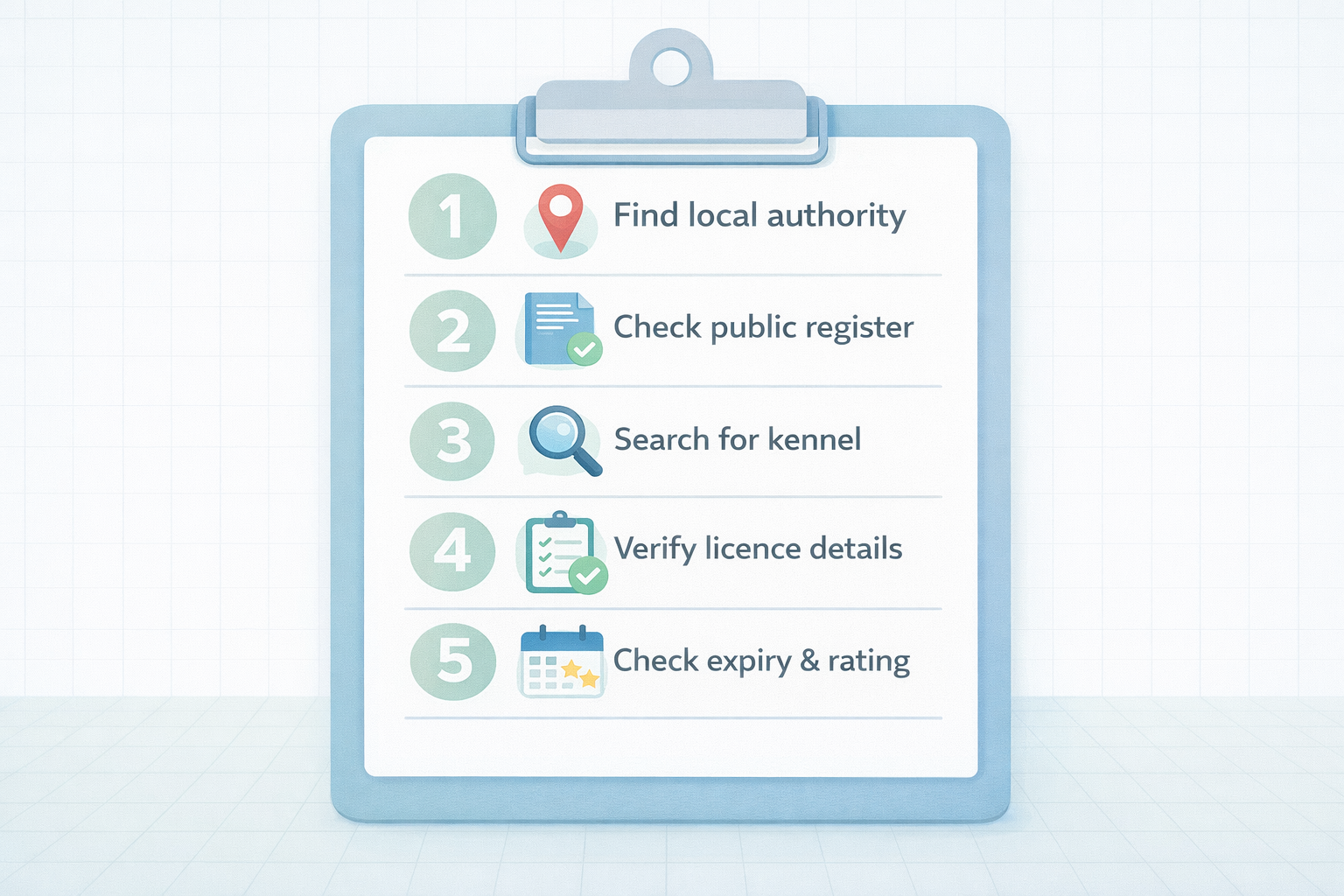
5-Step Verification Checklist
- Find your licensing authority using the government's local council finder
- Locate their public register online or contact the licensing team directly
- Search for the kennel by business name or address
- Check the licence details match what's displayed at the premises/website
- Verify the expiry date and star rating are current
Once you've completed these verification steps, you can book with confidence knowing your chosen kennel meets all legal requirements. Find boarding options in your area on Tailstays.
Frequently Asked Questions
What if a kennel claims exemption from licensing?
All commercial dog boarding requires a licence in England under the 2018 Regulations. There are no exemptions for small operations or occasional boarding. If a kennel claims exemption, they're likely operating illegally.
Do home boarders need licences too?
Yes, home boarding (where your dog stays in the carer's home) requires the same licence as traditional kennels. The regulations apply equally to both. Only dog sitting in the owner's own home is generally exempt.
How often are kennel licences renewed?
Licence duration depends on the star rating. Higher-rated facilities (4-5 stars) typically get 2-3 year licences, while newer or lower-rated kennels receive annual licences requiring more frequent renewal and inspection.
Can I check a kennel's inspection history?
Some councils publish inspection reports on their public registers, but this varies by authority. You can request inspection records under Freedom of Information if they're not publicly available, though reports may be redacted.
What should I do if I find an unlicensed kennel?
Report unlicensed operations to your local council's licensing team immediately. They have enforcement powers including prosecution and closure orders. Also report to RSPCA if you suspect animal welfare issues.