
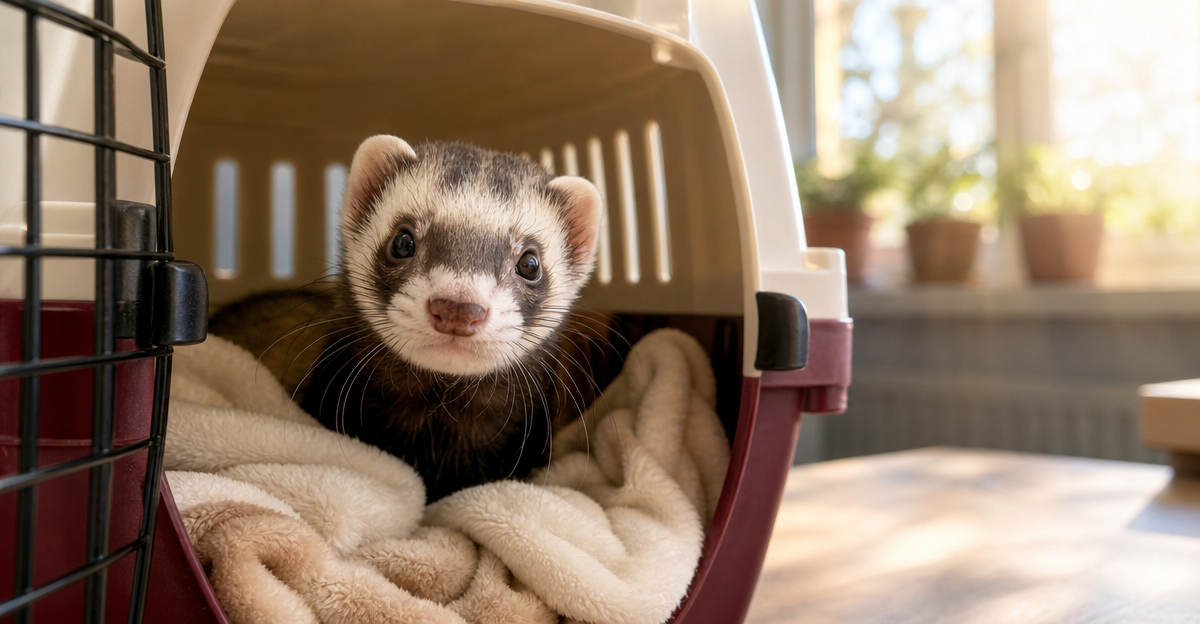
Finding a ferret sitter is genuinely harder than finding someone to look after a cat or dog. Ferrets are obligate carnivores with a fast metabolism, specific health vulnerabilities, and a daily routine that demands real commitment. Getting the match wrong isn't just inconvenient; it can put your ferrets at risk.
This guide covers what makes ferret care distinct, how the three main sitting options compare, how to screen a prospective ferret sitter, and how to hand over confidently before you leave.
Key Takeaways
- Ferrets are mustelids, not rodents. Sitters who lump them in with hamsters, guinea pigs, and rabbits are working from the wrong baseline.
- Ferrets need high-protein, meat-based food. Fruit, vegetables, and sugary treats are harmful and can contribute to insulinoma over time.
- Daily care involves 6 to 8 small meals (or ad-lib kibble access), daily litter tray cleaning, and at least one hour of supervised out-of-cage time as a floor, not a target.
- UK options include specialist ferret boarders, house-sitters who come to your home, and generalist pet sitting platforms. Each comes with trade-offs.
- Specialist ferret boarders are geographically patchy. Rural owners may need to plan further ahead or lean on community networks.
- Tailstays lists over 2,700 pet-friendly hotels across the UK, useful context if you're travelling and need to plan around your ferrets' care arrangements.
Your Three Options Compared
There are three realistic options for ferret care while you're away. The table below summarises the key differences, and the sections that follow explain each in more detail.
| Specialist Boarder | House-Sitter / In-Home | Generalist Platform | |
|---|---|---|---|
| Ferret expertise | High: typically keeps ferrets themselves | Variable: depends entirely on the individual | Low to variable: "accepts ferrets" is not the same as experienced |
| Familiar environment | No: ferrets travel to the boarder | Yes: ferrets stay in their own home | Either, depending on service type booked |
| Availability | Patchy: concentrated in urban areas | Depends on local sitter pool | Widest availability nationally |
| Facility quality | Usually purpose-built enclosures, ferret-proofed free-roam | Your own home, so you control the setup | Varies widely; visit before booking |
| Vet access | Often has an existing exotic vet relationship | Relies on your briefing and prep | Relies on your briefing and prep |
| Licensing | Should hold local council licence for commercial boarding | Informal arrangements may not require one | Platform-dependent; check before booking |
| Typical cost | Higher: specialist premium applies | Mid-range: varies by sitter and visit frequency | Varies by platform and location; check directly |
| Best for | Older ferrets, health conditions, multi-ferret households | Settled ferrets in routine, rural locations | Owners who can screen thoroughly and vet carefully |
Why Ferrets Need a Specialist Sitter, Not Just Any Pet Sitter
Most pet sitters who say they accept small animals mean they're comfortable with rabbits, guinea pigs, and hamsters. That's a completely different skillset from ferret care, and confusing the two is where things go wrong.
Ferrets Are Mustelids, Not Rodents
This matters more than it sounds. Rodents (order Rodentia) and mustelids (family Mustelidae, which includes ferrets, otters, and weasels) are biologically distinct. Their dietary needs, digestive systems, and behavioural patterns are fundamentally different. A guide that groups ferrets with hamsters and guinea pigs, as some popular pet sitting platforms do, is working from a flawed premise that could lead a sitter to make genuinely dangerous choices.
The most common consequence is offering fruit, vegetables, or grain-based treats that would be perfectly fine for a guinea pig. For a ferret, these are harmful. Ferrets are obligate carnivores with a short digestive tract; their bodies are not equipped to process plant matter effectively, and repeated exposure to sugary foods has been linked to insulinoma, a serious pancreatic condition. A sitter who reads that ferrets are "similar to rodents" may not grasp why the fruit bowl is off limits. It's the single most avoidable mistake in ferret care, and it starts with a sitter who never learned the difference.
The Daily Care Commitment
Ferrets have a high metabolic rate and a very short digestive transit time, roughly three to four hours. This means they need access to food frequently. Most ferret owners feed 6 to 8 small meals per day, or leave a quality high-protein kibble available ad-lib so ferrets can graze. Either way, the sitter needs to understand that missing a feed or offering the wrong food isn't a minor oversight.
Beyond feeding, expect the following as non-negotiable daily tasks:
- Litter tray cleaning. Ferrets are consistent corner users and will avoid a dirty tray, which creates hygiene and health problems. Daily cleaning isn't optional.
- Out-of-cage time. One hour is widely cited as a minimum, and most ferret welfare resources treat this as a floor, not a target. Healthy ferrets benefit from significantly more enrichment time, and a sitter who views one hour as "job done" may be underselling what your ferrets actually need.
- Social handling. Ferrets kept in groups, referred to as a business, need a sitter who is comfortable managing several animals at once, including the occasional nip from a ferret that's startled or still young.
Health Risks a Sitter Must Recognise
Ferrets are susceptible to heatstroke at temperatures that would feel merely warm to a human. Anything above around 26°C can become dangerous, so the sitter's environment must be well ventilated and kept cool, particularly in summer. This isn't a "nice to have" but a welfare requirement.
Ferrets can also contract human influenza. If a sitter is unwell with a cold or flu, they should take precautions: wash hands thoroughly before handling, and ideally avoid close face contact.
Finally, ferrets with insulinoma, a relatively common condition in older ferrets, can experience episodes of hypoglycaemia. Signs include weakness, glazed eyes, drooling, and pawing at the mouth. A sitter who has never heard of insulinoma will not know to take these symptoms seriously. Make sure any sitter you use knows what to watch for and has your vet's contact details before you leave.
Pros and Cons of Each Option
Option A: Specialist Ferret Boarder
- Pros: Genuine ferret knowledge; purpose-built enclosures; ferret-proofed free-roam areas; existing exotic vet relationship; peace of mind for owners of older or unwell ferrets.
- Cons: Geographically rare, so often requires travel; higher cost; ferrets must leave familiar surroundings; advance booking essential.
A dedicated ferret boarder, ideally someone who keeps ferrets themselves, brings genuine knowledge of diet, handling, and health signs. Businesses like Blue Ferret Boarding in the North East do exist, but you may find nothing within a reasonable distance. If you're in a rural area, start looking well before your travel date. For a wider view of professional care specifically for ferrets, our guide to ferret boarding in the UK covers the options in more depth.
On licensing: in England, commercial home boarding is subject to the Animal Welfare (Licensing of Activities Involving Animals) (England) Regulations 2018, with Wales having similar requirements under separate legislation. A legitimate boarding business should hold a licence issued by their local council. It's worth asking to see it.
Option B: House-Sitter or In-Home Pet Sitter
- Pros: Ferrets stay in familiar surroundings; no transport stress; you control the environment and ferret-proofing; often less disruptive for settled ferrets.
- Cons: Relies entirely on sitter knowledge with no facility safety net; your handover briefing becomes critical; vet access depends on your preparation.
A sitter who comes to your home, whether for daily drop-in visits or an overnight stay, removes the stress of transporting your ferrets. The trade-off is that you're relying entirely on the sitter's knowledge. Your handover briefing becomes the most important document in the arrangement. More on that below.
Option C: Generalist Pet Sitting Platforms
- Pros: Widest availability nationally; easy to compare multiple sitters; platforms like Pawshake, PetBacker, and Petsitter.com allow filtering by accepted pet type.
- Cons: "Accepts ferrets" and "experienced with ferrets" are very different things; platform guarantees may be designed around dogs and cats; quality varies enormously.
Rates vary by location, service type, and sitter experience, so check the platform directly for current pricing. Whatever the cost, the screening process matters more than the price. Check what the platform's guarantee actually covers for exotic pets before committing, and read the small print on insurance. If you keep other small animals too, our guide on choosing small pet sitters for rabbits and guinea pigs is a useful companion read, though remember that ferrets sit in a category of their own.
Ready to see what's available near you? Tailstays lets you search and compare pet-friendly options across the UK to help you plan around your ferrets' care.
Verdict: Which Option Is Right for You?
There's no single right answer, but the decision is clearer than it might seem once you know what to prioritise.
A specialist boarder is best if your ferret is older, has a health condition such as insulinoma, or you have a large group that needs experienced management. The expertise premium is worth paying when the stakes are higher, and the peace of mind of knowing your sitter already has an exotic vet relationship is significant. If you can find one within a reasonable distance, this is the gold standard.
House-sitting or in-home care is best if your ferrets are young, healthy, and settled in their routine, particularly if you live rurally where specialist boarders are thin on the ground. Keeping ferrets in familiar surroundings with a well-briefed sitter is often less disruptive than boarding, provided you invest time in the handover. This option rewards thorough preparation more than any other.
A generalist platform is a reasonable option if neither of the above is available and you're willing to screen candidates rigorously. The listing is a starting point, not a quality guarantee. Use the screening questions below to test specific ferret knowledge before you commit, and verify what the platform's insurance actually covers for exotic pets.
Screening Questions to Ask Before You Book
Don't skip this step. A sitter who genuinely knows ferrets will answer these questions confidently. Someone who doesn't will either bluff or admit uncertainty, and either response tells you something useful.
- Have you cared for ferrets before? How many, and for how long? Ask for specifics.
- What would you feed them, and how often? The right answer is a high-protein meat-based diet, either quality kibble available ad-lib or multiple small meals throughout the day. Vague answers about "small animal food" are a warning sign.
- How would you handle out-of-cage time? What does your space look like? You're listening for ferret-proofing awareness: no accessible electrical cables, no toxic plants, no gaps behind furniture or appliances.
- What is your process if a ferret seems unwell or lethargic? A good sitter will mention contacting you immediately and having a vet number ready. Hesitation here is a red flag.
- Are you comfortable cleaning the litter tray daily? If they push back on frequency, that's your answer.
- Do you have experience handling ferrets in a group? Managing several ferrets at once, particularly during out-of-cage time, requires calm confidence.
- Do you have other pets? Dogs and cats with a high prey drive can be a serious risk to ferrets. Temperament matters, but so does the setup.
- What is your nearest exotic-animal-friendly vet? Standard vet practices vary in their ferret experience. Ideally your sitter already has a relationship with an exotic animal vet, or is at least aware of one nearby.
What to Watch for at the Meet-and-Greet
A face-to-face meeting before you book isn't just polite convention. It gives you a chance to observe how the sitter actually behaves around your ferrets, not just how they answer questions on the phone.

Watch how they handle initial contact. Ferrets nip, especially when startled or exploring someone new. A confident, experienced sitter won't flinch or pull away. They'll read the animal's body language and respond calmly. Someone who yelps and drops a ferret at the first nip is not ready for the job.
If you're arranging home boarding, visit the space. Look for a multi-level enclosure with appropriate bedding and enrichment, a free-roam area that has been properly ferret-proofed, and temperature control, which is particularly important in warmer months. The environment should feel clean and considered, not improvised.
Bring your ferrets' own food, bedding, and a couple of familiar toys. A sitter who's genuinely engaged will ask about your ferrets' individual quirks, preferences, and routines. If they don't ask a single question about your animals, that tells you something.
Red flags to note: the sitter refers to ferrets as being "like hamsters"; they can't answer a basic question about diet; they seem uncertain about what out-of-cage time involves; they haven't thought about vet access. Any one of these on its own might be explained away. Several together, and you should keep looking.
Your Pre-Departure Handover Checklist
The handover briefing is where you either set your sitter up to succeed or leave them guessing. Put everything in writing, not just a verbal run-through.
- Feeding schedule: food type, quantity or access method, frequency, and any foods that must never be given (fruit, vegetables, sugary treats).
- Litter tray routine: cleaning frequency, preferred litter material, and where clean supplies are kept.
- Out-of-cage time: minimum duration, which rooms are safe, and what to watch for during free-roam.
- Emergency vet contact: ideally an exotic-animal-experienced practice, along with written authorisation for emergency treatment up to a specified cost threshold. This is the most important document in your handover pack, so make sure it is in place before you leave.
- Health history: any current medications, recent vet visits, known conditions (particularly insulinoma if relevant), and what early warning signs look like for your specific ferrets.
- Ferret-proofing instructions: if the sitter is boarding your ferrets in their own home, they need specific guidance on what needs to be blocked or secured before your ferrets are let out.
- Update expectations: agree in advance how often you'd like photo or video updates. Daily is a reasonable ask and most attentive sitters will offer it without prompting.
- Insurance check: confirm whether the sitting platform or individual sitter holds pet injury insurance, and what it actually covers for exotic pets. Don't assume it extends automatically from dog and cat cover.
Where to Find a Ferret Sitter in the UK
The honest answer is that your options depend heavily on where you live. Ferret-specialist sitters are far more common in urban areas, and genuinely thin on the ground in rural parts of the UK. Plan ahead.
- The British Ferret Club and local ferret rescue networks. These are your best starting point for finding sitters with verified ferret experience. Community word-of-mouth surfaces trusted individuals that no commercial platform will list.
- Local ferret Facebook groups. Search for your area plus "ferret boarding" or "ferret sitting". Regional ferret owners' communities frequently post recommendations and are often more responsive than formal directories.
- Specialist boarding facilities. They exist, but you may need to travel. If you find one within a reasonable distance, it's worth paying the travel premium for the reassurance of genuinely experienced care.
- Pet sitting platforms (Pawshake, PetBacker, Petsitter.com). Filter by accepted pet type and then apply the screening questions above rigorously. The platform listing is a starting point, not a quality guarantee.
If you're travelling and need to coordinate accommodation with ferret care arrangements, find pet-friendly hotels near you on Tailstays, with coverage across cities including London, Leeds, York, Bristol, and Liverpool. Most pet-friendly hotels cater primarily to dogs, so if you're considering travelling with your ferrets, contact properties directly to confirm they can accommodate them. If your trip involves a mix of pets and destinations, our guide to pet-friendly holidays in the UK is worth a look while you plan.
What Good Ferret Sitting Actually Looks Like
It's worth being clear about what you should expect once you've handed over, so you can tell the difference between a sitter who's on top of things and one who's winging it.
Daily photo or video updates are a reasonable and normal expectation. You should see active, curious ferrets in a clean environment, not motionless animals in a dirty cage. A sitter who finds this ask unreasonable is telling you something about how seriously they're taking the role.
Any change in behaviour, appetite, or energy should be communicated to you immediately. Ferrets can deteriorate quickly, particularly if they have an underlying health condition. A sitter who waits to mention that a ferret has been off its food for two days has left it too long.
Your ferrets should not be mixed with unfamiliar animals, especially dogs or cats with a prey drive. Even a dog that "loves animals" can cause serious stress or injury to a ferret. A good sitter manages this proactively, not reactively.
Frequently Asked Questions
Can any pet sitter look after ferrets?
Technically, yes. In practice, experience matters enormously. Ferret diet, health needs, and behaviour are distinct from cats, dogs, and rodents. A sitter who has only cared for hamsters or guinea pigs is working from the wrong frame of reference. Always verify specific ferret experience before booking, and use the screening questions in this guide to test it.
Do ferret sitters need a licence in the UK?
In England, commercial home boarding operations are subject to the Animal Welfare (Licensing of Activities Involving Animals) (England) Regulations 2018, with Wales having similar requirements under separate legislation. Ferrets are not specifically named in the same licensing categories as dogs and cats, but any person running a commercial boarding business should be operating transparently and, where required, holding a local council licence. Individual house-sitters operating informally may not need one. If you're unsure, contact your local council for clarification on what applies in your area.
How much does a ferret sitter cost in the UK?
Costs vary by service type, location, and sitter experience. Specialist boarders typically command a premium over generalist platform sitters, reflecting their expertise. Rates differ significantly across platforms and areas, so check directly with the sitter or platform for current pricing rather than relying on any published figure, which can change frequently.
What should I do if my ferret gets ill while I'm away?
The key is to prepare before you leave. Make sure your sitter has the contact details for an exotic-animal-experienced vet and written authorisation for emergency treatment up to a cost you're comfortable with. If a ferret shows signs of hypoglycaemia, such as weakness, glazed eyes, or pawing at the mouth, that requires urgent veterinary attention, not a wait-and-see approach.
Can ferrets stay in pet-friendly hotels?
Most pet-friendly hotels are set up for dogs and occasionally cats. Whether they'll accommodate ferrets depends entirely on the individual property. Tailstays lists over 2,700 pet-friendly hotels across the UK, including strong coverage in cities like London, Leeds, and York. If you're travelling and hoping to bring your ferrets, contact properties directly to confirm before booking.