

Planning a pet friendly holiday in the UK usually means one of two things: finding accommodation that welcomes your pet, or finding excellent care for your pet so you can holiday freely. Both are valid. Both take planning. And the right answer depends entirely on your pet, your destination, and what kind of break you actually want.
Key Takeaways
- Tailstays lists 2,708 licensed pet hotels across the UK, with the strongest concentrations in London (31), Leeds (25), York (25), Nottingham (22) and Bristol (20). Most UK owners have realistic local options worth comparing before deciding whether to travel with their pet or board them.
- Dog-friendly holiday accommodation is a well-developed market in most UK regions, particularly for coastal and countryside breaks. Cat-friendly and small-animal-friendly holiday lets are rare to the point of being practically non-existent.
- Pet hotel availability varies significantly by region. Popular licensed facilities in cities and tourist areas, particularly around the summer school holidays and Easter, book out two to three months in advance.
- 'Pet friendly' has no legal definition for UK holiday accommodation, so standards vary enormously. Licensed pet hotels, by contrast, are inspected and star-rated under UK animal welfare regulations.
- Overseas trips largely take the decision out of your hands. Post-Brexit rules make taking pets to Europe a significant logistical undertaking, and a licensed pet hotel is the practical answer for most international travel.
- There are two genuinely different approaches to a pet friendly holiday: travelling with your pet, or boarding them professionally so you can travel without restriction. This guide covers both honestly, including when leaving your pet is actually the kinder choice.
The Real Question Behind Pet Friendly Holidays
Search for 'pet friendly holidays' and you'll get two completely different types of searcher in the same results. One wants a dog-friendly cottage in the Lake District. The other wants to book a fortnight in Greece without worrying about who's looking after the cat.
The distinction matters more than it might seem, because the planning process, the costs and the right decision all look very different depending on which camp you're in. This guide covers both, honestly.
It's also worth saying clearly: bringing your pet on holiday is not always the kindest option. Some pets, particularly cats and anxious dogs, are far better served by a calm, familiar routine in a good pet hotel than by a week in an unfamiliar cottage.
Travelling With Your Pet vs Booking a Pet Hotel
Here's a straightforward comparison across the factors that matter most when you're making this decision.
| Factor | Travelling With Your Pet | Professional Pet Hotel |
|---|---|---|
| Cost | Accommodation supplement (typically ranging from nothing to £25 or more per pet per night in the mid-market lodge sector) plus travel kit and insurance add-ons | Daily boarding rate; no accommodation surcharge; no destination restrictions |
| Stress on the animal | Variable. Active dogs often thrive; cats and anxious pets often struggle with unfamiliar environments | Good pet hotels offer a consistent routine, which suits many pets far better than a novel location |
| Flexibility of destination | Limited to pet-friendly locations; overseas travel requires significant paperwork and planning | Unrestricted. You can book any destination without reference to your pet's needs |
| Accommodation restrictions | Significant. 'Pet friendly' covers a wide spectrum of quality; breed and weight limits are common | None. Your accommodation choice is entirely independent |
| Suitability for cats, small animals and exotics | Very poor in practice | Good, if you find a specialist provider. Cats, rabbits, birds and reptiles can all be catered for |
| Emergency vet access | You're responsible; access depends on where you're staying and local provision | Licensed pet hotels are expected to have vet arrangements in place |
| Your holiday enjoyment | Can be wonderful with the right dog and destination; can also involve constant logistics | You genuinely switch off, knowing your pet is cared for by professionals |
| Suitable for long-haul or overseas trips | No, for most pets. Post-Brexit rules make even European travel complex | Yes. Pet hotels are specifically designed for this scenario |
Option A: Bringing Your Pet on Holiday
When It Works Well
Certain holidays are genuinely improved by having your dog along. Coastal walks in Cornwall, moorland hikes in the Peak District, or a long weekend in a dog-friendly National Trust property are obvious examples. Your dog gets exercise, stimulation and your company. You get a companion who's just as excited about the walk as you are. If you're weighing up destinations, our guide to the best dog holiday destinations in the UK is a good place to start.
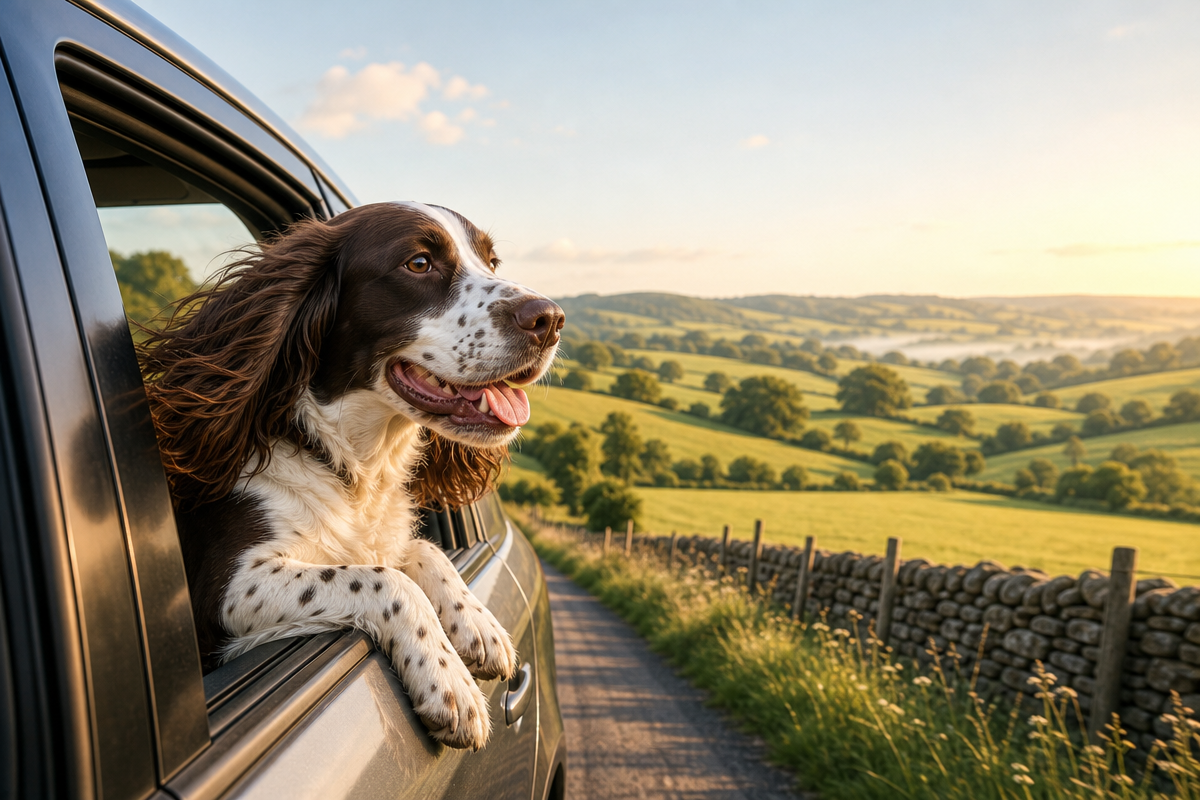
It also makes sense for dogs who struggle badly with separation. If your dog has genuine separation anxiety and has never settled well away from home, a familiar face on holiday beats a distressing boarding experience. Similarly, if you have several pets and the logistics of boarding them all feel unmanageable, travelling with them may be more practical.
Short UK breaks generally work better than long trips. The less disruption to routine, the easier it tends to be for the animal.
What to Watch Out For
The phrase 'pet friendly' has no legal definition for holiday accommodation. A cottage can call itself pet friendly because it tolerates a single small dog in the utility room, or because it has a fully enclosed garden, wipe-down floors throughout and a dog washing station outside. You won't know which until you ask.
Before you book, get answers to these questions:
- Is there a fully enclosed outdoor space, or can your dog get out?
- Are there breed or weight restrictions? (These are common and not always displayed prominently.)
- What is the pet supplement per night, and is there a cap?
- Is your pet allowed in all rooms, or restricted to certain areas?
- Can you leave your pet unattended in the property? Many cottages prohibit this entirely.
That last point catches a lot of owners out. If you can't leave your dog alone in the cottage, you can't have a meal out, visit a museum, or do anything that isn't dog-friendly. For some people that's fine. For others it's the point at which a pet hotel starts to look very appealing.
Cats, rabbits, guinea pigs, birds and reptiles deserve a direct mention here, because almost every piece of 'pet friendly holiday' content online is really about dogs. The market for cat-friendly holiday accommodation barely exists, and the market for rabbit-friendly lodges is essentially non-existent. If your pet isn't a dog, a professional pet hotel is almost certainly your only realistic option. For cats specifically, it's worth reading up on how to travel with cats before you commit to bringing one along.
If you're considering taking your dog or cat to Europe, the rules have changed significantly since Brexit. Under UK Government guidance on pet travel (GOV.UK), your pet needs to be microchipped, vaccinated against rabies and issued with an Animal Health Certificate from an official vet no more than ten days before travel. The old EU pet passport issued in Great Britain is no longer valid for travel to EU countries. Our overview of the pet passport rules after Brexit walks through what changed. Research this well in advance: it isn't complicated once you know the steps, but it takes time.
Long car journeys in warm weather also warrant serious thought. Dogs can overheat quickly, particularly in stopped or slow traffic. Regular breaks, water and never leaving a pet in a parked car are basics, but worth stating, and the RSPCA regularly warns about the dangers of pets in hot vehicles. For a fuller rundown of the law and the kit, see our guide to dog car safety in the UK.
Costs to Budget For
Pet supplements vary widely. Some independent cottages charge nothing; others charge £25 or more per night, and that adds up over a week. Mid-market lodge providers typically fall somewhere in between, so it's always worth confirming the exact supplement before booking.
Beyond accommodation, factor in travel insurance that covers your pet (standard travel policies do not), any travel-specific kit (a portable crate, travel water bottle, boot liner or seat cover), and a refundable cleaning deposit if your accommodation requires one. Some properties also require a specific pet damage waiver.
Option B: Booking a Professional Pet Hotel
When It's the Better Choice
If you're travelling abroad, booking a city break that's incompatible with a dog, or heading anywhere your pet simply can't follow, a licensed pet hotel is the answer. It's also the right call if your pet is elderly, on daily medication, prone to anxiety in new environments, or belongs to a species that holiday accommodation doesn't cater for.
There's a less-discussed scenario worth naming too. Some owners love their pets dearly and still find that managing a pet's needs on holiday gets in the way of the break itself. There is nothing wrong with that. Knowing your pet is safe and well cared for by professionals can make for a better holiday all round.
What Makes a Pet Hotel Different from a Traditional Kennel
The distinction is more than marketing. Traditional boarding kennels are individual runs, often outdoors, with limited human interaction. Pet hotels, as the name suggests, aim for something closer to a home-like environment: smaller groups, more individual attention, enrichment activities, and sometimes home boarding arrangements where your pet stays in a private home rather than a commercial facility. If you're torn between the two set-ups, our comparison of home boarding vs kennels goes into more detail.
Both types, along with home boarding operations, require a licence under the Animal Welfare (Licensing of Activities Involving Animals) (England) Regulations 2018, with Wales having similar requirements under separate legislation. The star rating system attached to that licence (one to five stars) reflects the quality of facilities and care, not just basic compliance. A five-star rated facility will have met higher standards across space, enrichment and welfare outcomes.
Licensed facilities are subject to regular inspections, with higher-rated providers sometimes inspected every two to three years and lower-rated ones more frequently. That inspection history matters when you're choosing.
How to Find and Vet a Pet Hotel
Start by verifying licensing status. In England, licences are issued by local councils, and you can ask any provider for their licence number. In Scotland, licensing requirements differ from England's 2018 framework. In Wales, similar licensing applies under separate legislation. If a provider can't show you a current licence, that's a serious concern. Our step-by-step guide to checking if a kennel is licensed covers exactly how to do this.
Questions worth asking before you book:
- What is the staff-to-pet ratio during the day, and is there overnight supervision?
- How much individual exercise or outdoor time does each pet get daily?
- How do you handle a veterinary emergency? Which practice do you use?
- Can my pet have a trial stay before the main booking?
- How do you manage pets on daily medication?
- What happens if my pet isn't settling well?
Red flags to watch for: no licence number displayed or available on request, reluctance to let you see the facilities before booking, no vaccination requirements (most reputable providers require kennel cough vaccination, with timing depending on the vaccine type), and no clear emergency vet protocol. Worth reading beforehand: what to know about kennel cough before boarding.
Reputable providers will let you visit and meet the staff before committing. That's good practice, not a legal requirement, but it tells you a great deal about how a place is run.
Based on listings in our directory, Tailstays covers 2,708 licensed pet hotels across the UK. The largest concentrations are in London (31 listings), Leeds (25), York (25), Nottingham (22) and Bristol (20), with strong coverage also in Southampton, Stoke-on-Trent, Swansea, Derby and Liverpool. If you're looking for options near you, searching on Tailstays lets you filter by location and see what's available.
Pros and Cons at a Glance
Travelling With Your Pet
Pros: Your pet stays with you, which suits social dogs and owners who'd miss them too much. Dog-friendly UK holidays are a well-developed market with good options in most regions. No settling-in period required.
Cons: Destination choice is significantly restricted. Accommodation quality under 'pet friendly' varies enormously. Car travel and new environments can be stressful for some animals. Leaving your pet alone in holiday accommodation is often prohibited.
Professional Pet Hotel
Pros: Full freedom to choose your destination. Licensed, inspected care with clear welfare standards. Suitable for dogs, cats and, in some cases, small animals and exotics. Specialist handling for elderly or medical-needs pets.
Cons: Upfront daily cost. Some pets need a trial stay or settling-in period. Popular pet hotels book up well in advance, particularly over summer and school holidays. It requires more forward planning than simply packing a pet bed in the car.
Understanding the Costs
Comparing costs directly is harder than it looks, because both options have visible costs and hidden ones.
For pet-friendly accommodation, supplements at independent holiday lets can range from nothing to £25 or more per pet per night, and a cleaning deposit on top of that is common. Over a seven-night stay with two pets, that's a meaningful additional outlay.
For pet hotels, UK daily boarding rates vary by location, facility type and the level of care involved. According to ManyPets, dog boarding in the UK typically costs between £25 and £75 per day depending on the type of provider and region. Home boarding, where your dog stays in a licensed carer's home, tends to sit towards the lower end of that range, while specialist or boutique pet hotels sit towards the higher end. For a closer look at what drives these figures, see how much dog sitters cost in the UK.
The hidden costs on the travel-with-your-pet side are easy to underestimate: travel insurance that covers your pet (often an add-on, not a standard inclusion), a boot liner or crate for the car, portable water and feeding equipment, and the cost of any activities or restaurants you can't access because your dog can't come. The hidden benefit on the pet hotel side is that your entire accommodation budget, activity budget and destination choice are unrestricted.
Neither option is categorically cheaper. It depends on where you're going, how long for, and what you're comparing against.
Which Option Is Right for You?
Bring your pet if: you have an active dog who genuinely enjoys new environments, you're staying in the UK at accommodation you've verified actually suits your pet, the trip is built around activities your dog can join, and you're happy to structure the holiday around your pet's needs.
Book a pet hotel if: you're travelling abroad, your pet is a cat or non-dog animal, your pet is elderly or on medication, you want to choose your destination without reference to your pet's logistics, or your pet is the type who genuinely thrives on a calm routine rather than novelty.
There's an honest point worth sitting with here. Some pets, particularly indoor cats and homebodied dogs, will be far less stressed in a well-run pet hotel with a consistent daily routine than in an unfamiliar holiday cottage full of strange smells, new sounds and owners distracted by being on holiday. That's not a reflection of how much you love your pet. It's a reflection of what your pet actually needs.
If you're still weighing it up, browse pet hotels near you on Tailstays to see what licensed options are available before you make a final call. Knowing what's out there often makes the decision easier.
Frequently Asked Questions
Is it cruel to leave my dog in a pet hotel while I go on holiday?
Not if the pet hotel is well run and your dog has been properly introduced to it. Many dogs do well in a structured, sociable environment with regular exercise and human contact. The key is finding a licensed provider with good welfare standards and, where possible, giving your dog a trial stay before the main booking so the experience isn't entirely new. Some dogs settle quickly and genuinely enjoy the company. Others take a day or two. A good pet hotel will keep you updated. If your dog struggles with being apart from you, our guide on separation anxiety and dog boarding is worth a read.
What's the difference between a pet hotel and a kennel?
The terms are sometimes used interchangeably, but in practice they often describe different environments. Traditional kennels typically involve individual outdoor runs with limited human interaction. Pet hotels aim for a more home-like experience: smaller groups, more one-to-one attention, enrichment, and sometimes home boarding arrangements where pets stay in a private licensed home. Both require a licence in England under the Animal Welfare (Licensing of Activities Involving Animals) (England) Regulations 2018. The star rating attached to that licence gives you a clearer signal of quality than the name alone.
Can I take my cat on a pet-friendly holiday in the UK?
In theory, yes. In practice, the market for cat-friendly holiday accommodation is very thin. Most properties that describe themselves as pet friendly mean dogs only, and some explicitly exclude cats. Cats are also generally less adaptable to new environments than dogs, and many vets and animal behaviourists suggest cats do better in a familiar routine than on a trip away. A licensed cattery or cat home boarding service is usually the more realistic and welfare-conscious choice. Our comparison of a cattery vs a cat sitter can help you weigh those options.
Do all pet-friendly cottages allow cats and dogs?
No. 'Pet friendly' has no regulated meaning for holiday accommodation. It's a label properties apply themselves, and what it covers varies enormously. Some properties welcome cats and dogs; many accept dogs only; some have weight or breed limits; others restrict pets to ground-floor rooms or charge per pet per night. Always contact the property directly to confirm exactly what's permitted before you book. Don't rely on the listing alone.
How far in advance should I book a pet hotel for peak holiday periods?
As early as you can. Reputable licensed pet hotels, particularly in cities and popular areas, fill up quickly over the summer school holidays, Easter and Christmas. Booking two to three months ahead for peak periods is sensible. If you want a trial stay before the main booking, factor that in too, which means finding your provider earlier still. Leaving it until a few weeks before a summer holiday significantly limits your options, especially if your pet has specific needs.
Are pet hotels regulated in the UK?
Yes, for dogs and cats. In England, both boarding kennels and home boarding services require a licence under the Animal Welfare (Licensing of Activities Involving Animals) (England) Regulations 2018. Wales has similar requirements under separate legislation, and Scotland and Northern Ireland have their own separate licensing regimes. Licensed facilities are subject to regular inspections and awarded a star rating that reflects the quality of care, not just minimum compliance. When choosing a pet hotel, always ask for the licence number and verify it with the issuing local authority if you want to be certain. Our overview of UK dog boarding regulations explains how these rules protect your pet.