
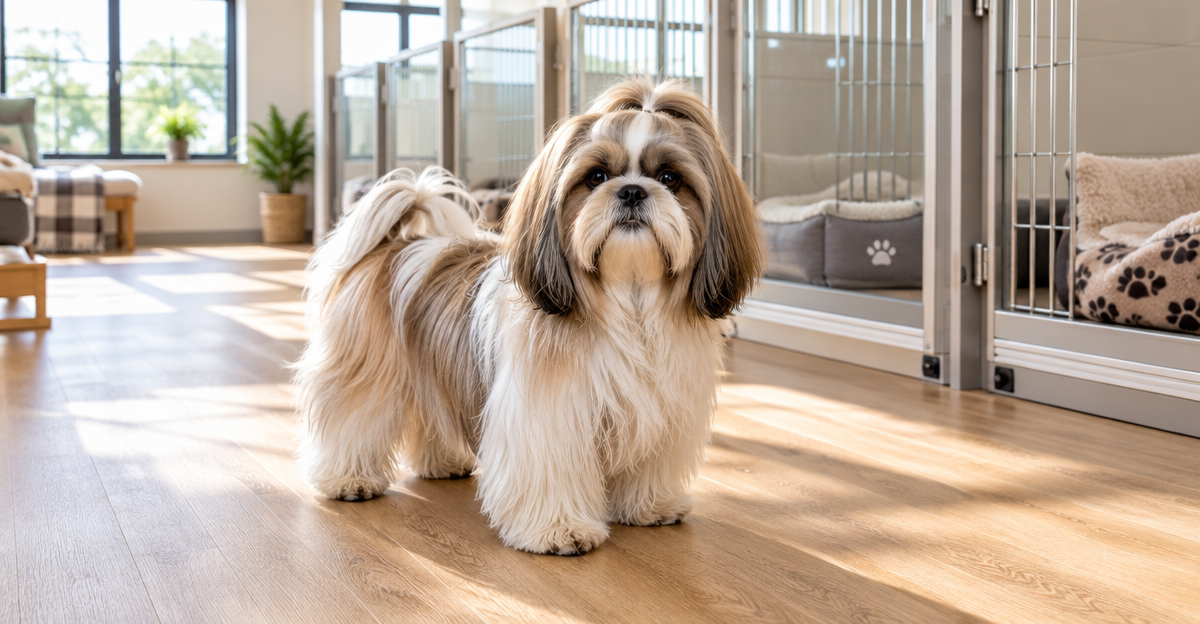
Finding the right dog kennels in Belfast takes a bit more local knowledge than a quick Google search will give you. Northern Ireland has its own regulatory framework, its own peak booking periods, and a geographic spread of facilities that makes location a genuine practical consideration. This guide covers all of it.
If you have only ever read UK boarding advice written with England in mind, some of what follows will be new. The rules here are different, and they matter when you are choosing dog kennels in Belfast.
Key Takeaways
- Dog boarding establishments in Northern Ireland are licensed under NI-specific legislation and regulated by local councils such as Belfast City Council and Lisburn and Castlereagh City Council. England's 2018 licensing regulations do not apply here.
- The Twelfth fortnight in July is the single busiest booking period for Belfast kennels. Book months in advance if you need care during this window.
- Facilities are spread across the city and its outskirts. Your nearest airport (Belfast International at Nutts Corner near Dundrod, or George Best Belfast City Airport on the east side) is a practical filter if you are flying.
- Kennel cough vaccination is commonly required by Belfast kennels. Confirm the timing requirement with your chosen facility before booking.
- Always visit a facility in person before committing, and ask for written confirmation of vaccination policies and any additional charges.
- Tailstays lists pet hotels serving the Belfast area. You can browse Belfast-area options to compare what is available.
What Dog Boarding Options Exist in Belfast?
Belfast dog owners have three main types of boarding to choose from: traditional kennels, pet hotels and home-based boarding. Each suits a different kind of dog and owner, and all three are represented in the area.
Traditional boarding kennels remain the most established option. They typically offer individual runs, structured feeding schedules and set exercise periods. Pet hotels operate on a similar licensed basis but often emphasise more personalised care, smaller group sizes and additional services such as grooming or training.
Home boarding, where a carer hosts your dog in their own home rather than a kennel environment, is a growing alternative across Belfast. It can work particularly well for dogs that find kennel life stressful. Worth knowing: home boarding in Northern Ireland requires its own separate licence from the relevant council, just as kennels do. It is not a looser or unregulated arrangement. If you are weighing up the two, our guide on home boarding versus kennels goes deeper into which fits which dog.
Where to Look Geographically
Facilities are dotted across the city and its hinterland. The Castlereagh and Lisnabreeny corridor in south-east Belfast has historically had a concentration of kennels, reflecting the slightly more rural character of that edge of the city. Carryduff, just south of the city boundary, and areas like Craigantlet and the Ards Peninsula further east are also worth exploring if you live on that side of town.
For owners flying from Belfast International Airport (BFS) at Nutts Corner near Dundrod, facilities in the north and west of the city or in the Lisburn and Castlereagh council area can make logistical sense. You drop your dog off on the way to the airport rather than making a separate journey. For those using George Best Belfast City Airport (BHD) on the eastern shore of the lough, kennels in east Belfast, Holywood or the Newtownards direction are more practical.
If you are travelling by ferry from Belfast port, the same principle applies. Factor in your route to the terminal when shortlisting facilities, rather than simply picking the closest one to home.
Northern Ireland Boarding Regulations: What They Mean for You
This is where Belfast differs significantly from the rest of the guidance you will find online. The vast majority of articles about dog kennel licensing in the UK refer to the Animal Welfare (Licensing of Activities Involving Animals) (England) Regulations 2018. That legislation does not apply in Northern Ireland. Full stop.
Northern Ireland has its own legislative framework governing animal welfare and boarding establishments. The Welfare of Animals Act (Northern Ireland) 2011 sets the overarching animal welfare duties, while boarding establishments have historically been regulated under the Boarding Establishments for Animals (Northern Ireland) Order 1983. Licensing sits with local district councils rather than with a national scheme. If you want the wider picture, our overview of UK dog boarding regulations sets out how the different nations compare.
In practice, that means a kennel or home boarding provider operating in Belfast should hold a licence issued by Belfast City Council. One operating in Carryduff or the Lisnabreeny area may fall under Lisburn and Castlereagh City Council instead. Facilities near Newtownards would fall under Ards and North Down Borough Council. Always check which council area the facility sits in if you want to verify its licence.
What a Licence Actually Means
A licence is not just a piece of paper on the wall. It means the facility has been inspected by council officers and found to meet welfare standards covering things like space, cleanliness, ventilation, feeding and supervision. Capacity limits are typically set as part of the licence conditions, and facilities are subject to ongoing inspections as a condition of remaining licensed.
How to Verify Before You Book
You have two straightforward options. First, ask the facility directly for their licence number and the issuing council. Any reputable operator will tell you without hesitation. Second, contact the relevant council's environmental health or licensing department and ask whether a named facility holds a current boarding establishment licence. It takes a few minutes and gives you genuine peace of mind.
Red flags include operators who cannot or will not confirm their licensing status, facilities that have no fixed premises address, or anyone advertising large capacity boarding from what appears to be a private home without mentioning a licence. Unlicensed boarding is not just legally problematic for the operator. It means no inspections, no oversight, and no guaranteed welfare standards for your dog.
How to Evaluate Dog Kennels in Belfast
Visiting Before You Book
No amount of good reviews substitutes for walking through the front gate yourself. Reputable facilities welcome pre-booking visits. If a kennel declines to let you see where your dog will sleep and exercise, that alone should give you pause.
When you visit, use your senses as much as your checklist. A well-run kennel smells clean, not simply masked with disinfectant. The dogs present should not appear excessively distressed. Staff should be able to answer your questions confidently rather than deflect them.
Specific things to assess during your visit:
- Cleanliness of runs, bedding areas and communal spaces
- Size of individual runs and whether there is adequate space for a dog your size
- Whether there are covered outdoor areas (relevant in Belfast's frequently wet climate)
- Staff-to-dog ratio during peak hours and overnight supervision arrangements
- How the facility handles a dog that becomes unwell, including which vet they use and how emergencies are managed
- Whether dogs have scheduled individual exercise or simply time in a run
- Noise levels and how dogs are separated if they are reactive
Questions worth asking directly:
- What vaccinations do you require, and what is the timing policy for kennel cough?
- Can I bring my dog's own food?
- What is your policy on administering medication?
- Are there bank holiday surcharges, and when do they apply?
- What happens if my dog needs emergency veterinary care?
Vaccination Requirements
Most Belfast kennels require evidence of up-to-date core vaccinations before accepting a dog. These typically cover distemper, parvovirus and leptospirosis, and your vet will record them in your dog's vaccination record or pet passport. Bring the physical document on arrival, not just a photo of it. If you are unsure where your dog stands, our dog vaccination schedule explains what is due and when.
Kennel cough (Bordetella bronchiseptica) vaccination is commonly required by Belfast facilities and is worth confirming in advance. The intranasal and injectable forms have different timescales before they take effect, so the required lead time before your dog's arrival will depend on which type your vet administers. Ask the kennel for their specific policy in writing when you book, then confirm with your vet to make sure the timing works. Leaving this to the week before you travel is not the plan. For more on the illness itself, see our guide to kennel cough before boarding.
Asking About Additional Charges
The nightly rate you see advertised is rarely the full picture. Belfast kennels, like those elsewhere in the UK, commonly charge separately for:
- Medication administration (often a daily fee per medication)
- Additional or longer walks beyond the standard exercise allocation
- Grooming or bathing on collection
- Bank holiday and peak-season surcharges
- Late collection or early drop-off outside staffed hours
On current pricing in Belfast specifically, we have not included a price range here rather than give you a number that could mislead you. Ask facilities directly for their current rate card, and factor in any extras when comparing.
Seasonal and Local Factors Specific to Belfast
If you need kennels during the Twelfth fortnight in July, book early. This is not a general summer booking tip. The period around the Twelfth of July is the single highest-demand window for dog boarding across Northern Ireland, reflecting school holidays, Orange Order marching season events and the volume of families travelling. Kennels that have spaces in June may be fully booked for weeks either side of the Twelfth.
Other peak periods to plan around: the school Easter holidays, the summer holidays more broadly (late June through August), Christmas and New Year. If your travel coincides with any of these, treat your kennel booking with the same urgency you would give your flights.
Belfast's climate is a genuine operational consideration. The city is notably wet, and dogs still need outdoor exercise regardless. Check whether a facility has covered exercise areas or indoor alternatives. A kennel whose only outdoor run is fully exposed to rain is not ideal for a long stay, particularly for dogs that do not cope well with being kept indoors.
Pet Hotels vs Traditional Kennels: Which Suits Your Dog?
The distinction between a pet hotel and a traditional kennel is partly one of branding, but it does reflect genuine differences in how care is delivered. Understanding those differences helps you match the environment to your dog's temperament.
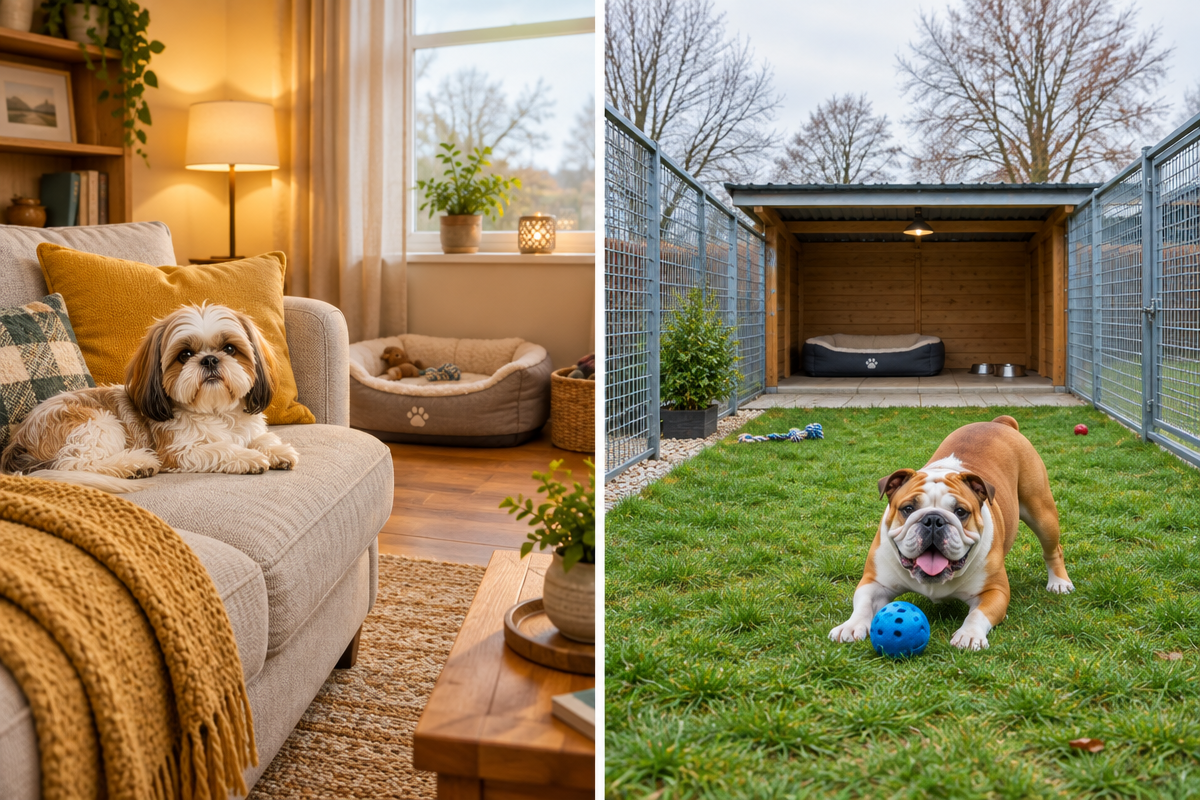
Traditional kennels tend to offer a more structured, high-capacity model. Dogs have their own run, feeding happens on a set schedule, and exercise is typically in allocated groups or individually at set times. For dogs that are confident, have boarded before and take routine changes in their stride, this setup works well. Multi-dog households where dogs need separate runs also tend to be well served by traditional kennels.
Pet hotels typically operate with smaller numbers, more varied enrichment activities and more human interaction throughout the day. They often suit anxious dogs, older dogs with specific routines, or dogs that have struggled in traditional kennel environments previously. If your dog gets particularly worked up when you leave, our advice on separation anxiety and dog boarding is worth a read before you book. Home boarding, where your dog lives as part of a carer's household, goes furthest in replicating a domestic environment.
You can search and compare pet hotels serving the Belfast area on Tailstays to see what types of accommodation are currently listed and what each facility offers.
Practical Tips for a Smooth Belfast Kennel Stay
A trial night or short day visit before a longer booking is genuinely worth doing, especially for a dog that has never boarded before. It surfaces any problems while the stakes are low, and most reputable Belfast facilities will accommodate this.
On packing: a familiar blanket or unwashed item of your clothing can help a dog settle, but check the kennel's policy first. Some facilities discourage personal items for hygiene reasons or because bedding gets mixed up between dogs. Our what to pack for dog boarding checklist covers the essentials.
Food is another practical question. Some kennels supply their own, which is fine for dogs without dietary requirements. If your dog has a sensitive stomach or is on a specific diet, confirm that the facility will use the food you provide and how to label it clearly for each meal.
Make sure the kennel has your emergency contact number, the number of the vet you authorise them to contact, and written confirmation of any medical or behavioural needs your dog has. Do not rely on a verbal handover at drop-off when you are rushing for a flight.
One thing worth preparing for when you collect: your dog may come home tired, a little hoarse from barking, and briefly unsettled in their routine. This is common after any boarding stay and usually resolves within a day or two. It is not necessarily a sign anything went wrong.
When you are ready to shortlist, you can compare pet hotels and boarding options across the Belfast area on Tailstays and narrow things down by location and the services that matter to your dog.
Frequently Asked Questions
Do dog kennels in Belfast require vaccinations?
Most licensed kennels in Belfast require evidence of up-to-date core vaccinations, typically including distemper, parvovirus and leptospirosis. Many also require kennel cough vaccination. See the Vaccination Requirements section above for details on timing, which varies by vaccine type.
How much do dog kennels in Belfast cost per night?
Current, verified pricing for Belfast kennels is not readily available in published sources, so we do not quote a figure that could mislead you. Contact facilities directly for their current rate card, and ask specifically about peak-season surcharges and additional service fees beyond the base nightly rate.
Are Belfast kennels licensed by Belfast City Council?
Kennels within the Belfast City Council area should hold a licence issued by that council. Facilities in surrounding areas fall under different councils: Lisburn and Castlereagh City Council, Ards and North Down Borough Council, and others depending on location. You can verify a facility's licence by asking them directly for their licence number, or by contacting the relevant council's environmental health or licensing department.
How far in advance should I book kennels in Belfast for summer?
For the Twelfth fortnight in July, several months in advance is not excessive. This is the highest-demand period for dog boarding in Northern Ireland, and popular facilities fill up quickly. For the broader summer school holiday period, Easter, Christmas and New Year, aim to book as soon as your own travel plans are confirmed rather than waiting until the last month.
What is the difference between a kennel and a pet hotel in Belfast?
Traditional kennels typically accommodate larger numbers of dogs in individual runs with structured feeding and exercise routines. Pet hotels generally operate with smaller group sizes, more varied enrichment and more hands-on human contact throughout the day. Both require a council licence to operate legally in Northern Ireland. The right choice depends on your dog's temperament, history with boarding and individual needs rather than any strict quality difference between the two formats.