
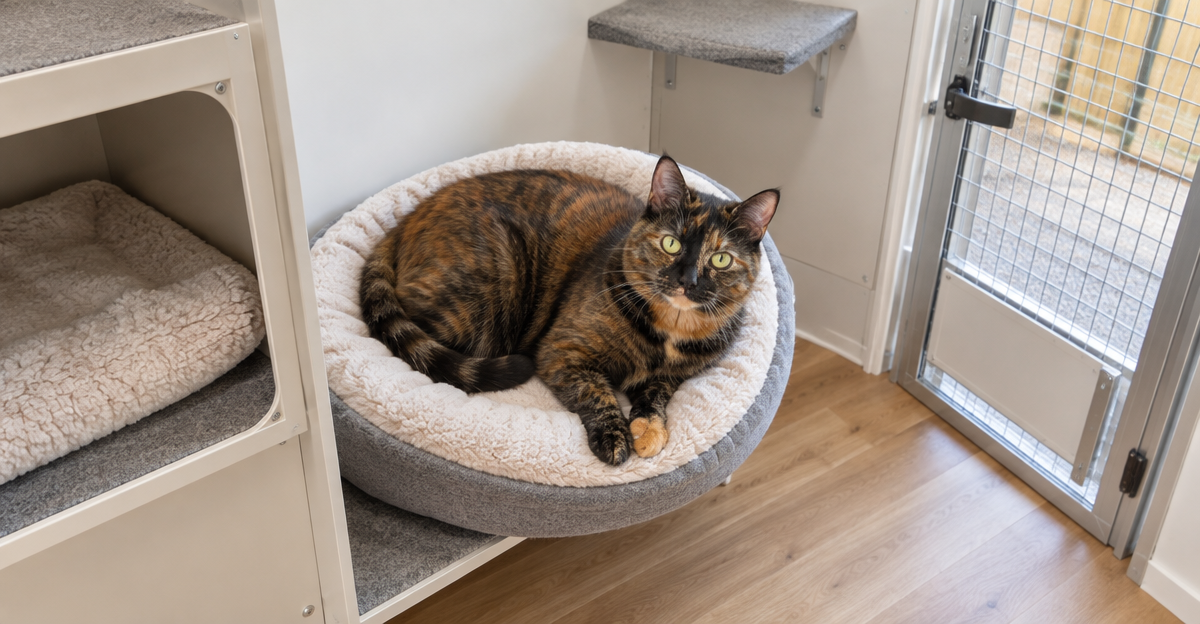
A good cattery in Lincoln is licensed by the council covering its address, has an owner who welcomes visits, and keeps your cat warm, calm and safe. Most cat boarding around the city is in small, family-run rural sites outside the centre. That means the real work falls to you: check the licence, visit in person and ask the right questions.
Handing your cat over for a week is a wrench, even for confident owners. This guide covers what cat boarding in Lincoln actually looks like, the local details that matter when you vet a cattery, and how to plan around the busy periods.
Key Takeaways
- Catteries near Lincoln are mostly rural and family-run, often on the edge of the city or in nearby villages, including along routes such as the A15.
- Licences are issued by the local council for the cattery's address, which could be City of Lincoln Council, North Kesteven or West Lindsey.
- Always ask to see the licence and visit before you book. Reputable providers will let you look around.
- Cat-only sites can mean less noise and stress than combined kennel and cattery sites, though a well-run combined site can still be a good choice.
- Book early for Easter, summer, Christmas and school holidays.
Cat Boarding in Lincoln: What's Available Locally
Cat boarding in Lincoln is mainly a countryside affair. Rather than a cluster of big commercial hotels, you'll find a handful of small, owner-run catteries within a short drive of the city. Lincoln isn't currently among the cities with the most listings in our directory of 2,704 hotels, so we won't guess at how many options there are. Treat any local name below as a starting point, not a recommendation, and check the details directly with the business.
Countryside catteries on the edge of the city
Many catteries serving Lincoln sit in villages north and south of the city, often close to the A15 corridor. Villages such as Ingham and Scopwick come up regularly in local searches. Clifftop Boarding Kennels and Cattery, for example, describes itself in its own directory listing as being in Ingham and caring for both dogs and cats. We haven't verified its facilities, so confirm its licence, star rating and cat accommodation with the business and the council before you rely on it.
A word of caution about directory listings in general: they can carry outdated hours, old contact details or self-reported claims such as licence status. A listing that says a site is licensed is not the same as seeing it on the council register.
Combined kennel and cattery sites vs cat-only catteries
Some sites board dogs and cats together; others only take cats. Neither is automatically better, but the difference matters a great deal if your cat is nervous.
| Feature | Cat-only cattery | Combined kennel and cattery |
|---|---|---|
| Noise | Usually quieter, with no barking | Depends on layout and how well the cat area is separated |
| Stress for your cat | Fewer dog sounds and smells | Can be fine if the cattery is a separate building |
| Experience | Focus on feline behaviour | Often run by people with broad animal experience |
| Best for | Shy, senior or easily startled cats | Confident, sociable cats |
If you're considering a combined site, ask how far the cat block is from the dog kennels and whether the cats can hear or see the dogs. If your cat tends to struggle away from home, our guide on why cats get stressed at the cattery covers the signs to watch for.
Heated chalets vs basic pens, and what 'runs' mean
Accommodation varies a lot. Better catteries offer individual chalets with a separate sleeping area and living space, often heated. Basic set-ups may be a single pen with far less room to move.
A 'run' is usually a secure outdoor or semi-outdoor section attached to a cat's unit, so it can sit in the fresh air while staying safely contained. Some sites also have a separate play area. Ask how long cats spend in each, and whether the runs are covered, secure and sheltered from wind and rain.
To start looking, you can browse cat boarding in Lincoln on Tailstays, then check the listing details directly with each provider.
Local and Seasonal Factors in Lincoln
A bit of local knowledge helps you avoid two problems: a full diary and a cat that's too cold or too hot.
Peak periods
Easter, the summer holidays and Christmas are the usual crunch points for cat boarding anywhere in the UK, and Lincoln is no exception. December demand comes mainly from residents travelling to see family, and with only a small number of catteries around the city, the best units can go early. Our advice is simple: reserve as soon as your dates are set, particularly for school holidays.
Rural and exposed locations
Lincolnshire is open, flat country. Exposed sites feel the wind in winter and the sun in summer. Ask how the cattery keeps units warm in a cold snap and cool in a heatwave, including ventilation and shade for outdoor runs.
Vet access
Ask which local vet the cattery uses and how quickly they can get a cat seen. For a rural site, knowing the route to the nearest practice is reassuring. Leave your own vet's details too.
How to Choose a Cattery in Lincoln
Honestly, a twenty-minute visit will tell you more than any listing. Before that, though, a few checks are worth doing from home.
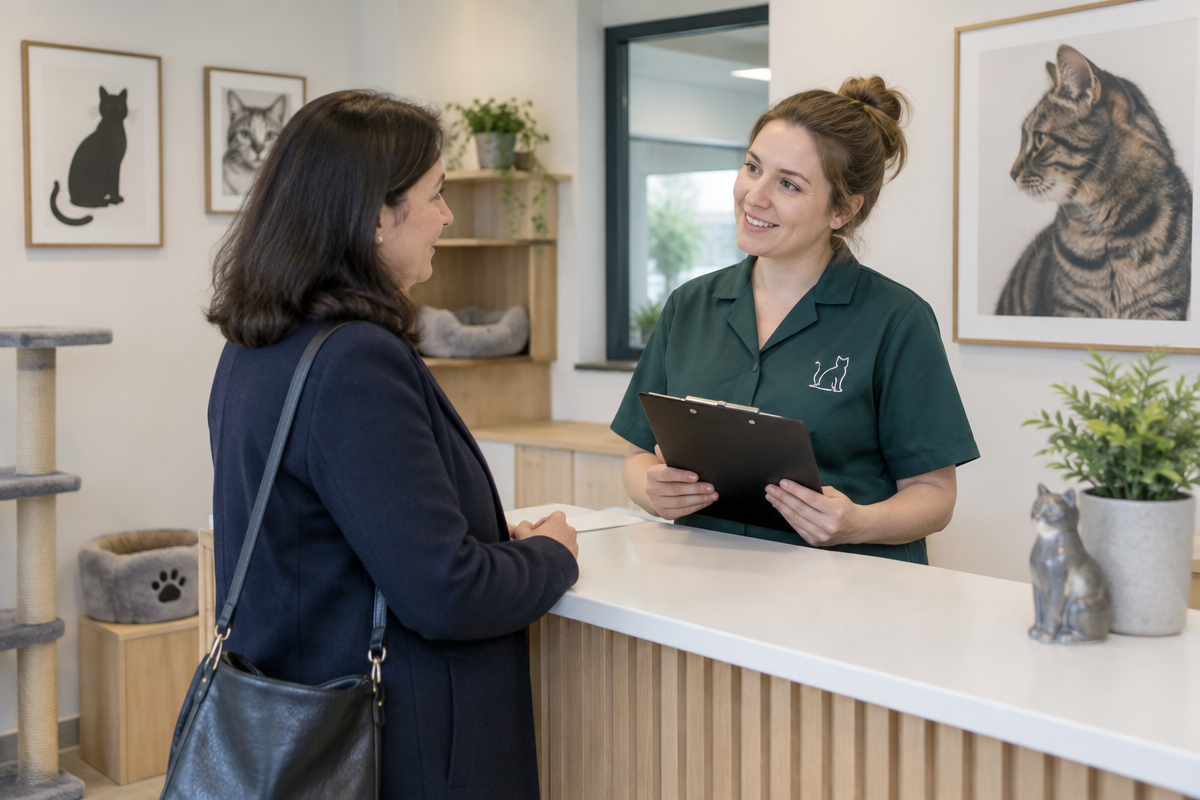
- Check the right council register. Catteries need a licence under the Animal Welfare (Licensing of Activities Involving Animals) (England) Regulations 2018, and the council issues it with a star rating. Around Lincoln, the council depends on the address: City of Lincoln Council, North Kesteven District Council or West Lindsey District Council. A cattery with a Lincoln postal address may actually sit in a neighbouring council area, so make sure you're searching the right register. For more on how boarding licences work, see our guide to UK pet laws on welfare and boarding.
- Factor in journey times. A cattery in the city may be minutes away, while village sites can be a 15 to 20 minute drive. Think about drop-off and collection, especially if your cat hates the car.
- Visit in person. Look for clean, well-ventilated, heated units with secure double-door entry. Be wary if the owner refuses a tour, won't show the licence or gives vague answers about vaccinations, vets or insurance.
- Ask the essentials. Vaccination and flea policy, named vet and emergency procedure, daily routine, medication handling, deposit and cancellation terms.
What about prices?
We haven't found verified, published nightly rates for Lincoln catteries that we can cite, so we won't quote a figure. Prices generally depend on the type of accommodation (a basic pen or a heated chalet), whether cats share, the season, and extras such as medication or grooming. Ask each cattery for a written quote covering your exact dates, and check whether peak periods carry a surcharge.
Once you have a shortlist, you can compare providers on Tailstays and contact each one directly to request a stay. When it's time to pack, our cat boarding checklist covers what to bring.
Booking Your Cat's Stay with Tailstays
Tailstays is a search and comparison platform, not a booking service. You search for options, look through the listing details, then contact the hotel directly to request your stay. Coverage differs by area and we can't confirm how many catteries near Lincoln are listed, so if results look thin, widen your search to neighbouring towns.
On each listing, check the licence information, read the reviews and look at the facilities described. Then confirm everything with the cattery itself and, where you can, with the council register. When you're ready, see what's available on Tailstays.
FAQs
How much does a cattery cost in Lincoln?
Prices vary between providers and we haven't found verified published rates for Lincoln to quote. Accommodation type, sharing, peak-season surcharges and extras all affect the cost, so ask each cattery for a written quote for your dates.
Do catteries in Lincoln need a licence?
Yes. In England, catteries need a licence under the Animal Welfare (Licensing of Activities Involving Animals) (England) Regulations 2018. The licence comes from the local council, which around Lincoln could be City of Lincoln Council, North Kesteven or West Lindsey depending on the address.
What vaccinations does my cat need for boarding?
Most catteries ask for an up-to-date core vaccination, usually the annual F3 booster covering cat flu and enteritis. Requirements differ, so check with the cattery and bring your vaccination card. Leave enough time before the stay, as timing can matter. Our cat vaccination schedule explains which vaccines are due when.
How far in advance should I book?
For Easter, summer, Christmas and school holidays, book as soon as your dates are confirmed, often several months ahead. Outside peak periods a few weeks can be enough, but smaller catteries can still fill up.
Can I visit the cattery before booking?
Reputable catteries will usually let you look around, often by appointment. It's good practice rather than a legal rule, but a refusal to show you the site is a red flag.