
So You're Getting a Hamster
Hamsters are often labelled as "starter pets", but that undersells them considerably. They have real personalities, specific welfare needs, and, if you get things right from the beginning, can be genuinely rewarding animals to keep. This guide covers the core welfare questions every new owner needs to answer: what hamsters actually need to stay healthy, what goes wrong when those needs aren't met, and when to get professional help.
Key Takeaways
- Hamsters are solitary, nocturnal animals, most of what you read about their behaviour flows from those two facts.
- Cage size is the single most common welfare mistake new owners make. Bigger is always better.
- Diet should be based around a good quality seed mix or pellets, supplemented with fresh food in small amounts.
- Most hamsters take 2-4 weeks to tame properly. Patience matters more than technique.
- Hamsters are not covered by pet boarding licensing requirements under the Animal Welfare (Licensing of Activities Involving Animals) (England) Regulations 2018, always vet any boarding arrangement carefully.
- Wet tail is a veterinary emergency. Know what it looks like before you need to.
Which Species Should You Choose?
There are five species commonly kept as pets in the UK, and they're not interchangeable. Getting clear on the differences before you buy prevents welfare problems later.
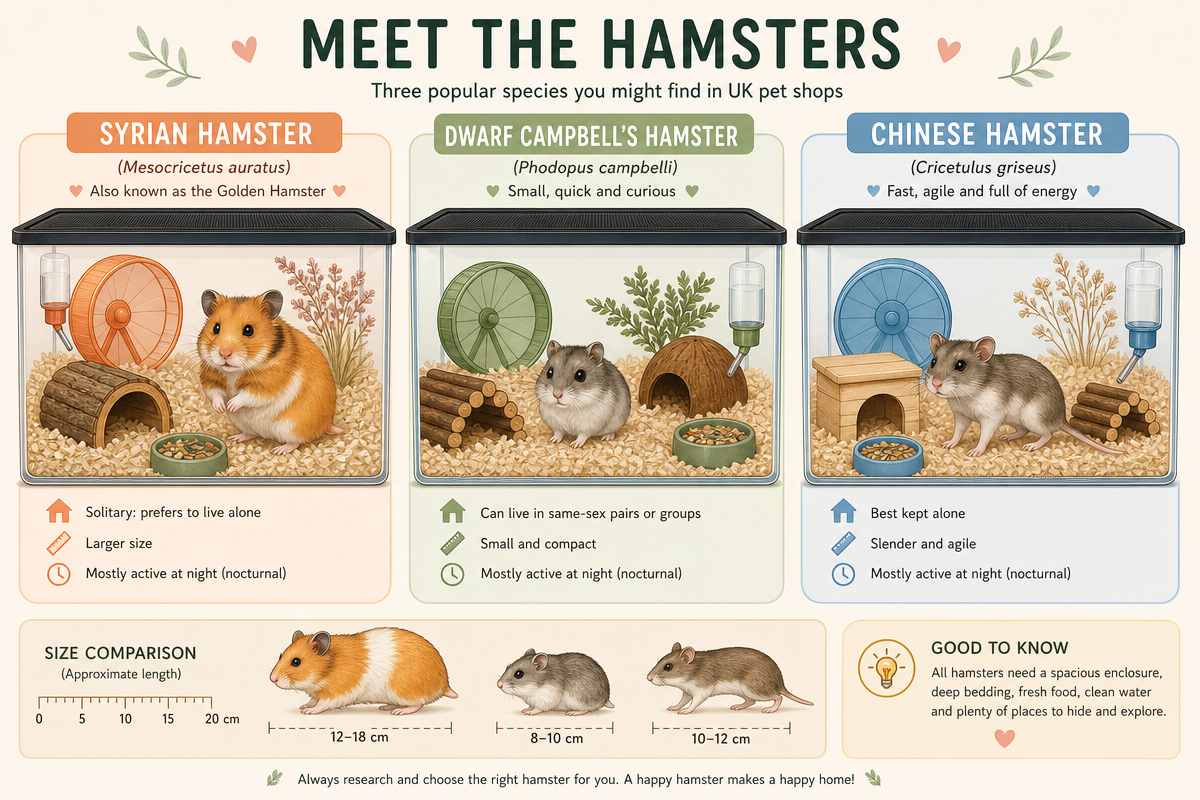
Syrian hamsters (also called golden or teddy bear hamsters) are the largest species, typically reaching 15-17cm. They are strictly solitary, housing two Syrians together will almost always end badly, regardless of what a pet shop might suggest. Their size makes them easier to handle for beginners, and they tend to tame down well.
Dwarf species, including Russian Campbell's, Winter White, Roborovski, and Chinese hamsters, are smaller, faster, and generally trickier to handle. Some dwarf species can live in same-sex pairs if introduced from a young age, though this isn't guaranteed to work and any pair should be monitored closely for signs of stress or fighting.
For a first-time owner, a Syrian is usually the most straightforward choice. They're easier to tame, less prone to bolting during handling, and their larger size means they're more comfortable in younger children's hands, though any child should always be supervised.
What Causes Poor Welfare in Hamsters?
Most hamster welfare problems trace back to a small number of setup and husbandry mistakes. Understanding the causes makes the practical solutions below much easier to follow.
Inadequate housing
The minimum cage size debate has shifted considerably in recent years, and the welfare consensus is clear: most cages sold in mainstream pet shops are too small. The German standard of 100cm × 50cm floor space, referenced in the German Animal Welfare Act and widely adopted by hamster welfare organisations, is considered a reasonable minimum for a Syrian, and many experienced keepers go larger still.
In the wild, hamsters can roam large distances each night. A hamster confined to a small cage with inadequate stimulation will often develop stereotypic behaviours, repetitive bar-chewing, pacing, or over-grooming, which are signs of stress, not quirky personality traits.
Wrong substrate
Hamsters have sensitive airways and are obligate burrowers. Dusty or scented bedding causes respiratory irritation, and substrate that's too shallow prevents natural burrowing behaviour, a significant source of chronic stress.
Poor diet
Many hamster mixes sold in pet shops are heavy on coloured puffed shapes, nutritional filler that hamsters either ignore or overeat. An unbalanced diet affects coat condition, weight, and energy levels, and increases the risk of conditions like diabetes, which is relatively common in dwarf species.
Rushed taming and daytime disturbance
Hamsters sleep for most of the day and become active around dusk. Waking them during daylight hours is stressful and often results in biting, which then gets unfairly labelled as aggression. Similarly, beginning handling before a hamster has settled into a new home compounds stress and sets back the taming process significantly.
Practical Solutions
Housing and enrichment
Your setup should include:
- Deep substrate, at least 20-30cm in part of the enclosure for burrowing. This isn't optional for their wellbeing.
- A solid-surface running wheel, minimum 28cm diameter for a Syrian, 20cm for most dwarfs. Mesh or barred wheels can cause spinal injuries and should be avoided.
- A hide or nest box, somewhere to sleep undisturbed during the day.
- Enrichment items, sand baths, tunnels, foraging opportunities, and chew toys to keep them mentally active.
Glass tanks and large modular cages both work well. Barred cages are fine provided bar spacing is appropriate for the species (no more than 1cm for Syrians, tighter for dwarfs) and the floor area is large enough.
Scatter feeding, hiding food throughout the substrate rather than in a bowl, encourages foraging and keeps hamsters mentally occupied for far longer than a food dish does. Rotating enrichment items periodically (swapping in one or two new items every couple of weeks) keeps the environment novel without requiring a complete overhaul.
Bedding and substrate
Safe options include paper-based bedding (such as Carefresh or similar unscented varieties), chemical-free soil mixes, and plain peat. Avoid cedar and pine shavings, which contain volatile compounds linked to respiratory and liver problems. Scented or coloured bedding is also best avoided.
For nesting material, unbleached tissue paper or plain paper strips work well. A hamster that enthusiastically shreds and rearranges nesting material is engaged with their environment, a good sign.
Feeding
The foundation of the diet should be a good quality seed mix or nugget/pellet food designed specifically for hamsters. Fresh food can be offered in small amounts several times a week. Good options include:
- Leafy greens, romaine lettuce, kale, spinach (small amounts)
- Vegetables, broccoli, cucumber, courgette, carrot (as an occasional treat due to sugar content)
- Protein sources, plain cooked chicken, mealworms, or a small piece of hard-boiled egg once or twice a week
Foods to avoid include citrus fruits, onions, garlic, raw potato, rhubarb, and anything high in sugar or salt. Fresh water should be available at all times. Both bottles and bowls work, if you use a bowl, change it daily as it soils quickly. Offering both initially lets you see which your hamster prefers.
Taming and handling
Give any new hamster at least three to five days to settle in before attempting handling, and resist the urge to constantly check on them during that period.
- Days 1-5: Leave the hamster alone apart from food and water changes. Let them learn your scent by placing a worn piece of clothing near the cage.
- Days 5-10: Begin talking softly near the cage during their active period (usually evening). Offer a treat from your fingers through the bars or over the side.
- Week 2 onwards: Once they're taking food confidently, place your hand in the cage and let them investigate. Don't grab, let them come to you.
- Week 3-4: Gently scoop from underneath to lift. Keep sessions short (5-10 minutes) and always do this close to the ground or over a soft surface.
Most hamsters tame down well within a month if you're consistent. Some, particularly Roborovskis, may never become comfortable with regular handling, and that's a species trait rather than a training failure.
Environment and temperature
Keep the cage in a quiet room away from direct sunlight, extreme temperature fluctuations, and loud sounds. Hamsters do best at ambient temperatures between roughly 18-24°C. Temperatures below about 10°C can trigger a dangerous pseudo-hibernation state (torpor), which is sometimes mistaken for death. Warm them gradually and seek veterinary advice if this occurs.
When you go away
Unlike dogs and cats, hamsters are not covered by the Animal Welfare (Licensing of Activities Involving Animals) (England) Regulations 2018, which means anyone can offer hamster boarding without a licence. Note that Scotland and Wales have separate frameworks, and regulations can change, so it is worth checking current guidance. The onus is entirely on you to vet whoever looks after your pet.
Options include a trusted friend or family member coming to your home, a neighbour taking the hamster in, or a small animal boarding service. Whichever route you go, make sure the carer understands the importance of not disturbing the hamster during the day, knows the signs of wet tail, and has contact details for a local vet. Leave detailed care notes covering food quantities, enrichment routine, and anything specific to your individual hamster's habits. You can find small animal boarding options on Tailstays.
When to Seek Professional Help
Hamsters are small animals with short lifespans, typically 1.5 to 3 years depending on species, which means health changes can move quickly. Finding a vet with small animal or exotic experience before you need one is genuinely worthwhile.
Wet tail, treat as an emergency
Wet tail (proliferative ileitis) is the most serious common condition in hamsters, and it can be fatal within 24-48 hours if untreated. Signs include a wet, soiled rear end, lethargy, hunched posture, and a strong unpleasant smell. It's caused by bacterial overgrowth in the intestine, often triggered by stress, and it's most common in young Syrians in the weeks after rehoming. If you see these signs, get to a vet the same day.
Dental problems
Hamsters have continuously growing teeth. In a well-kept hamster with access to appropriate chew toys and a varied diet, this generally isn't an issue. Signs of dental problems include difficulty eating, drooling, and weight loss. Overgrown or misaligned teeth need veterinary attention.
Other conditions requiring veterinary assessment
Respiratory infections present as wheezing, laboured breathing, or discharge from the eyes and nose. Skin mites can cause patchy fur loss and scratching. Diabetes is relatively common in dwarf hamsters, particularly Campbell's and Winter Whites, signs include excessive thirst and urination. Any unexplained weight loss, change in behaviour, or unusual lumps should prompt a vet visit.
Frequently Asked Questions
How long do hamsters live?
Most hamsters live between 1.5 and 3 years, with Syrians typically reaching the longer end of that range and Roborovskis sometimes living slightly longer. Dwarf species, particularly Campbell's, often have shorter lifespans. It's worth being emotionally prepared for this before purchasing a hamster, especially if there are young children involved.
Can hamsters be kept together?
Syrian hamsters must always be housed alone, they are territorial and will fight, often fatally, if kept together. Some dwarf species (Russian Campbell's and Winter Whites) can sometimes live in same-sex pairs if introduced from a young age and given enough space, but this isn't guaranteed to work. Any pairing should be monitored closely and you should always have a second cage ready in case they need separating.
My hamster is biting the bars of the cage, is something wrong?
Bar-chewing is usually a sign that a hamster's needs aren't being met, most commonly insufficient space, lack of burrowing substrate, or not enough enrichment. Before assuming it's a personality quirk, review the cage setup against the welfare guidelines above. In most cases, a larger enclosure with deeper substrate resolves it.
Do hamsters need vaccinations or regular vet check-ups?
Hamsters don't require vaccinations. That said, registering with a vet who has small animal experience before you have an emergency is genuinely sensible, especially given how quickly conditions like wet tail can deteriorate. An annual check-up is a reasonable habit to get into, particularly as hamsters age.
Is it normal for my hamster to sleep all day?
Yes, hamsters are crepuscular to nocturnal animals and will spend most of the day sleeping. This is completely normal. What isn't normal is a hamster that seems lethargic during their usual active period in the evening, won't move when gently encouraged, or shows other signs of illness. If a hamster seems unresponsive during waking hours and the room temperature is very cold, check for torpor (pseudo-hibernation) and warm them gradually while seeking veterinary advice.