
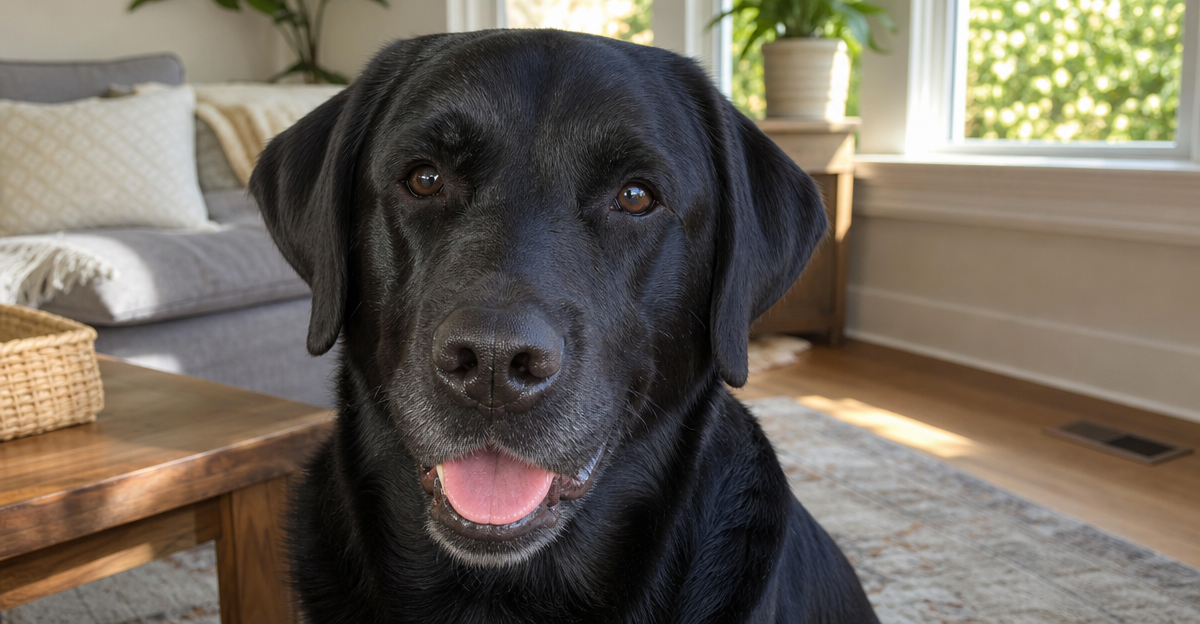
Dogs communicate primarily through body language, using their entire body to express emotions from contentment to anxiety. Understanding these signals helps you respond appropriately to your dog's needs and prevents stress from escalating into more serious behavioural issues.
Most dogs follow a predictable communication ladder, starting with subtle signals and escalating only when their early warnings go unnoticed. Learning to spot these early signs strengthens your bond and keeps everyone safer.
Key Takeaways
- Dogs use whole-body communication, with context and individual differences affecting interpretation
- Early stress signals include yawning, nose licking, and looking away, spot these to prevent escalation
- The communication ladder shows how dogs escalate from subtle signals to growling when ignored
- Never punish growling, it's valuable communication that prevents bites
- Relaxed dogs show loose, wiggly body language with soft eyes and natural tail positions
- Share your dog's specific signals with boarding facilities to help staff understand their needs
Understanding How Dogs Communicate
Your dog's body language tells a story that's far more detailed than their barks or whines. Dogs evolved as pack animals, developing sophisticated visual communication systems that remain their primary way of expressing emotions.
Unlike human communication, which relies heavily on words, dogs use their entire body as a communication tool. Their ears, eyes, mouth, tail, and overall posture work together to create clear messages about how they're feeling.
Physical differences between breeds can affect how clearly these signals show. A Pug's flat face makes subtle mouth movements harder to spot than a Border Collie's. Dogs with cropped ears or docked tails have fewer tools for expression. Dense coats can hide body tension that would be obvious on a short-haired breed.
The Three-Factor Approach to Reading Dog Body Language
Accurate interpretation requires considering three key factors together, not in isolation.
Individual dog considerations: Your dog's normal behaviour patterns, breed characteristics, and physical limitations all influence their communication style. A naturally reserved breed like a Shiba Inu may show stress differently than an outgoing Golden Retriever.
Whole body assessment: Never focus on just one signal. A wagging tail doesn't always mean happiness if the dog's body is tense and their ears are pinned back. Look at the complete picture.
Situational context: The same signal can mean different things in different situations. Yawning during a training session suggests stress, whilst yawning before bedtime is probably just tiredness.
Early Warning Signs: Subtle Stress Signals
These subtle signals are your dog's polite way of saying they're feeling uncertain or need space. Catching stress at this level prevents it from escalating up what behaviourists call the communication ladder.
Yawning when your dog isn't tired often indicates tension or mild anxiety. You'll typically see this during training sessions, vet visits, or when meeting new people.
Nose licking and lip licking without food present are classic displacement behaviours. Dogs do this when they're processing something stressful or trying to calm themselves down.
Eye blinking and "whale eye", where you see the whites of their eyes, show discomfort. Rapid blinking is particularly common when dogs feel pressured by direct eye contact.
Looking away and head turning are polite avoidance signals. Your dog is essentially saying "I'm not a threat" and hoping the stressful situation will pass.
Paw lifting and displacement behaviours like scratching when not itchy, sniffing the ground suddenly, or shaking off when not wet are signs your dog is processing mild stress.
Why Early Recognition Matters
Responding to these early signals prevents your dog from needing to escalate their communication. When you notice subtle stress signs and help your dog by removing them from the situation or reducing pressure, you're teaching them that these polite signals work.
This builds trust and confidence. Dogs who feel heard at the subtle level rarely need to resort to growling or snapping because their owners consistently respond to their quieter requests for help.
For boarding situations, sharing these specific signals with kennel staff helps them recognise when your dog needs extra support or space, making their stay more comfortable.
Mid-Level Stress Indicators
When subtle signals don't work, dogs escalate to more obvious body language changes. These mid-level indicators show your dog is becoming genuinely uncomfortable and needs immediate help.
Body positioning changes like turning sideways or away from the stressor are clear avoidance signals. Dogs might also sit or lie down in situations where they'd normally stand, using position to create psychological distance.
Walking away or attempting to escape is unambiguous communication. Your dog is removing themselves from something they find stressful and should be allowed to do so.
Crouching and tail tucking show significant anxiety. The dog is making themselves smaller and protecting vulnerable areas, indicating they feel threatened.
Ears pinned back against the head, different from the relaxed ear position of contentment, signals worry or fear.
Freezing and stiffening represent a dog's attempt to become invisible or avoid confrontation. This stillness is different from calm relaxation, you can see the tension in their muscles.
High-Alert Warning Signs
These signals indicate a dog who feels cornered or threatened. They're final warnings before a bite might occur, and should always be taken seriously.
Staring and rigid posture show a dog who's moved from anxiety into defensive mode. Their body becomes still and hard, weight often shifted forward.
Growling is valuable communication that should never be punished. A growling dog is warning that they're close to their limit and giving you a chance to back off or help them. Punishing growls teaches dogs to skip this warning and go straight to biting.
Snapping, biting the air as a final warning, shows a dog who feels their previous signals have been ignored and sees no other option.
Biting occurs when a dog's communication has completely broken down. Most dogs don't want to bite and will only do so when they feel they have no other choice.
The Communication Ladder Concept
Behaviourist Kendal Shepherd developed the ladder of communication concept to show how dogs escalate their signals when early warnings are ignored. Dogs don't skip steps, they progress through increasingly obvious signals until something works.
Understanding this ladder explains why punishment backfires. When you suppress a dog's warning signals through punishment, you haven't addressed their underlying stress. You've simply taught them not to warn you, making them more likely to bite without warning.
The goal isn't to stop dogs communicating stress, it's to address the source of their stress and respond helpfully to their early signals.
Signs of a Relaxed, Happy Dog
Recognising contentment is just as important as spotting stress. A truly relaxed dog displays loose, flowing body language that's the opposite of the tense signals we've discussed.
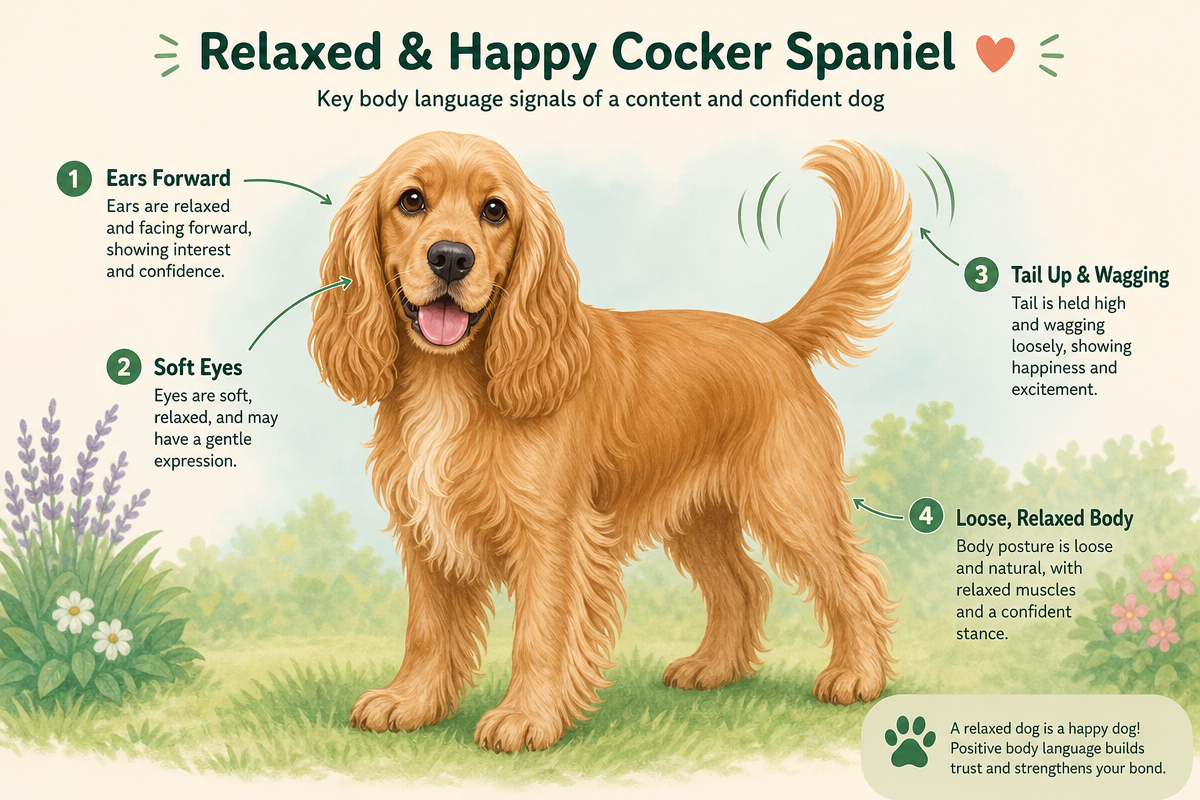
Loose, wiggly body language shows throughout their movement. Their gait is bouncy and natural, without stiffness or hesitation.
Soft eyes and relaxed facial muscles are key indicators. Their mouth might be slightly open in a natural position, and their eyes have a soft, unfocused quality rather than hard staring.
Natural tail position and movement varies by breed, but should look effortless. A relaxed tail wag involves the whole rear end, not just the tail tip.
Responsive but settled behaviour shows a dog who's alert to their environment without being anxious about it. They can settle easily and respond appropriately to your cues.
Play signals like play bows, bouncing movements, and exaggerated expressions show dogs who feel safe enough to be silly. These are completely different from stress signals, even when the energy level is high.
Many of these relaxed signals overlap with signs your dog loves you, loose body language and soft eyes show both contentment and trust.
Applying This Knowledge in Different Situations
Understanding dog body language becomes most valuable when applied to real-world situations where your dog might feel stressed.
At home, watch for subtle signals during daily interactions. Notice whether your dog seeks attention or moves away when you approach. These patterns tell you about their comfort level with handling, grooming, or play.
During vet visits, your dog's body language helps you advocate for them. If you spot early stress signals, ask the vet to slow down or take breaks. Most veterinary professionals appreciate owners who can read their dog's communication.
When meeting new people or dogs, your dog's signals guide how to manage the interaction. If they're showing avoidance behaviours, don't force contact. Let them observe from a distance until they choose to approach.
Seasonal considerations matter too. Dogs often show more stress signals during fireworks season or thunderstorms. Recognising these early helps you provide support before they become overwhelmed.
Preparing for Boarding Success
Boarding facilities benefit enormously from understanding your individual dog's communication style. Create a detailed note about your dog's specific stress signals and what helps them feel more confident.
Include information about their favourite calming activities, whether they prefer quiet spaces when overwhelmed, and any particular triggers that make them anxious. This helps boarding staff recognise when your dog needs extra support and respond appropriately.
Experienced boarding facilities typically ask for this type of information because they understand how much it improves each dog's boarding experience. Browse pet hotels near you on Tailstays.
Frequently Asked Questions
How long does it take to learn your dog's body language?
Most owners start recognising their dog's basic signals within a few weeks of focused observation. Understanding subtle individual patterns takes 2-3 months of consistent attention. Each dog has unique communication quirks that become clearer with time.
Can you teach children to recognise dog body language?
Yes, children as young as 4-5 can learn basic dog signals like "giving space when the dog looks away" or "stop if the dog goes stiff." Focus on safety signals first, teaching them to recognise when dogs need space prevents most bite incidents.
What if my dog skips early warning signs?
Some dogs appear to skip early signals, but they've usually learned these don't work. Start responding to any subtle signals you do see, even if they seem minor. Most dogs will begin using earlier warnings again once they trust you'll listen.
Do all breeds communicate the same way?
Basic signals are similar across breeds, but expression varies significantly. Herding breeds often use intense eye contact as normal communication, whilst this might indicate stress in other breeds. Toy breeds may show more dramatic reactions to stimuli than larger, calmer breeds.
How can I help my dog feel more confident?
Respond consistently to their early communication signals, allow them to make choices about interactions when possible, and avoid forcing them into situations that trigger strong stress responses. Building confidence takes time but creates dogs who feel safe expressing their needs.