
Your dog loses their mind when you walk through the door. But is that love, or is it dinner? Science has actually answered this one. Dogs release oxytocin, the same bonding hormone humans produce, when interacting with their favourite people. The attachment is real, measurable, and specific to you.
Japanese researchers found that dogs who maintained longer eye contact with their owners showed higher oxytocin levels, mirroring the parent-child bonding process. What we experience as a dog’s “love” is a complex mix of attachment, learned associations, and neurochemistry that’s functionally very similar to the real thing.
Key Takeaways
- Soft eye contact and relaxed facial expressions indicate trust and attachment
- Full-body wiggles and helicopter tail wagging are reserved for special people
- Following you around and seeking your presence shows secure attachment
- Choosing you over food or play is the strongest indicator of prioritised bonding
- Healthy attachment includes independence, obsessive following without settling is anxiety, not love
- Context matters: tail wagging, licking, and jumping aren’t always what they seem
What Creates Strong Dog-Human Bonds
When dogs gaze at their owners, both species release oxytocin. Dopamine pathways activate in dogs’ brains when they see their favourite humans, creating the same reward response we feel when seeing loved ones.
Animal behaviourists distinguish between attachment and anthropomorphic “love.” Dogs form secure attachments characterised by seeking proximity, using owners as a “safe base” for exploration, and showing distress during separation. This matches attachment theory patterns seen in human relationships.
The bond develops through consistent, positive interaction over time. Dogs who receive patient training, regular routines, and respectful handling form stronger attachments than those showered with treats but given little structure.
12 Signs of Genuine Attachment
Physical Signs
1. Soft, relaxed eye contact
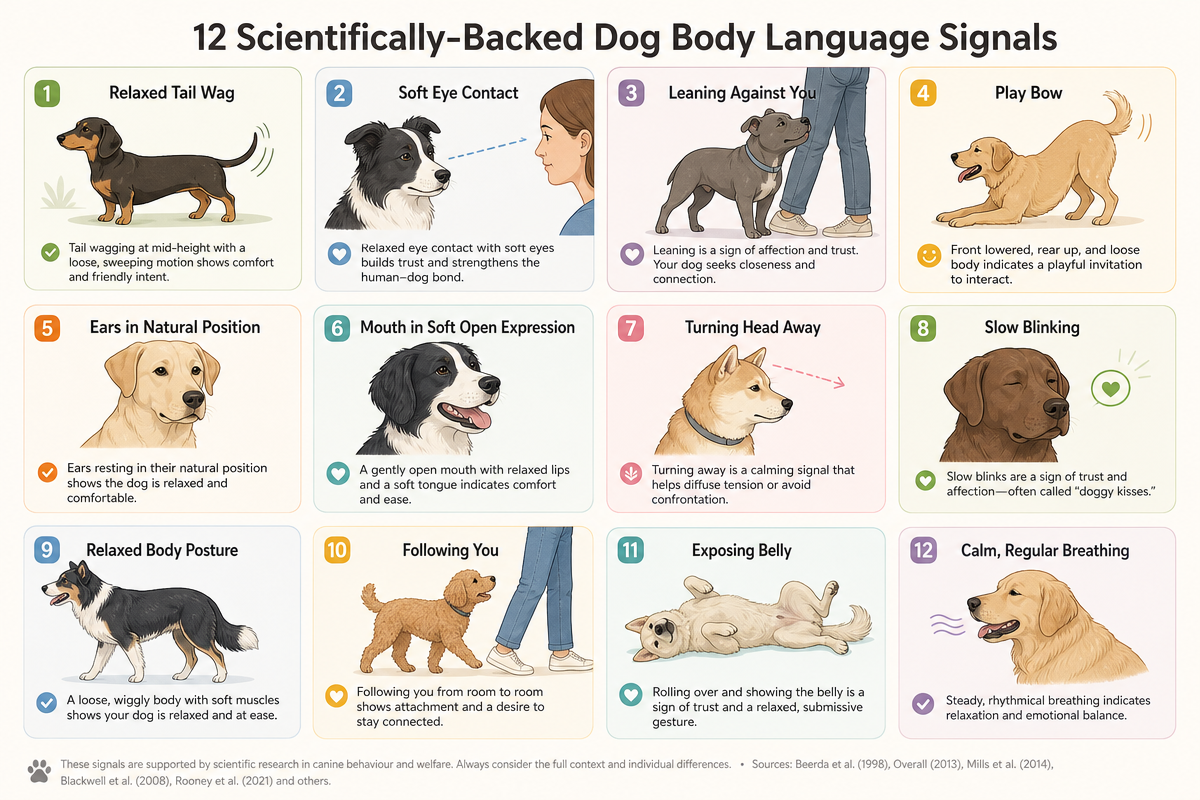
Unlike direct staring (which dogs find threatening), loving dogs offer gentle eye contact with relaxed facial muscles. Their eyes appear soft, sometimes described as “smiling,” and they don’t break contact immediately when you look back. For more on reading these cues, our dog body language guide covers the full picture.
2. Full-body wiggling and helicopter tail
Excited tail wagging that starts at the shoulders and flows through the entire body is different from stiff, high tail wagging (which can signal tension). The “helicopter tail”, spinning in circles, is typically reserved for their most beloved humans.
3. Sleeping close to or touching you
Dogs who choose to sleep pressed against you are seeking security from their trusted person. This shows they consider you part of their group and a source of comfort.
4. Gentle, purposeful licking
Loving licks are soft and deliberate, often on hands, face, or arms. This differs from frantic attention-seeking licking. Gentle licking releases endorphins in both you and your dog.
Behavioural Signs
5. Excited but controlled greetings
Dogs who truly love you show enthusiasm when you return but also display some self-control. They might wiggle intensely but sit when asked, or bring a toy instead of jumping frantically. This shows they value pleasing you alongside expressing excitement.
6. Following you around the house
Being your “shadow” indicates your dog finds your presence rewarding. However, healthy attachment allows for independence, dogs with separation anxiety follow obsessively and can’t settle even when you’re present.
7. Bringing you their favourite toys
Sharing prized possessions demonstrates trust and a desire to engage with you. Dogs often bring toys when greeting you or initiating play, associating you with positive experiences.
8. Choosing you over food or play
The ultimate test. When your dog abandons dinner or an exciting game to come to you, you rank higher than immediate physical needs in their priority system.
Emotional Indicators
9. Eyebrow movements
Research shows dogs raise their left eyebrow more when seeing their owners compared to strangers. They also use more facial expressions around beloved humans.
10. Relaxed body language in your presence
Loved dogs display loose, fluid movement around their favourite humans. Their bodies appear soft, ears sit naturally, and they move with easy confidence. No stress signals, no panting, pacing, or rigid posture.
11. Seeking comfort when stressed or ill
Dogs with strong attachments turn to their humans during thunderstorms, illness, or anxiety. They might rest their head on your lap, press against you, or position themselves nearby for reassurance.
12. Positioning themselves protectively
This isn’t about aggression. Dogs who love you stay alert to potential threats and place themselves between you and uncertain situations. Small dogs might bark warnings; larger dogs simply position themselves nearby.
Common Misconceptions
Signals That Aren’t Always Love
Not all tail wagging indicates happiness. Stiff, high wags can signal arousal or tension. Context matters: loose, wiggly wags with relaxed body language are genuinely affectionate. Rigid, alert wagging is something else.
Licking isn’t automatically affection either. Dogs lick for many reasons: attention-seeking, anxiety, learned behaviour, or because you taste salty. Loving licks are gentle and paired with other bonding behaviours.
Jumping up usually reflects excitement or attention-seeking rather than love. Many dogs jump on strangers too, it’s about getting closer to faces and hands, not expressing deep attachment.
Destructive behaviour when alone typically indicates boredom, anxiety, or inadequate exercise, not “spite” or revenge. Dogs lack the cognitive complexity for emotional manipulation.
Strengthening Your Bond
Understanding your dog’s love language helps you respond in kind. Dogs who show soft eye contact respond well to gentle gazing sessions. Those who bring toys appreciate interactive play. Physical cuddlers benefit from regular petting and massage.
Consistency builds trust more than grand gestures. Regular routines, patient training, and calm handling deepen attachment over time. Forcing affection, picking up a reluctant dog, prolonged hugging, can actually undermine the bond.
When to Seek Professional Help
Healthy attachment is normal and beneficial. But some attachment-related behaviours cross into territory that needs professional intervention from a veterinary behaviourist or certified trainer.
Seek help if your dog shows separation anxiety rather than healthy attachment: destructive behaviour when left alone, excessive drooling or panting when you prepare to leave, inability to settle when you’re home, or obsessive following without any independence.
If your dog shows no attachment signs after 6-12 months of consistent, positive interaction, that may indicate underlying behavioural or health issues worth investigating.
If protective behaviour escalates to aggression towards visitors or other family members, get professional help immediately to ensure everyone’s safety while preserving your bond.
Frequently Asked Questions
How long does it take for a dog to bond with you?
Initial attachment can form within days, but deep bonding typically develops over 3-6 months of consistent, positive interaction. Rescue dogs or those with difficult histories may need longer, sometimes up to a year.
Can dogs love multiple family members equally?
Dogs can form strong attachments to several people but usually have a primary bond with one, often whoever provides most of their care, training, and attention. Secondary bonds are still meaningful.
Do some breeds show love differently?
Yes. Herding breeds often show attachment through following and “managing” their humans. Sight hounds may be more independent but still deeply bonded. Working breeds express love through eagerness to please, while companion breeds tend toward physical affection.
What if my dog doesn’t show these signs?
Some dogs are naturally less expressive, and others may have learned that certain behaviours aren’t welcome. Build positive associations through consistent routines, treats, and gentle interaction. Avoid forcing affection, let your dog approach at their own pace.
How does boarding affect the bond with my dog?
Short-term boarding rarely affects long-term bonds. Dogs with secure attachments typically readjust quickly upon your return, often showing extra affection initially. Strongly bonded dogs actually adapt to temporary care more readily than anxious ones, they trust you’ll come back.