
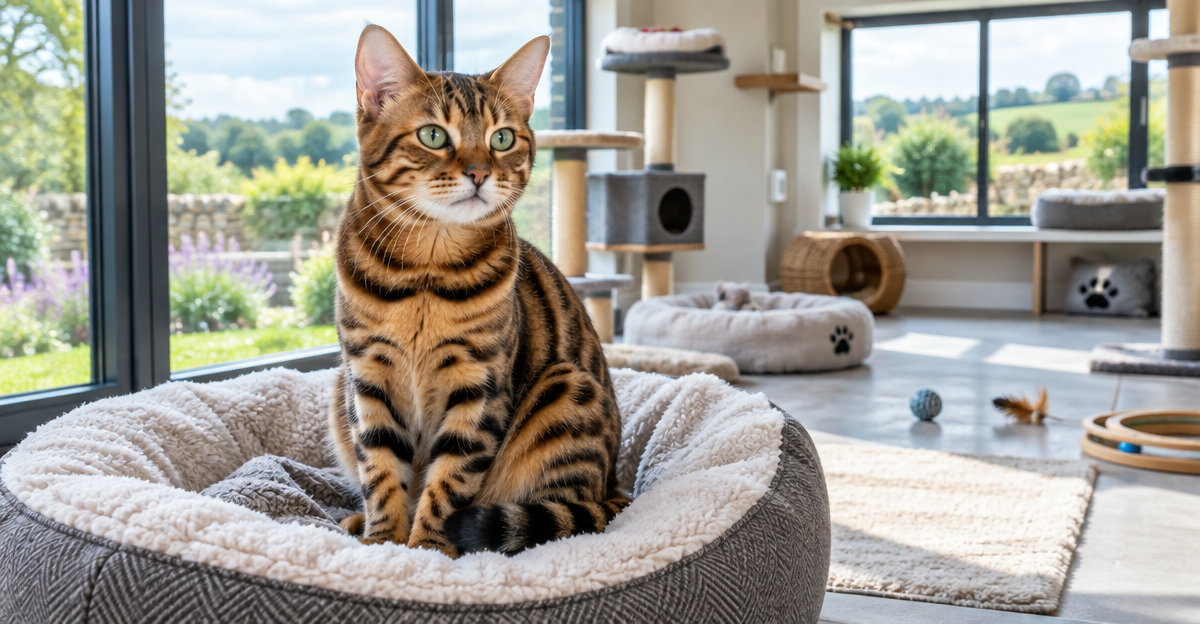
Catteries in Essex range from small home-run set-ups to purpose-built cat hotels, and every one of them needs a council licence to board your cat legally. Which one suits you depends on where you live, where you're travelling from and how your cat copes with being away from home.
Essex is a big county with very different corners. This guide covers those area differences first, then gives you a checklist for choosing a cattery wherever you are.
Key Takeaways
- Essex provision varies by area: Thames-side and south Essex, Chelmsford and mid-Essex, the north-east coast around Colchester, and the Stansted, Harlow and Epping corridor.
- In England, catteries must hold a licence under the Animal Welfare (Licensing of Activities Involving Animals) (England) Regulations 2018, issued by the local council.
- Ask for the licence number and check it with the council. A displayed star rating reflects the licence assessment, not customer reviews.
- Most catteries ask for up-to-date cat flu and enteritis vaccinations, so leave time for a vet visit.
- Distance to your route or airport, opening hours and peak-season availability often matter as much as the facilities.
What Does Cat Boarding Look Like Across Essex?
Expect three broad types: rural farm-based sites, small family-run catteries attached to a home, and catteries marketed as "luxury cat hotels".
Boarding catteries are spread right across the county, from Benfleet and Billericay to Halstead, Harwich and Waltham Abbey. Many are combined kennels and catteries, where dogs and cats share a site, though usually in separate buildings.
Cat-only sites do exist, and they tend to suit nervous cats because there's no barking. If your cat bolts under the bed at the sound of a neighbour's spaniel, it's worth seeking one out. That said, combined sites can be perfectly good, so don't rule them out. Just ask how the cat accommodation is kept apart from the dog side.
"Luxury" is a marketing label, not a graded standard. Treat it as a prompt to ask what you actually get. It might mean heated suites, covered runs and more space. It might simply mean a nicer website.
Which Part of Essex Should You Search?
Most owners start close to home, but if you live near an area boundary it's worth widening the search by a few miles. The table gives a quick overview, with notes on each area below.
| Area | What to expect | Who it suits |
|---|---|---|
| Chelmsford and mid-Essex | Rural sites, several advertising themselves as luxury cat hotels | Owners wanting larger suites and a countryside setting |
| South Essex | Dense provision across many towns, mix of combined and cat-only sites | Commuter households who want drop-off near home or work |
| Colchester, Tendring and the north-east coast | Farm-based and family-run sites, busy in the holiday season | Coastal and north-east residents, summer travellers |
| North and west Essex | Small specialist catteries, some close to Stansted | Airport travellers and Harlow, Dunmow and Epping residents |
| Thames-side and London border | Mix of urban and edge-of-town sites | Owners near Thurrock or east London who want a short journey |
Chelmsford and mid-Essex
Around Chelmsford, Galleywood, the Hanningfields, Roxwell, Purleigh and Maldon, you'll find a cluster of sites styled as luxury cat hotels. That gives you real choice if you want something roomier than a basic pen. It also means you need to compare like with like, because "luxury" covers a wide range of set-ups.
South Essex
Billericay, Brentwood, Basildon, Benfleet, Canvey Island, Hockley, Wickford and Southend sit in a densely populated belt, and provision reflects that. Plenty of households here commute, so pick-up and drop-off times matter more than you might think. One detail worth knowing: Southend is its own unitary authority, so a cattery there is licensed by a different council from one in Rochford or Castle Point.
Colchester, Tendring and the north-east coast
Colchester, Clacton, Brightlingsea, Harwich and Mersea have a steady spread of catteries, many of them farm-based or attached to kennels. Demand tends to rise sharply in the school holidays and over summer, so this is an area where booking early really pays off.
North and west Essex
Braintree, Halstead, Dunmow, Stansted, Harlow, Waltham Abbey, Epping and Ongar make up a corridor that includes Stansted Airport. If you fly regularly, a cattery within a short drive of the terminal takes a lot of the stress out of early departures and late returns. Some cat-only sites nearby advertise their distance to the airport, which makes comparison easier.
Thames-side and London-border Essex
Grays and Thurrock sit on the Thames, with Romford, Rainham and Hornchurch on the London border. Here's a quirk that catches people out: those last three are in the London Borough of Havering, so a licence there comes from Havering Council, not an Essex authority. If you're closer to the capital, you may also want to look at pet hotels in London.
Looking for somewhere near you? Compare Essex pet hotels on Tailstays and narrow the search by town.
How to Choose a Cattery in Essex: What to Check
Work through these checks in order and you'll filter out most of the weaker options before you ever pick up the phone.
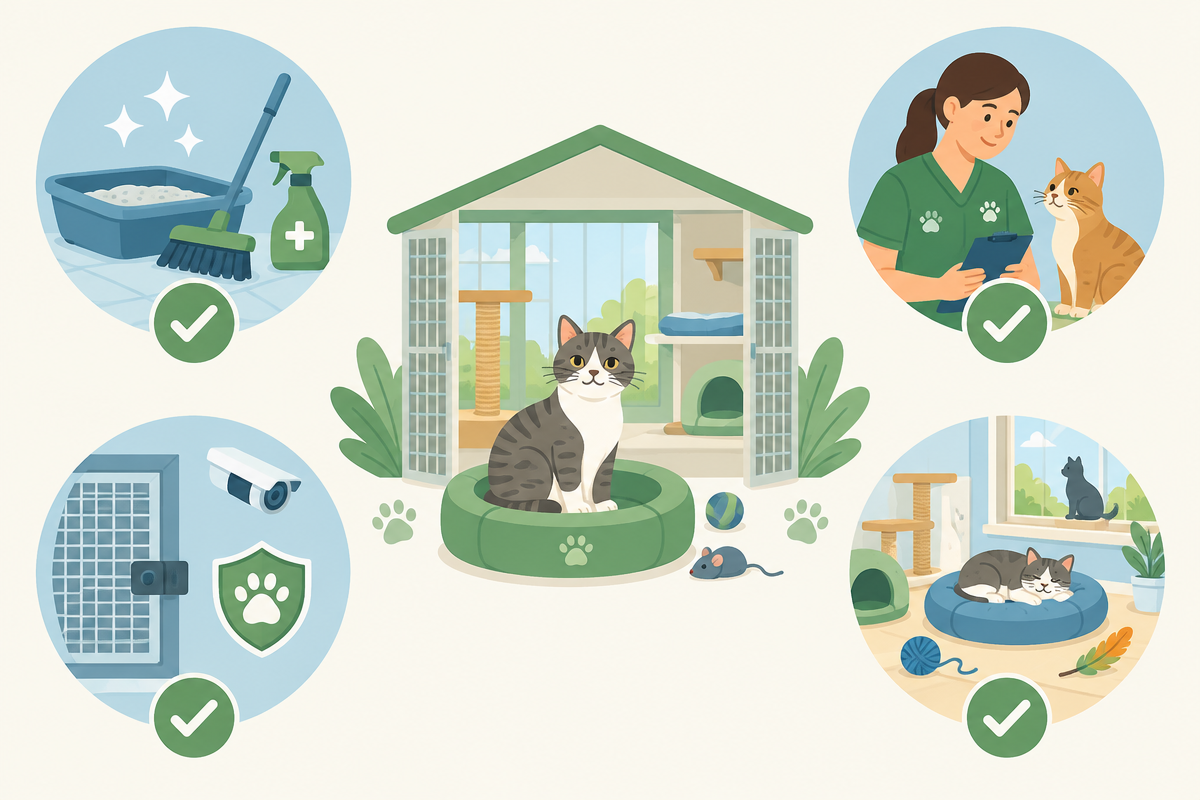
Check the licence
In England, catteries need a licence under the Animal Welfare (Licensing of Activities Involving Animals) (England) Regulations 2018. In Essex it comes from the local district, borough or unitary council, such as Uttlesford, Chelmsford, Colchester, Southend or Thurrock. (Wales has similar requirements under separate legislation, so the rules aren't identical across the UK.)
Licences carry a star rating and should be on display. The rating reflects the council's assessment of the premises and standards, not what customers think.
Ask the cattery for its licence number and confirm it with the relevant council's licensing team. Don't rely on a directory calling a provider "licensed". It takes five minutes and it's the single most useful check you can make. Bear in mind a licence is a minimum standard, not a guarantee of quality.
Check vaccinations
Most catteries ask for cat flu and feline enteritis vaccinations to be in date. Each sets its own rules, so ask exactly what proof they need and book your vet well ahead if a booster is due. Our cat vaccination schedule guide explains the timings if you're unsure where your cat stands.
Compare accommodation
Look for heated suites, a covered exercise area and sneeze barriers between cats. Multi-cat households should ask about interconnecting rooms.
Understand pricing
Published prices are rare, so treat any figure you do find as a single data point rather than a benchmark. Ask for a full quote that includes minimum stays, bank holiday rates, medication fees, extra cats and any deposit.
Ask about opening and drop-off hours
Many catteries work on restricted, appointment-only drop-off and collection windows, and some close on bank holidays. If you're catching an early flight, check the windows actually fit your timings, and get the hours confirmed in writing for busy periods.
Visit and ask questions
Reputable providers will happily let you look around. Ask who is on site overnight, which vet they use and how they handle illness. Red flags include no licence on display, reluctance to show you the premises, no vaccination checks, and cats from different households sharing airspace.
Ready to start comparing? See what's available on Tailstays and shortlist a few to call.
When Should You Book a Cattery in Essex?
For school holidays, Christmas and the summer, book as early as you can, ideally several months ahead. Small catteries only have a handful of suites, and they fill fast.
Near Stansted, you're competing with every other traveller who wants a cattery close to the airport. Bank holidays often carry surcharges, and some catteries close on those days, so check before you commit. Our advice is simple: book the cattery when you book the holiday, not after.
What If Your Cat Has Special Needs?
Tell the cattery about any health problems, medication, age-related needs or anxiety before you book. Not every site is set up for every cat, and it's far better to find that out on the phone than at drop-off.
For cats on medication, ask who administers it, how it's recorded and whether there's an extra charge. Older cats may need softer bedding, easy-access litter trays or a quieter suite away from the entrance. If your cat has struggled with boarding before, our guide on why cats get stressed at the cattery covers the signs to watch for and what helps.
Can You Use Tailstays to Find Cat Boarding in Essex?
Yes. You can search Tailstays by location to find and compare pet hotels, then contact your chosen provider to request a booking and confirm the details directly with the cattery.
Tailstays lists providers across Essex, including in Chelmsford, Colchester, Brentwood, Braintree and Wickford. Browse the Essex page for what's currently listed near you, and if you're on the London border, London listings may also be within reach. Whatever you find, run through the checklist above and verify the licence with the council.
When you're ready, start your search on Tailstays.
FAQ
How much does a cattery cost in Essex?
It varies by cattery, suite type and time of year, and few Essex catteries publish their rates openly. Ask for a full written quote covering minimum stays, bank holiday rates, extra cats and medication.
Do catteries in Essex need to be licensed?
Yes. Under the 2018 Regulations, catteries and cat home boarding in England need a licence from the local council. In Essex, the issuing council depends on the district, and parts of the London border fall under Havering.
What vaccinations does my cat need?
Usually cat flu and enteritis, including any boosters that are due. Requirements differ between catteries, so ask what proof they want before you book.
Is a cattery or a cat sitter better?
It depends on your cat. A sitter visiting your own home suits confident cats that prefer familiar surroundings, and generally doesn't need a licence. A cattery suits cats that need round-the-clock supervision or medication, though some shy cats find a new place stressful. Our cattery vs cat sitter comparison goes into more detail.
Can my cats share a suite?
Often yes, if they live together. Many catteries offer shared or interconnecting suites for cats from the same household. Confirm this when booking, as it may affect the price.
What should I pack for my cat?
Bring their vaccination record, their usual food, any medication with written instructions, and a familiar blanket or toy. Check the cattery's own list too, as some supply bedding and some prefer you not to bring items. Our cat boarding checklist covers the essentials.