
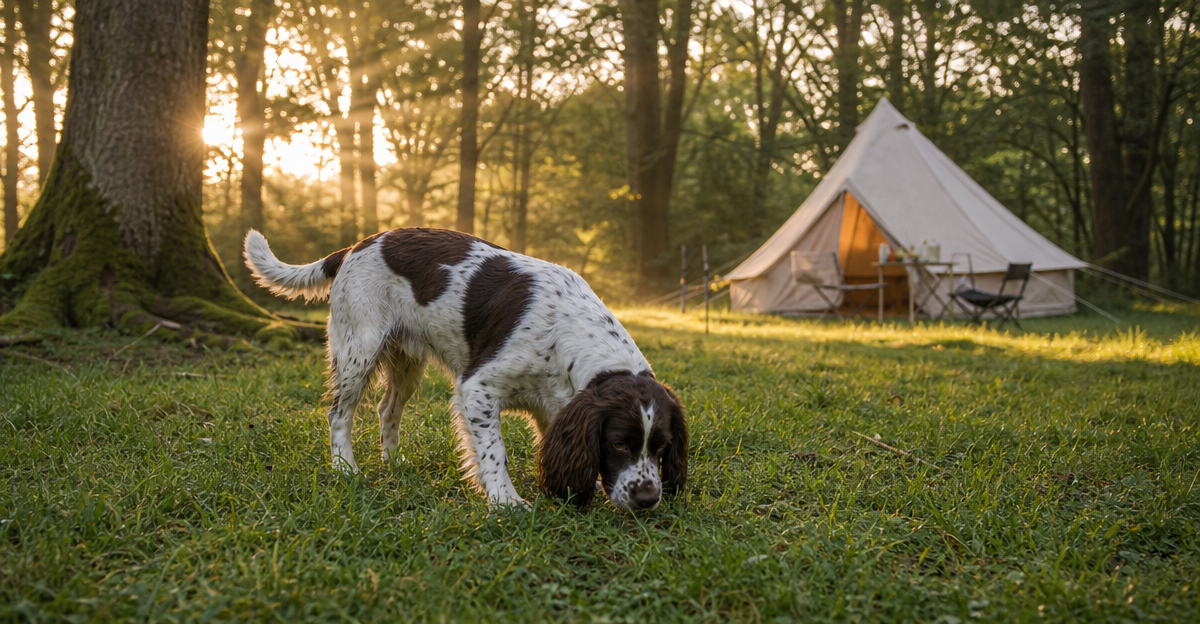
Pet friendly camping is genuinely available across the UK, with hundreds of sites welcoming dogs and, in some cases, other animals. But 'pet friendly' on a booking page can mean very different things depending on the site, your pet type, and how the rules are applied. Knowing what to check before you book will save you a difficult conversation at the gate.
Key Takeaways
- Pet friendly camping is widely available, but rules vary significantly between sites. Always verify your specific pet type is welcome before booking.
- Most sites accept dogs on leads only. Breeds prohibited under the Dangerous Dogs Act 1991 are refused at all commercial sites.
- Per-pet fees vary from free to £4 or more per dog per night depending on the site.
- Cats, small animals, and less common pets face very limited campsite availability.
- If camping doesn't suit your pet's temperament or your travel plans, a licensed pet hotel is a practical, structured alternative.
Is Pet-Friendly Camping Right for Your Pet?
Before you search for a site, it's worth being honest about whether camping is actually a good fit for your specific animal. Most campsite content focuses entirely on dogs, which leaves owners of cats, rabbits, or other pets with very little useful guidance. This section addresses that gap.
Which Pets Can Actually Go Camping?
Dogs are by far the most campsite-compatible pets, and the majority of pet-friendly sites are designed with them in mind. That said, some breeds face restrictions (more on this below), and individual site policies still vary considerably.
Cats are rarely accepted at commercial campsites, and there's a practical reason for that. A cat's natural instinct is to roam, and an unfamiliar outdoor environment, with traffic, other animals, and no familiar territory, creates a genuine welfare and escape risk. Very few sites have the infrastructure to accommodate cats safely, and those that do are the exception rather than the rule. For most cats, a licensed boarding cattery is simply the better option. Our guide to catteries versus cat sitters can help you weigh up the alternatives.
Small animals such as rabbits, guinea pigs, and hamsters face almost no commercial campsite provision. Temperature regulation, predator exposure, and handling stress make camping a poor environment for small pets. If you're travelling and need somewhere for a rabbit or guinea pig, specialist small animal boarding is a far more appropriate solution than hoping a campsite will accommodate them.
Birds and reptiles present similar challenges. Temperature sensitivity, stress responses to new environments, and the near-total absence of specialist campsite facilities make travelling with these animals to a campsite impractical in most cases.
Is Your Dog Actually Ready to Go Camping?
Most guides list the basics (vaccinations, socialisation, obedience) without explaining why each one matters in a camping context. Here's what each requirement actually means in practice.
Vaccinations need to be current because campsites bring together dogs from many different households. A dog who is up to date at home is still potentially exposed to pathogens carried by unfamiliar dogs, including kennel cough, parvovirus, and leptospirosis. Check with your vet before any trip involving multi-dog environments, and read up on kennel cough if you're unsure what you're protecting against.
Socialisation matters because campsites are sociable environments. Close pitches, communal areas, and shared paths mean your dog will encounter strangers, children, and other dogs regularly. A dog who struggles with these interactions won't be comfortable, and neither will your neighbours.
Recall is arguably the most critical obedience skill for camping. Open terrain near livestock, unfenced footpaths, and the general stimulation of a new environment make a reliable recall essential, particularly given the legal implications of dogs near farm animals (covered below).
Microchipping is a legal requirement for dogs in England under The Microchipping of Dogs (England) Regulations 2015, and has been since April 2016. If your dog isn't microchipped, that needs sorting before any trip. It's not just about legal compliance: a camping environment genuinely increases the risk of a dog getting separated from their owner.
Comfort in unfamiliar environments is something you can actually test before you go. Put the tent up in the garden and let your dog sleep in it for a night or two. A dog who settles easily at home is far more likely to settle on site.
Signs Camping Might Not Suit Your Pet
Some dogs genuinely enjoy camping. Others find it overwhelming, and it's worth knowing the warning signs before you commit to a trip.
- Separation anxiety: Most campsites require dogs to be supervised at all times or only left alone briefly. A dog who becomes distressed when left is not going to manage a campsite environment well. Our advice on separation anxiety is worth reading if this sounds familiar.
- Reactive behaviour: If your dog is reactive around other dogs, strangers, or children, the close-quarters nature of most campsites is likely to be stressful for them and disruptive for others.
- Senior or health-compromised dogs: Older dogs and those with conditions affected by cold, damp, or irregular routine may find camping more taxing than restful.
- Puppies who haven't completed their vaccination course: A puppy under 12 weeks, or one who isn't yet fully vaccinated, shouldn't be in high-dog-density environments.
If any of these apply, it doesn't mean your dog can never come on a trip. It just means this particular trip might be better planned with a licensed pet hotel in mind instead. That's not a failure; it's good ownership.
Understanding the Rules Before You Book
This is the step most people skip, and it's usually where avoidable problems begin. Campsite pet policies vary enormously, and the headline 'pet friendly' label tells you very little.
What Campsite Pet Policies Actually Mean
'Pets welcome' and 'dogs welcome' are not the same thing. Some sites use 'pets welcome' to mean dogs only. Others extend it to cats or small animals but with significant restrictions. Always contact the site directly to confirm your specific pet type is genuinely accommodated.
Lead rules are a consistent feature of virtually every commercial campsite. The Camping and Caravanning Club specifies short leads, typically up to 2 metres, at their sites, which is a useful benchmark. Many independent sites follow a similar standard. On-pitch compounds or enclosures are permitted at some sites, but even within an enclosure, many sites require the dog to remain on lead.
Leaving dogs unattended varies by site. Some allow dogs to remain in a securely closed, ventilated tent for short periods; others prohibit unattended dogs entirely. This matters if you're planning any activity that doesn't allow dogs, so check the specific rule before you assume either way.
Facility blocks, including shower and toilet blocks, are off-limits for dogs at virtually every commercial site. The exception is assistance dogs under the Equality Act 2010, which operators must accommodate.
Breed Restrictions: What the Law Says and What Sites Add
All UK campsites operating commercially must refuse dogs prohibited under the Dangerous Dogs Act 1991. The four types currently prohibited are the Pit Bull Terrier, Japanese Tosa, Dogo Argentino, and Fila Brasileiro. This is a legal requirement, not a discretionary site policy: no commercial site can lawfully admit these breeds.
Beyond the legal prohibition, some independent sites add their own restrictions. These vary widely and might include size limits or restrictions on specific breeds based on the site's own risk assessment. These are entirely at the site's discretion.
It's worth clarifying a common source of confusion here. Some online content conflates legal breed bans with discretionary site policies, giving the impression that dogs like Bulldogs or Rottweilers face near-universal restrictions. They don't. Bulldogs are not prohibited under the Dangerous Dogs Act 1991, and treating them as practically banned could unnecessarily put owners off camping altogether. If you have a breed that isn't on the prohibited list, check with the specific site rather than assuming a blanket ban applies.
Pet Fees: What to Budget
Per-pet fees are common at UK campsites, though the range is wide. Fees vary considerably by site and season, ranging from free to £4 or more per dog per night, so check directly with any site you're considering as pricing can change. The Camping and Caravanning Club charges no additional dog fee at their Club Sites, a notable exception to the general trend.
Most sites cap the number of dogs at two per pitch. Beyond the nightly fee, factor in any charge for using a dog wash station, and consider keeping a small budget aside for waste bags or incidentals. Some sites may also take a refundable damage deposit.
Questions to Ask the Campsite Before You Book
A quick call or email before booking will tell you far more than the listing page. Ask:
- Are [your specific pet type or breed] welcome on site?
- What is the maximum number of pets per pitch?
- Are pets permitted in any on-site accommodation, or pitches only?
- Is there a designated off-lead exercise area?
- Can I leave my dog briefly if I use the facilities?
- Is there a dog wash station on site?
- Is there livestock on or adjacent to the site?
A site that can answer these clearly and consistently is generally a well-managed one. Vague or contradictory answers are worth noting.
Planning the Trip: A Practical Checklist
What to Pack for Your Pet
Packing for a pet requires a bit more forward planning than packing for yourself. Don't rely on site shops for pet supplies; they're inconsistent, and you may not find what you need.
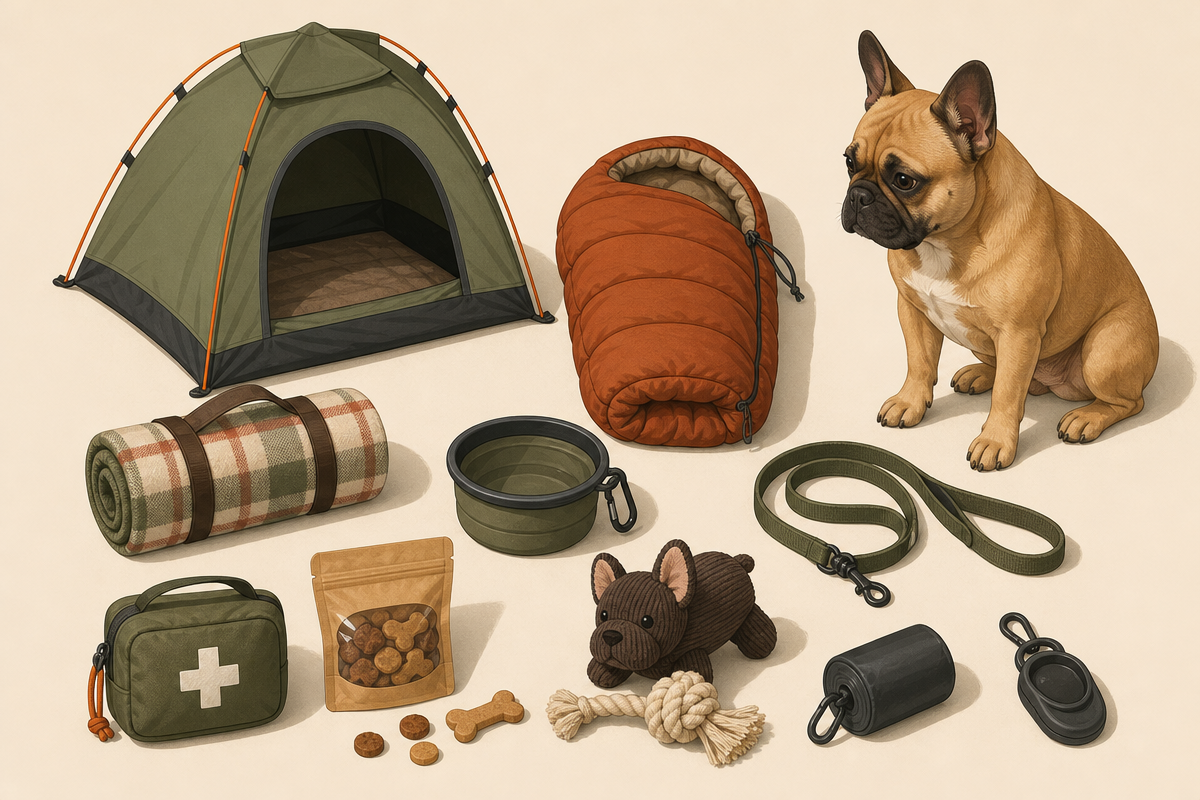
- Food and water in sufficient quantity, plus sealed containers to keep food fresh
- Familiar bedding or a blanket from home. Your dog's own scent genuinely helps them settle in an unfamiliar environment
- A 2-metre lead (the standard maximum for most sites) and a collar with an ID tag. Under the Control of Dogs Order 1992, dogs in public must wear a collar with the owner's name and address, which is a legal requirement, not just good practice
- Poo bags in generous supply; fouling enforcement is active in most areas
- A basic pet first aid kit: tweezers for tick removal, antiseptic wipes, and bandages
- Any regular medication stored appropriately, in a cool bag if temperature-sensitive
- A portable paw cleaner or dedicated towel for muddy returns
- A tether or on-pitch compound if you plan to use one
- A recent clear photo of your pet, in case they go missing
Preparing for the Campsite Environment
If you haven't already, put the tent up at home and let your dog spend time in it before the trip. A dog who has slept in a tent before is far less likely to be unsettled on the first night of the actual holiday.
Check local seasonal restrictions before you travel. Many beaches in Cornwall, Devon, and Dorset restrict dogs during summer months, often between May and September. It's frustrating to arrive and discover your planned beach walk isn't possible.
Brush up on the Countryside Code, which sets out responsible behaviour in the countryside for everyone, and the Dog Walking Code (applicable in Wales, published by the Welsh Government at gov.wales), which specifically addresses responsible dog ownership in rural settings.
If the site is on or near farmland, and many UK campsites are, you need to be aware of the Dogs (Protection of Livestock) Act 1953. This legislation makes it an offence for a dog to attack or chase livestock, and it places responsibility squarely on the owner. Keep your dog on a lead whenever livestock are near, and treat this as a non-negotiable.
Finally, consider the weather. Short-coated and small dogs are susceptible to hypothermia in cold or wet conditions. Pack accordingly and have a plan if conditions turn bad.
Booking Red Flags Worth Watching For
Not every site labelled 'pet friendly' is equally well-managed. These are signs worth pausing on:
- No clear pet policy on the booking page. If it's not written down, the rules are probably inconsistent
- 'Pet friendly' listings that specify dogs in outdoor areas only, with no clarity on what that means in practice
- No mention of waste disposal facilities for pets
- No perimeter information or mention of nearby unfenced roads
- No maximum dog number policy stated anywhere
A well-run pet-friendly site will have thought through all of these. Gaps in the information often reflect gaps in the management.
What Pet-Friendly Campsite Facilities Actually Look Like
The phrase 'pet friendly' covers an enormous range. A site where dogs are technically tolerated on leads is technically pet friendly. So is a premium glamping site with enclosed private gardens and a dog wash station. Knowing what level of provision you're actually getting helps you pick the right site for your pet.
Basic, Mid-Range, and Well-Equipped Sites
At the basic end, dogs are permitted on leads and the owner is responsible for everything. There may be no designated walking area, no dog wash, and no specific facilities beyond a poo bin or two. These sites work fine for experienced camping dogs and owners who come prepared.
Mid-range sites typically offer a designated dog walk area, poo bins throughout the site, and at least one water point. This makes daily management considerably easier, especially on longer trips.
Well-equipped sites add dog wash stations, off-lead exercise paddocks, and sometimes dog-friendly access to on-site pubs or cafes. The Camping and Caravanning Club's network is a good example: their Club Sites consistently include facilities like dog showers and designated walks, and as noted, charge no additional dog fee.
Glamping with Pets: The Distinction That Catches People Out
Glamping with dogs is increasingly popular, and more shepherd's huts, pods, and yurts now accept pets than they did even a few years ago. But there's a specific trap in how glamping sites are marketed.
A site can be labelled 'pet friendly' while still requiring dogs to sleep outside the accommodation unit. The site itself welcomes dogs; the hut or pod does not. These are two separate things, and the headline label doesn't tell you which applies. Always read the accommodation-specific small print, not just the site overview.
At premium glamping sites, dogs may be allowed inside the unit and the plot may include a private enclosed garden. These are the most comfortable options for owners whose dogs don't settle well outdoors alone, but they're not universal, and they usually command higher nightly rates.
Wild Camping: What the Law Actually Says
Wild camping without landowner permission is not legal in England or Wales. Visit Wales is clear on this: wild or free camping without landowner permission is not allowed in Wales. In England, the same principle applies under common law, so you need permission to camp on private land.
Scotland is different. Under the Land Reform (Scotland) Act 2003, wild camping is a legal right for most of Scotland's countryside, subject to responsible behaviour under the Scottish Outdoor Access Code. If you're planning a wild camping trip with your dog in Scotland, you're on much firmer legal ground, but the same livestock rules and Countryside Code principles still apply.
If you're considering informal camping on private land in England or Wales, you'll need to get landowner permission first. Pet rules in that situation are entirely at their discretion.
When Camping Isn't the Right Option
Not every pet is suited to camping, and not every trip allows pets to come along. That's not a problem; it's just a planning consideration. The honest answer, which you won't find in most campsite-focused guides, is that a licensed pet boarding hotel is sometimes the genuinely better option for your pet. If you're still weighing things up, our guide to pet-friendly holidays in the UK looks at the bring-them-or-board-them decision in more depth.
In England, the Animal Welfare (Licensing of Activities Involving Animals) (England) Regulations 2018 require dog and cat boarding businesses to hold a licence issued by their local authority. Wales has introduced similar requirements under separate legislation. Scotland and Northern Ireland operate under different frameworks, so licensing requirements vary if you're based there. Each licensed facility in England and Wales is assessed on a 1 to 5 star rating covering the physical environment, socialisation, diet, care practices, and overall management. It's worth noting that this licensing regime applies specifically to dog and cat boarding: small animal boarding (rabbits, guinea pigs, birds, reptiles) is generally not subject to the same licensing requirements, which is one reason specialist small animal boarding providers vary more widely in how they operate.
You can find and compare licensed dog and cat boarding options across the UK, including in London, Leeds, York, Nottingham, Bristol, and Swansea, on Tailstays.
A licensed pet hotel is particularly worth considering for dogs with anxiety or reactive behaviour, pets with medical needs requiring consistent routines, trips where pets simply cannot come along due to the nature of the destination, and during weather periods that would make outdoor camping uncomfortable or unsafe for your animal.
Knowing you have a solid alternative takes the pressure off camping decisions. You don't need to make camping work if it isn't right for your pet. There are better options, and they're easier to find than most people realise. Search for licensed pet hotels near you on Tailstays to see what's available in your area.
Frequently Asked Questions
Can any dog breed go to a pet-friendly campsite?
No. All UK commercial campsites must refuse the four breeds prohibited under the Dangerous Dogs Act 1991: Pit Bull Terrier, Japanese Tosa, Dogo Argentino, and Fila Brasileiro. Beyond these legal prohibitions, some sites add their own discretionary restrictions. Breeds not on the prohibited list, including Bulldogs, Rottweilers, and similar, are not legally banned, but individual site policies may still apply. Always confirm directly with the site before booking.
Can I leave my dog in a tent while I use the site facilities?
At many sites, briefly yes, provided the tent is securely closed and well ventilated. Most campsites do not permit dogs to be left unattended for extended periods, and some prohibit it entirely. This varies by site, so check the specific policy before you assume it's fine either way.
What's the difference between a pet-friendly campsite and a pet-friendly glamping unit?
A site can be labelled pet friendly while still requiring dogs to sleep outside the individual accommodation unit. The site welcomes pets; the hut, pod, or yurt may not. Always read the unit-level small print rather than relying on the site's headline description. Some premium glamping sites do allow dogs inside the unit, but this is not the default.
Is wild camping with a dog legal in the UK?
It depends where you are. In England and Wales, wild camping without landowner permission is not legal. In Scotland, the Land Reform (Scotland) Act 2003 grants a legal right to wild camp across most of the countryside, subject to responsible behaviour under the Scottish Outdoor Access Code. If you're camping informally on private land in England or Wales, you'll need the landowner's permission first.
What should I do if my pet isn't suited to camping?
Consider a licensed pet boarding hotel as an alternative. Licensed dog and cat boarding facilities in England and Wales operate under a regulated framework and are assessed for quality of care. You can find more detail on how this works in the When Camping Isn't the Right Option section above. You can find and compare licensed options near you through Tailstays.