
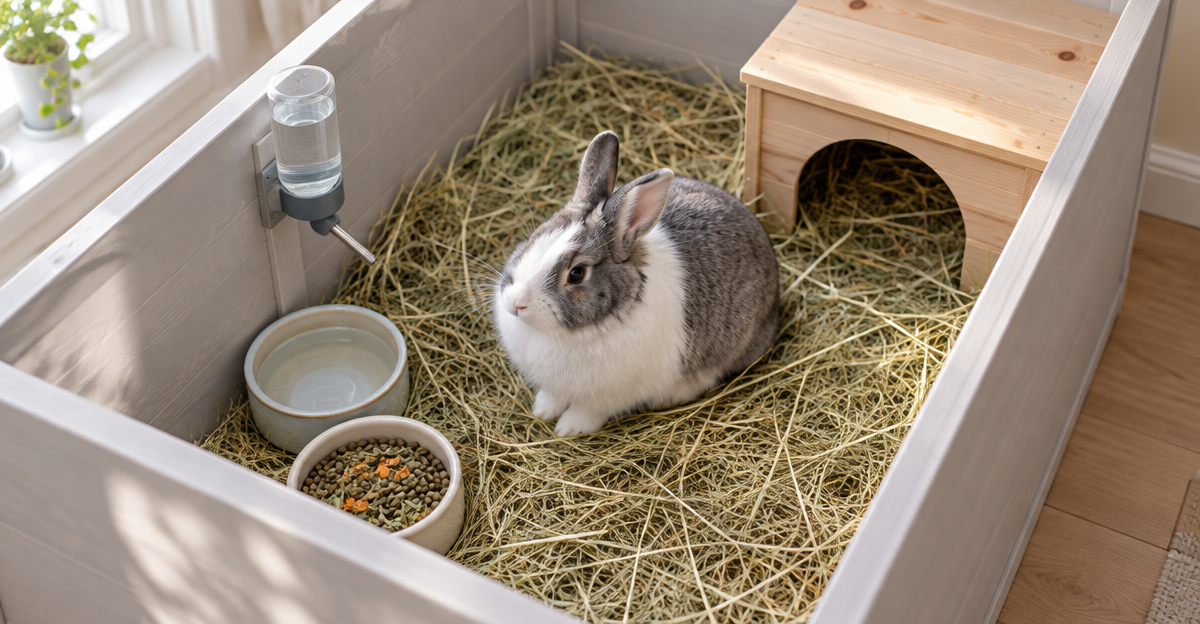
Rabbit boarding in Essex is mostly run by home-based small-pet boarders. There are also a handful of purpose-built rabbit and guinea pig hotels, plus some kennels and catteries that take small animals alongside dogs and cats. The right choice depends on your rabbit's temperament, vaccination status and the time of year, so it pays to ask the right questions before you commit.
Leaving a rabbit is nerve-racking. They hide illness well, and a rabbit that stops eating can go downhill within hours. This guide will help you find care you can trust, wherever you are in the county.
Key Takeaways
- Prices: Essex providers usually quote per rabbit, per day or night, with a discount for two sharing. There are real examples in the checklist below, but always confirm current figures.
- Main types: home-based small-pet boarders, specialist rabbit and guinea pig hotels, kennels and catteries that take small animals, and vet-nurse-run boarding.
- Vaccinations: reputable boarders ask for proof of up-to-date myxomatosis and RHD protection (RHD1 and RHD2).
- Book early: July, August and Christmas fill up fast.
- Before you book: check temperature control, emergency vet arrangements, insurance, separation from predator species and payment terms.
What Does Rabbit Boarding Look Like in Essex?
Essex offers four broad models. Each suits a different kind of rabbit, and none is automatically better than the others.
Home-based small-pet boarders
This is the dominant model. Home boarders advertising online are spread across Billericay, Wickford, Rochford, Southend, Chelmsford, Witham, Maldon and Colchester. Your rabbits usually stay in a garage, spare room, summer house or converted outbuilding at the carer's property.
The appeal is small numbers and personal attention, and for a shy rabbit a good home boarder is often hard to beat. The catch is that standards vary enormously, which is exactly why the checklist below matters.
Specialist rabbit and guinea pig hotels
Some operators run purpose-built cabins or sheds just for rabbits and guinea pigs, with listings around Brentwood and Billericay, for example. A dedicated building makes it easier to control temperature and keep rabbits well away from dogs and cats. Ask about insulation, ventilation and how many animals share the space.
Kennels and catteries that also take small animals
A few established kennels and catteries also board small pets, for example around Colchester and Thorrington, Dunmow, Waltham Abbey and Ingatestone. Their dog and cat boarding must be licensed by the local authority, but that licence does not automatically mean the small animal side is inspected in the same way. Ask.
Ask, too, how far the rabbits are kept from barking dogs and cat scent. Rabbits are prey animals, and living next door to a predator is genuinely stressful for them.
Vet-nurse-run boarding
Some Essex boarders advertise a Registered Veterinary Nurse (RVN) on the team. That is reassuring if your rabbit is on medication or is a senior with health quirks. It is not a licence, though, and it doesn't guarantee good housing. You can't verify the claim from an advert alone, but RVNs appear on the RCVS register, so you can check a name there.
Where in Essex Can You Find Rabbit Boarding Near You?
Home boarders cluster around the larger towns, and most only offer drop-off within a fairly local radius. If you are searching for rabbit boarding near you, start with your own area and widen out.
- South Essex: Basildon, Billericay, Wickford, Southend, Rochford, Benfleet and Canvey Island have a steady spread of home boarders.
- Mid Essex: Chelmsford, Witham, Maldon and Braintree. Chelmsford has several small-pet options.
- North and East Essex: Colchester, Clacton and Manningtree. There are fewer specialists here, so kennels and catteries that take small pets play a bigger role.
- West Essex: Waltham Abbey, Harlow and Epping.
- On the London border: Romford, Rainham, Havering and Ilford are technically Greater London, not Essex, though Romford is a handy option if you live on that side of the county. Some directory listings labelled as Essex actually have London addresses, so check the postcode.
Tailstays has an Essex page showing the pet hotels currently listed across the county. Not every listing takes rabbits, so confirm small animals are accepted before you enquire, and run any boarder you find through the checklist below.
Drop-off logistics matter more than people expect. Many home boarders only accept drop-off and collection in set windows, and a rabbit in a carrier should not spend long in a hot car.
Flying from Stansted or Southend? Check drop-off times against your flight. A boarder who opens mid-morning is no use if you leave at 5am, so ask well in advance about an early or late handover, or plan to drop off the day before.
How Do You Choose Rabbit Boarding in Essex? A 10-Point Checklist
Work through these before you hand over a deposit. If a boarder seems irritated by the questions, that tells you something too.
- Decide what setting suits your rabbit. Nervous or elderly rabbits often do better in a quiet home setup with few other animals. Outdoor rabbits may cope happily with an outbuilding, while a house rabbit used to family noise may find a shed very strange. Seniors may need heated accommodation in winter.
- Check credentials and licensing. Ask about insurance (and whether it covers boarding, not just pet visiting), DBS checks if that matters to you, pet first aid training and any veterinary experience.
Licensing is where people get confused. In England, the Animal Welfare (Licensing of Activities Involving Animals) (England) Regulations 2018 cover dog and cat boarding. Rabbits and other small animals are generally not covered for boarding, but local practice can vary, so ask your council rather than assuming. The gov.uk guidance has the detail, and our overview of UK pet laws on welfare and boarding explains the wider picture. If a boarder also takes dogs or cats, they should hold a licence for that. Treat a 'Local Authority Licensed' badge on a directory as a claim to verify, and ask to see the certificate. - Ask about vaccinations. Rabbits should be protected against myxomatosis and both RHD1 and RHD2. Vaccines commonly used by UK vets include Nobivac Myxo-RHD PLUS (myxomatosis plus RHD1 and RHD2), Filavac (RHD1 and RHD2, given separately from myxomatosis) and the newer Yurvac RHD. Your vet will advise which fits your rabbit. Requirements differ between boarders, so ask how many weeks before the stay the jabs must have been given, and expect to show the vaccination card or vet record.
- Ask about housing and exercise. Is it a hutch only, a hutch with a run, or a proper floor-space pen? How much time out does each rabbit get daily? Are rabbits kept apart from other clients' pets? Steer clear of setups with ferrets, dogs or cats nearby, as predator smells and sounds can cause real stress.
- Check temperature control. If we had to pick one question to prioritise, it would be this one. Rabbits cope badly with heat, and heatstroke is generally considered a real risk once temperatures climb into the mid-20s Celsius. Ask about fans, air conditioning and cool tiles or pads in summer, and heating or insulation in winter. Essex regularly gets some of the UK's hottest summer days, so this is a genuine local factor, not a minor detail.
- Discuss diet and routine. Bring your own food and hay so nothing changes suddenly, and ask how fresh greens are handled. Most importantly, ask how they monitor appetite and droppings each day. A rabbit that stops eating or pooping may be developing gut stasis, which is an emergency.
- Ask about emergencies. Which vet do they use, and is it a rabbit-savvy practice? Can you authorise treatment in advance, and who pays up front? Can they give medication, and is there a fee for it?
- Understand pricing, deposits and policies. Prices change, so treat these as examples only. According to Buns Away's website, boarding is £9.50 per night for one rabbit and £10.50 for two sharing. Oak Brooks' price list, as published in September 2025, quotes £12.50 per day for one rabbit and £14.50 to £15.50 for two, with extras such as nail clipping at £10. These are individual providers rather than county averages, and the figures may have changed since. Also ask about deposits (and whether they are refundable), minimum stays in peak season, rules for bonded pairs and any charges for medication or peak-period supplements.
- Ask about updates and handover. Will you get photos or video, and how often? What are the drop-off windows, and do they close on Sundays or bank holidays?
- Do a settling-in visit or a call. Reputable providers are usually happy to talk you through the setup, and many let you visit. Some don't offer viewings, in which case ask for detailed photos or a video call.
Ready to start shortlisting? See what's listed across Essex and compare providers before you make that first call.
What Are the Red Flags When Choosing a Rabbit Boarder?
Walk away, or at least ask a lot more questions, if you spot any of these:
- No vaccination requirement at all
- Your rabbit housed alongside unknown animals, or unbonded rabbits mixed together
- No plan for heat or cold
- A vague or missing emergency vet plan
- No insurance, or insurance that only covers pet visiting when your rabbit will be staying on their premises
- Pressure to pay the full amount in cash upfront, with no written terms or cancellation policy
- Big marketing claims ('Essex's leading', 'luxury', '5 star') with nothing to back them up
What Seasonal Factors Affect Rabbit Boarding in Essex?
Summer heat and flystrike
Summer is the riskiest time to board. Both the Rabbit Welfare Association & Fund (RWAF) and the RSPCA warn that rabbits overheat easily and that flystrike, where flies lay eggs on soiled fur, can become life-threatening very quickly in warm weather. Ask how often rabbits are checked each day, particularly around the rear end, and how shade and ventilation are managed.
Christmas and school holidays
July, August and Christmas book out early, and some providers take bookings up to a year ahead. If you know your dates, enquire now rather than later.
Winter cold and elderly rabbits
Older rabbits with arthritis or weaker circulation can struggle in cold, damp outbuildings. Ask about heated or well-insulated accommodation and dry bedding.
How Should You Prepare Your Rabbit for a Stay?
A little preparation makes the first night far less stressful. For a fuller list, see our guide on what to pack for rabbit boarding.
- Check vaccination dates well before booking, in case a booster is due.
- Use a secure carrier with a towel or bedding inside.
- Pack familiar food and plenty of hay.
- Include a bedding item or toy that smells of home.
- Write a care sheet covering medication, quirks, likes and dislikes.
- Leave your vet's details and pet insurance information, plus an emergency contact who is not on holiday with you.
What Are the Alternatives to Boarding?
- Home pet sitter visits: your rabbit stays in familiar surroundings, but visits are short and a problem can go unnoticed between them. Our guide to choosing small pet sitters for rabbits and guinea pigs covers what to look for.
- Friends or family: free and familiar, but only a good idea if they know rabbits, can spot the signs of illness and can handle an emergency.
- Rabbit-savvy vet boarding: strong medical oversight, which suits rabbits with health conditions. It can feel stressful and clinical for some rabbits, though, and not every practice offers it.
If boarding still looks like the best fit, search Tailstays to see what's available near you.
FAQs
How much does rabbit boarding cost in Essex?
It depends on the provider, whether one or two rabbits share, the season and any extras. The pricing point in the checklist above gives named examples, but they are individual quotes that may be out of date. Always ask for a current price list and a full breakdown of extras.
Do rabbits need to be vaccinated to board?
Reputable boarders will usually insist on it. There is no single national rule, as each provider sets its own policy, so check theirs. Your vet can tell you which vaccines your rabbit needs and when a booster is due.
Can I board two rabbits together, or an unneutered or unbonded rabbit?
Most boarders will house a bonded pair together, often at a lower rate per rabbit than two separate stays. Never mix rabbits that are not bonded, because fighting can cause serious injuries. Policies differ for unneutered or unbonded rabbits: many boarders ask for rabbits to be neutered and will keep unbonded rabbits apart, sometimes at an extra charge. Mention this when you enquire so there are no surprises.
Can indoor house rabbits cope with boarding?
Many can, especially with a quiet home setup, familiar food and something that smells of home. Ask whether the boarder keeps rabbits indoors or in outbuildings, and choose the setting closest to what your rabbit is used to. Very nervous rabbits may be better off with a home sitter.
Is rabbit boarding licensed in Essex?
Generally not. The 2018 licensing regulations in England cover dog and cat boarding, so rabbit-only boarders often operate without a licence. Local practice can vary, so check with your council if in doubt. A boarder who also takes dogs or cats should hold a licence for that activity.
Ready to compare? Browse pet hotels on Tailstays and weigh up rabbit boarding options near you.