
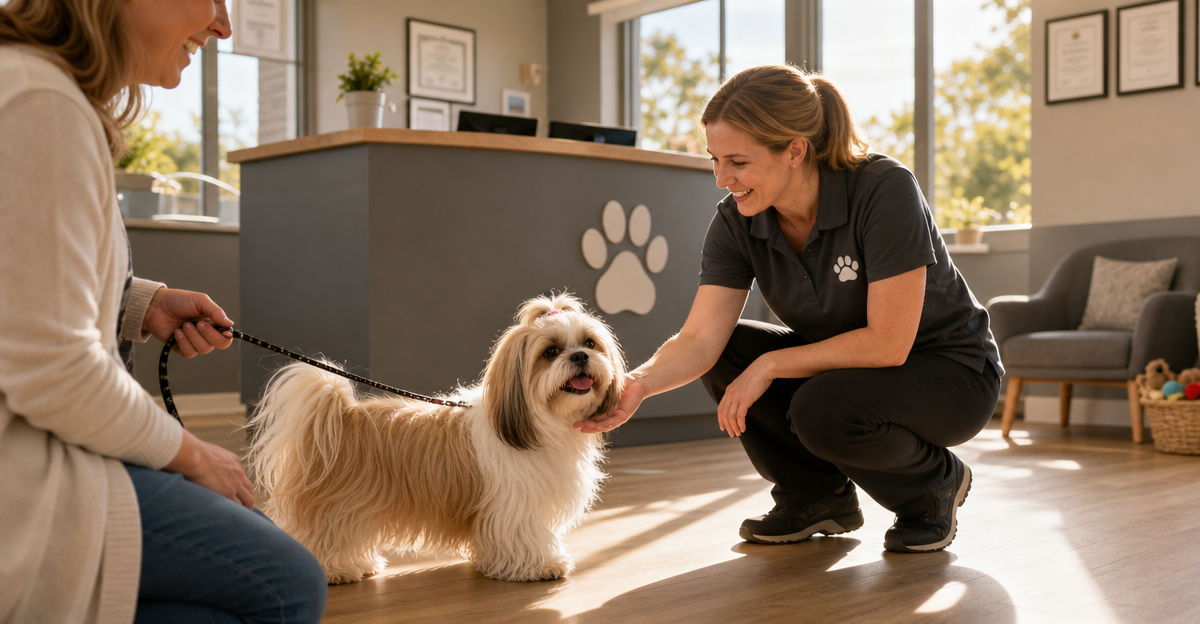
Pet friendly holidays are genuinely brilliant when they work: your dog splashing through Cornish rockpools, or curling up beside you in a cosy cottage. But they're not always the right choice, and knowing when to travel with your pet versus when to book boarding can make the difference between a holiday you actually enjoy and one spent anxious about your animal.
This guide walks you through the decision, so you can make the choice that's right for your pet, your destination, and your sanity. There's no shame in either answer, but there's a lot to be said for picking the honest one.
Key Takeaways
- Pet friendly holidays work best for adaptable pets, road trips, and self-catering stays, and less so for flights, city breaks, or pets with health issues.
- Not all "pet friendly" accommodation is equally accommodating. Always read the small print before you book.
- Quality boarding is a genuinely good alternative, not a last resort. Many pets thrive on the routine and social stimulation.
- Licensed boarding applies to dogs and cats in England under the Animal Welfare (Licensing of Activities Involving Animals) (England) Regulations 2018, with Wales having similar requirements under separate legislation.
- The earlier you research boarding, the better. Popular kennels and home boarders fill up fast over school holidays.
- Tailstays lists over 2,700 boarding providers across the UK if you need to compare options.
Working Out What's Right for Your Pet
Should Your Pet Actually Travel?
It's the question most pet owners half-ask themselves and then skip past. Before you start searching for dog friendly cottages, it's worth being honest about whether bringing your pet will genuinely suit them, or whether it's more about easing your own guilt about leaving them.
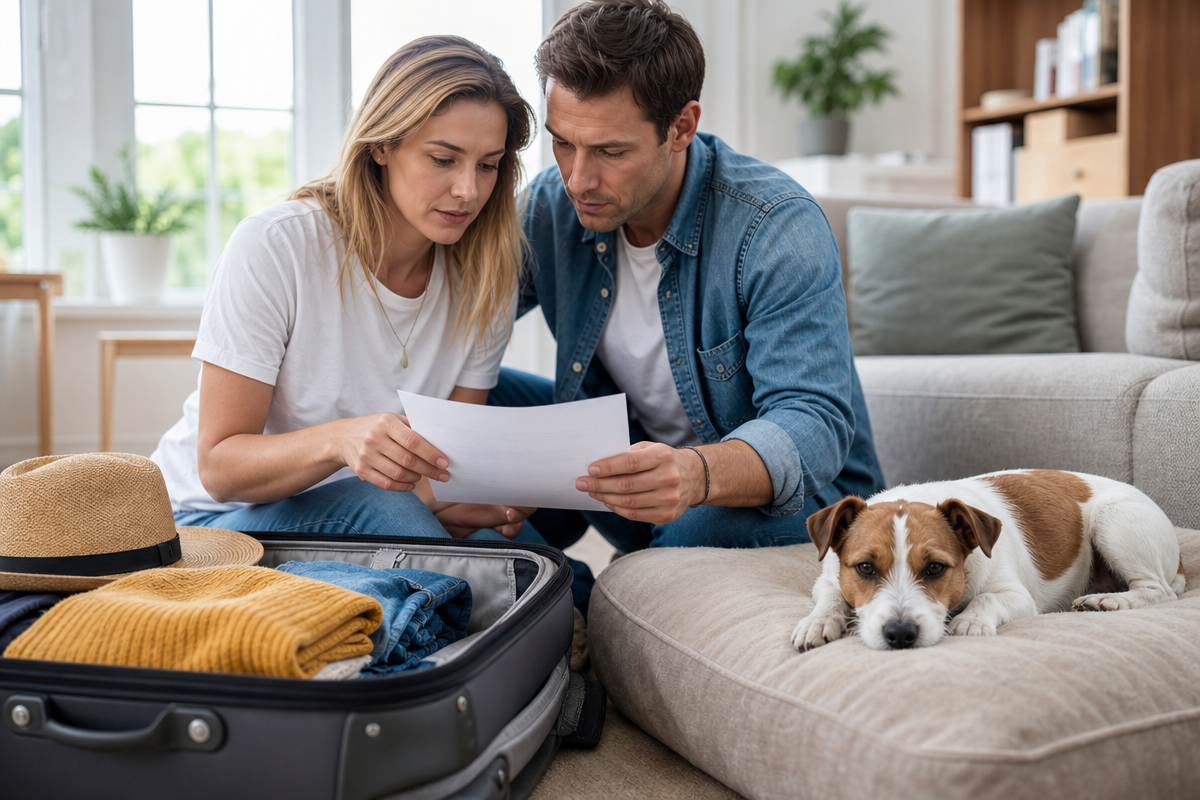
Some pets travel brilliantly. Dogs who are used to car journeys, sleep anywhere, and greet strangers warmly make natural travel companions. Others find new environments stressful, struggle with disrupted routines, or have health conditions that make travel risky. Cats, rabbits, and most small animals almost always do better staying at home or in familiar surroundings. The upheaval of travel is rarely worth it for them, and if you do need to move a cat, our guide to travelling with cats explains why it's so often more trouble than it's worth.
Ask yourself these questions honestly before you go any further:
- Does your pet cope well in new environments, or do they take days to settle?
- Will the holiday involve long stretches where your pet is left alone in unfamiliar accommodation?
- Are there activities on your itinerary where your pet genuinely cannot come?
- Does your pet have anxiety, health conditions, or age-related needs that travel could worsen?
If you answered yes to most of those, boarding with a trusted provider is likely the kinder option. That's not a failure. It's good pet ownership.
Matching the Trip to Your Pet
Done right, travelling with your pet adds something genuinely special to a holiday. You tend to walk more, discover more, and slow down in a way that a packed itinerary rarely allows. But the holiday type matters enormously.
The setups that tend to work best:
- Self-catering cottages and lodges: your pet has a base, a garden, and a consistent sleeping spot. This is the sweet spot for most dogs.
- Coastal or countryside destinations: beaches, moorland, and forest trails are natural dog territory. Many National Parks are well set up for visiting dogs, and our guide to UK dog holiday destinations is a good place to start.
- Shorter trips close to home: a long weekend rather than a two-week trip gives less time for things to go wrong.
- Travelling with a dog who already knows you well: rescue dogs in their first year or newly rehomed pets may find the disruption harder than you expect.
City breaks with pets are harder. Hotels vary wildly in how genuinely accommodating they are, restaurant terraces disappear the moment it rains, and the noise and pace of urban environments can be exhausting for animals. It can work, but it takes more planning.
Reading the small print on accommodation. "Pet friendly" means very different things to different providers. Some genuinely welcome animals, with dog beds, treat jars, muddy paw towels, the lot. Others simply mean they won't turn you away, but the rules are restrictive enough to make the stay stressful. Before you confirm any booking, check:
- The maximum number and size of pets allowed (some cottages cap at one small dog)
- Whether pets are permitted in all rooms or restricted to certain areas
- Whether pets can be left alone in the property, and under what conditions
- Any additional pet deposits or cleaning fees
- Whether there's outdoor space that's fully enclosed
- Proximity to roads, livestock, or other hazards your pet might encounter
A quick phone call before booking often tells you more than the listing does. A host who's genuinely enthusiastic about pets will usually say so straight away.
Practical preparation. The difference between a smooth trip and a chaotic one usually comes down to preparation done a few weeks before you leave, not the night before. For dogs travelling by car, make sure they're secured correctly. Under the Highway Code, an unsecured dog in a vehicle can count as a distraction and affect your insurance in the event of an accident. A well-fitted harness with a seatbelt attachment or a secured crate are the standard approaches, and our guide to dog car safety covers the law and kit in more detail.
Bring more of everything than you think you need: food, medication, poo bags, a familiar blanket or bed, and your vet's contact details. If your pet takes regular medication, carry enough for the full trip plus a few days extra in case you're delayed. It's also worth checking whether there's a vet near your destination before you need one urgently.
If you're travelling abroad with a dog or cat, the rules around pet passports and microchipping changed after Brexit. Check the current DEFRA guidance well in advance, since the requirements differ depending on whether you're entering Great Britain, going to EU countries, or travelling to Northern Ireland, and the timelines can be longer than most people expect. Our post-Brexit pet passport guide spells out what's changed.
If Boarding Is the Better Choice
There's a version of pet ownership that treats boarding as a compromise or an inconvenience. That version is wrong. For many pets, a good boarding stay, with routine, enrichment, and attentive care, is genuinely enjoyable. Your dog isn't sitting by the door pining. They're probably asleep after a morning of play.
Boarding makes clear sense when:
- Your holiday involves flights, which are stressful and, for brachycephalic breeds in particular, potentially risky
- You'll be away for more than a week and your pet doesn't travel well
- Your destination has limited outdoor space or significant noise and crowds
- Your pet is elderly, anxious, or managing a health condition
- You're travelling somewhere with genuine restrictions on dogs in public spaces
The main options for dogs in the UK are kennels (purpose-built facilities), home boarding (your dog stays in a carer's home), and house sitters (someone stays in your home while you're away). The key is choosing the right type for your pet's temperament. A sociable, bouncy Labrador may love a busy kennels with plenty of canine company. A nervous or elderly dog might be far happier in a home boarding setup with one carer and no other dogs, or a very small group. Our home boarding versus kennels comparison weighs up the two in detail.
Both kennels and home boarding for dogs require a licence in England under the 2018 Regulations, with Wales having similar requirements under separate legislation. Home boarding is not a looser, more informal arrangement from a regulatory standpoint. It carries its own licensing requirements and inspections. What differs is the environment and experience for your dog, not the level of oversight.
Dog sitting in the owner's own home, where a carer comes to your house, generally does not require a licence, though you should always check the carer's experience and whether they carry appropriate insurance. For cats, licensed catteries and cat home boarding are available under the same England and Wales framework. Scotland does not currently have consistent national licensing for cat boarding. Rabbits, guinea pigs, hamsters, birds, reptiles, and other small animals are not covered by the 2018 Regulations, so choosing a carer for smaller pets is more about personal vetting than verified regulation.
Start your search early, as popular providers fill up months in advance over school holidays and peak summer weeks. Browse what's available in your area on Tailstays, which lists over 2,700 boarding providers across the UK, with strong concentrations in cities like London (32 listings), Leeds (25), York (25), Bristol (20), and Liverpool (17).
Assessing a Shortlist of Providers
Start with the basics: verify that the provider holds a current licence from their local council. You can ask to see it directly, and reputable providers won't hesitate to share it. Licensed facilities are subject to regular inspections, with the frequency depending on their star rating under the scoring system introduced by the 2018 Regulations. If you want to run the check yourself, our step-by-step guide to checking a kennel's licence walks you through it. The licence is the floor, not the ceiling.
Beyond the licence, look for:
- A visit or meet-and-greet before your trip. Reputable providers will encourage this. It lets your pet explore the environment and gives you a chance to ask questions and get a feel for how the place is run.
- Clear vaccination policies. Most kennels and home boarders require up-to-date core vaccinations and kennel cough cover. Ask about the specific timing requirements for kennel cough, which can vary by vaccine type. Leaving this until the week before you travel can cause problems if you've missed the window.
- Honest questions about your pet. A good carer asks about your dog's temperament, triggers, feeding routine, and health history. If they don't ask, that tells you something.
- Emergency procedures. Ask which vet they use and what happens if your pet becomes unwell during your stay.
- Regular updates during your stay. Many home boarders send photos and messages. It's not essential, but it makes an enormous difference to owners who worry.
Red flags to watch for: no verifiable licence, reluctance to allow a pre-visit, vague answers about emergency vet arrangements, no questions asked about your pet's temperament or health, and reviews that mention illness or poor communication. If a provider can't answer basic questions confidently, move on.
On pricing, higher prices don't automatically mean better care, but unusually low prices for a fully licensed provider in your area are worth querying. Costs vary widely by location and facilities, and our guide to how much dog sitters cost in the UK gives a fuller sense of the ranges.
Booking Early and Briefing Your Provider
Once you know your travel dates, boarding should be one of the first things you sort, not an afterthought in the week before you leave. A rushed choice made under time pressure is rarely your best choice.
If your pet has never been boarded before, build a settling-in stay into your planning. A one-night or weekend trial well before your holiday gives your pet time to get comfortable with the environment and gives you confidence that everything will be fine while you're away. It also gives you time to try somewhere else if the first option doesn't feel right. This matters most for anxious dogs, and our advice on separation anxiety and dog boarding is worth a read if that's your situation.
Use the time before your trip to prepare a detailed care sheet for your provider: feeding schedule, any medications with dosing instructions, emergency contacts, your vet's details, and anything specific about your pet's behaviour or quirks. The more your carer knows, the better they can look after your animal.
Making Your Decision
There's no universal right answer here. Bringing your pet on holiday is a joy when the conditions are right. Leaving them in good hands is equally responsible when they're not. The pets who struggle most are those whose owners went with the option that made the owner feel better, rather than the option that suited the animal. That's worth sitting with honestly before you finalise any plans.
If boarding is the direction you're heading, find and compare providers near you on Tailstays and start shortlisting early. If you're travelling with your pet, the preparation steps above will serve you well. Either way, your holiday is more enjoyable when you know your pet is genuinely happy, wherever they are.
Frequently Asked Questions
Is it better to take my dog on holiday or leave them in kennels?
It depends entirely on your dog's temperament and your holiday type. Dogs who settle easily in new environments tend to enjoy travelling, especially on rural or coastal trips with lots of outdoor time. Dogs who are anxious, elderly, or easily unsettled by change often do much better in a familiar boarding routine than in a succession of unfamiliar places. There's no single right answer, but be honest about which option genuinely suits your dog rather than which one suits you.
Do kennels have to be licensed in the UK?
In England, boarding kennels for dogs and cats must hold a licence from their local council under the Animal Welfare (Licensing of Activities Involving Animals) (England) Regulations 2018, with Wales having similar requirements under separate legislation. Scotland and Northern Ireland have separate licensing regimes. You can ask any provider to show you their current licence, and a reputable one will do so without hesitation.
How far in advance should I book a kennels or home boarder?
For school holiday periods and peak summer weeks, it's wise to book as early as possible, often several months in advance for popular providers. Leaving it to a few weeks before you travel significantly narrows your options and may mean you end up with a provider you haven't had time to properly vet.
What vaccinations does my dog need for boarding?
Most kennels and home boarders require core vaccinations to be up to date, typically covering distemper, hepatitis, and parvovirus, along with kennel cough. The timing requirements for kennel cough specifically can vary depending on which vaccine type the provider uses, so always confirm the exact requirements when you enquire. Leaving this until the week before you travel can cause problems if you've missed the window.
Can I board my rabbit, guinea pig, or other small pet?
Yes, many independent animal keepers and some boarding facilities offer care for small animals. However, boarding for rabbits, guinea pigs, hamsters, ferrets, birds, reptiles, and similar species is not covered by the 2018 licensing regulations that apply to dogs and cats. This means you'll need to do your own vetting: ask about the carer's experience, how the animals are housed, and what their emergency protocols are.